Kirjojen hintavertailu – 12 859 819 kirjaa ja 27 kauppaa
Kirjailija
Fergus Hume
Kirjat ja teokset yhdessä paikassa: 938 kirjaa, julkaisuja vuosilta 2004–2026, suosituimpiin kuuluu Lady Jim of Curzon Street A Novel. Vertaile teosten hintoja ja tarkista saatavuus suomalaisista kirjakaupoista.
Manchester Guardian.--"A female highwayman is a somewhat daring variety in fiction of which crime and audacity is the chief merit of Mr. Fergus Hume's latest work. Mr. Hume is a clever writer in a very fertile vein." Literary World.--"In 'Claude Duval of Ninety-Five' we have a recendesence of highway robbery very skilfully contrived." Weekly Sun.--"The plot is very cleverly worked out. The book is to be heartily commended as one of its author's masterpieces." Literature.--"The story is novel, and is worked out into a present day environment with real dexterity." Yorkshire Post.--"An entertaining romance which should agree with the prevailing mood of the libraries." Observer.--"Mr. Hume's story will rank among the best of its type." A Green Bird Publication of a high quality paperback
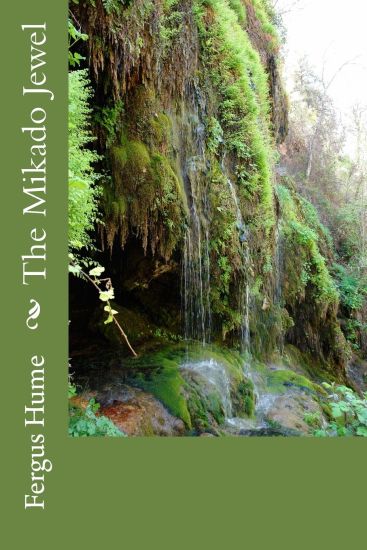
A mystery thriller set in England and India concerning a golden bracelet, a sacred ornament taken from a Hindu idol, worn by a young English gentleman born and raised in India.
The dingy little cart containing the clean linen of the Rectory, was on its way by an unusually roundabout route. Neddy Mellin, the washer woman's son, who disliked work as much as he liked play, which was natural in a lad of thirteen, grumbled openly at the uncongenial task of driving the large white donkey. The animal herself, who answered to the name of Nelly, grumbled also in her own way, as she objected to innovations. Hitherto she had been allowed to take the short road to the parson's residence; now she was compelled to go by the long one, which was particularly annoying on this damp, misty November afternoon. With the obstinacy of her race she refused to trot, and although Neddy whipped her, coaxed her, and threatened her, Nelly tstill behaved as though she were attending a funeral. Mrs. Mellin did not mind. Throned amidst the bundles of linen, she peered through the fog for something she particularly wished to see. Only when the cart arrived midway down a melancholy, deserted thoroughfare, bordered by dripping elm-trees, did she speak. Then the cart stopped as she fancied she heard an order. "There," said Mrs. Mellin, pointing with a fat, red finger at a dreary mansion which stood in a disorderly garden. "Maranatha I never did 'ear of sich a queer name in all my born days." "It's a scripter name, and has to do with cursing," explained her son, who, being a choir-boy, knew something about the Bible. "Then don't let me 'ear you use sich a wicked word, or I'll take the skin off your back," said his mother, wiping her large crimson face with a corner of her tartan shawl. "Maranatha it gives me the shivers, it do." "You're using it yourself," murmured Neddy, in an injured tone. "Me, being your elder and your ma, has a right to use words as ain't fit for you," said Mrs. Mellin, tartly, "and as we've got the washing of the new gent as has come to live there, I'll say the name often enough. I'll be bound. But not you, Neddy. Say the 'Ouse, and I'll know what you mean. And for 'Eaven's sake, child don't 'it the donkey. I want to look at the place." Mrs. Mellin craned forward so as to get a better view, and stared at the square, ugly building, the damp red bricks of which were almost hidden by dark curtains of untrimmed ivy. Smoke came from one chimney, which showed that the house was inhabited, but as the shutters were up and the door closed, there was a sinister look about the whole place which made the washerwoman shiver. In its wilderness of shrubs and long grass, girdled by gigantic elms, all sopping and dripping, the mansion loomed portentously through the mists. It looked like a house with an evil history, and the queer name on the gate suited it extraordinarily well. Mrs. Mellin was not imaginative, yet she shivered again as she signed that Nelly could proceed. Tired of standing and anxious to get her day's work over, Nelly changed her funeral pace for a more active one. "Maranatha " murmured Mrs. Mellin, as the cart turned into the Parade. "Well, baronet or no baronet, he won't get much good out of Maranatha. Arter suicides you may paint a 'ouse, you may furnish a 'ouse, and you may advertise 'ouses till you're sick, but them as comes to live in sich allays leaves afore the term's out. An' no wonder 'ow long he'll stay?" "Who'll stay?" asked Neddy curiously. "I wasn't speaking to you, child. 'Old your tongue and drive on. I do 'ope as Mrs. Craver ain't 'eard. This will be news for 'er. And that Emily Pyne is sich a gossip, as never was." All the way to the Rectory, Mrs. Mellin continued to talk in this way to herself, while Neddy kept his ears open to drink in every word. He was a slender boy with a wonderfully delicate complexion, curly golden hair, and innocent blue eyes, looking, on the whole, like a stray angel. And when in the choir he not only looked like an angel but sang like one, as his voice was remarkably beautiful.
Hume was born in England, the second son of James Hume. When he was three the family emigrated to Dunedin, New Zealand, where he was educated at Otago Boys' High School and studied law at the University of Otago. He was admitted to the New Zealand bar in 1885. Shortly after graduation Hume relocated to Melbourne, Australia, where he obtained a job as a barristers' clerk. He began writing plays, but found it impossible to persuade the managers of Melbourne theatres to accept or even to read them.
From the New York Times: Such a beautiful fan sticks of jade and enamel, beads of jade and amber hooped with gold depending from it. Most valuable feature of all from the point of view of the Mandarin Lo-Keong and of his enemy, Hop-Sing, hidden under the enamel was a record of the secret place where poor Lo had concealed the assorted lot of documents that showed his record as an ex-Boxer leader.
Thank you for checking out this book by Theophania Publishing. We appreciate your business and look forward to serving you soon. We have thousands of titles available, and we invite you to search for us by name, contact us via our website, or download our most recent catalogues. When Spenser Tait took his seat at the breakfast table, he cast a look around, according to custom, to see that all was as orderly as he could wish. The neatest and most methodical of men, he was positively old maidish in his love of regularity and tidiness. His valet, Dormer, -with him for over fifteen years, -had been trained by such long service into the particular ways of his master, and was almost as exacting as Tait himself in the matter of domestic details. No woman was permitted to penetrate into those chambers in Earls Street, St. James'; but had one been able to do so, she could have found no fault with them, either on the score of taste or of cleanliness. The shell of this hermit crab was eloquent of the idiosyncrasies of its tenant. The main characteristic of the breakfast room was one of severe simplicity. The carpet of green drappled brown, the curtains to match, and the furniture of oak, polished and dark. On the white cloth of the table an appetizing breakfast was set out in silver and china, and a vase of flowers showed that the little gentleman was not unmindful of the requirements of an artistic temperament. Even the Times, carefully cut and warmed, was neatly folded by the silver ringed napkin, and Dormer, standing stiff and lean by his master's chair, was calmly satisfied that no fault could be found with his work. For the past fifteen years, save on occasions of foreign travel, the same etiquette had been observed, the same actions performed, for, like the laws of the Medes and Persians, the habits of Tait were fixed and determine
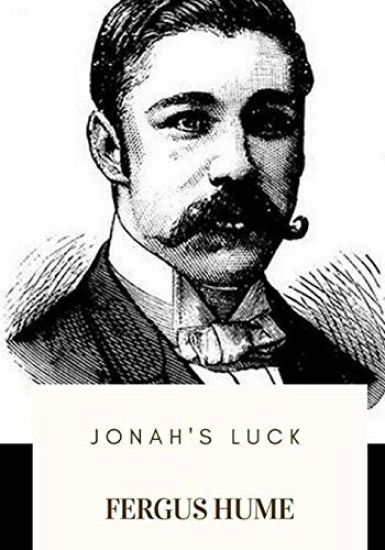
Fergusson Wright Hume, known as Fergus Hume (1859-1932) was an English novelist. Shortly after graduation he left for Melbourne. He began writing plays, but found it impossible to persuade the managers of the Melbourne theatres to accept or even read them. Finding that the novels of Emile Gaboriau were then very popular in Melbourne, he obtained and read a set of them and determined to write a novel of a similar kind. The result was the self-published novel 'The Mystery of a Hansom Cab' (1886), which became a great success. After the success of his first novel and the publication of another he returned to England in 1888. He resided in the Essex countryside for thirty years, eventually producing over 100 novels and short stories. He was a capable writer of mystery stories, and may be looked upon as one of the precursors of the many writers of detective stories whose work was so popular in the twentieth century. His other works include 'Madame Midas' (1888), 'The Silent House' (1899), 'The Bishop's Secret' (1900), 'Secret Passage' (1905), 'The Green Mummy' (1908), and 'Red Money' (1912).
Fergusson Wright Hume (8 July 1859 - 12 July 1932), known as Fergus Hume, was a prolific English novelist. Hume was born in England, the second son of James Hume. When he was three the family emigrated to Dunedin, New Zealand, where he was educated at Otago Boys' High School and studied law at the University of Otago. He was admitted to the New Zealand bar in 1885. Shortly after graduation Hume relocated to Melbourne, Australia, where he obtained a job as a barristers' clerk.
Fergusson Wright Hume, known as Fergus Hume (8 July 1859 - 12 July 1932) was a prolific English novelist. Finding that the novels of mile Gaboriau were then very popular in Melbourne, he obtained and read a set of them and determined to write a novel of a similar kind. The result was the self-published novel The Mystery of a Hansom Cab (1886), which became a great success. Hume based his descriptions of poor urban life on his knowledge of Little Bourke Street. He sold the English and United States rights to the novel for 50 pounds, and thus derived little benefit from its success. It eventually became the best selling mystery novel of the Victorian era, author John Sutherland terming it the "most sensationally popular crime and detective novel of the century". This novel inspired Arthur Conan Doyle to write A Study in Scarlet, which introduced the character Sherlock Holmes. Doyle remarked, "Hansom Cab was a slight tale, mostly sold by 'puffing'." After the success of his first novel and the publication of another, Professor Brankel's Secret (c.1886), Hume returned to England in 1888. He resided in London for few years and then he moved to the Essex countryside where he lived in Thundersley for 30 years, eventually producing more than 100 novels and short stories. He continued to be anxious for success as a dramatist, and at one time Henry Irving was favourably considering one of his plays, but he died before it could be produced.
THE MAN WITH A SECRET "With anxious dread have I avoided thee, Thou haunting evil of my early days, Yet by some trick of Fate we meet again; I pray thee, sir, let me go far away. And place the roaring seas between us twain, There is but sorrow in our comradeship." It was the high road to the village of Garsworth, wide, deeply rutted, and somewhat grass-grown, with a tall hedge of yellow-blossomed gorse on the one side, and on the other a ragged, broken fence, over which leaned a man absorbed in meditation, his eyes fixed upon the setting sun. The fence, rotten and moss-tufted, ran along the edge of a little hill, the slope of which had been lately reaped, and was now covered with bristly yellow stubble, variegated by bare-looking patches of brownish earth. At the bottom of the hill flowed the narrow river Gar, with its sluggish waters rolling lazily along between the low mud banks, bordered by rows of pollard willows and lush rank grasses which hid the burrows of the water-rats. Beyond, towards the distant hills, stretched the damp, melancholy fen-lands, with their long lines of slimy ditches, still pools of black water, and scattered clumps of stunted trees. Still further away appeared a scanty fringe of forest, above which could be seen the square, grey tower of a church, and over all glared an angry red sky barred with thin lines of heavy clouds, looming intensely black against the accentuating crimson light behind. An evil-looking scene it was, for over the brooding loneliness and desolation of the fen-lands flared the fierce scarlet of the sunset, turning the slender line of the river and the sombre pools of water to the tint of blood, as though they had been smitten with the Egyptian plague. FERGUS HUME Fergusson Wright Hume (8 July 1859 - 12 July 1932), known as Fergus Hume, was a prolific English novelist. Hume was born in England, the second son of James Hume. When he was three the family emigrated to Dunedin, New Zealand, where he was educated at Otago Boys' High School and studied law at the University of Otago. He was admitted to the New Zealand bar in 1885. Shortly after graduation Hume relocated to Melbourne, Australia, where he obtained a job as a barristers' clerk. He began writing plays, but found it impossible to persuade the managers of Melbourne theatres to accept or even to read them. Finding that the novels of mile Gaboriau were then very popular in Melbourne, Hume obtained and read a set of them and determined to write a novel of the same kind. The result was The Mystery of a Hansom Cab, set in Melbourne, with descriptions of poor urban life based on his knowledge of Little Bourke Street. It was self-published in 1886 and became a great success. Because he sold the British and American rights for 50 pounds, however, he reaped little of the potential financial benefit. It became the best-selling mystery novel of the Victorian era; in 1990 John Sutherland called it the "most sensationally popular crime and detective novel of the century". This novel inspired Arthur Conan Doyle to write A Study in Scarlet, which introduced the fictional consulting detective Sherlock Holmes. Doyle remarked, "Hansom Cab was a slight tale, mostly sold by 'puffing'." After the success of his first novel and the publication of another, Professor Brankel's Secret (c.?1886), Hume returned to England in 1888. He resided in London for a few years and then moved to the Essex countryside where he lived in Thundersley for 30 years. Eventually he produced more than 100 novels and short stories.
Thank you for checking out this book by Theophania Publishing. We appreciate your business and look forward to serving you soon. We have thousands of titles available, and we invite you to search for us by name, contact us via our website, or download our most recent catalogues. Certain portions of England yet remain undiscovered by Americans and uncivilised by railways. Colester village above King's-meadows, in a county which need not be named, is one of these unknown spots. No doubt before long the bicycle and the motor-car will enliven its somnolent neighbourhood, but at present it is free from the summer jaunts of tourists. With this neglect the Colester folk profess themselves satisfied. They have no wish to come into contact with the busy world. This prejudice against intrusion dates from medi val times, when strangers rarely came to the village with peaceful intentions. Even now a chance comer is looked upon with suspicion. Mr Richard Pratt said something of this sort to the vicar during a morning ramble, some six weeks after he had taken up his residence in The Nun's House. With the parson and the gentry of the parish Mr Pratt agreed very well, his respectability having been vouched for by Mrs Gabriel, the lady of the manor. But the villagers still held aloof, although the newcomer did his best to overcome their churlish doubts. They did not credit his story that he had settled in Colester to pass his remaining years in peace, and even the money he scattered so freely could not buy their loyalty. Pratt had never met with such people before. In most countries an open purse invites an open heart; but the Colester villagers were above Mammon worship. Such an experience was refreshing to Pratt, and introduced him to a new type of humanity.
Simon Beecot was a country gentleman with a small income, a small estate and a mind considerably smaller than either. He dwelt at Wargrove in Essex and spent his idle hours-of which he possessed a daily and nightly twenty-four-in snarling at his faded wife and in snapping between whiles at his son. Mrs. Beecot, having been bullied into old age long before her time, accepted sour looks and hard words as necessary to God's providence, but Paul, a fiery youth, resented useless nagging. He owned more brain-power than his progenitor, and to this favoring of Nature paterfamilias naturally objected. Paul also desired fame, which was likewise a crime in the fire-side tyrant's eyes. As there were no other children Paul was heir to the Beecot acres, therefore their present proprietor suggested that his son should wait with idle hands for the falling in of the heritage. In plain words, Mr. Beecot, coming of a long line of middle-class loafers, wished his son to be a loafer also. Again, when Mrs. Beecot retired to a tearful rest, her bully found Paul a useful person on whom to expend his spleen. Should this whipping-boy leave, Mr. Beecot would have to forego this enjoyment, as servants object to being sworn at without cause. For years Mr. Beecot indulged in bouts of bad temper, till Paul, finding twenty-five too dignified an age to tolerate abuse, announced his intention of storming London as a scribbler.
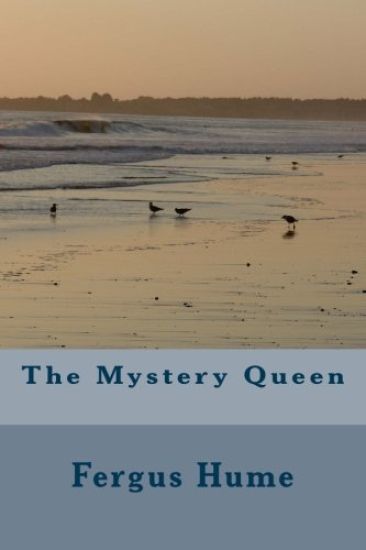
Excerpt from The Mystery Queen Sir Charles Moon looked up with a start, and drew his bushy gray eye-brows together. Some people would give more than that to know them, my dear. About the Publisher Forgotten Books publishes hundreds of thousands of rare and classic books. Find more at www.forgottenbooks.com This book is a reproduction of an important historical work. Forgotten Books uses state-of-the-art technology to digitally reconstruct the work, preserving the original format whilst repairing imperfections present in the aged copy. In rare cases, an imperfection in the original, such as a blemish or missing page, may be replicated in our edition. We do, however, repair the vast majority of imperfections successfully; any imperfections that remain are intentionally left to preserve the state of such historical works.
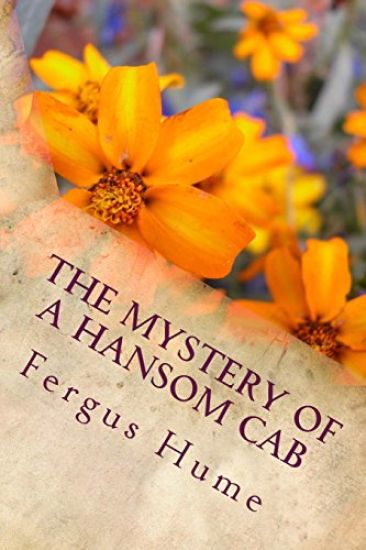
The Mystery of a Hansom Cab is a mystery fiction novel by English writer Fergus Hume. The book was first published in Australia in 1886. Set in Melbourne, the story focuses on the investigation of a homicide involving a body discovered in a hansom cab, as well as an exploration into the social class divide in the city. The book was successful in Australia selling 100,000 copies in the first two print runs. It was then published in Britain and the United States and went on to sell over 500,000 copies worldwide, outselling the first of Arthur Conan Doyle's Sherlock Holmes novels, A Study in Scarlet (1887).
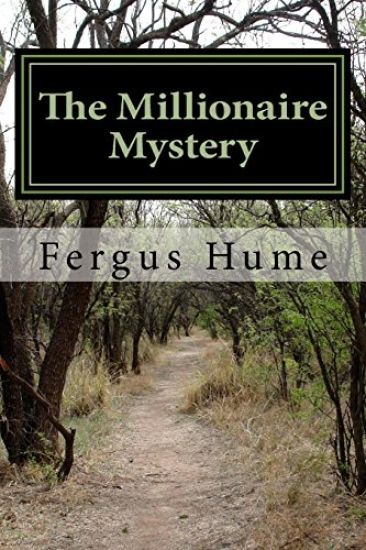
Fergus Hume was renowned as the bestselling mystery writer of Victorian times after his first book, The Mystery of a Hansom Cab, broke all records. In 1901 he returned to form with this ingenious tale, selected to represent Hume's prolific output by Collins' Detective Club panel in 1930. Cicero Gramp was, according to himself, a 'professor of elocution and eloquence' - to anyone else he was no more than an engaging and extremely craft vagabond. Hence it was that he found himself awakened from his sleep in the corner of the churchyard, the cheapest available lodging, by men's voices at an hour past midnight. Two dark figures silhouetted for an instant against the white mausoleum where lay the body of the millionaire Richard Marlow. Then the turning of a key in the iron door of the vault. Silence. Two figures moving back into the night carrying a sinister burden - what Gramp guessed was the body of Marlow. But when a search was made in the vault, Marlow's coffin was found shut, and not empty: only the body in it was not Marlow's but that of another man - murdered And that is only the first puzzle in The Millionaire Mystery . .
Hume was born in England, the second son of James Hume. When he was three the family emigrated to Dunedin, New Zealand, where he was educated at Otago Boys' High School and studied law at the University of Otago. He was admitted to the New Zealand bar in 1885. Shortly after graduation Hume relocated to Melbourne, Australia, where he obtained a job as a barristers' clerk. He began writing plays, but found it impossible to persuade the managers of Melbourne theatres to accept or even to read them.
From the New York Times: Such a beautiful fan sticks of jade and enamel, beads of jade and amber hooped with gold depending from it. Most valuable feature of all from the point of view of the Mandarin Lo-Keong and of his enemy, Hop-Sing, hidden under the enamel was a record of the secret place where poor Lo had concealed the assorted lot of documents that showed his record as an ex-Boxer leader.