Kirjojen hintavertailu – 12 876 548 kirjaa ja 26 kauppaa

Kirjailija

Filipe Carreira da Silva

Kirjat ja teokset yhdessä paikassa: 11 kirjaa, julkaisuja vuosilta 2007–2026, suosituimpiin kuuluu G.H. Mead. Vertaile teosten hintoja ja tarkista saatavuus suomalaisista kirjakaupoista.

11 kirjaa

Kirjojen julkaisuvuodet: 2007–2026.

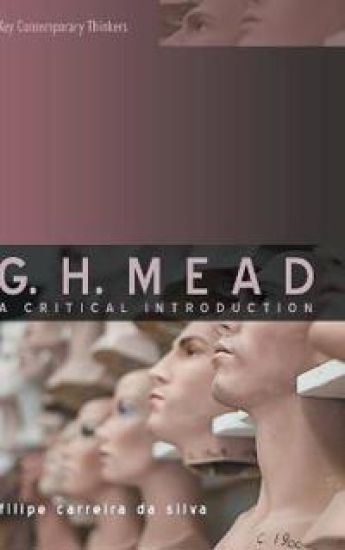
G.H. Mead

G.H. Mead

Filipe Carreira da Silva

Polity Press
2007
sidottu
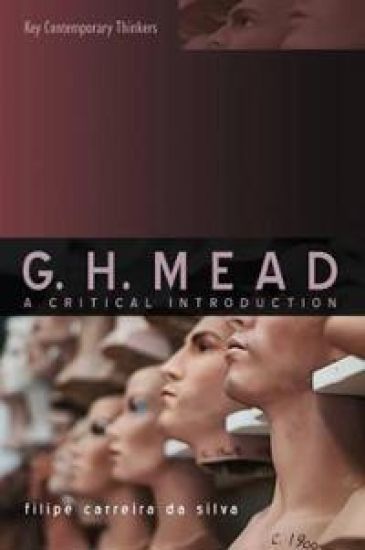
G. H. Mead is rightly considered to be one of sociology's founding fathers, yet to date there have been surprisingly few books devoted to his life and work. This book fills the gap by introducing Mead's ideas to a younger generation of social scientists. Beginning with a biographical account of the main events in Mead's career, Filipe Carreira da Silva provides a thorough examination of Mead's social theory of the self, the reception of his ideas into sociology, and the relevance of his work to the contemporary social sciences. He focuses in detail on the core ideas associated with Mead's work, including gesture and the significant symbol, the I-me distinction and the 'generalized other', as well as exploring less well-known aspects of his writing. This comprehensive introduction to Mead's thinking will appeal to students across the social sciences, providing a refreshing perspective on the social nature of the individual self.
G.H. Mead

G.H. Mead

Filipe Carreira da Silva

Polity Press
2007
nidottu
G. H. Mead is rightly considered to be one of sociology's founding fathers, yet to date there have been surprisingly few books devoted to his life and work. This book fills the gap by introducing Mead's ideas to a younger generation of social scientists. Beginning with a biographical account of the main events in Mead's career, Filipe Carreira da Silva provides a thorough examination of Mead's social theory of the self, the reception of his ideas into sociology, and the relevance of his work to the contemporary social sciences. He focuses in detail on the core ideas associated with Mead's work, including gesture and the significant symbol, the I-me distinction and the 'generalized other', as well as exploring less well-known aspects of his writing. This comprehensive introduction to Mead's thinking will appeal to students across the social sciences, providing a refreshing perspective on the social nature of the individual self.
Colonial Senses

Colonial Senses

Filipe Carreira da Silva; Sofia Aboim

Cambridge University Press
2026
sidottu
'Colonial Senses' explores how Portuguese late colonialism and its afterlives are experienced and resisted through the senses. Moving beyond a purely textual analysis, the Element examines the insurgent optics of Amílcar Cabral, the feminist haptics of Paulina Chiziane and the sonic politics of Black female activists in post-colonial Lisbon. The Element posits that Portuguese late colonialism's sensory regime prioritised proximity and aesthetic contact in order to mask violence and stifle dissent. Using social theory, literature and ethnography, we analyse a variety of visual, tactile and auditory registers. We offer a new hypothesis on the sensory architecture of empire: that the Portuguese colonial empire developed a distinctive multisensory regime structured around aestheticised contact, intimate violence and the suppression of autonomous sensory expression. Combining historical and sociological analysis, this Element demonstrates how sensory colonial legacies endure into the present and contributes to sensory and postcolonial studies.
Colonial Senses

Colonial Senses

Filipe Carreira da Silva; Sofia Aboim

Cambridge University Press
2026
pokkari
'Colonial Senses' explores how Portuguese late colonialism and its afterlives are experienced and resisted through the senses. Moving beyond a purely textual analysis, the Element examines the insurgent optics of Amílcar Cabral, the feminist haptics of Paulina Chiziane and the sonic politics of Black female activists in post-colonial Lisbon. The Element posits that Portuguese late colonialism's sensory regime prioritised proximity and aesthetic contact in order to mask violence and stifle dissent. Using social theory, literature and ethnography, we analyse a variety of visual, tactile and auditory registers. We offer a new hypothesis on the sensory architecture of empire: that the Portuguese colonial empire developed a distinctive multisensory regime structured around aestheticised contact, intimate violence and the suppression of autonomous sensory expression. Combining historical and sociological analysis, this Element demonstrates how sensory colonial legacies endure into the present and contributes to sensory and postcolonial studies.
The Politics of the Book

The Politics of the Book

Filipe Carreira da Silva; Mónica Brito Vieira

Pennsylvania State University Press
2021
pokkari
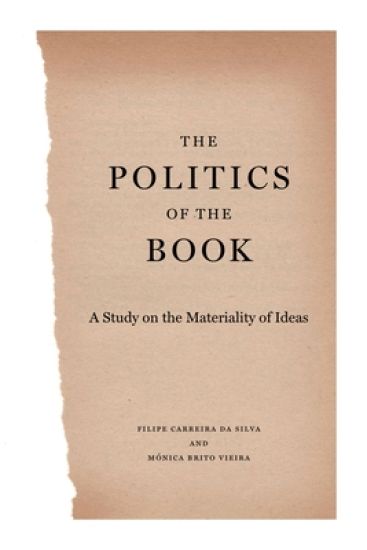
It is impossible to separate the content of a book from its form. In this study, Filipe Carreira da Silva and Mónica Brito Vieira expand our understanding of the history of social and political scholarship by examining how the entirety of a book mediates and constitutes meaning in ways that affect its substance, appropriation, and reception over time. Examining the evolving form of classic works of social and political thought, including W. E. B. Du Bois’s The Souls of Black Folk, G. H. Mead’s Mind, Self, and Society, and Karl Marx’s 1844 Economic and Philosophic Manuscripts, Carreira da Silva and Brito Vieira show that making these books involved many hands. They explore what publishers, editors, translators, and commentators accomplish by offering the reading public new versions of the works under consideration, examine debates about the intended meaning of the works and discussions over their present relevance, and elucidate the various ways in which content and material form are interwoven. In doing so, Carreira da Silva and Brito Vieira characterize the editorial process as a meaning-producing action involving both collaboration and an ongoing battle for the importance of the book form to a work’s disciplinary belonging, ideological positioning, and political significance. Theoretically sophisticated and thoroughly researched, The Politics of the Book radically changes our understanding of what doing social and political theory—and its history—implies. It will be welcomed by scholars of book history, the history of social and political thought, and social and political theory.
The Politics of the Book

The Politics of the Book

Filipe Carreira da Silva; Mónica Brito Vieira

Pennsylvania State University Press
2019
sidottu
It is impossible to separate the content of a book from its form. In this study, Filipe Carreira da Silva and Mónica Brito Vieira expand our understanding of the history of social and political scholarship by examining how the entirety of a book mediates and constitutes meaning in ways that affect its substance, appropriation, and reception over time. Examining the evolving form of classic works of social and political thought, including W. E. B. Du Bois’s The Souls of Black Folk, G. H. Mead’s Mind, Self, and Society, and Karl Marx’s 1844 Economic and Philosophic Manuscripts, Carreira da Silva and Brito Vieira show that making these books involved many hands. They explore what publishers, editors, translators, and commentators accomplish by offering the reading public new versions of the works under consideration, examine debates about the intended meaning of the works and discussions over their present relevance, and elucidate the various ways in which content and material form are interwoven. In doing so, Carreira da Silva and Brito Vieira characterize the editorial process as a meaning-producing action involving both collaboration and an ongoing battle for the importance of the book form to a work’s disciplinary belonging, ideological positioning, and political significance. Theoretically sophisticated and thoroughly researched, The Politics of the Book radically changes our understanding of what doing social and political theory—and its history—implies. It will be welcomed by scholars of book history, the history of social and political thought, and social and political theory.
Portuguese Sociology

Portuguese Sociology

Filipe Carreira da Silva

Palgrave Pivot
2015
sidottu
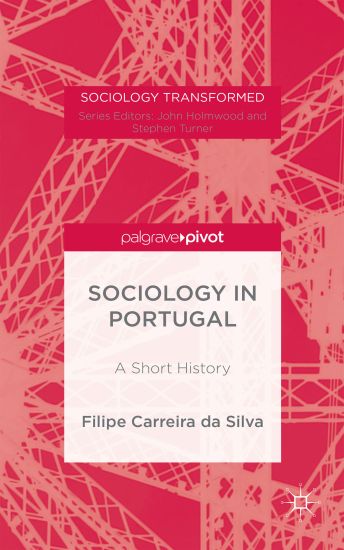
Sociology in Portugal provides the first English-language account of the history of sociology in Portugal from 1945 to the present day. Banned by the fascist regime until 1974, the institutionalization of sociology as an academic discipline came relatively late. Understanding academic disciplines as institutionalized struggles over meaning, Filipe Carreira da Silva gives a genealogy of sociology in Portugal from its origins in the political-administrative interstices of a dictatorship, through the 'cyclopean moment' of the political revolution of April 1974, which brought about its swift institutionalization and subsequent consolidation in the new democratic regime, to the challenges posed by internationalization since the 1990s. Attempts to define Portugal itself, he demonstrates, have been at the heart of these struggles. Analyzing agents, institutions, contexts, instruments and ideas, Carreira da Silva shows in fascinating detail how the sociological understanding of Portugal evolved from that of a developing society in the 1960s, to that of a modernizing European social formation in the 1980s, to the post-colonial or post-imperial Portugal of today.
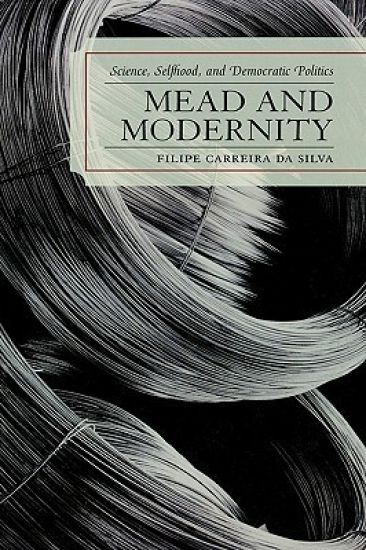
Mead and Modernity

Mead and Modernity

Filipe Carreira da Silva

Lexington Books
2010
nidottu
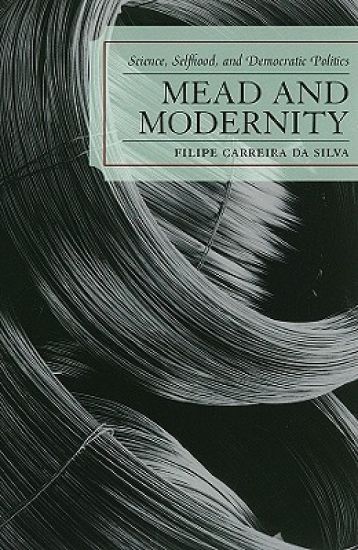
Filipe Carreira da Silva addresses the basic questions 'How should we read Mead?' and 'Why should we read Mead today' by showing that the history of ideas and theory-building are closely-related endeavors. Following a contextualist approach in exploring the meaning of Mead's writings, Carreira da Silva reads the entire corpus of Mead's published and unpublished writings in light of the context in which they were originally produced, from concrete events like the American involvement in World War I to more general debates like that of the nature of modernity. Mead and Modernity attests to the relevance of Mead's ideas by assessing the relative merits of his responses to three fundamental modern problematics: science, selfhood, and democratic politics. The outcome is an innovative intellectual portrait of Mead as a seminal thinker whose contributions extend beyond his well-known social theory of the self and include important insights into the philosophy of science and radical democratic theory.
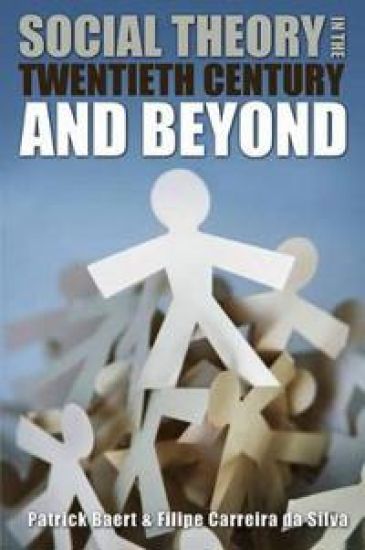
Social Theory in the Twentieth Century and Beyond

Social Theory in the Twentieth Century and Beyond

Patrick Baert; Filipe Carreira da Silva

Polity Press
2009
sidottu
This revised edition of Patrick Baert's widely acclaimed Social Theory in the Twentieth Century, now benefitting from the collaboration of Filipe Carreira da Silva has been brought right up-to-date with cutting-edge developments in social theory today. It offers an easy-to-read but provocative account of the development of social theory, covering a range of key figures and classic schools of thought. The authors bridge the gap between philosophy and social theory, locating the theoretical views of individuals such as Michel Foucault, Anthony Giddens and Jürgen Habermas within wider historical traditions. The revised edition includes new material on French pragmatist sociology and cultural sociology, and on contemporary social thinkers such as Zygmunt Bauman, Ulrich Beck, Manuel Castells, Randall Collins, Michael Mann, Saskia Sassen and Theda Skocpol. The authors conclude with a bold, new pragmatist agenda for social theory and the social sciences. Written in a lively style, and avoiding jargon, Social Theory in the Twentieth Century and Beyond is aimed at students who wish to gain an understanding of the main debates and dilemmas driving social theory. Like its predecessor, it will be a standard introduction to modern social theory for students in sociology, politics and anthropology.
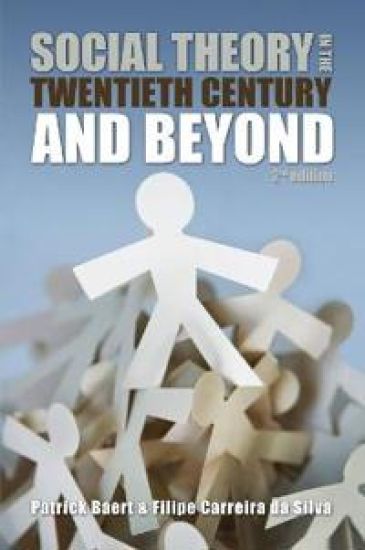
Social Theory in the Twentieth Century and Beyond

Social Theory in the Twentieth Century and Beyond

Patrick Baert; Filipe Carreira da Silva

Polity Press
2009
nidottu

Halvin toimitettuna 35,50 €

This revised edition of Patrick Baert's widely acclaimed Social Theory in the Twentieth Century, now benefitting from the collaboration of Filipe Carreira da Silva has been brought right up-to-date with cutting-edge developments in social theory today. It offers an easy-to-read but provocative account of the development of social theory, covering a range of key figures and classic schools of thought. The authors bridge the gap between philosophy and social theory, locating the theoretical views of individuals such as Michel Foucault, Anthony Giddens and Jürgen Habermas within wider historical traditions. The revised edition includes new material on French pragmatist sociology and cultural sociology, and on contemporary social thinkers such as Zygmunt Bauman, Ulrich Beck, Manuel Castells, Randall Collins, Michael Mann, Saskia Sassen and Theda Skocpol. The authors conclude with a bold, new pragmatist agenda for social theory and the social sciences. Written in a lively style, and avoiding jargon, Social Theory in the Twentieth Century and Beyond is aimed at students who wish to gain an understanding of the main debates and dilemmas driving social theory. Like its predecessor, it will be a standard introduction to modern social theory for students in sociology, politics and anthropology.
Mead and Modernity

Mead and Modernity

Filipe Carreira da Silva

Lexington Books
2008
sidottu
Filipe Carreira da Silva addresses the basic questions 'How should we read Mead?' and 'Why should we read Mead today' by showing that the history of ideas and theory-building are closely-related endeavors. Following a contextualist approach in exploring the meaning of Mead's writings, Carreira da Silva reads the entire corpus of Mead's published and unpublished writings in light of the context in which they were originally produced, from concrete events like the American involvement in World War I to more general debates like that of the nature of modernity. Mead and Modernity attests to the relevance of Mead's ideas by assessing the relative merits of his responses to three fundamental modern problematics: science, selfhood, and democratic politics. The outcome is an innovative intellectual portrait of Mead as a seminal thinker whose contributions extend beyond his well-known social theory of the self and include important insights into the philosophy of science and radical democratic theory.