Kirjojen hintavertailu – 12 903 725 kirjaa ja 27 kauppaa

Kirjailija

Fintan O'Toole

Kirjat ja teokset yhdessä paikassa: 26 kirjaa, julkaisuja vuosilta 1998–2026, suosituimpiin kuuluu The Child Sex Scandal and Modern Irish Literature. Vertaile teosten hintoja ja tarkista saatavuus suomalaisista kirjakaupoista.

26 kirjaa

Kirjojen julkaisuvuodet: 1998–2026.

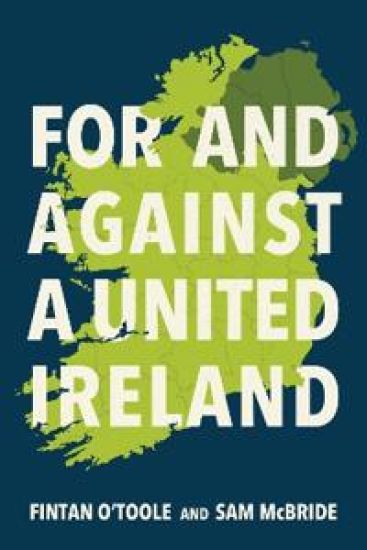
For and Against a United Ireland

For and Against a United Ireland

Sam McBride; Fintan O'Toole

UNIVERSITY OF NOTRE DAME PRESS
2026
sidottu
In For and Against a United Ireland, renowned journalists Fintan O'Toole and Sam McBride provide an accessible and measured approach to the polarized debate about Irish unification. The prospect of Irish unification is now stronger than at any point since partition in 1921. Voters on both sides of the Irish border may soon have to confront for themselves what the answer to a referendum question would mean—for themselves, for their neighbours, and for their society. Journalists Fintan O'Toole and Sam McBride examine the strongest arguments for and against a united Ireland. What do the words "united Ireland" even mean? Would it be better for Northern Ireland? Would it improve lives in the Republic of Ireland? And could it be brought about without bloodshed? O'Toole and McBride each argue the case for and against unity, questioning received wisdom and bringing fresh thinking to one of Ireland's most intractable questions.
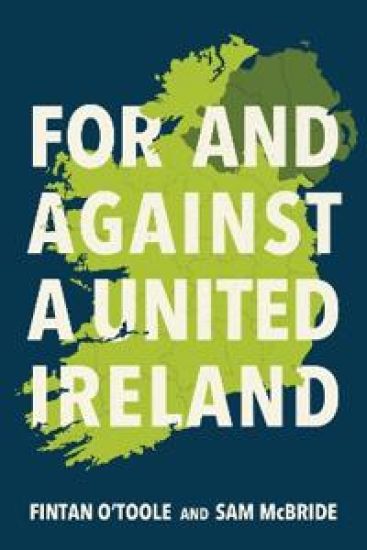
For and Against a United Ireland

For and Against a United Ireland

Sam McBride; Fintan O'Toole

UNIVERSITY OF NOTRE DAME PRESS
2026
nidottu
In For and Against a United Ireland, renowned journalists Fintan O'Toole and Sam McBride provide an accessible and measured approach to the polarized debate about Irish unification. The prospect of Irish unification is now stronger than at any point since partition in 1921. Voters on both sides of the Irish border may soon have to confront for themselves what the answer to a referendum question would mean—for themselves, for their neighbours, and for their society. Journalists Fintan O'Toole and Sam McBride examine the strongest arguments for and against a united Ireland. What do the words "united Ireland" even mean? Would it be better for Northern Ireland? Would it improve lives in the Republic of Ireland? And could it be brought about without bloodshed? O'Toole and McBride each argue the case for and against unity, questioning received wisdom and bringing fresh thinking to one of Ireland's most intractable questions.
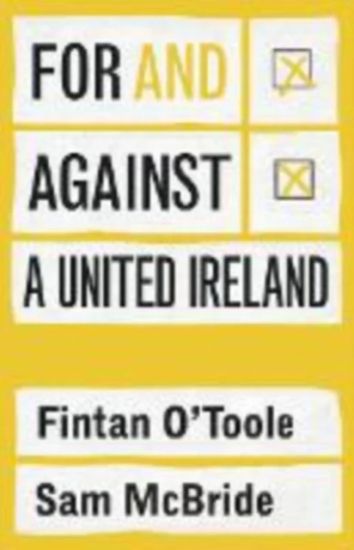
For and against a united Ireland

For and against a united Ireland

Fintan O'Toole; Sam McBride

ROYAL IRISH ACADEMY
2025
pokkari

Halvin toimitettuna 31,80 €

The prospect of Irish unification is now stronger than at any point since partition in 1921. Voters on both sides of the Irish border may soon have to confront for themselves what the answer to a referendum question would mean - for themselves, for their neighbours, and for their society. Journalists Fintan O'Toole and Sam McBride examine the strongest arguments for and against a united Ireland. What do the words 'united Ireland' even mean? Would it be better for Northern Ireland? Would it improve lives in the Republic of Ireland? And could it be brought about without bloodshed? O’Toole and McBride each argue the case for and against unity, questioning received wisdom and bringing fresh thinking to one of Ireland’s most intractable questions.
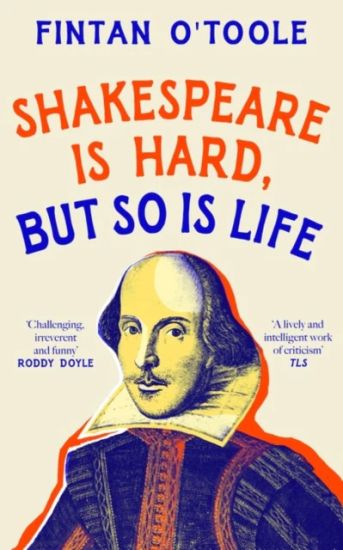
Shakespeare is Hard, but so is Life

Shakespeare is Hard, but so is Life

Fintan O'Toole

BLOOMSBURY PUBLISHING PLC
2025
nidottu

Halvin toimitettuna 16,20 €

The works of Shakespeare have become staples of literature. They are everywhere, from our early schooling to the lecture rooms of academia, from classic theatre to modern adaptations on stage and screen. But how well do we really know his plays? In this witty, iconoclastic book, the bestselling author Fintan O’Toole examines four of Shakespeare’s most enduring tragedies: Hamlet, Macbeth, Othello and King Lear. He shows how their tragic heroes have been over-simplified and moulded to fit restrictive, conservative values, and restores the true heart and spirit of the classics.'I've never read a book like this before: it's challenging, irreverent and funny.' Roddy Doyle
Shakespeare is Hard, but so is Life

Shakespeare is Hard, but so is Life

Fintan O'Toole

BLOOMSBURY PUBLISHING PLC
2024
sidottu
The works of Shakespeare have become staples of literature. They are everywhere, from our early schooling to the lecture rooms of academia, from classic theatre to modern adaptations on stage and screen. But how well do we really know his plays? In this witty, iconoclastic book, the bestselling author Fintan O’Toole examines four of Shakespeare’s most enduring tragedies: Hamlet, Macbeth, Othello and King Lear. He shows how their tragic heroes have been over-simplified and moulded to fit restrictive, conservative values, and restores the true heart and spirit of the classics.'I've never read a book like this before: it's challenging, irreverent and funny.' Roddy Doyle
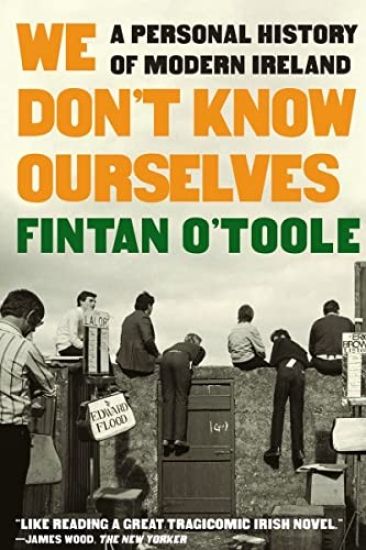
We Don't Know Ourselves: A Personal History of Modern Ireland

We Don't Know Ourselves: A Personal History of Modern Ireland

Fintan O'Toole

Liveright Publishing Corporation
2023
nidottu
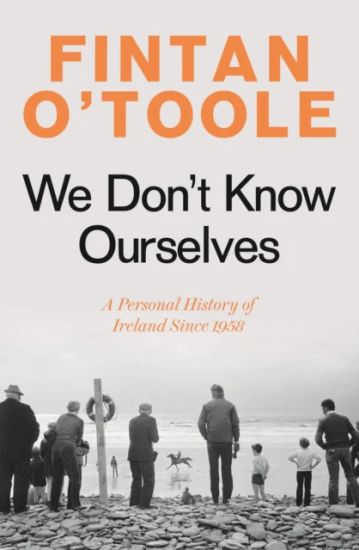
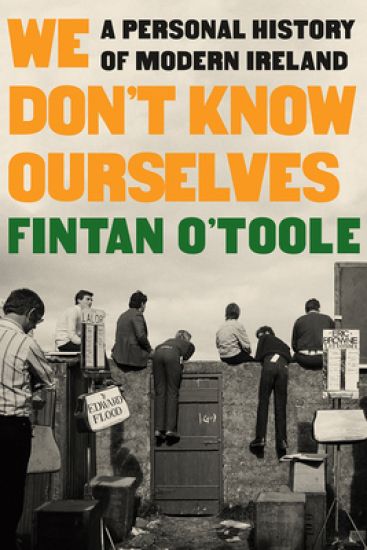
Fintan O'Toole was born in the year the revolution began. It was 1958, and the Irish government--in despair, because all the young people were leaving--opened the country to foreign investment and popular culture. So began a decades-long, ongoing experiment with Irish national identity. In We Don't Know Ourselves, O'Toole, one of the Anglophone world's most consummate stylists, weaves his own experiences into Irish social, cultural, and economic change, showing how Ireland, in just one lifetime, has gone from a reactionary "backwater" to an almost totally open society--perhaps the most astonishing national transformation in modern history. Born to a working-class family in the Dublin suburbs, O'Toole served as an altar boy and attended a Christian Brothers school, much as his forebears did. He was enthralled by American Westerns suddenly appearing on Irish television, which were not that far from his own experience, given that Ireland's main export was beef and it was still not unknown for herds of cattle to clatter down Dublin's streets. Yet the Westerns were a sign of what was to come. O'Toole narrates the once unthinkable collapse of the all-powerful Catholic Church, brought down by scandal and by the activism of ordinary Irish, women in particular. He relates the horrific violence of the Troubles in Northern Ireland, which led most Irish to reject violent nationalism. In O'Toole's telling, America became a lodestar, from John F. Kennedy's 1963 visit, when the soon-to-be martyred American president was welcomed as a native son, to the emergence of the Irish technology sector in the late 1990s, driven by American corporations, which set Ireland on the path toward particular disaster during the 2008 financial crisis. A remarkably compassionate yet exacting observer, O'Toole in coruscating prose captures the peculiar Irish habit of "deliberate unknowing," which allowed myths of national greatness to persist even as the foundations were crumbling. Forty years in the making, We Don't Know Ourselves is a landmark work, a memoir and a national history that ultimately reveals how the two modes are entwined for all of us.
We Don't Know Ourselves

We Don't Know Ourselves

Fintan O'Toole

BLOOMSBURY PUBLISHING PLC
2022
nidottu

Halvin toimitettuna 18,70 €

The #1 Irish Times bestseller WINNER of the An Post Irish Book Awards 'A clear-eyed, myth-dispelling masterpiece' Marian Keyes 'Sweeping, authoritative and profoundly intelligent' Colm Tóibín, Guardian 'With the pace and twists of an enthralling novel' Irish Times 'Evocative, moving, funny and furious' Dominic Sandbrook, Sunday Times 'An enthralling, panoramic book' Patrick Radden Keefe 'A book that will remain important for a very long time' An Post Irish Book AwardWe Don't Know Ourselves is a very personal vision of recent Irish history from the year of O'Toole's birth, 1958, down to the present. Ireland has changed almost out of recognition during those decades, and Fintan O'Toole's life coincides with that arc of transformation. The book is a brilliant interweaving of memories (though this is emphatically not a memoir) and engrossing social and historical narrative. This was the era of Eamon de Valera, Jack Lynch, Charles Haughey and John Charles McQuaid, of sectarian civil war in the North and the Pope's triumphant visit in 1979, but also of those who began to speak out against the ruling consensus – feminists, advocates for the rights of children, gay men and women coming out of the shadows. We Don't Know Ourselves is an essential book for anyone who wishes to understand modern Ireland.
We Don't Know Ourselves: A Personal History of Modern Ireland

We Don't Know Ourselves: A Personal History of Modern Ireland

Fintan O'Toole

Liveright Publishing Corporation
2022
sidottu
Fintan O'Toole was born in the year the revolution began. It was 1958, and the Irish government--in despair, because all the young people were leaving--opened the country to foreign investment and popular culture. So began a decades-long, ongoing experiment with Irish national identity. In We Don't Know Ourselves, O'Toole, one of the Anglophone world's most consummate stylists, weaves his own experiences into Irish social, cultural, and economic change, showing how Ireland, in just one lifetime, has gone from a reactionary "backwater" to an almost totally open society--perhaps the most astonishing national transformation in modern history. Born to a working-class family in the Dublin suburbs, O'Toole served as an altar boy and attended a Christian Brothers school, much as his forebears did. He was enthralled by American Westerns suddenly appearing on Irish television, which were not that far from his own experience, given that Ireland's main export was beef and it was still not unknown for herds of cattle to clatter down Dublin's streets. Yet the Westerns were a sign of what was to come. O'Toole narrates the once unthinkable collapse of the all-powerful Catholic Church, brought down by scandal and by the activism of ordinary Irish, women in particular. He relates the horrific violence of the Troubles in Northern Ireland, which led most Irish to reject violent nationalism. In O'Toole's telling, America became a lodestar, from John F. Kennedy's 1963 visit, when the soon-to-be martyred American president was welcomed as a native son, to the emergence of the Irish technology sector in the late 1990s, driven by American corporations, which set Ireland on the path toward particular disaster during the 2008 financial crisis. A remarkably compassionate yet exacting observer, O'Toole in coruscating prose captures the peculiar Irish habit of "deliberate unknowing," which allowed myths of national greatness to persist even as the foundations were crumbling. Forty years in the making, We Don't Know Ourselves is a landmark work, a memoir and a national history that ultimately reveals how the two modes are entwined for all of us.
Three Years in Hell

Three Years in Hell

Fintan O'Toole

Apollo
2021
nidottu
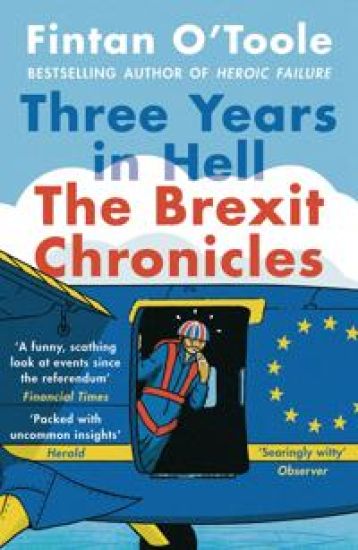
Three years in the troubled British Isles from the bestselling author of Heroic Failure. In 2011 Queen Elizabeth made her first ever state visit to the Irish Republic. It was a great, moving occasion. In settling once and for all its relationship with Ireland, Britain was also settling its relationship with the rest of the world, taking its place as a normal, equal democracy. It was not to last. Then came the 2016 referendum, and so beganThree Years in Hell
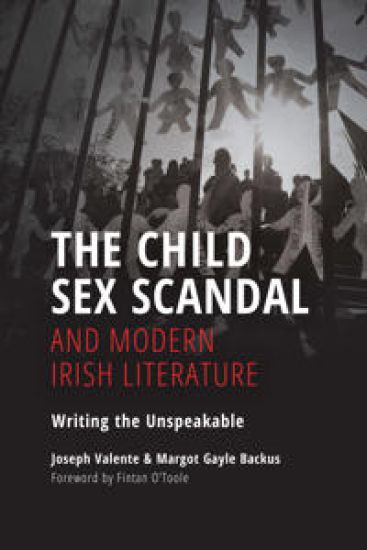
The Child Sex Scandal and Modern Irish Literature

The Child Sex Scandal and Modern Irish Literature

Joseph Valente; Margot Gayle Backus; Fintan O'Toole

Indiana University Press
2020
sidottu
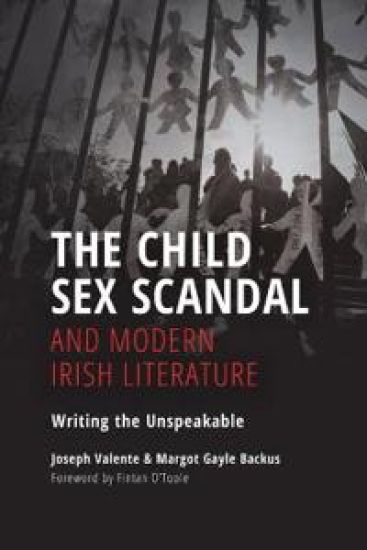
Even though the Irish child sex abuse scandals in the Catholic Church have appeared steadily in the media, many children remain in peril. In The Child Sex Scandal and Modern Irish Literature, Joseph Valente and Margot Gayle Backus examine modern cultural responses to child sex abuse in Ireland. Using descriptions of these scandals found in newspapers, historiographical analysis, and 20th- and 21st-century literature, Valente and Backus expose a public sphere ardently committed to Irish children's souls and piously oblivious to their physical welfare. They offer historically contextualized and psychoanalytically informed readings of scandal narratives by nine notable modern Irish authors who actively, pointedly, and persistently question Ireland's responsibilities regarding its children. Through close, critical readings, a more nuanced and troubling account emerges of how Ireland's postcolonial heritage has served to enable such abuse. The Child Sex Scandal and Modern Irish Literature refines the debates on why so many Irish children were lost by offering insight into the lived experience of both the children and those who failed them.
The Child Sex Scandal and Modern Irish Literature

The Child Sex Scandal and Modern Irish Literature

Joseph Valente; Margot Gayle Backus; Fintan O'Toole

Indiana University Press
2020
pokkari
Even though the Irish child sex abuse scandals in the Catholic Church have appeared steadily in the media, many children remain in peril. In The Child Sex Scandal and Modern Irish Literature, Joseph Valente and Margot Gayle Backus examine modern cultural responses to child sex abuse in Ireland. Using descriptions of these scandals found in newspapers, historiographical analysis, and 20th- and 21st-century literature, Valente and Backus expose a public sphere ardently committed to Irish children's souls and piously oblivious to their physical welfare. They offer historically contextualized and psychoanalytically informed readings of scandal narratives by nine notable modern Irish authors who actively, pointedly, and persistently question Ireland's responsibilities regarding its children. Through close, critical readings, a more nuanced and troubling account emerges of how Ireland's postcolonial heritage has served to enable such abuse. The Child Sex Scandal and Modern Irish Literature refines the debates on why so many Irish children were lost by offering insight into the lived experience of both the children and those who failed them.
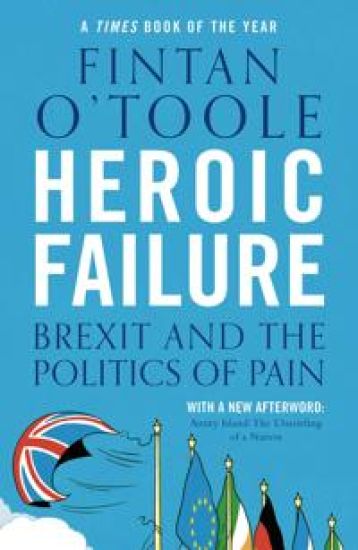
Heroic Failure

Heroic Failure

Fintan O'Toole

Apollo
2019
nidottu
'A wildly entertaining but uncomfortable read... Pitilessly brilliant' JONATHAN COE. 'There will not be much political writing in this or any other year that is carried off with such style' The Times. A TIMES BOOK OF THE YEAR. 'A quite brilliant dissection of the cultural roots of the Brexit narrative' David Miliband. 'Hugely entertaining and engrossing' Roddy Doyle. 'Best book about the English that I've read for ages' Billy Bragg. A fierce, mordantly funny and perceptive book about the act of national self-harm known as Brexit. A great democratic country tears itself apart, and engages in the dangerous pleasures of national masochism. Trivial journalistic lies became far from trivial national obsessions; the pose of indifference to truth and historical fact came to define the style of an entire political elite; a country that once had colonies redefined itself as an oppressed nation requiring liberation. Fintan O'Toole also discusses the fatal attraction of heroic failure, once a self-deprecating cult in a hugely successful empire that could well afford the occasional disaster. Now failure is no longer heroic – it is just failure, and its terrible costs will be paid by the most vulnerable of Brexit's supporters. A new afterword lays out the essential reforms that are urgently needed if England is to have a truly democratic future and stable relations with its nearest neighbours.
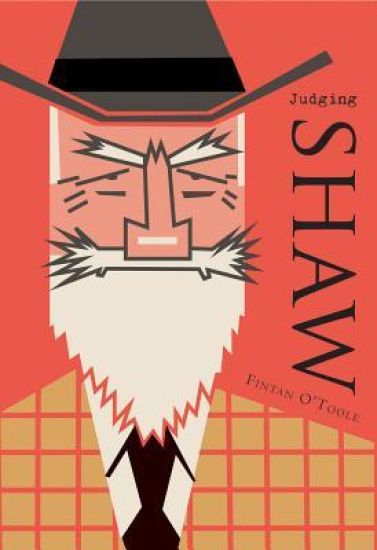
Judging Shaw

Judging Shaw

Fintan O'Toole

Royal Irish Academy
2017
sidottu
GBS was the first great brand – discover how he created this most modern of concepts. The fourth book in the Royal Irish Academy’s award-winning ‘Judging’ series looks at the legacy of George Bernard Shaw, Nobel prizewinner for literature. George Bernard Shaw has left a vast legacy of theatrical, fictional, polemical, critical and philosophical writing. The first person to win both a Nobel Prize and an Academy Award, Shaw bridges the Victorian era and the contemporary culture of celebrity. The GBS brand came to be recognised globally as referring to an Irish provocateur with a red beard and startling opinions. He was a master of self-invention, a nobody who captured the zeitgeist and one of the first private individuals to understand fully how to generate—and how to use—global fame. The timing of Judging Shaw is fortuitous, as it will serve to reintroduce GBS to an Irish and international readership. The book is an interesting, informative, and well-written survey of Shaw/GBS and will be a welcome addition to the library of those who know Bernard Shaw perhaps only as the author of Pygmalion, his most popular and frequently performed play.
Caledonian Dreaming

Caledonian Dreaming

Gerry Hassan; Fintan O'Toole

Luath Press Ltd
2014
pokkari
Caledonian Dreaming examines the state of contemporary Scotland, the independence referendum, and its wider consequences. In this short, accessible book, Hassan challenges the myths that define modern Scotland and its place in the United Kingdom. He forensically examines the shortcomings of Scottish society – from the ‘missing Scotland’ of voters disconnected from public life to the collusion of Labour and SNP on most issues bar independence. He argues that Scotland has the potential to become a modern, progressive, democratic country – aided by the creative energies and passions unleashed by the independence question.
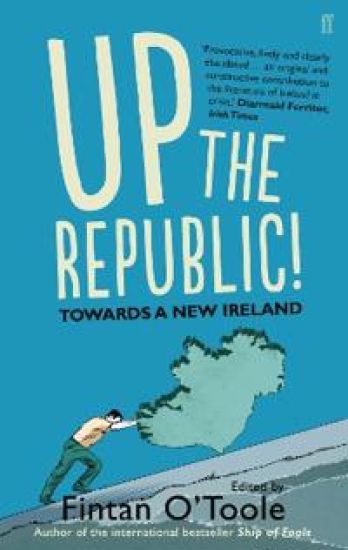
Up the Republic!

Up the Republic!

Fintan O'Toole

Faber Faber
2013
pokkari
In this important book, historians, lawyers, economists and writers come together to put a coherent case: that although the Irish economic collapse has resulted in national humiliation, renewed emigration and a decline in living standards for the majority of the population, there is still hope that the country can be reformed and renewed. Irish politicians offered the now notorious blanket guarantee to all the banks which had got in over their heads during the great property bubble - including one that had become little more than a criminal enterprise. A different set of politicians grimly enforces the consequences of that guarantee, locking an entire generation of Irish men and women into paying for the mistakes of greedy bankers and their corrupt friends in government. The energy of hope has to come from elsewhere. These essays demonstrate how simple measures and different economic and social policies could release that energy and fulfil the promise of an educated, literate and culturally vibrant people.
A History of Ireland in 100 Objects

A History of Ireland in 100 Objects

Fintan O'Toole

Royal Irish Academy
2013
sidottu
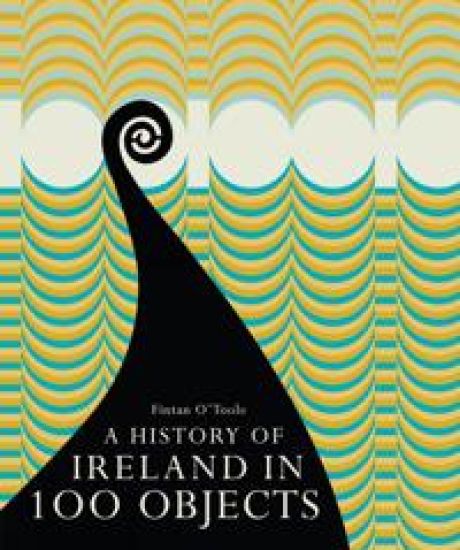
This book takes 100 objects and explores their significance in shaping Ireland. Photographs are accompanied by a concise and insightful story that shows the social, political and artistic vitality of each object. Beginning with Mesolithic Ireland and ending in 2005, ornamental treasures such as the Book of Kells, the magnificent 8th century Ardagh Chalice and a chair by modernist furniture designer Eileen Gray are given equal importance as pieces such as the bloodstained shirt of Irish revolutionary James Connolly, a 1950s washing machine and the letters from the Anglo Irish Bank sign which were dismantled in 2011. The concept for this book came from a series in the Irish Times by columnist, writer and literary editor Fintan O’Toole, who also writes the robust introduction to the book.
Enough is Enough

Enough is Enough

Fintan O'Toole

Faber Faber
2011
pokkari
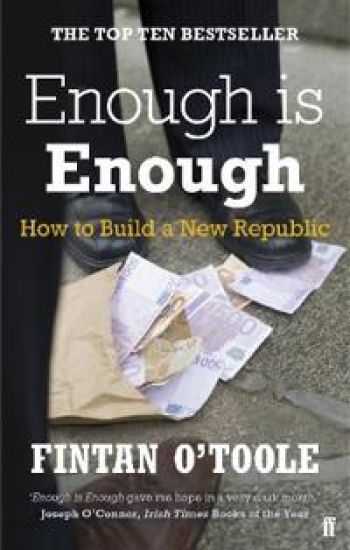
The Republic of Ireland, which declared itself in 1949, allowed the Catholic Church to dominate its civil society and education system. Investment by American and European companies, and a welcoming tax regime, created the 'Celtic Tiger' of the 1990s. That brief burst of good fortune was destroyed by a corrupt political class which encouraged a wild property boom, leaving the country almost bankrupt. What Ireland needs now is a programme of real change. It needs to become a fully modern republic in fact as well as name. Politicians have been let get away with murder, and there is a fatalistic sense that nothing can change. The country needs to encourage participation in, and oversight and knowledge of politics, to make people feel that they have a right to challenge the old party machines and to make a difference. It is their country, after all.
Ship of Fools

Ship of Fools

Fintan O'Toole

Faber Faber
2010
pokkari

Halvin toimitettuna 23,90 €

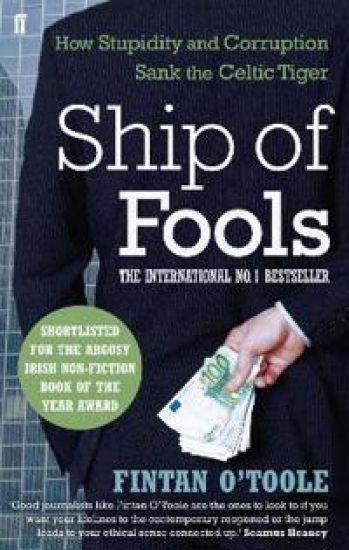
For twenty years, Ireland's economic miracle was supposed to be the envy of the world. Low taxes, light regulation and an 'anything goes' attitude seemed to have created boundless prosperity. And then, as in Iceland, the glittering palaces vanished in the heat of the global financial meltdown. For years, those with economic power had been investing in a gigantic property bubble. In Ship of Fools Fintan O'Toole tells the story of this dizzying rise and sickening fall. Ireland may have had a tiger economy, but those in charge of it had not lost their taste for sweetheart deals, back-handers and bribery. This is the essential analysis of Ireland's economic suicide.
Ship of Fools

Ship of Fools

Fintan O'Toole

PublicAffairs,U.S.
2010
sidottu
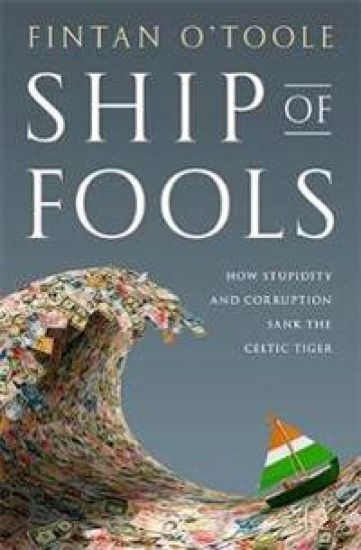
The death of the Celtic tiger is not an extinction event to trouble naturalists. There was, in fact nothing natural about this tiger, if it ever really existed. The"Irish Economic miracle” was built on good old-fashioned subsidies (from the European Union) and the simple fact that until the 1980s Ireland was by the standards of the developed world so economically backward that the only way was up. And as it began to catch up to European and American averages, the Irish economy could boast some seemingly remarkable statistics. These lured in investors, the Irish deregulated and all but abandoned financial oversight, and a great Irish financial ceilidh began. It would last for a decade. When the global financial crash of 2008 arrived it struck Ireland harder than anywhere-even Iceland looked like a model of rectitude compared to the fiasco that stretched from Cork to Dublin. There was an avalanche of statistics as toxic as the property-based assets that lay beneath many of them: type="disc" The International Monetary Fund was predicting that Ireland's Gross Domestic Product (GDP) would shrink by 13.5 per cent in 2009 and 2010-the worst performance among all the advanced economies and one of the worst ever recorded in peacetime in the developed world. type="disc" Government debt almost doubled in a year. type="disc" In May 2008, &euro13.5 million was paid for a 450-acre farm in Warrenstown, County Meath-one of the highest prices ever paid for agricultural land anywhere in the world. By 2009 the level of debt among Irish households and companies was the highest in the European Union. type="disc" The country's gross indebtedness was larger than Japan's, which has thirty times the population. type="disc" Between 1994 and 2006, the average second-hand house price in Dublin increased from &euro82,772 to &euro512,461-a rise of 519 per cent. By 2009 Irish house prices had fallen more rapidly than any others in Europe. type="disc" With a fifth of its office spaces empty, Dublin had the highest vacancy rate of any European capital and was rated as having the worst development and investment potential of twenty-seven European cities. type="disc" The Irish stock exchange fell by 68 per cent in 2008 type="disc" The average Irish family had lost almost half its financial assets type="disc" Unemployment rose faster than in any other Western European country, increasing by 85 per cent in a year. type="disc" Ireland's bad bank, the National Assets Management Agency (Nama), which had to take over &euro90 billion in loans to developers from banks that would otherwise be insolvent holds more assets [sic] than any publicly quoted property company in the world, dwarfing giants such as GE Capital Real Estate and Morgan Stanley Real Estate, which own assets of &euro60 billion and &euro48 billion respectively. And under all this rubble lay the corpse of the Celtic Tiger. How Ireland managed to achieve such a spectacular implosion is a stunning story of corruption, carelessness and venality, told with passion and fury by one of Ireland's most respected journalists and commentators.