Kirjojen hintavertailu – 12 859 828 kirjaa ja 27 kauppaa

Kirjailija

Fiona Kelly

Kirjat ja teokset yhdessä paikassa: 7 kirjaa, julkaisuja vuosilta 2011–2025, suosituimpiin kuuluu Key Issues in Evolving Dementia Care. Vertaile teosten hintoja ja tarkista saatavuus suomalaisista kirjakaupoista.

7 kirjaa

Kirjojen julkaisuvuodet: 2011–2025.

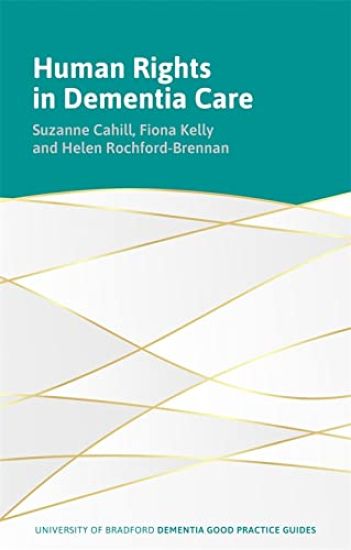
Human Rights in Dementia Care

Human Rights in Dementia Care

Suzanne Cahill; Fiona Kelly; Helen Rochford-Brennan

JESSICA KINGSLEY PUBLISHERS
2025
pokkari
Human rights are a key issue for all healthcare and social care practitioners, and almost every aspect of dementia care has a human rights dimension. How can we balance the individual's right for dignity, autonomy and privacy against the backdrop of time constraints, duty of care and limited resources? Can a person with dementia be supported to participate in decision making? Is assistive technology always empowering? What must it feel like to be denied a dementia- specific service because of one's age? This practice guide addresses these along with other critical questions, helping you to better understand the diverse and often complex dimensions of dementia caregiving. It provides a new framework to enable you to apply a human rights approach to real life situations, placing the person with dementia at the centre stage and keeping their dignity, independence, sense of purpose and quality of life at the fore. The book builds on person-centred principles, uses case studies to demonstrate theory and provides new analytical tools to support all those committed to best practice in dementia care.
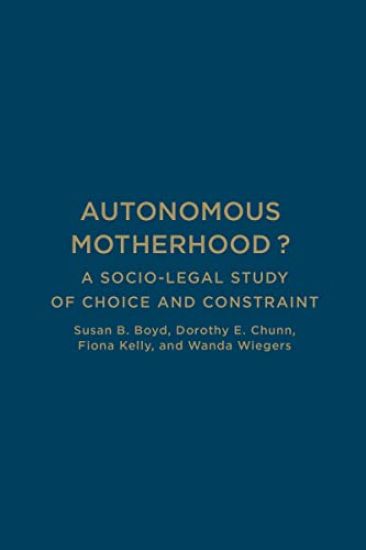
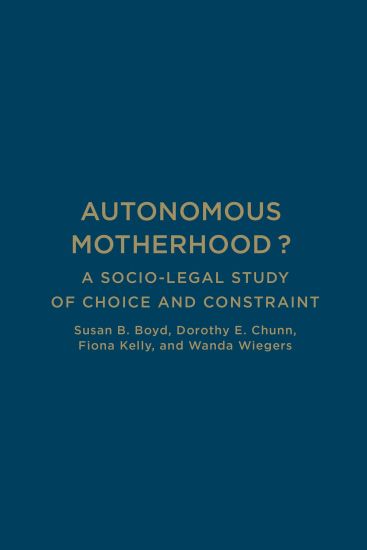
Autonomous Motherhood?

Autonomous Motherhood?

Susan B. Boyd; Dorothy E. Chunn; Fiona Kelly; Wanda Wiegers

University of Toronto Press
2015
sidottu
Since the end of the Second World War, increasing numbers of women have decided to become mothers without intending the biological father or a partner to participate in parenting. Many conceive via donor insemination or adopt; others become pregnant after a brief sexual relationship and decide to parent alone. Using a feminist socio-legal framework, Autonomous Motherhood? probes fundamental assumptions within the law about the nature of family and parenting. Drawing on a range of empirical evidence, including legislative history, case studies, and interviews with single mothers, the authors conclude that while women may now have the economic and social freedom to parent alone, they must still negotiate a socio-legal framework that suggests their choice goes against the interests of society, fatherhood, and children.
Autonomous Motherhood?

Autonomous Motherhood?

Susan B. Boyd; Dorothy E. Chunn; Fiona Kelly; Wanda Wiegers

University of Toronto Press
2015
pokkari
Since the end of the Second World War, increasing numbers of women have decided to become mothers without intending the biological father or a partner to participate in parenting. Many conceive via donor insemination or adopt; others become pregnant after a brief sexual relationship and decide to parent alone. Using a feminist socio-legal framework, Autonomous Motherhood? probes fundamental assumptions within the law about the nature of family and parenting. Drawing on a range of empirical evidence, including legislative history, case studies, and interviews with single mothers, the authors conclude that while women may now have the economic and social freedom to parent alone, they must still negotiate a socio-legal framework that suggests their choice goes against the interests of society, fatherhood, and children.
Australian Family Law: The Contemporary Context

Australian Family Law: The Contemporary Context

Belinda Fehlberg; Rae Kaspiew; Jenni Millbank; Fiona Kelly; Juliet Behrens

OUP Australia and New Zealand
2014
nidottu
Australian Family Law: The Contemporary Context 2nd Edition encourages critical thinking and a wide understanding of contemporary Australian family law. Description and analysis of the law is set in a broad context that includes policy debates surrounding the law and the family as well as discussion of relevant empirical and research literature. Recent years have seen a burgeoning of empirical research relevant to family law and policy, and this research enables the authors to convey a rich sense of the law in action, social norms (both attitudes and behaviours), and the contexts of the field. This second edition has been comprehensively updated to reflect the latest changes in family law. It continues to take a thematic approach, and its use of interdisciplinary materials presents the substantive law in a highly contextualised way. This new edition includes a separate chapter on financial disputes, and expanded coverage of parenting and property disputes.
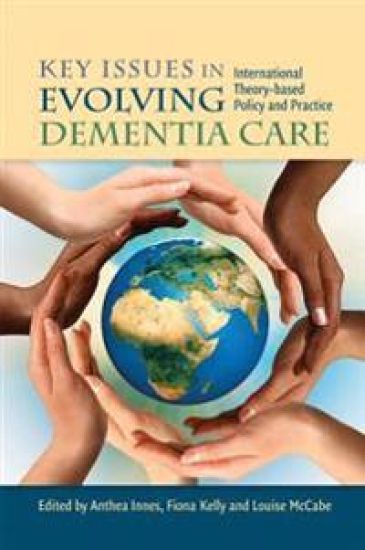
Key Issues in Evolving Dementia Care

Key Issues in Evolving Dementia Care

Anthea Innes; Fiona Kelly; Louise McCabe; June Andrews

Jessica Kingsley Publishers
2012
pokkari
Focusing on theoretical, policy and practice issues which are increasingly identified as key priorities, the contributors to this important book examine the ways in which dementia care is evolving around the globe. They explore the latest theory underpinning dementia care, the applications of this theory in dementia care research and how this research is influencing and shaping practice. Written by practitioners, policy influencers and researchers who draw on case studies from the UK, the USA, Canada, Australia, France, India and Malta, the book forms the basis for a worldwide dialogue of interdisciplinary initiatives and ideas. Insights into how policy and regional and national dementia strategies are developed, and the range of innovative approaches that can be taken in practice, mark a positive step towards ensuring that the needs of people with dementia around the world are met, both now and in the future. This book makes essential reading for practitioners, researchers, policy makers and students in the field of dementia care.
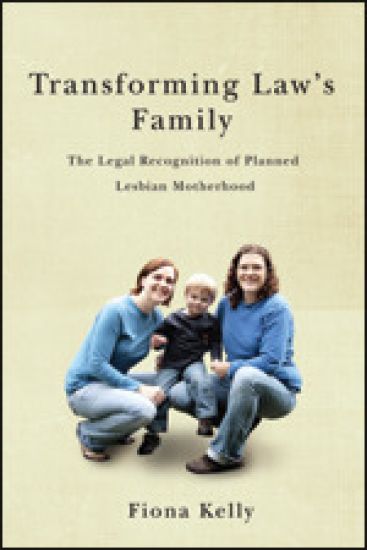
Transforming Law's Family

Transforming Law's Family

Fiona Kelly

University of British Columbia Press
2012
pokkari
In the past few decades, gays and lesbians, along with theirfamilies, have become more visible members of Canadian society,enjoying increasing levels of legal recognition. In the area of legalparenthood, however, significant questions remain unanswered. InTransforming Law's Family, Fiona Kelly explores thecomplex issues encountered by planned lesbian families as they work todefine their parental rights, roles, and family structures within thetenets of family law. While Canadian courts recognize lesbian parenthood in somecircumstances, a number of issues that are largely unique to plannedlesbian families – such as the legal status of known spermdonors and non-biological mothers – persist. Drawing oninterviews with lesbian mothers, this groundbreaking book illuminatesthe changing definitions of family and suggests a model for law reformthat would enable the legal recognition of alternative forms ofparentage. The first empirical study in Canada to address the legal dimensions ofplanned lesbian families, this book makes an important contribution tofamily law, queer studies, and law reform literature.
Transforming Law's Family

Transforming Law's Family

Fiona Kelly

University of British Columbia Press
2011
sidottu
In the past few decades, gays and lesbians, along with theirfamilies, have become more visible members of Canadian society,enjoying increasing levels of legal recognition. In the area of legalparenthood, however, significant questions remain unanswered. InTransforming Law's Family, Fiona Kelly explores thecomplex issues encountered by planned lesbian families as they work todefine their parental rights, roles, and family structures within thetenets of family law. While Canadian courts recognize lesbian parenthood in somecircumstances, a number of issues that are largely unique to plannedlesbian families – such as the legal status of known spermdonors and non-biological mothers – persist. Drawing oninterviews with lesbian mothers, this groundbreaking book illuminatesthe changing definitions of family and suggests a model for law reformthat would enable the legal recognition of alternative forms ofparentage. The first empirical study in Canada to address the legal dimensions ofplanned lesbian families, this book makes an important contribution tofamily law, queer studies, and law reform literature.