Kirjojen hintavertailu – 12 903 725 kirjaa ja 27 kauppaa

Kirjailija

Fiona R. Cameron

Kirjat ja teokset yhdessä paikassa: 6 kirjaa, julkaisuja vuosilta 2021–2023, suosituimpiin kuuluu Museum Practices and the Posthumanities. Vertaile teosten hintoja ja tarkista saatavuus suomalaisista kirjakaupoista.

6 kirjaa

Kirjojen julkaisuvuodet: 2021–2023.

Museum Practices and the Posthumanities

Museum Practices and the Posthumanities

Fiona R. Cameron

Routledge
2023
sidottu

Halvin toimitettuna 228,60 €

This book critiques modern museologies and curatorial practices that have been complicit in emerging existential crises. It confidently presents novel, more-than-human curatorial visions, methods, frameworks, policies, and museologies radically refiguring the epistemological foundations of curatorial, museological thinking, and practice for a habitable planet. Modern curatorial and museological practices are dominated by modern humanism in which capital growth, social, technological advancement, hubris, extraction, speciest logics, and colonial domination predominate, often without reflection. While history, science, and technology museums and their engagement with non-human worlds have always been ecological as an empirical reality, the human-centred frameworks and forms of human agency that institutions deploy tend to be non-cognizant of this reality. Museum Practices and the Posthumanities: Curating for Planetary Habitability reveals how these practices are ill-equipped to deal with the contemporary world of rapid digital transformations, post-Covid living, climate change, and its impacts among other societal changes, and it shows how museums might best meet these challenges by thinking with and in more-than-human worlds. This book is aimed at museological scholars and museum professionals, and it will provide them with the inspiration to conduct research on and curate from a different ecological reference point to promote a world good enough for all things to thrive in radical co-existence.
Museum Practices and the Posthumanities

Museum Practices and the Posthumanities

Fiona R. Cameron

Routledge
2023
nidottu

Halvin toimitettuna 51,60 €

This book critiques modern museologies and curatorial practices that have been complicit in emerging existential crises. It confidently presents novel, more-than-human curatorial visions, methods, frameworks, policies, and museologies radically refiguring the epistemological foundations of curatorial, museological thinking, and practice for a habitable planet. Modern curatorial and museological practices are dominated by modern humanism in which capital growth, social, technological advancement, hubris, extraction, speciest logics, and colonial domination predominate, often without reflection. While history, science, and technology museums and their engagement with non-human worlds have always been ecological as an empirical reality, the human-centred frameworks and forms of human agency that institutions deploy tend to be non-cognizant of this reality. Museum Practices and the Posthumanities: Curating for Planetary Habitability reveals how these practices are ill-equipped to deal with the contemporary world of rapid digital transformations, post-Covid living, climate change, and its impacts among other societal changes, and it shows how museums might best meet these challenges by thinking with and in more-than-human worlds. This book is aimed at museological scholars and museum professionals, and it will provide them with the inspiration to conduct research on and curate from a different ecological reference point to promote a world good enough for all things to thrive in radical co-existence.
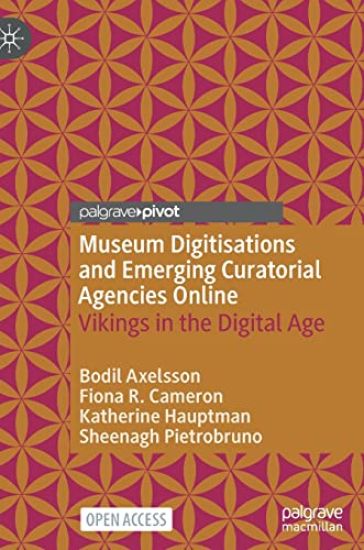
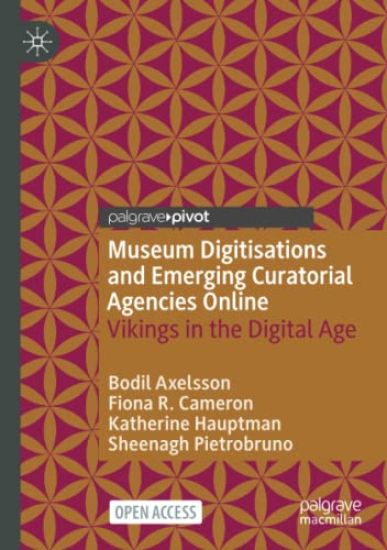
Museum Digitisations and Emerging Curatorial Agencies Online

Museum Digitisations and Emerging Curatorial Agencies Online

Bodil Axelsson; Fiona R. Cameron; Katherine Hauptman; Sheenagh Pietrobruno

Springer Nature Switzerland AG
2022
sidottu
This open access book explores the multiple forms of curatorial agencies that develop when museum collection digitisations, narratives and new research findings circulate online. Focusing on Viking Age objects, it tracks the effects of antagonistic debates on discussion forums and the consequences of search engines, personalisation, and machine learning on American-based online platforms. Furthermore, it considers eco-systemic processes comprising computation, rare-earth minerals, electrical currents and data centres and cables as novel forms of curatorial actions. Thus, it explores curatorial agency as social constructivist, semiotic, algorithmic, and material. This book is of interest to scholars and students in the fields of museum studies, cultural heritage and media studies. It also appeals to museum practitioners concerned with curatorial innovation at the intersection of humanist interpretations and new materialist and more-than-human frameworks.
Museum Digitisations and Emerging Curatorial Agencies Online

Museum Digitisations and Emerging Curatorial Agencies Online

Bodil Axelsson; Fiona R. Cameron; Katherine Hauptman; Sheenagh Pietrobruno

Springer Nature Switzerland AG
2022
nidottu
This open access book explores the multiple forms of curatorial agencies that develop when museum collection digitisations, narratives and new research findings circulate online. Focusing on Viking Age objects, it tracks the effects of antagonistic debates on discussion forums and the consequences of search engines, personalisation, and machine learning on American-based online platforms. Furthermore, it considers eco-systemic processes comprising computation, rare-earth minerals, electrical currents and data centres and cables as novel forms of curatorial actions. Thus, it explores curatorial agency as social constructivist, semiotic, algorithmic, and material. This book is of interest to scholars and students in the fields of museum studies, cultural heritage and media studies. It also appeals to museum practitioners concerned with curatorial innovation at the intersection of humanist interpretations and new materialist and more-than-human frameworks.
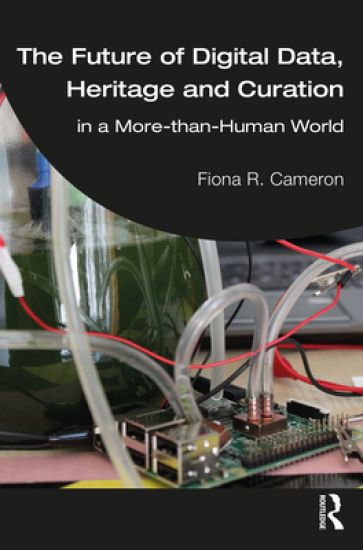
The Future of Digital Data, Heritage and Curation

The Future of Digital Data, Heritage and Curation

Fiona R. Cameron

Routledge
2021
nidottu

Halvin toimitettuna 53,40 €

The Future of Digital Data, Heritage and Curation critiques digital cultural heritage concepts and their application to data, developing new theories, curatorial practices and a more-than-human museology for a contemporary and future world. Presenting a diverse range of case examples from around the globe, Cameron offers a critical and philosophical reflection on the ways in which digital cultural heritage is currently framed as societal data worth passing on to future generations in two distinct forms: digitally born and digitizations. Demonstrating that most perceptions of digital cultural heritage are distinctly western in nature, the book also examines the complicity of such heritage in climate change, and environmental destruction and injustice. Going further still, the book theorizes the future of digital data, heritage, curation and the notion of the human in the context of the profusion of new types of societal data and production processes driven by the intensification of data economies and through the emergence of new technologies. In so doing, the book makes a case for the development of new types of heritage that comprise AI, automated systems, biological entities, infrastructures, minerals and chemicals – all of which have their own forms of agency, intelligence and cognition. The Future of Digital Data, Heritage and Curation is essential reading for academics and students engaged in the study of museums, archives, libraries, galleries, archaeology, cultural heritage management, information management, curatorial studies and digital humanities.
The Future of Digital Data, Heritage and Curation
The Future of Digital Data, Heritage and Curation critiques digital cultural heritage concepts and their application to data, developing new theories, curatorial practices and a more-than-human museology for a contemporary and future world. Presenting a diverse range of case examples from around the globe, Cameron offers a critical and philosophical reflection on the ways in which digital cultural heritage is currently framed as societal data worth passing on to future generations in two distinct forms: digitally born and digitizations. Demonstrating that most perceptions of digital cultural heritage are distinctly western in nature, the book also examines the complicity of such heritage in climate change, and environmental destruction and injustice. Going further still, the book theorizes the future of digital data, heritage, curation and the notion of the human in the context of the profusion of new types of societal data and production processes driven by the intensification of data economies and through the emergence of new technologies. In so doing, the book makes a case for the development of new types of heritage that comprise AI, automated systems, biological entities, infrastructures, minerals and chemicals – all of which have their own forms of agency, intelligence and cognition. The Future of Digital Data, Heritage and Curation is essential reading for academics and students engaged in the study of museums, archives, libraries, galleries, archaeology, cultural heritage management, information management, curatorial studies and digital humanities.