Kirjojen hintavertailu – 12 859 827 kirjaa ja 27 kauppaa

Kirjailija

Fiona Williams

Kirjat ja teokset yhdessä paikassa: 13 kirjaa, julkaisuja vuosilta 1989–2025, suosituimpiin kuuluu The Flâneuse. Vertaile teosten hintoja ja tarkista saatavuus suomalaisista kirjakaupoista.

13 kirjaa

Kirjojen julkaisuvuodet: 1989–2025.

The House of Broken Bricks

The House of Broken Bricks

Fiona Williams

Holt Paperbacks
2025
nidottu
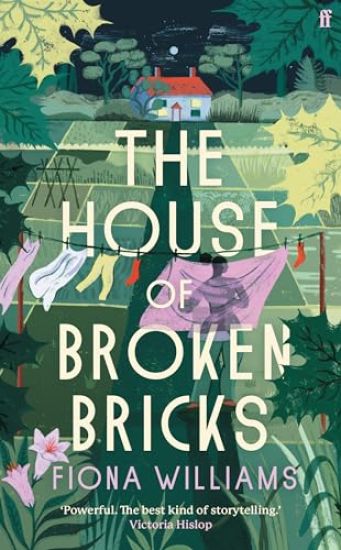
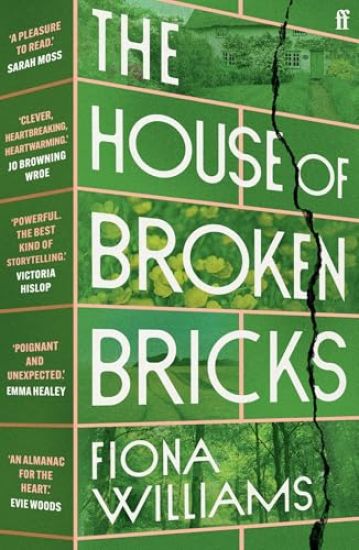
Every marriage has its seasons... It's autumn when we meet Tess, but her relationship with Richard is in a deep, cold winter. A winter so harsh, their union may never see the bright light of spring. Tess is a Londoner whose relationship with Richard transports her from a Jamaican diaspora in the city to the English countryside, where predatory birds hover over fields, buses run twice a day, neighbors barter honey for cider, and no one looks like her. As Tess and Richard settle in, the dramatic arrival of their fraternal twins--one who presents as black and the other as white--recasts the family dynamic, stirring up complicated feelings and questions of belonging. Tess yearns for the comforting chaos of life as it once was, instead of Max and Sonny tracking dirt through the kitchen where cooking Caribbean food becomes her sole comfort. And Richard obsesses over getting his crops planted rather than deal with the conversation he cannot bear to have. In Fiona Williams' quartet of unforgettable, alternating perspectives, secrets and vines clamber over the house's broken red bricks, and although its inhabitants seem to be withering, Sonny knows that something is stirring. . . . As the seasons change and the cracks let in more light, the family might just be able to start to heal.
The House of Broken Bricks

The House of Broken Bricks

Fiona Williams

FABER FABER
2025
nidottu

Halvin toimitettuna 18,90 €

AN INDEPENDENT BEST BOOK OF 2024'Beautifully written.' Prima'An almanac for the heart.' EVIE WOODS, author of The Lost Bookshop'Tender and powerful.' Observer'A pleasure to read.'SARAH MOSS, author of Ghost WallIf every marriage has its seasons, Richard and Tess's is in a deep winter. As day breaks over the Somerset Levels, Tess watches the chamomile clouds part. This morning, two sunrises graze the frosted floodplains: one rises low over a stretch of willows, while the other shines brightly from beneath the water. The light paints the house a startling crimson: a painful beauty that Tess, Richard and their son Max - riddled with grief - find easy to ignore. But none of them can ignore Sonny, who desperately wants things to go back to the way they were before. As the seasons change, and the cracks in the bricks let in more light, might this broken family find a way to start to heal? Readers love The House of Broken Bricks:'Gorgeously written, lyrical, atmospheric and emotional.' @readingnpainting'Brilliant story, a joy to read, couldn't put it down.' @lucy.reads.a.lot'A masterpiece! Beautifully written, a brilliant debut novel.' @the_postcard_edit 'Heartwarming and heartbreaking. Tender and shocking. A joy to read.' @suzannahslibrary'Absolutely spot-on in how it portrays children's emotional intuition, this is a beaut of a book.'
The House of Broken Bricks

The House of Broken Bricks

Fiona Williams

Henry Holt Company
2024
sidottu
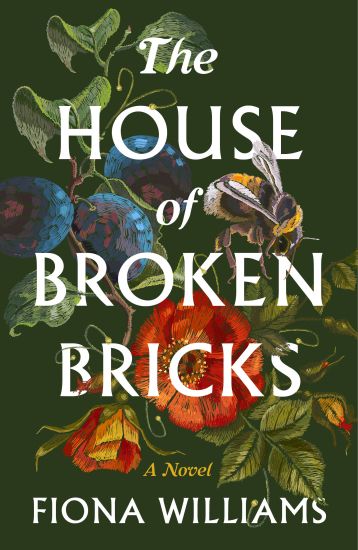
Every marriage has its seasons... It's autumn when we meet Tess, but her relationship with Richard is in a deep, cold winter. A winter so harsh, their union may never see the bright light of spring. Tess is a Londoner whose relationship with Richard transports her from a Jamaican diaspora in the city to the English countryside, where predatory birds hover over fields, buses run twice a day, neighbors barter honey for cider, and no one looks like her. As Tess and Richard settle in, the dramatic arrival of their fraternal twins--one who presents as black and the other as white--recasts the family dynamic, stirring up complicated feelings and questions of belonging. Tess yearns for the comforting chaos of life as it once was, instead of Max and Sonny tracking dirt through the kitchen where cooking Caribbean food becomes her sole comfort. And Richard obsesses over getting his crops planted rather than deal with the conversation he cannot bear to have. In Fiona Williams' quartet of unforgettable, alternating perspectives, secrets and vines clamber over the house's broken red bricks, and although its inhabitants seem to be withering, Sonny knows that something is stirring. . . . As the seasons change and the cracks let in more light, the family might just be able to start to heal.
The House of Broken Bricks

The House of Broken Bricks

Fiona Williams

FABER FABER
2024
sidottu
'An almanac for the heart.' EVIE WOODS, author of The Lost Bookshop'Haunting prose that cracks the English pastoral novel and lets the darkness in. A pleasure to read.'SARAH MOSS, author of Ghost Wall'A clever, heartbreaking, heartwarming depiction of family love, grief and the possibility of hope.'JO BROWNING WROE, author of A Terrible Kindness'Poignant and unexpected . . . brave and subtle.'EMMA HEALEY, author of Elizabeth is Missing'Wonderful . . . brave in its deep truths about loss and love.'INGRID PERSAUD, author of Love After LoveAin't nothing wrong with being broken. Nothing at all. You're like these houses, not a whole brick in em and look how strong they are. As Tess traces the sunrise over the floodplains, light that paints the house a startling crimson, she yearns for the comforting chaos of life as it once was. Instead of Max and Sonny tracking dirt through the kitchen - Tess and Richard's 'rainbow twins' - Tess absorbs the quiet. The nights draw in, the soil cools and Richard fights to get his winter crops planted rather than deal with the discussion he cannot bear to have. Secrets and vines clamber over the broken red bricks and although its inhabitants seem to be withering, in the damp, crumbling soil Sonny knows that something is stirring . . . As the seasons change, and the cracks let in more light, the family might just be able to start to heal. This is the story of a broken family, what they see and what they cannot say laid bare in their overlapping perspectives. It is a tale of life in the cracks, because in the space for acceptance, of passing and of laying to rest, the possibilities of new energy, light and love, are seeded. Readers love The House of Broken Bricks:'Gorgeously written, lyrical, atmospheric and emotional.' @readingnpainting'Brilliant story, a joy to read, couldn't put it down.' @lucy.reads.a.lot'A masterpiece! Beautifully written, a brilliant debut novel.' @the_postcard_edit 'Heartwarming and heartbreaking. Tender and shocking. A joy to read.' @suzannahslibrary'Absolutely spot-on in how it portrays children's emotional intuition, this is a beaut of a book.'

The House of Broken Bricks

The House of Broken Bricks

Fiona Williams

FABER FABER
2024
pokkari
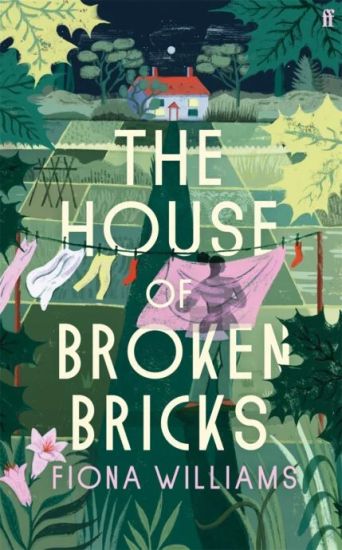
**AVAILABLE FOR PRE-ORDER NOW** 'Shocking and powerful. . . This is the best kind of story telling - characters I genuinely care about, and a narrative that demands to be followed.' VICTORIA HISLOP Ain't nothing wrong with being broken. Nothing at all. You're like these houses, not a whole brick in em and look how strong they are. As Tess traces the sunrise over the floodplains, light that paints the house a startling crimson, she yearns for the comforting chaos of life as it once was. Instead of Max and Sonny tracking dirt through the kitchen - Tess and Richard's 'rainbow twins' - Tess absorbs the quiet. The nights draw in, the soil cools and Richard fights to get his winter crops planted rather than deal with the discussion he cannot bear to have. Secrets and vines clamber over the broken red bricks and although its inhabitants seem to be withering, in the damp, crumbling soil - Sonny knows it - something is stirring . . . As the seasons change, and the cracks let in more light, the family might just be able to start to heal. This is the story of a broken family, what they see and what they cannot say laid bare in their overlapping perspectives. It is a tale of life in the cracks, because in the space for acceptance, of passing and of laying to rest, the possibilities of new energy, light and love, are seeded.
Social Policy

Social Policy

Fiona Williams

Polity Press
2021
sidottu
Welfare states face profound challenges. Widening economic and social inequalities have been intensified by austerity politics, sharpened by the rise in ethno-nationalism and exposed by the COVID-19 pandemic. At the same time, recent decades have seen a resurgence of social justice activism at both the local and the transnational level. Yet the transformative power of feminist, anti-racist and postcolonial/decolonial thinking has become relatively marginal to core social policy theory, while other critical approaches – around disability, sexuality, migration, age and the environment – have found recognition only selectively. This book provides a much needed new analysis of this complex landscape, drawing together critical approaches in social policy with intersectionality and political economy. Fiona Williams contextualizes contemporary social policies not only in the global crisis of finance capitalism but also in the interconnected global crises of care, ecology and racialized borders. These shape and are shaped at national scale by the intersecting dynamics of family, nation, work and nature. Through critical assessment of these realities, the book probes the ethical, prefigurative and transformative possibilities for a future welfare commons. This significant intervention will animate social policy thinking, teaching and research. It will be essential reading for anyone wanting to understand the complexities of social policy for the years ahead.
Social Policy

Social Policy

Fiona Williams

Polity Press
2021
nidottu
Welfare states face profound challenges. Widening economic and social inequalities have been intensified by austerity politics, sharpened by the rise in ethno-nationalism and exposed by the COVID-19 pandemic. At the same time, recent decades have seen a resurgence of social justice activism at both the local and the transnational level. Yet the transformative power of feminist, anti-racist and postcolonial/decolonial thinking has become relatively marginal to core social policy theory, while other critical approaches – around disability, sexuality, migration, age and the environment – have found recognition only selectively. This book provides a much needed new analysis of this complex landscape, drawing together critical approaches in social policy with intersectionality and political economy. Fiona Williams contextualizes contemporary social policies not only in the global crisis of finance capitalism but also in the interconnected global crises of care, ecology and racialized borders. These shape and are shaped at national scale by the intersecting dynamics of family, nation, work and nature. Through critical assessment of these realities, the book probes the ethical, prefigurative and transformative possibilities for a future welfare commons. This significant intervention will animate social policy thinking, teaching and research. It will be essential reading for anyone wanting to understand the complexities of social policy for the years ahead.
Gendering citizenship in Western Europe

Gendering citizenship in Western Europe

Ruth Lister; Fiona Williams; Anneli Anttonen; Jet Bussemaker; Ute Gerhard; Jacqueline Heinen; Stina Johansson; Arnlaug Leira; Birte Siim; Constanza Tobio

Policy Press
2007
nidottu
This is a collectively written, inter-disciplinary, thematic cross-national study which combines conceptual, theoretical, empirical and policy material in an ambitious and innovative way to explore a key concept in contemporary European political, policy and academic debates. The first part of the book clarifies the various ways that the concept of citizenship has developed historically and is understood today in a range of Western European welfare states. It elaborates on the contemporary framing of debates and struggles around citizenship. This provides a framework for three policy studies, looking at: migration and multiculturalism; the care of young children; and home-based childcare and transnational dynamics. The book is unusual in weaving together the topics of migration and childcare and in studying these issues together within a gendered citizenship framework. It also demonstrates the value of a multi-level conceptualisation of citizenship, stretching from the domestic sphere through the national and European levels to the global. The book is aimed at students of social policy, sociology, European studies, women's studies and politics and at researchers/scholars/policy analysts in the areas of citizenship, gender, welfare states and migration.
Rethinking Families

Rethinking Families

Fiona Williams

CALOUSTE GULBENKIAN FOUNDATION
2004
pokkari
"Rethinking Families" is a contribution to debates about changes in family lives and relationships from the Economic and Social Research Council's CAVA Research Group at the University of Leeds. It provides a considered, authoritative and politically relevant perspective on these issues, for policy-makers and practitioners alike.
Social Policy

Social Policy

Fiona Williams

JOHN WILEY AND SONS LTD
1989
nidottu
This introduction to social policy argues for the centrality of race, gender and class in welfare theory and practice. It develops an analytical framework for the study of the welfare state which considers factors deriving from capitalism, patriarchy, racism and the division of labour.