Kirjojen hintavertailu – 12 903 735 kirjaa ja 27 kauppaa

Kirjailija

Fleur Johns

Kirjat ja teokset yhdessä paikassa: 5 kirjaa, julkaisuja vuosilta 2013–2023, suosituimpiin kuuluu Non-Legality in International Law. Vertaile teosten hintoja ja tarkista saatavuus suomalaisista kirjakaupoista.

5 kirjaa

Kirjojen julkaisuvuodet: 2013–2023.

#Help

#Help

Fleur Johns

OXFORD UNIVERSITY PRESS INC
2023
sidottu
Like many other areas of life, humanitarian practice and thinking are being transformed by information and communications technology. Despite this, the growing digitization of humanitarianism has been a relatively unnoticed dimension of global order. Based on more than seven years of data collection and interdisciplinary research, #Help presents a ground-breaking study of digital humanitarianism and its ramifications for international law and politics. Global problems and policies are being reconfigured, regulated, and addressed through digital interfaces developed for humanitarian ends. #Help analyses how populations, maps, and emergencies take shape on the global plane when given digital form and explores the reorientation of nation states' priorities and practices of governing around digital data collection imperatives. This book also illuminates how the growing prominence of digital interfaces in international humanitarian work is sustained and shaped by law and policy. #Help reveals new vectors of global inequality and new forms of global relation taking effect in the here and now. To understand how major digital platforms are seeking to extend their serviceable lives, and to see how global order might take shape in the future, it is essential to grasp the perils and possibilities of digital humanitarianism. #Help will transform thinking about what is at stake in the use of digital interfaces in the humanitarian field and about how, where, and for whom we are making the global order of tomorrow.
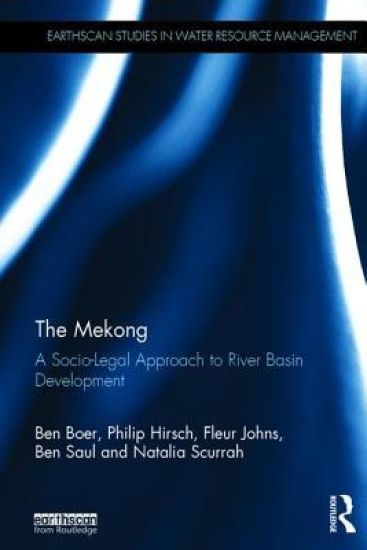
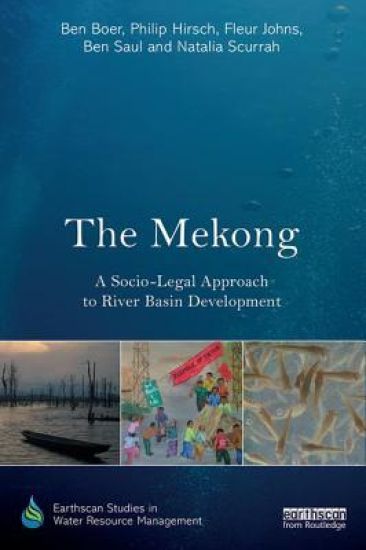
The Mekong: A Socio-legal Approach to River Basin Development

The Mekong: A Socio-legal Approach to River Basin Development

Ben Boer; Philip Hirsch; Fleur Johns; Ben Saul; Natalia Scurrah

Routledge
2015
sidottu
An international river basin is an ecological system, an economic thoroughfare, a geographical area, a font of life and livelihoods, a geopolitical network and, often, a cultural icon. It is also a socio-legal phenomenon. This book is the first detailed study of an international river basin from a socio-legal perspective. The Mekong River Basin, which sustains approximately 70 million people across Cambodia, China, Laos, Myanmar, Thailand and Vietnam, provides a prime example of the socio-legal complexities of governing a transboundary river and its tributaries. The book applies its socio-legal analysis to bring a fresh approach to understanding conflicts surrounding water governance in the Mekong River Basin. The authors describe the wide range of uses being made of legal doctrine and legal argument in ongoing disputes surrounding hydropower development in the Basin, putting to rest lingering caricatures of a single, ‘ASEAN’ way of navigating conflict. They call into question some of the common assumptions concerning the relationship between law and development. The book also sheds light on important questions concerning the global hybridization or crossover of public and private power and its ramifications for water governance. With current debates and looming conflicts over water governance globally, and over shared rivers in particular, these issues could not be more pressing.
The Mekong: A Socio-legal Approach to River Basin Development

The Mekong: A Socio-legal Approach to River Basin Development

Ben Boer; Philip Hirsch; Fleur Johns; Ben Saul; Natalia Scurrah

Routledge
2015
nidottu
An international river basin is an ecological system, an economic thoroughfare, a geographical area, a font of life and livelihoods, a geopolitical network and, often, a cultural icon. It is also a socio-legal phenomenon. This book is the first detailed study of an international river basin from a socio-legal perspective. The Mekong River Basin, which sustains approximately 70 million people across Cambodia, China, Laos, Myanmar, Thailand and Vietnam, provides a prime example of the socio-legal complexities of governing a transboundary river and its tributaries. The book applies its socio-legal analysis to bring a fresh approach to understanding conflicts surrounding water governance in the Mekong River Basin. The authors describe the wide range of uses being made of legal doctrine and legal argument in ongoing disputes surrounding hydropower development in the Basin, putting to rest lingering caricatures of a single, ‘ASEAN’ way of navigating conflict. They call into question some of the common assumptions concerning the relationship between law and development. The book also sheds light on important questions concerning the global hybridization or crossover of public and private power and its ramifications for water governance. With current debates and looming conflicts over water governance globally, and over shared rivers in particular, these issues could not be more pressing.
Non-Legality in International Law

Non-Legality in International Law

Fleur Johns

Cambridge University Press
2015
pokkari
International lawyers typically start with the legal. What is a legal as opposed to a political question? How should international law adapt to the unforeseen? These are the routes by which international lawyers typically reason. This book begins, instead, with the non-legal. In a series of case studies, Fleur Johns examines what international lawyers cast outside or against law - as extra-legal, illegal, pre-legal or otherwise non-legal - and how this comes to shape political possibility. Non-legality is not merely the remainder of regulatory action. It is a key structuring device of contemporary global order. Constructions of non-legality are pivotal to debate in areas ranging from torture to foreign investment and from climate change to natural disaster relief. Understandings of non-legality inform what international lawyers today do and what they refrain from doing. Tracing and potentially reimagining the non-legal in international legal work is, accordingly, both vital and pressing.
Non-Legality in International Law

Non-Legality in International Law

Fleur Johns

Cambridge University Press
2013
sidottu
International lawyers typically start with the legal. What is a legal as opposed to a political question? How should international law adapt to the unforeseen? These are the routes by which international lawyers typically reason. This book begins, instead, with the non-legal. In a series of case studies, Fleur Johns examines what international lawyers cast outside or against law - as extra-legal, illegal, pre-legal or otherwise non-legal - and how this comes to shape political possibility. Non-legality is not merely the remainder of regulatory action. It is a key structuring device of contemporary global order. Constructions of non-legality are pivotal to debate in areas ranging from torture to foreign investment and from climate change to natural disaster relief. Understandings of non-legality inform what international lawyers today do and what they refrain from doing. Tracing and potentially reimagining the non-legal in international legal work is, accordingly, both vital and pressing.