
Kirjojen hintavertailu – 12 903 725 kirjaa ja 27 kauppaa

Kirjailija

Florian Tigges

Kirjat ja teokset yhdessä paikassa: 2 kirjaa, julkaisuja vuosilta 2013–2014, suosituimpiin kuuluu Fundamental Concepts of Architecture. Vertaile teosten hintoja ja tarkista saatavuus suomalaisista kirjakaupoista.

2 kirjaa

Kirjojen julkaisuvuodet: 2013–2014.

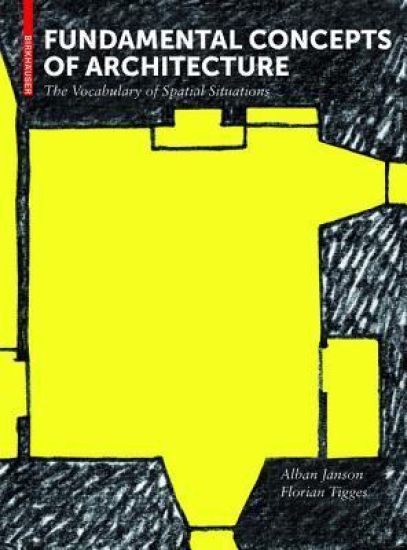
Fundamental Concepts of Architecture

Fundamental Concepts of Architecture

Alban Janson; Florian Tigges

Birkhauser
2014
sidottu
Architecture is an experience – with the intellect and with all our senses, in motion, and in use. But in order to actually discuss and assess it with relevance, a clarification of terms is essential in order to avoid the vagueness that often prevails when talking about architecture. This dictionary provides a vocabulary that allows the architecture discourse to go beyond the declaration of constructive relationships or the description of architectonic forms in familiar terms like “roof,” “base,” “wall,” and “axis” or “proportion”. The point is to describe the experience of architecture: how exactly does it contribute to the experience of a situation? For instance, the staging of an entrance situation, or the layout and visitor routes through a museum. From “context,” through “guidance,” “readability,” “patina,” “spatial structure,” “symmetry” and “tectonics,” to “width” (and “narrowness”) or “window,” the most important terms in architectural language are explained precisely and in detail.
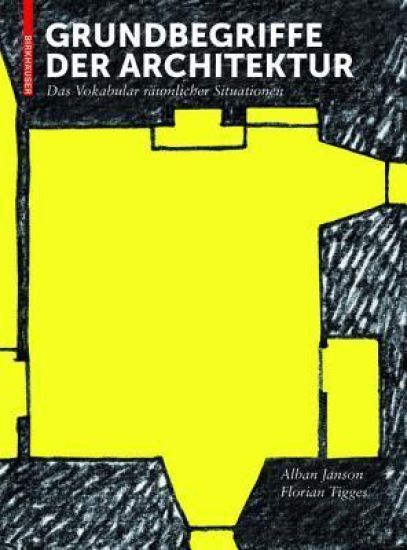
Grundbegriffe der Architektur

Grundbegriffe der Architektur

Alban Janson; Florian Tigges

Birkhauser
2013
sidottu
Architecture is an experience – with the intellect and with all our senses, in motion, and in use. But in order to actually discuss and assess it with relevance, a clarification of terms is essential in order to avoid the vagueness that often prevails when talking about architecture. This dictionary provides a vocabulary that allows the architecture discourse to go beyond the declaration of constructive relationships or the description of architectonic forms in familiar terms like “roof,” “base,” “wall,” and “axis” or “proportion”. The point is to describe the experience of architecture: how exactly does it contribute to the experience of a situation? For instance, the staging of an entrance situation, or the layout and visitor routes through a museum. From “context,” through “guidance,” “readability,” “patina,” “spatial structure,” “symmetry” and “tectonics,” to “width” (and “narrowness”) or “window,” the most important terms in architectural language are explained precisely and in detail.