Kirjojen hintavertailu – 12 903 725 kirjaa ja 27 kauppaa

Kirjailija

Florin Curta

Kirjat ja teokset yhdessä paikassa: 17 kirjaa, julkaisuja vuosilta 2001–2025, suosituimpiin kuuluu Women Archaeologists under Communism, 1917-1989. Vertaile teosten hintoja ja tarkista saatavuus suomalaisista kirjakaupoista.

17 kirjaa

Kirjojen julkaisuvuodet: 2001–2025.

Medieval Europe 250-1450

Medieval Europe 250-1450

Christian Raffensperger; Florin Curta

TAYLOR FRANCIS LTD
2025
nidottu

Halvin toimitettuna 58,10 €

Providing an inclusive history of the entire territory and people of medieval Europe from 250-1450, this volume examines not just the political history but the rich social and cultural history, too. European history has functioned as a defining force in the modern worldview of many countries and their citizens. Whether viewed positively or negatively, that history has shaped the world in many ways. To understand Europe, it is essential to have a clear view of its medieval history. Proceeding from the decline of the Roman Empire, with the arrival of Germanic and Turkic peoples, through the development of polities in medieval Europe from Iberia to Ireland, Scandinavia to Sicily, and all the way to the taiga, European history grows and changes over the medieval period which we bring to a close with the final fall of Rome, the capture of Constantinople by the Ottomans in 1453. Traditional histories of medieval Europe focus primarily on the West. This history attempts to include the breadth of the continent, from Scandinavia to the Mediterranean and from the Atlantic to the Urals, from the nomads of the steppe to the Sami herders in the north and from the vernacular literacies of Alfred the Great of Wessex to Boris’s kingdom in Bulgaria. The chapters pair eastern and western elements to help make the point that all of Europe was undergoing changes, not only the west, who then pushed those changes onto the east which has been the common narrative. Medieval Europe 250-1450 is essential reading for all students of Medieval Europe and, in particular, those who wish to understand the interactions and parallels between east and west, north and south.

Medieval Europe 250-1450

Medieval Europe 250-1450

Christian Raffensperger; Florin Curta

TAYLOR FRANCIS LTD
2025
sidottu
Providing an inclusive history of the entire territory and people of medieval Europe from 250-1450, this volume examines not just the political history but the rich social and cultural history, too. European history has functioned as a defining force in the modern worldview of many countries and their citizens. Whether viewed positively or negatively, that history has shaped the world in many ways. To understand Europe, it is essential to have a clear view of its medieval history. Proceeding from the decline of the Roman Empire, with the arrival of Germanic and Turkic peoples, through the development of polities in medieval Europe from Iberia to Ireland, Scandinavia to Sicily, and all the way to the taiga, European history grows and changes over the medieval period which we bring to a close with the final fall of Rome, the capture of Constantinople by the Ottomans in 1453. Traditional histories of medieval Europe focus primarily on the West. This history attempts to include the breadth of the continent, from Scandinavia to the Mediterranean and from the Atlantic to the Urals, from the nomads of the steppe to the Sami herders in the north and from the vernacular literacies of Alfred the Great of Wessex to Boris’s kingdom in Bulgaria. The chapters pair eastern and western elements to help make the point that all of Europe was undergoing changes, not only the west, who then pushed those changes onto the east which has been the common narrative. Medieval Europe 250-1450 is essential reading for all students of Medieval Europe and, in particular, those who wish to understand the interactions and parallels between east and west, north and south.
Medieval East Central and Eastern Europe

Medieval East Central and Eastern Europe

Florin Curta; Sebastien Rossignol

UNIVERSITY OF TORONTO PRESS
2025
pokkari

Halvin toimitettuna 57,50 €

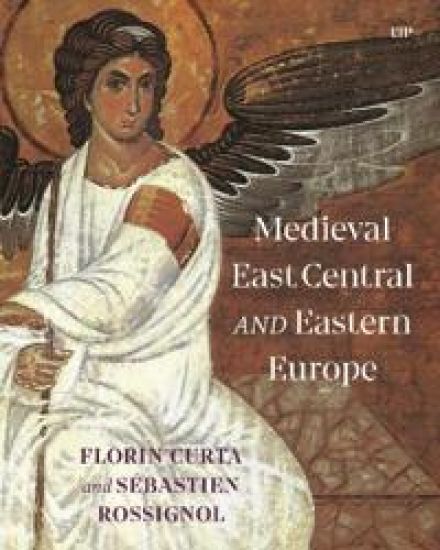
From Bohemia to Rus’ and from the White Sea to the Balkans, Medieval East Central and Eastern Europe by Florin Curta and Sébastien Rossignol covers the medieval history of a large area. This groundbreaking textbook is an important introduction for students and an essential tool for instructors of courses on the Middle Ages and the entire eastern half of Europe. With elements of medieval archaeology, Medieval East Central and Eastern Europe includes dynastic characters, political legacies, and a list of suggested readings for anyone interested in learning more about the history of these regions. Written in an accessible style that appeals to a general reader, this textbook explicates the diversity of historical experiences available in these parts of Europe during the Middle Ages – from the influence of Byzantine traditions in the Balkans to the integration of Western cultures and the impact of the Eurasian steppe lands. This text highlights the distinct social and cultural characteristics that shaped these societies, including the persistence of nomadic groups, the limited reach of feudalism, and the enduring presence of pagan, Jewish, and Muslim communities. Structured with chronological overviews and thematic chapters, Medieval East Central and Eastern Europe is an invaluable resource on underrepresented regions for specialists and non-specialists alike.
Medieval East Central and Eastern Europe

Medieval East Central and Eastern Europe

Florin Curta; Sebastien Rossignol

UNIVERSITY OF TORONTO PRESS
2025
sidottu
From Bohemia to Rus’ and from the White Sea to the Balkans, Medieval East Central and Eastern Europe by Florin Curta and Sébastien Rossignol covers the medieval history of a large area. This groundbreaking textbook is an important introduction for students and an essential tool for instructors of courses on the Middle Ages and the entire eastern half of Europe. With elements of medieval archaeology, Medieval East Central and Eastern Europe includes dynastic characters, political legacies, and a list of suggested readings for anyone interested in learning more about the history of these regions. Written in an accessible style that appeals to a general reader, this textbook explicates the diversity of historical experiences available in these parts of Europe during the Middle Ages – from the influence of Byzantine traditions in the Balkans to the integration of Western cultures and the impact of the Eurasian steppe lands. This text highlights the distinct social and cultural characteristics that shaped these societies, including the persistence of nomadic groups, the limited reach of feudalism, and the enduring presence of pagan, Jewish, and Muslim communities. Structured with chronological overviews and thematic chapters, Medieval East Central and Eastern Europe is an invaluable resource on underrepresented regions for specialists and non-specialists alike.
Medieval Europe From Another Angle

Medieval Europe From Another Angle

Florin Curta

TAYLOR FRANCIS LTD
2025
sidottu
While the Middle Ages represent a topic of perennial interest, most studies have addressed the western parts of the European continent, often from the angle of the written sources. This volume examines an area less known in the literary and archaeological evidence. The studies included therein provide significant insights into the history and archaeology of East Central and Eastern Europe during Late Antiquity and the early Middle Ages. This is the first volume of essays explicitly to reassess the significance of the region, as well as the role of the archaeological evidence in studying ethnicity in the Middle Ages, particularly in the case of the Slavs and the Avars. Because of its geographic, chronological, thematic, and methodological scope, this book offers a new perspective from a different angle on the analysis of the archaeological and written sources. Some chapters focus on settlement sites; others discuss artifacts from burial assemblages. As well as advancing new models for the analysis of the written sources in relation to ethnicity, Medieval Europe from Another Angle offers new approaches to the understanding of how ethnicity may have been constructed in the Middle Ages in material culture terms. It will appeal to scholars and students alike studying Late Antiquity and the early Middle Ages with an interest in material culture and its use in building ethnic boundaries.
Medieval Europe From Another Angle

Medieval Europe From Another Angle

Florin Curta

TAYLOR FRANCIS LTD
2025
sidottu
The history of East Central, Southeastern and Eastern Europe may be considered as alternating between a Marxist emphasis on rigid differences between Antiquity and the Middle Ages, largely derived from distinctive modes of production, and a preoccupation with borders, ethnicity, and personalities. This volume examines a number of economic problems that highlight the limits of the current interpretative models, such as the existence of markets or the relation between trade and gift-giving, largely on the basis of the archaeological evidence from the eastern parts of the European continent. In addition, four other chapters address critically such issues as the images of Charlemagne in East Central Europe and of the Vlachs in the French crusade chronicles, linear frontiers, as well as the significance of St. Christopher in Teutonic Prussia. Medieval Europe from Another Angle will appeal to scholars and students alike studying Late Antiquity and the early Middle Ages with an interest in material culture and its use in building ethnic boundaries. It covers a wide geographical area—from Iberia to the Baltic region.
Women Archaeologists under Communism, 1917-1989

Women Archaeologists under Communism, 1917-1989

Florin Curta; Iurie Stamati

Springer Nature Switzerland AG
2022
nidottu
This book explores the uncharted territory of the history of archaeology under Communism through the biographies of five women archaeologists from the Soviet Union, Bulgaria, Romania, Hungary, and Poland. They were working in medieval archaeology, with a specific focus on the (early) Slavs. The choice of specialists in medieval archaeology has much to do with the fact that in the five East European countries considered in this book, medieval archaeology began to develop into a serious discipline less than a century ago. The main catalyst for the sudden rise of medieval archaeology was a dramatic shift in emphasis from traditional political and constitutional to social and economic history. In five countries, the rise of medieval archaeology thus coincides in time, and was ultimately caused by the imposition of Communist regimes. The five women were therefore true pioneers in their field, and respective countries.
Slavs in the Making

Slavs in the Making

Florin Curta

TAYLOR FRANCIS LTD
2022
nidottu
Slavs in the Making takes a fresh look at archaeological evidence from parts of Slavic-speaking Europe north of the Lower Danube, including the present-day territories of the Czech Republic, Slovakia, Poland, Belarus, Ukraine, and Russia. Nothing is known about what the inhabitants of those remote lands called themselves during the sixth century, or whether they spoke a Slavic language. The book engages critically with the archaeological evidence from these regions, and questions its association with the "Slavs" that has often been taken for granted. It also deals with the linguistic evidence—primarily names of rivers and other bodies of water—that has been used to identify the primordial homeland of the Slavs, and from which their migration towards the Lower Danube is believed to have started. It is precisely in this area that sociolinguistics can offer a serious alternative to the language tree model currently favoured in linguistic paleontology. The question of how best to explain the spread of Slavic remains a controversial issue. This book attempts to provide an answer, and not just a critique of the method of linguistic paleontology upon which the theory of the Slavic migration and homeland relies. The book proposes a model of interpretation that builds upon the idea that (Common) Slavic cannot possibly be the result of Slavic migration. It addresses the question of migration in the archaeology of early medieval Eastern Europe, and makes a strong case for a more nuanced interpretation of the archaeological evidence of mobility. It will appeal to scholars and students interested in medieval history, migration, and the history of Eastern and Central Europe.
Women Archaeologists under Communism, 1917-1989

Women Archaeologists under Communism, 1917-1989

Florin Curta; Iurie Stamati

Springer Nature Switzerland AG
2021
sidottu
This book explores the uncharted territory of the history of archaeology under Communism through the biographies of five women archaeologists from the Soviet Union, Bulgaria, Romania, Hungary, and Poland. They were working in medieval archaeology, with a specific focus on the (early) Slavs. The choice of specialists in medieval archaeology has much to do with the fact that in the five East European countries considered in this book, medieval archaeology began to develop into a serious discipline less than a century ago. The main catalyst for the sudden rise of medieval archaeology was a dramatic shift in emphasis from traditional political and constitutional to social and economic history. In five countries, the rise of medieval archaeology thus coincides in time, and was ultimately caused by the imposition of Communist regimes. The five women were therefore true pioneers in their field, and respective countries.
Slavs in the Making

Slavs in the Making

Florin Curta

Routledge
2020
sidottu
Slavs in the Making takes a fresh look at archaeological evidence from parts of Slavic-speaking Europe north of the Lower Danube, including the present-day territories of the Czech Republic, Slovakia, Poland, Belarus, Ukraine, and Russia. Nothing is known about what the inhabitants of those remote lands called themselves during the sixth century, or whether they spoke a Slavic language. The book engages critically with the archaeological evidence from these regions, and questions its association with the "Slavs" that has often been taken for granted. It also deals with the linguistic evidence—primarily names of rivers and other bodies of water—that has been used to identify the primordial homeland of the Slavs, and from which their migration towards the Lower Danube is believed to have started. It is precisely in this area that sociolinguistics can offer a serious alternative to the language tree model currently favoured in linguistic paleontology. The question of how best to explain the spread of Slavic remains a controversial issue. This book attempts to provide an answer, and not just a critique of the method of linguistic paleontology upon which the theory of the Slavic migration and homeland relies. The book proposes a model of interpretation that builds upon the idea that (Common) Slavic cannot possibly be the result of Slavic migration. It addresses the question of migration in the archaeology of early medieval Eastern Europe, and makes a strong case for a more nuanced interpretation of the archaeological evidence of mobility. It will appeal to scholars and students interested in medieval history, migration, and the history of Eastern and Central Europe.
The Velestino Hoard

The Velestino Hoard

Florin Curta; Bartlomiej Szymon Szmoniewski

Springer Nature Switzerland AG
2019
sidottu
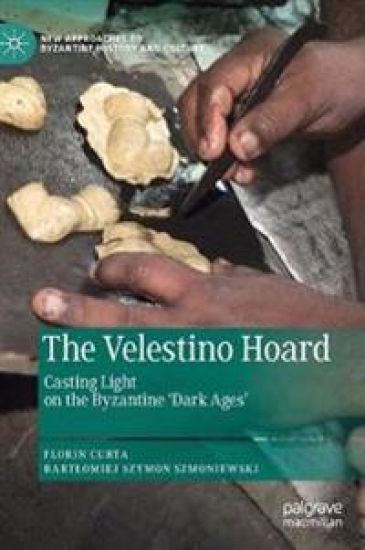
This book examines the remarkable Velestino hoard, found in Thessaly in the 1920s, and analyses the light that this collection of artifacts sheds on a poorly studied period of Byzantine history, and on largely neglected aspects of Byzantine civilization. Many collections of Byzantine gold- and silverware, such as Vrap and Seuso, have been surrounded by controversy. None, however, has been under more suspicion than the Velestino hoard, particularly with regards to its authenticity. The hoard contains no gold and no silver, and is in fact a collection of bronze and leaden plaques, some with human, and others with animal or geometric representations. The authors examine three distinct aspects of the hoard: the iconography of its components, the method of its production, and the function of those components. The conclusions that they reached provide valuable new insights into eighth-century Byzantine culture. The book explores the Byzantine cultural and political context of the Velestino hoard and will appeal to historians and art historians of early Byzantium, as well as archaeologists and historians of early medieval technologies.
The Edinburgh History of the Greeks, c. 500 to 1050

The Edinburgh History of the Greeks, c. 500 to 1050

Florin Curta

Edinburgh University Press
2014
nidottu
This is a completely new approach to the history of Greece during the early Middle Ages. This book is the first comprehensive treatment of the economic and social history of Greece during the early Middle Ages. From the collapse of the urban economy in the early 7th century to the beginning of prosperity during the first half of the 11th century, it examines the crucial transformations taking place in Greece during the 'Dark Ages' and the Middle Byzantine period. Bringing together archaeological and historical research of early medieval Greece, Curta offers a completely new dimension in the history of the region, which has never been considered in its totality and is still relatively unknown. Modern boundaries and nationalist preconception regarding ethnic identity have long hindered an adequate study of early medieval Greece. By contrast, the wide-ranging approach adopted here highlights the similarities and differences in the archaeological evidence associated with different social and ethnic groups, whose identities were much more fluid than previously imagined.
The Edinburgh History of the Greeks, c. 500 to 1050

The Edinburgh History of the Greeks, c. 500 to 1050

Florin Curta

Edinburgh University Press
2011
sidottu
This volume traces the social, economic and political history of the Greeks between 500 and 1050. The book adopts an interdisciplinary approach and uses archaeological evidence, as well as coins and seals, fiscal documents, medieval chronicles, and hagiographic literature to examine the development of Greek culture in the early medieval period. Several themes provide the foundation for this volume and run through the chapters; these include the Balkan context, the Social Role of the Army and the Onset of Economic Growth. Special attention is paid to the size of the economy in early medieval Greece. Both the social and the economic are privileged and analyzed together as integrally connected spheres of life, thus filling a major gap in existing literature on this period.
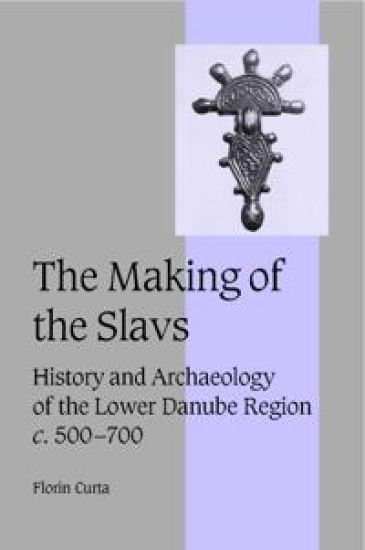
The Making of the Slavs

The Making of the Slavs

Florin Curta

Cambridge University Press
2007
pokkari
This book offers an alternative approach to the problem of Slavic ethnicity in south-eastern Europe between c. 500 and c. 700, from the perspective of current anthropological theories. The conceptual emphasis here is on the relation between material culture and ethnicity. The author demonstrates that the history of the Sclavenes and the Antes begins only at around 500 AD. He also points to the significance of the archaeological evidence, which suggests that specific artefacts may have been used as identity markers. This evidence also indicates the role of local leaders in building group boundaries and in leading successful raids across the Danube. Because of these military and political developments, Byzantine authors began employing names such as Sclavines and Antes in order to make sense of the process of group identification that was taking place north of the Danube frontier. Slavic ethnicity is therefore shown to be a Byzantine invention.
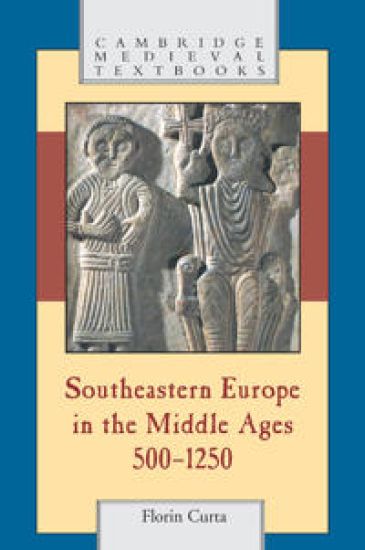
Southeastern Europe in the Middle Ages, 500–1250

Southeastern Europe in the Middle Ages, 500–1250

Florin Curta

Cambridge University Press
2006
pokkari
Southeastern Europe in the Middle Ages stood at a crossroads of trade and crusading routes and fell within the spheres of influence of both the Byzantine Orthodox Church and Latin Christendom. This authoritative survey draws on historical and archaeological sources in the narration of 750 years of the history of the region, including Romania, southern Ukraine, southern Hungary, Croatia, Slovenia, Serbia, Montenegro, Bulgaria, Macedonia, Albania and Greece. Exploring the social, political and economic changes marking the transition from late Antiquity to the early Middle Ages, this book addresses important themes such as the rise of medieval states, the conversion to Christianity, the monastic movement inspired by developments in Western Europe and in Byzantium, and the role of material culture (architecture, the arts and objects of daily life) in the representation of power.
Southeastern Europe in the Middle Ages, 500–1250

Southeastern Europe in the Middle Ages, 500–1250

Florin Curta

Cambridge University Press
2006
sidottu
Southeastern Europe in the Middle Ages stood at a crossroads of trade and crusading routes and fell within the spheres of influence of both the Byzantine Orthodox Church and Latin Christendom. This authoritative survey draws on historical and archaeological sources in the narration of 750 years of the history of the region, including Romania, southern Ukraine, southern Hungary, Croatia, Slovenia, Serbia, Montenegro, Bulgaria, Macedonia, Albania and Greece. Exploring the social, political and economic changes marking the transition from late Antiquity to the early Middle Ages, this book addresses important themes such as the rise of medieval states, the conversion to Christianity, the monastic movement inspired by developments in Western Europe and in Byzantium, and the role of material culture (architecture, the arts and objects of daily life) in the representation of power.
The Making of the Slavs

The Making of the Slavs

Florin Curta

Cambridge University Press
2001
sidottu
This book offers a new approach to the problem of Slavic ethnicity in south-eastern Europe between c. 500 and c. 700, from the perspective of current anthropological theories. The conceptual emphasis here is on the relation between material culture and ethnicity. The author demonstrates that the history of the Sclavenes and the Antes begins only at around 500 AD. He also points to the significance of the archaeological evidence, which suggests that specific artifacts may have been used as identity markers. This evidence also indicates the role of local leaders in building group boundaries and in leading successful raids across the Danube. Because of these military and political developments, Byzantine authors began employing names such as Sclavines and Antes in order to make sense of the process of group identification that was taking place north of the Danube frontier. Slavic ethnicity is therefore shown to be a Byzantine invention.