
Kirjojen hintavertailu – 12 859 818 kirjaa ja 27 kauppaa

Kirjailija

Floris Verhaart

Kirjat ja teokset yhdessä paikassa: 3 kirjaa, julkaisuja vuosilta 2020–2023, suosituimpiin kuuluu Classical Learning in Britain, France, and the Dutch Republic, 1690-1750. Vertaile teosten hintoja ja tarkista saatavuus suomalaisista kirjakaupoista.

3 kirjaa

Kirjojen julkaisuvuodet: 2020–2023.

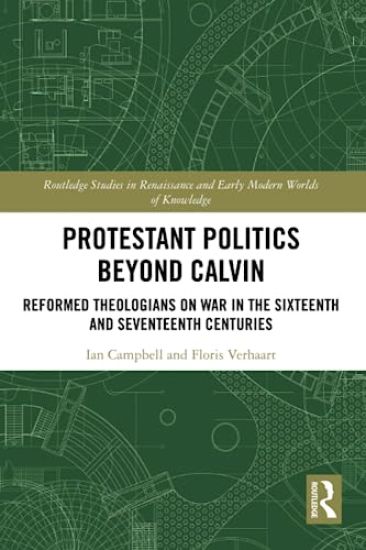
Protestant Politics Beyond Calvin

Protestant Politics Beyond Calvin

Ian Campbell; Floris Verhaart

TAYLOR FRANCIS LTD
2023
nidottu
The Reformed (or Calvinist) universities of sixteenth and seventeenth-century Europe hosted rich, Latin-language conversations on the nature of politics, the powers of kings and magistrates, resistance, revolution, and religious warfare. Nevertheless, it is too often assumed that Reformed political thought did not develop beyond John Calvin’s Institutes of 1559. This book remedies this problem, presenting extracts from major Reformed theologians and intellectuals (including Peter Martyr Vermigli, Guillaume de Buc, David Pareus, Lambert Daneau, and Bartholomäus Keckermann) which demonstrate both continuity and change in Reformed political argument. These men taught in France, the Holy Roman Empire, the Low Countries, and England, between the 1540s and 1660s, but they were read in universities throughout the North Atlantic world into the eighteenth century. Should all political action be subject to God’s direct command? Were humans capable of using their own God-given reason to tell right from wrong? Was it ever just to resist tyrants? Was religious difference enough by itself to justify war? Their political doctrines often aroused the greatest controversy in their own time; this is generally the first time that these extracts from their works have been translated into English. These texts and translations are accompanied by an introduction placing these authors in the context of the great European religious wars, advice on further reading, and a full bibliography.
Protestant Politics Beyond Calvin

Protestant Politics Beyond Calvin

Ian Campbell; Floris Verhaart

TAYLOR FRANCIS LTD
2022
sidottu
The Reformed (or Calvinist) universities of sixteenth and seventeenth-century Europe hosted rich, Latin-language conversations on the nature of politics, the powers of kings and magistrates, resistance, revolution, and religious warfare. Nevertheless, it is too often assumed that Reformed political thought did not develop beyond John Calvin’s Institutes of 1559. This book remedies this problem, presenting extracts from major Reformed theologians and intellectuals (including Peter Martyr Vermigli, Guillaume de Buc, David Pareus, Lambert Daneau, and Bartholomäus Keckermann) which demonstrate both continuity and change in Reformed political argument. These men taught in France, the Holy Roman Empire, the Low Countries, and England, between the 1540s and 1660s, but they were read in universities throughout the North Atlantic world into the eighteenth century. Should all political action be subject to God’s direct command? Were humans capable of using their own God-given reason to tell right from wrong? Was it ever just to resist tyrants? Was religious difference enough by itself to justify war? Their political doctrines often aroused the greatest controversy in their own time; this is generally the first time that these extracts from their works have been translated into English. These texts and translations are accompanied by an introduction placing these authors in the context of the great European religious wars, advice on further reading, and a full bibliography.
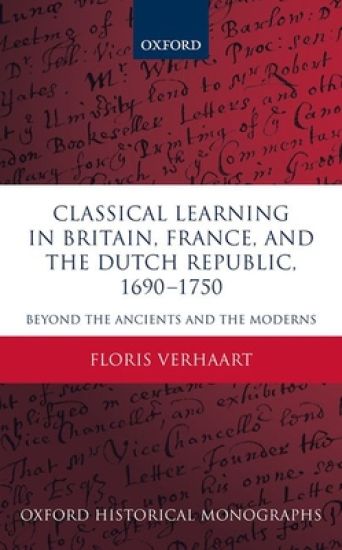
Classical Learning in Britain, France, and the Dutch Republic, 1690-1750
For much of western history, the achievements of classical antiquity were seen as unsurpassable, and works by Latin and Greek authors were viewed as treasure troves of information still useful for contemporary society. By the late seventeenth century, however, the progress of scientific discoveries and the new paradigms of rationalism and empiricism meant the authority of the ancients was called into question. Those working on the classical past and its literature debated new ways of defending their relevance for society. The different approaches to classical literature defended in these debates explain how the writings of ancient Greece and Rome could become a vital part of eighteenth-century culture and political thinking. Floris Verhaart analyses these eighteenth-century debates about the value of classics, arguing that the Enlightenment, though often seen as an age of reason and modernity, in fact continuously sought inspiration from preceding traditions and ages such as Renaissance humanism and classical antiquity. The volume offers an interesting parallel with the modern day, in which the relationship between 'experts' and the general public has become the topic of debate and many academics, especially in the humanities, face pressure to explain how their work benefits society at large.