
Kirjailija
Ford Madox Ford
Kirjat ja teokset yhdessä paikassa: 302 kirjaa, julkaisuja vuosilta 1964–2026, suosituimpiin kuuluu Parade's End. Vertaile teosten hintoja ja tarkista saatavuus suomalaisista kirjakaupoista.
302 kirjaa
Kirjojen julkaisuvuodet: 1964–2026.
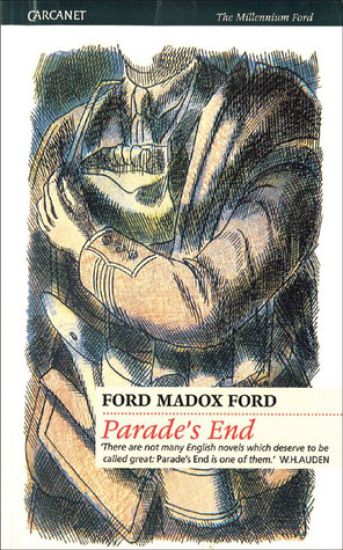
'There are not many English novels which deserve to be called great: Parade's End is one of them.' W. H. Auden, 1961 Parade's End is the title Ford Madox Ford gave to his greatest work, the four Tietjens novels which, in Graham Greene's words, tell 'the terrifying story of a good man tortured, pursued, driven into revolt, and ruined as far as the world is concerned by the clever devices of a jealous and lying wife'. He wanted to see the book printed in one volume: Some Do Not (1924), No More Parades (1925) and A Man Could Stand Up (1926), with his afterthought, The Last Post (1928). Christopher Tietjens is the last of a breed, the Tory gentleman, which the Great War, a savage marriage to Sylvia, and the qualities inherent in his nature, define and unravel. Here the War's attritions offered no escape from domestic witchcraft. Opposite Tietjens is Macmaster, a Scot, different in class and culture, at once friend and foil. Here Ford's art and his human vision achieve their greatest complexity and subtlety. With an afterword by Gerald Hammond Gerald Hammond is Professor of English at the University of Manchester, author of The Making of the English Bible, Fleeting Things and other critical volumes and editor of the Selected Poems of John Skelton and of Richard Lovelace in the FyfieldBooks series. This volume is part of The Millennium Ford project which aims to bring all the major writings of this great writer back into circulation.
Reminiscences Of Samuel Taylor Coleridge And Robert Southey
Joseph Cottle; Ford Madox Ford
KESSINGER PUBLISHING CO
2004
pokkari
Ford Madox Ford (1873-1939) published thirteen volumes of poetry between 1893 and 1936, crucial transitional years in the evolution of modern poetry. His early poems were written under the shadow of the Rossettis, Swinburne and William Morris, but Ford outgrew their heady late-Victorian lyricism, developing a voice that was natural, impressionistic, and ironic. This selection of his verse traces his development from the haunting poignancy of his early poems to his later style, which was to be so influential in the development of Modernism. Ezra Pound considered him to be the best lyric poet in England, and it was Ford who taught Pound that 'poetry should be as well written as prose'. He transformed Pound's style and, through Pound, the styles of Yeats and Eliot.
It is hard to overstate the impact that Ford had on the literature of his age. His work as an editor alone ensures him a place in the annals of Modernism; his patronage is a huge chapter of literary history. His is also a great critic, able to read present and past with independent vision.
For nine years, John Dowell and his wife have spent the summer season at a German spa town in the company of the respectable Ashburnhams. Behind the placid exterior of their lives lie the destructive passions of men and women. When Dowell's world breaks apart, he tells his story as intimately as to a silent listener across the fireplace of a country cottage. 'Who in this world knows anything of any other heart -- or of his own?'.
Ford Madox Ford's post-war masterpiece, Parade's End, is recognised as one of the great British novels about the First World War. This selection from his other extensive writings about the war, published and unpublished, sheds light on the tetralogy. It includes reminiscences, an unfinished novel, stories and excerpts from letters. Ford was in his forties when he enlisted: this made him one of the few writers of his maturity to fight on the Western Front. His experience of combat was limited, but he was in the Battle of the Somme, was often under bombardment, and suffered from shell-shock. His largely psychological response to the war anticipates the recent renewal of interest in trauma and shell-shock (as, for example, in Pat Barker's Ghost Road trilogy). This book provides important testimony by one of the best writers of his generation. MAX SAUNDERS is Reader in English at King's College, London, where he teaches nineteenth- and twentieth-century British, American and European literature. He wrote Ford Madox Ford: a dual life, published by Oxford University Press in two volumes (1996). Programme editor: Bill Hutchings
Shows Ford Madox Ford's poetic development from his early lyrics to his later conversational style. This volume displays, as well as early work, his less familiar modes, including satirical pieces never before collected.
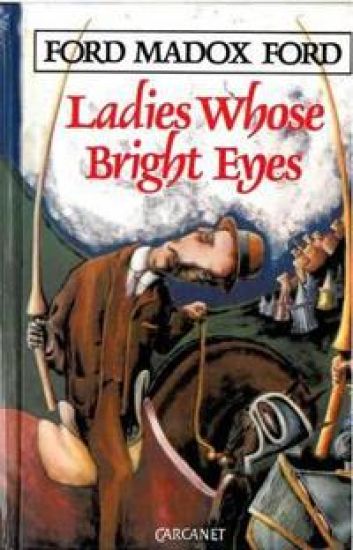
‘It occurred to me to wonder what would really happen to a modern man thrown back to the Middle Ages,’ Ford Madox Ford said after reading Mark Twain’s A Connecticut Yankee in King Arthur’s Court. The fruit of this meditation is Ladies Whose Bright Eyes: a romance, first published in 1911 and then thoroughly revised and re-published in 1935. Ford draws wonderful characters and puts them through revealing and amusing paces. Mr Sorrel is a man given to romance but also with conventional ambitions, trying to make modern weapons in an ancient world and make himself powerful. But Ford is more interested in character and period than in technology, and when the possibilities of romance present themselves, Mr Sorrel makes the most of them. He is well on his way to acclimatizing himself and becoming a proper knight when, as suddenly as he departed, he returns to the twentieth century. Science fiction has seldom been more charming or beguiling than it is here.
This 900-page survey of world literature, "From Confucius' Day to Our Own" (as the subtitle reads), was the last book written by Ford Madox Ford, one of the seminal figures of the modernist period. Written for general readers rather than scholars and first published in 1938, The March of Literature is a working novelist's view of what is valuable in literature, and why. Convinced that scholars and teachers give a false sense of literature, Ford brings alive the pleasures of reading by writing about books he is passionate about. Beginning at the beginning - with ancient Egyptian and Chinese literature and the Bible - Ford works his way through classical literature, the writings of the Middle Ages, the Renaissance, continuing up to the major writers of his own day like Ezra Pound, Henry James, and Joseph Conrad. With his encyclopedic reading and expertise in the techniques of writing, Ford is a reliable and entertaining guide. Ford also includes a chapter on publishers and booksellers, noting the key roles they play in literature's existence. Novelist Alexander Theroux (Darconville's Cat, An Adultery) has written an insightful introduction for this reissue, the first time this monumental book has been made available in paperback.