Kirjojen hintavertailu – 12 903 725 kirjaa ja 27 kauppaa

Kirjailija

Fouad Ajami

Kirjat ja teokset yhdessä paikassa: 9 kirjaa, julkaisuja vuosilta 1986–2022, suosituimpiin kuuluu Liberties Journal of Culture and Politics. Vertaile teosten hintoja ja tarkista saatavuus suomalaisista kirjakaupoista.

9 kirjaa

Kirjojen julkaisuvuodet: 1986–2022.

Liberties Journal of Culture and Politics

Liberties Journal of Culture and Politics

Anthony Julius; Nicholas Lemann; Alfred Brendel; Paul Berman; Jorie Graham; Fouad Ajami; Jack Goldsmith; Edward Luttwak; Roberto Calasso; Ishion Hutchinson; Walter Sheidel; Helen Vendler; Robert Alter; Daryl Michael Scott; Rosanna Warren; Alastair Macaulay; David Greenberg

Liberties Journal Foundation
2021
pokkari
Liberties – A Journal of Culture and Politics features original essays and poetry from some of today’s best writers and artists to inspire and impact the intellectual and creative lifeblood of culture and politics. This issue of Liberties includes: Anthony Julius on censorship of the arts; Nicholas Lemann on rescuing capitalism; Alfred Brendel on playing Beethoven; Paul Berman on the George Floyd uprising; Fouad Ajami’s story of an honor killing; Jack Goldsmith on conservatives and the courts; Edward Luttwak on understanding China; Roberto Calasso on when journals mattered; Walter Scheidel on life after covid; Helen Vendler on the poet Robert Hayden; Robert Alter on Lolita today; Daryl Michael Scott on the 13th Amendment; Alastair Macaulay on Balanchine; David Greenberg on renaming our heritage; new poetry from Jorie Graham, Ishion Hutchinson, and Rosanna Warren; and, Leon Wieseltier (editor) and Celeste Marcus (managing editor).
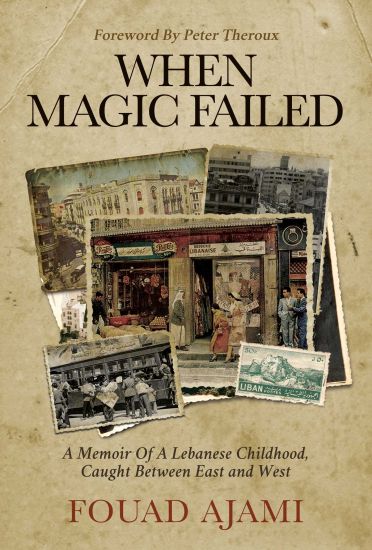
When Magic Failed

When Magic Failed

Fouad Ajami; Peter Theroux

Post Hill Press
2022
sidottu
From the author of The Arab Predicament and Dream Palace of the Arabs comes a beautiful and haunting memoir of growing up in Lebanon in the ’50s and ’60s—the story of a sensitive young man and budding intellectual caught between tradition and modernity, east and west. As one of the most profound and insightful scholars of the Middle East, Fouad Ajami’s sensibility was powerfully shaped by his childhood and youth in Lebanon in the ’50s and ’60s. The time was a transitional one—not only for the Middle East, but for America and the world. Lebanon in this era was just coming into its own as a cosmopolitan destination of the international jet set as well as earnest American educators seeking to modernize Arab society. The disruptive forces of the Middle East—the Cold War, the Palestinian conflict, religious extremism, the money and oil of the Gulf—were only just beginning to appear. In this haunting and beautifully written memoir of his Lebanese childhood, the late Middle East scholar, Fouad Ajami, casts a discerning light into the corners and alleyways of an Arab reality that would later erupt into full view.
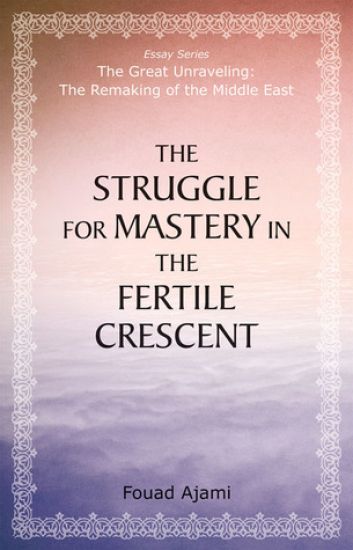
The Struggle for Mastery in the Fertile Crescent

The Struggle for Mastery in the Fertile Crescent

Fouad Ajami

Hoover Institution Press,U.S.
2014
nidottu
Fouad Ajami analyses the struggle for influence along the Fertile Crescent—the stretch of land that runs from Iran’s border with Iraq to the Mediterranean—among three of the regional powers that have stepped into the vacuum left by the West: Iran, Turkey, and Saudi Arabia. He explains that, of the three powers competing for influence, Saudi Arabia and Iran are in it for the long haul. Each of those powers has a sense of mission and constituencies that enable it to stick it out and pay the price for a sphere of influence. Ajami details each country’s prospects for supremacy and asserts that Iran must ultimately be reckoned to be the strongest.
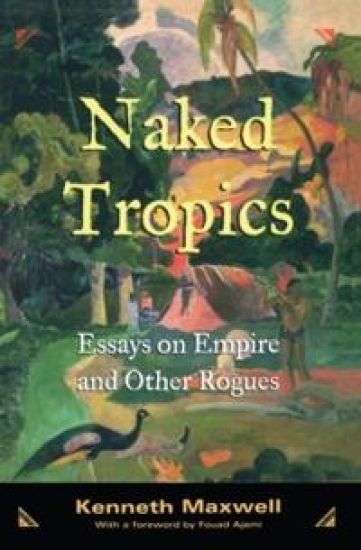
Naked Tropics

Naked Tropics

Kenneth Maxwell; Fouad Ajami

Routledge
2003
nidottu
In this volume distinguished historian Kenneth Maxwell collects some of his most significant writings, following Portugal's imperial journey from the Atlantic to the Indian Ocean and from the coast of Asia to the mouth of the Red Sea. Maxwell takes the reader on a lively journey from Macao to the Amazon forests-each piece in the collection is a reflection of the authors driving passions. Major themes he examines are: the peopling of the Americas, the shaking up of continents, the spirit that took a precocious Portugal into its imperial venture, the play between Portugal's' extensive imperial reach into Africa and Asia and the Americas, and the rise of Brazil and its tumultuous history.
The Dream Palace of the Arabs

The Dream Palace of the Arabs

Fouad Ajami

Vintage Books
1999
pokkari
From Fouad Ajami, an acclaimed author and chronicler of Arab politics, comes a compelling account of how a generation of Arab intellectuals tried to introduce cultural renewals in their homelands through the forces of modernity and secularism. Ultimately, they came to face disappointment, exile, and, on occasion, death. Brilliantly weaving together the strands of a tumultuous century in Arab political thought, history, and poetry, Ajami takes us from the ruins of Beirut's once glittering metropolis to the land of Egypt, where struggle rages between a modernist impulse and an Islamist insurgency, from Nasser's pan-Arab nationalist ambitions to the emergence of an uneasy Pax Americana in Arab lands, from the triumphalism of the Gulf War to the continuing anguished debate over the Israeli-Palestinian peace accords. For anyone who seeks to understand the Middle East, here is an insider's unflinching analysis of the collision between intellectual life and political realities in the Arab world today.
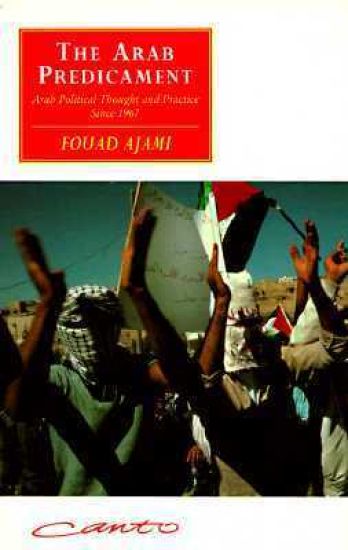
The Arab Predicament

The Arab Predicament

Fouad Ajami

Cambridge University Press
1992
sidottu
How have Arab political ideas and institutions evolved since the 1967 War? How have the Arabs contended with the external influences to which their wealth has exposed them? What are the implications of the rise of Islamic fundamentalism? Fouad Ajami seeks to answer these and related questions in his illuminating study of the constraints and possibilities facing the Arab world. The book documents the political and intellectual response to the defeat of 1967 and surveys the choices facing the Arab world as exemplified by the case of Egypt. It seeks to explain the resurgence of Islamic fundamentalism and locates its roots in the failures of the dominant political order, and the stalemate of secular political ideas. This revised edition, first published in 1992, was updated and renewed the book's status as an indispensable guide to the politics of the Arab world.
The Arab Predicament

The Arab Predicament

Fouad Ajami

Cambridge University Press
1992
pokkari
How have Arab political ideas and institutions evolved since the 1967 War? How have the Arabs contended with the external influences to which their wealth has exposed them? What are the implications of the rise of Islamic fundamentalism? Fouad Ajami seeks to answer these and related questions in his illuminating study of the constraints and possibilities facing the Arab world today. The book documents the political and intellectual response to the defeat of 1967 and surveys the choices facing the Arab world as exemplified by the case of Egypt. It seeks to explain the resurgence of Islamic fundamentalism and locates its roots in the failures of the dominant political order, and the stalemate of secular political ideas. This revised edition of Ajami's acclaimed study has been updated and renews the book’s status as an indispensable guide to the politics of the Arab world.
The Vanished Imam

The Vanished Imam

Fouad Ajami

Cornell University Press
1987
pokkari
In the summer of 1978, Musa al Sadr, the spiritual leader of the Muslim Shia sect in Lebanon, disappeared mysteriously while on a visit to Libya. As in the Shia myth of the "Hidden Imam," this modern-day Imam left his followers upholding his legacy and awaiting his return. Considered an outsider when he had arrived in Lebanon in 1959 from his native Iran, he gradually assumed the role of charismatic mullah, and was instrumental in transforming the Shia, a quiescent and downtrodden Islamic minority, into committed political activists. What sort of person was Musa al Sadr? What beliefs in the Shia doctrine did his life embody? Where did he fit into the tangle of Lebanon's warring factions? What was behind his disappearance? In this fascinating and compelling narrative, Fouad Ajami resurrects the Shia's neglected history, both distant and recent, and interweaves the life and work of Musa al Sadr with the larger strands of the Shia past.
The Vanished Imam

The Vanished Imam

Fouad Ajami

Cornell University Press
1986
sidottu
In the summer of 1978, Musa al Sadr, the spiritual leader of the Muslim Shia sect in Lebanon, disappeared mysteriously while on a visit to Libya. As in the Shia myth of the "Hidden Imam," this modern-day Imam left his followers upholding his legacy and awaiting his return. Considered an outsider when he had arrived in Lebanon in 1959 from his native Iran, he gradually assumed the role of charismatic mullah, and was instrumental in transforming the Shia, a quiescent and downtrodden Islamic minority, into committed political activists. What sort of person was Musa al Sadr? What beliefs in the Shia doctrine did his life embody? Where did he fit into the tangle of Lebanon's warring factions? What was behind his disappearance? In this fascinating and compelling narrative, Fouad Ajami resurrects the Shia's neglected history, both distant and recent, and interweaves the life and work of Musa al Sadr with the larger strands of the Shia past.