Kirjojen hintavertailu – 12 859 827 kirjaa ja 27 kauppaa
Kirjailija
Frances Hodgson Burnett
Kirjat ja teokset yhdessä paikassa: 1 440 kirjaa, julkaisuja vuosilta 1896–2026, suosituimpiin kuuluu Pikku prinsessa. Vertaile teosten hintoja ja tarkista saatavuus suomalaisista kirjakaupoista.
Nimi esiintyy myös muodoissa: Frances Hodgson-Burnett, Frances-Hodgson Burnett, Frances Hodgson Burnett.
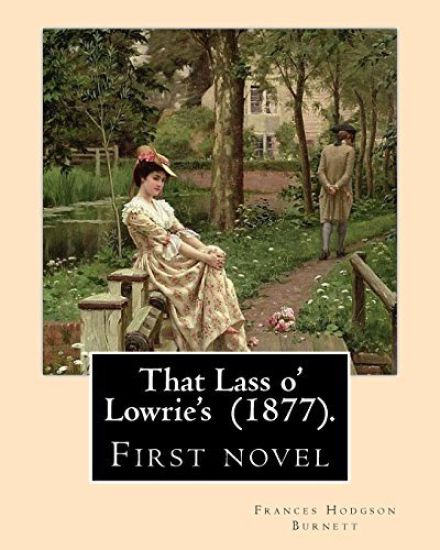
First novel by the author of The Little Princess, The Secret Garden and Little Lord Fauntleroy.... Frances Eliza Hodgson Burnett (24 November 1849 - 29 October 1924) was a British novelist and playwright. She is best known for the three children's novels Little Lord Fauntleroy (published in 1885-1886), A Little Princess (1905), and The Secret Garden (1911). Frances Eliza Hodgson was born in Cheetham, Manchester, England. After her father died in 1852, the family fell on straitened circumstances and in 1865 emigrated to the United States, settling in Jefferson City, Tennessee. There Frances began writing to help earn money for the family, publishing stories in magazines from the age of 19. In 1870, her mother died, and in 1872 Frances married Swan Burnett, who became a medical doctor. The Burnetts lived for two years in Paris, where their two sons were born, before returning to the United States to live in Washington, D. C. Burnett then began to write novels, the first of which (That Lass o' Lowrie's), was published to good reviews. Little Lord Fauntleroy was published in 1886 and made her a popular writer of children's fiction, although her romantic adult novels written in the 1890s were also popular. She wrote and helped to produce stage versions of Little Lord Fauntleroy and A Little Princess. Burnett enjoyed socializing and lived a lavish lifestyle. Beginning in the 1880s, she began to travel to England frequently and in the 1890s bought a home there, where she wrote The Secret Garden. Her oldest son, Lionel, died of tuberculosis in 1890, which caused a relapse of the depression she had struggled with for much of her life. She divorced Swan Burnett in 1898, married Stephen Townsend in 1900, and divorced him in 1902. A few years later she settled in Nassau County, Long Island, where she died in 1924 and is buried in Roslyn Cemetery. In 1936 a memorial sculpture by Bessie Potter Vonnoh was erected in her honour in Central Park's Conservatory Garden. The statue depicts her two famous Secret Garden characters, Mary and Dickon. Childhood in Manchester: Frances Eliza Hodgson was born in 1849 at 141 York Street in Cheetham, Manchester. She was the third of five children of Edwin Hodgson, an ironmonger from Doncaster in Yorkshire, and his wife Eliza Boond, from a well-to-do Manchester family. Hodgson owned a business in Deansgate, selling ironmongery and brass goods. The family lived comfortably, employing a maid and a nurse-maid. Frances had two older brothers and two younger sisters. In 1852 the family moved about a mile further along York Street to a more spacious home in a newly-built terrace, opposite St Luke's Church, with greater access to outdoor space. Barely a year later, with his wife pregnant for a fifth time, Hodgson died suddenly of a stroke, leaving the family without an income. Frances was cared for by her grandmother while her mother took over running the family business. From her grandmother, who bought her books, Frances learned to love reading, in particular her first book, The Flower Book, which had coloured illustrations and poems. Because of their reduced income, Eliza had to give up their family home and moved with her children to live with relatives in Seedley Grove, Tanners Lane, Pendleton, Salford, where they lived in a house with a large enclosed garden in which Frances enjoyed playing. For a year Frances went to a small dame school run by two women, where she first saw a book about fairies. When her mother moved the family to Islington Square, Salford, Frances mourned the lack of flowers and gardens. Their new home was located in a gated square of faded gentility adjacent to an area with severe overcrowding and poverty that "defied description", according to Friedrich Engels, who lived in Manchester at the time......

Il romanzo "Il giardino segreto", pubblicato nel 1909, fu riscoperto solo negli anni settanta, come antesignano di una nuova corrente pedagogica. Bambini e ragazzi si possano educare da soli; l'amicizia tra loro pu aiutarli a migliorarsi; il lavoro e la vita all'aperto garantiscono un corpo sano e favoriscono un buon equilibrio psicologico: queste sono quindi le tesi educative del romanzo, in netto contrasto con le convinzioni pedagogiche dell'epoca. Ma il libro non precorreva i tempi solo in questo: nella seconda parte vengono affrontate e ben spiegate le teorie del ''pensiero positivo'' e della ripetizione dei pensieri positivi che alla base di cos tante tecniche cosiddette ''magiche'', filione questo che stato riscoperto recentemente dalla ''New Age''. Il libro era talmente contrario alle regole educative dell'inizio del secolo che, sotto l'apparente semplicit , finiva per rivelarsi quasi rivoluzionario. Per questo motivo fu riscoperto solo molti anni dopo la sua pubblicazione. Traduzione di Silvia Cecchini.
Sara Crewe's young but doting father sends her to a London boarding school when she is seven. On her eleventh birthday her life of luxury comes to an abrupt end when she receives news that her father has died, shortly after losing his entire fortune. The school-mistress turns Sara into a servant to pay off her debts, and though Sara uses the entire force of her imagination and her good heart to remember who she is and keep starvation from the door, her life is desperate. Until the past returns in a very unexpected manner...
This work has been selected by scholars as being culturally important, and is part of the knowledge base of civilization as we know it. This work was reproduced from the original artifact, and remains as true to the original work as possible. Therefore, you will see the original copyright references, library stamps (as most of these works have been housed in our most important libraries around the world), and other notations in the work. This work is in the public domain in the United States of America, and possibly other nations. Within the United States, you may freely copy and distribute this work, as no entity (individual or corporate) has a copyright on the body of the work. As a reproduction of a historical artifact, this work may contain missing or blurred pages, poor pictures, errant marks, etc. Scholars believe, and we concur, that this work is important enough to be preserved, reproduced, and made generally available to the public. We appreciate your support of the preservation process, and thank you for being an important part of keeping this knowledge alive and relevant.
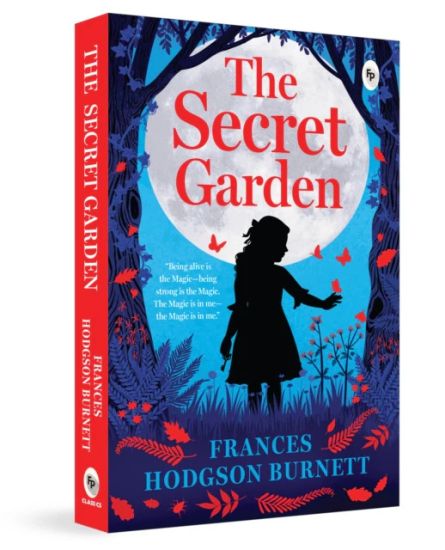
Enter the enchanting world of Frances Hodgson Burnett's timeless classic, The Secret Garden. Follow young Mary Lennox as she discovers a hidden paradise, filled with wonders and secrets waiting to be unlocked. This edition captures the magic and beauty of the garden's transformative power. Healing begins where the garden grows. Captivating edition of Frances Hodgson Burnett's beloved classic, The Secret Garden Join Mary on her journey of discovery and transformation Experience the magic of a hidden garden and its profound impact on lives Perfect for readers of all ages, from children to adults A cherished addition to any book collection, inspiring hope and the joy of nature.
The history of the circumstances about to be related began many years ago-or so it seems in these days. It began, at least, years before the world being rocked to and fro revealed in the pause between each of its heavings some startling suggestion of a new arrangement of its kaleidoscopic particles, and then immediately a re-arrangement, and another and another until all belief in a permanency of design seemed lost, and the inhabitants of the earth waited, helplessly gazing at changing stars and colours in a degree of mental chaos. Its opening incidents may be dated from a period when people still had reason to believe in permanency and had indeed many of them-sometimes through ingenuousness, sometimes through stupidity of type-acquired a singular confidence in the importance and stability of their possessions, desires, ambitions and forms of conviction.
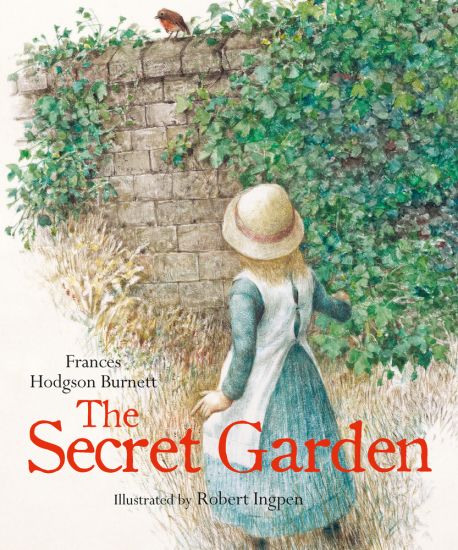
When spoiled rich girl, Mary Lennox, is orphaned, she is shipped from India to live in her uncle’s enormous manor in faraway England. The lonely girl is forbidden to play in most of the imposing house – struggling to adjust to her new surroundings, she goes out into the grounds every day. Before long, Mary finds a key to a secret garden that has been left untouched for ten years, and a whole new world of enchantment opens up to her. For the first time she learns to make friends – with the talented animal-charmer, Dickon, and her sickly cousin, Colin, who has been hidden away behind closed doors – and between them, the three children truly flourish as the garden reveals its haunting secrets. First published in 1911, Frances Hodgson Burnett’s story is one of the best-loved children’s books of the early twentieth century. This beautiful new edition brings together the complete and unabridged text with over seventy evocative illustrations and botanical studies by the award-winning artist Robert Ingpen.
Frances Burnett Hodgson’s novel The Secret Garden is both intriguing and uplifting. It is regarded as one of the best children’s books written in the twentieth century. Mary Lennox, a sickly ten year old girl, adrift in the world after both her mother and father die is sent to Yorkshire to live with an uncle whom she has never met, at his isolated house, Misselthwaite Manor. Initially Mary is seen as a rude, aggressive and selfish child. She dislikes her new home and the people living in it. But now the scene is set for her transformation and the introduction of the author’s engaging theme of rejuvenation and renewal. In exploring the grounds Mary finds the key to the locked garden which is neglected and overrun with weeds. She sets her mind to bringing it back to life. In doing so, Mary finds a purpose and an excitement in her lonely existence. However, apart from the garden, there are other secrets to be revealed at Misselthwaite Manor such as the strange cries in the night and the identity of Colin, a disabled boy, whom she discovers in the hidden bedroom. The popularity of this novel bears witness to its universal appeal and its timeless hold on the imagination.
The story of a small, angelic boy from New York who is told he is the heir to an English earldom and is whisked away to the English countryside where he begins to win over his bad-tempered old grandfather. When the boy's identity is challenged, his old friends from New York come to his rescue.
This book is about Marco Loristan, his father, and his friend, a street urchin called "The Rat". Marco's father, Stefan, is a Samavian patriot working to overthrow the cruel dictatorship in the kingdom of Samavia. Marco and his father come to London where Marco strikes up a friendship with a crippled street urchin known as The Rat. The friendship occurs when Marco overhears The Rat shouting in military form.