Kirjojen hintavertailu – 12 903 724 kirjaa ja 27 kauppaa

Kirjailija

Frances Karnes

Kirjat ja teokset yhdessä paikassa: 15 kirjaa, julkaisuja vuosilta 2005–2011, suosituimpiin kuuluu Assessment in the Classroom: The Key to Good Instruction (the Practical Strategies Series in Gifted Education). Vertaile teosten hintoja ja tarkista saatavuus suomalaisista kirjakaupoista.

15 kirjaa

Kirjojen julkaisuvuodet: 2005–2011.

Assessment in the Classroom: The Key to Good Instruction (the Practical Strategies Series in Gifted Education)
The goal of all classrooms is to maximize the learning of all students; therefore, correctly assessing what students have learned is an integral part of good instruction. By keeping the goal of good, strong assessment in mind, a teacher can clearly see his or her desired outcomes for a lesson, activity, or unit. It is critical to take into account a student's level of knowledge, understanding, beliefs, skills, dispositions, and learning styles when planning for good classroom instruction and assessment. Carolyn Callahan, a leader in the field of gifted education, guides teachers toward answering these questions about their students and planning for quality classroom assessment. In addition, the book provides an overview of the most common and successful assessment methods, including formal and informal assessments, student self-assessments, and preassessment strategies for planning instruction.
Identifying and Nurturing Math Talent

Identifying and Nurturing Math Talent

M. Katherine Gavin; Frances Karnes; Kristen R. Stephens

Prufrock Press
2011
nidottu
Now more than ever, we must cultivate top-notch mathematicians in order to address the needs, issues, and problems of the 21st century. Identifying and Nurturing Math Talent provides information for teachers, administrators, and parents interested in identifying and supporting mathematical talent in children and adolescents. This book offers practical advice on identifying mathematical talent, developing rigorous mathematics curricula, preparing highly qualified teachers, and locating specialized programs and schools in order to support the learning requirements of mathematically talented students.
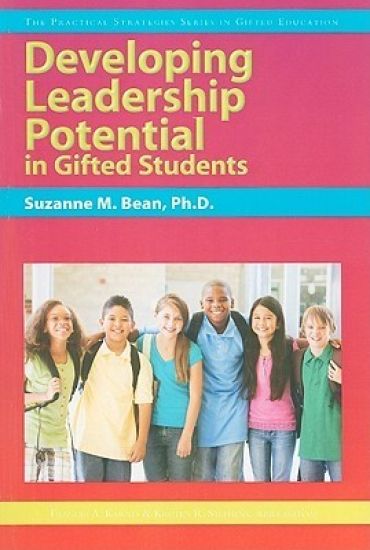
Developing Leadership Potential in Gifted Students

Developing Leadership Potential in Gifted Students

Suzanne M. Bean; Frances Karnes; Kristen R. Stephens

TAYLOR FRANCIS INC
2009
nidottu
Although the concept of leadership is often studied, researched, and discussed, the art of leadership is still misunderstood, debated, and often neglected. It is known, however, that leadership skills can be developed and more intentional endeavors must be made to cultivate bright, young leaders for the future. Developing Leadership Potential in Gifted Students offers insight into developing leadership skills in gifted students and provides definitions and theories of leadership, looks at trends and changing paradigms, and suggests screening and identification tools for leadership as well as instructional programs and materials to incorporate into the regular curriculum. This is one of the books in Prufrock Press' popular Practical Strategies Series in Gifted Education. The series offers 25 timesaving books on critical topics for educating gifted learners. Filled with practical information and advice, these books are ideal for classroom teachers, preservice teachers, and graduate students. In preparing this series, the authors have kept the busy classroom teacher in mind. The result is a timesaving introduction to the most important issues in gifted education.
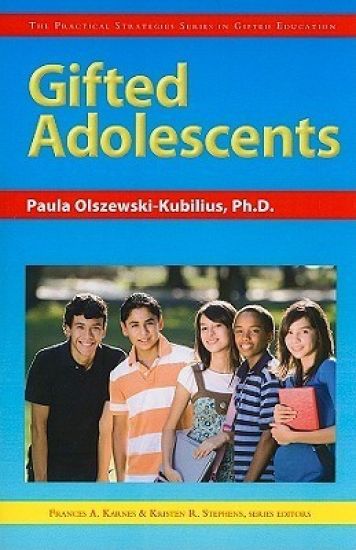
Gifted Adolescents

Gifted Adolescents

Paula Olszewski-Kubilius; Frances Karnes; Kristen R. Stephens

Prufrock Press
2009
nidottu
Part of Prufrock Press' Practical Strategies Series in Gifted Education, "Gifted Adolescents" focuses on talent development in adolescence, critical issues facing adolescents, and implications for educational practice and parenting. The series offers 25 timesaving books on critical topics for educating gifted learners. Filled with practical information and advice, these books are ideal for classroom teachers, preservice teachers, and graduate students. In preparing this series, the authors have kept the busy classroom teacher in mind. The result is a timesaving introduction to the most important issues in gifted education.
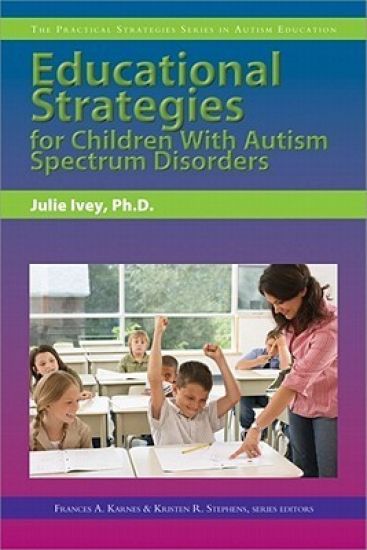
Educational Strategies for Children With Autism Spectrum Disorders

Educational Strategies for Children With Autism Spectrum Disorders

Julie Ivey; Frances Karnes; Kristen R. Stephens

TAYLOR FRANCIS INC
2009
nidottu
Focusing on educational and instructional strategies that are successful with students with autism spectrum disorders, Educational Strategies for Children With Autism Spectrum Disorders profiles the most current, research-based interventions that can be implemented by teachers in a classroom setting. Because autism spectrum disorders are on a continuum, educational placements can range from specialized autism classrooms to full-time inclusion in a general education classroom. It is important for teachers and staff to understand the various educational strategies that are available. It is the goal of this book to provide interventions and strategies to help teachers and staff best serve students on the autism spectrum. Strategies include applied behavior analysis, the Developmental, Individual Difference, Relationship-Based (DIR) model, discrete trial training, Picture Exchange Communication System (PECS), Pivotal Response Treatment (PRT), Sensory Integration Therapy, and Social Stories, among others.
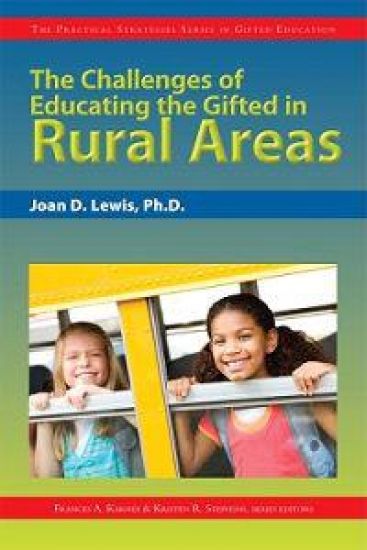
The Challenges of Educating the Gifted in Rural Areas

The Challenges of Educating the Gifted in Rural Areas

Frances Karnes; Kristen Stephens; Joan Lewis

Prufrock Press
2009
nidottu
Providing a high standard of education for our rural as well as urban students has been this country's intent, but often we have failed to achieve this goal. A number of factors have made guaranteeing educational equality for all students, regardless of location, more of a work-in-progress than a reality. It is only natural to ask how best to maintain a quality educational program in remote areas where funding is limited by lower population numbers and recruiting experienced teachers is problematic. The Challenges of Educating the Gifted in Rural Areas addresses the challenges and benefits of rural schools, shares how to adapt traditional gifted education programs for rural settings, and identifies and examines the components of a workable, successful collaboration among school administrators, teachers, students, parents, and other supporters from the community.
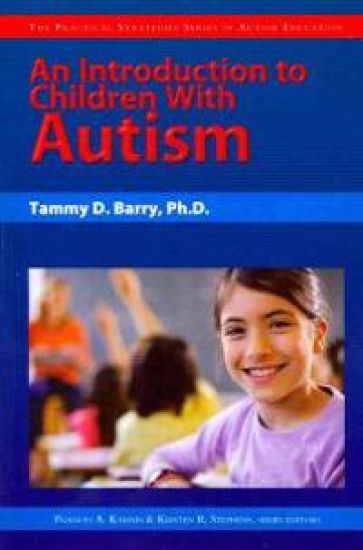
An Introduction to Children with Autism

An Introduction to Children with Autism

Tammy Berry; Tammy Barry; Frances Karnes

Prufrock Press
2009
nidottu
An Introduction to Children With Autism offers an informative overview of the autism spectrum. The book focuses on symptoms of autism and related disorders and characteristics of autism, including language, cognitive, behavioral, movement, affect/mood, temperament, sleeping and eating, and sensory characteristics. In addition, two case histories and evaluations are shared: one of a low-functioning child with autism and one of a high-functioning child with autism. Web resources and suggested readings are provided.
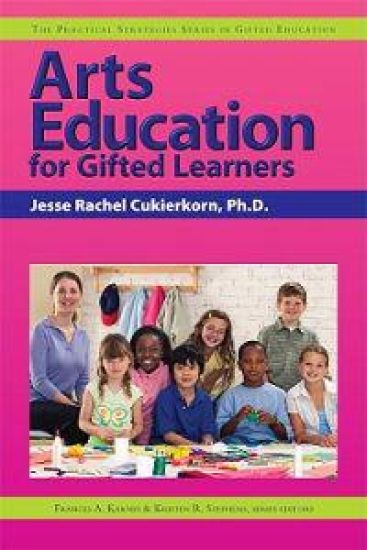
Arts Education for Gifted Learners: The Practical Strategies Series in Gifted Education

Arts Education for Gifted Learners: The Practical Strategies Series in Gifted Education

Jesse Rachel Cukierkorn; Frances Karnes; Kristen R. Stephens

Prufrock Press
2008
nidottu
Arts Education for Gifted Learners provides information for teachers and parents interested in supporting an artistically talented child. It reveals the characteristics of artistically talented students, describes program options, and shares an approach for supporting the affective needs of these students. This is one of the books in Prufrock Press' popular Practical Strategies Series in Gifted Education. This series offers a unique collection of tightly focused books that provide a concise, practical introduction to important topics concerning the education of gifted children. The guides offer a perfect beginner's introduction to key information about gifted and talented education.
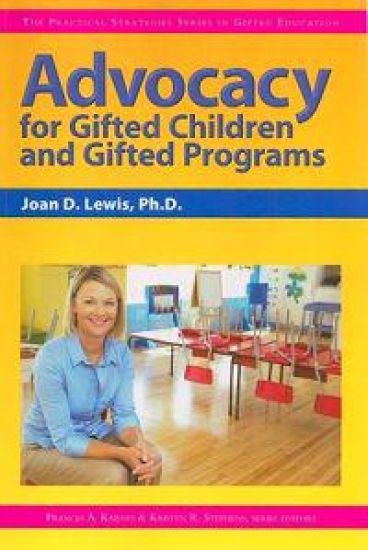
Advocacy for Gifted Children and Gifted Programs: The Practical Strategies Series in Gifted Education
Supporters of gifted education need to develop the skills of advocacy in order to help build strong, lasting, effective programs. "Advocacy for Gifted Children and Gifted Programs" describes a wide variety of successful strategies that can be used to advocate for gifted students at all levels.
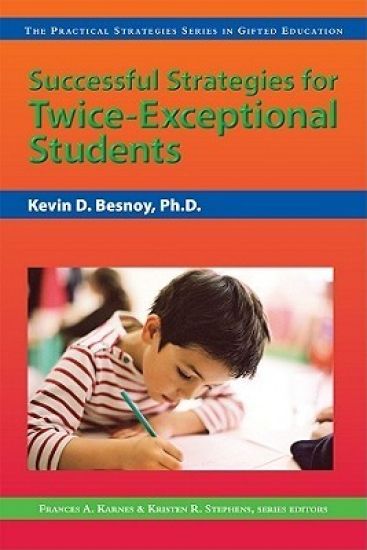
Successful Strategies for Twice-Exceptional Students: The Practical Strategies Series in Gifted Education
Some kids, including gifted students, have difficulties in school. Gifted students with learning disabilities may continuously struggle with certain areas of instruction, but never receive identification of or accommodation for their difficulties, because their gifts mask their disabilities. Gifted students with learning disabilities need unique instruction and a practical use of accommodations to succeed in school. It is important for educators to familiarize themselves with the definitions and characteristics of various learning disabilities, and learn the strategies they can use in the classroom to help gifted/learning-disabled students succeed. In this book, Kevin Besnoy takes an in-depth look at the various learning disabilities and difficulties some gifted students face, provides practical tips for accommodating and planning instruction for those students, and gives an overview of federal law related to this population.
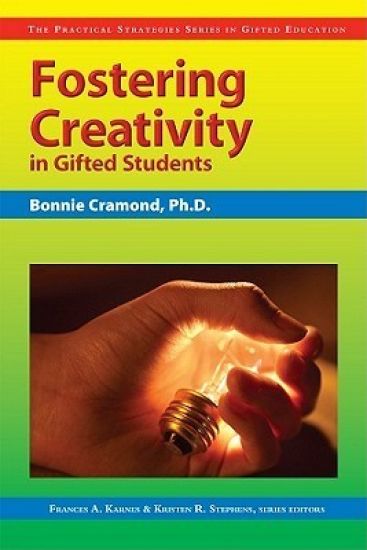
Fostering Creativity in Gifted Students

Fostering Creativity in Gifted Students

Bonnie Cramond; Frances Karnes; Kristen R. Stephens

TAYLOR FRANCIS INC
2005
nidottu
It is not possible to teach someone to be creative. It is not possible to teach someone to be intelligent. It is, however, possible to teach students to use the creativity and intelligence they already have. Students can be taught to think more creatively or intelligently, and can also learn strategies for thinking more rationally or imaginatively. Encouraging creative thinking in the classroom is an exciting component of any effective gifted education program. This guide offers basic foundations required for supporting creativity. From establishing the right classroom environment, to using creative teaching strategies, to assessing student outcomes, this book is filled with practical information. The book also includes a listing of competitive contests and programs and an extensive list of resources. This is one of the books in Prufrock Press' popular Practical Strategies Series in Gifted Education. This series offers a unique collection of tightly focused books that provide a concise, practical introduction to important topics concerning the education of gifted children. The guides offer a perfect beginner's introduction to key information about gifted and talented education.
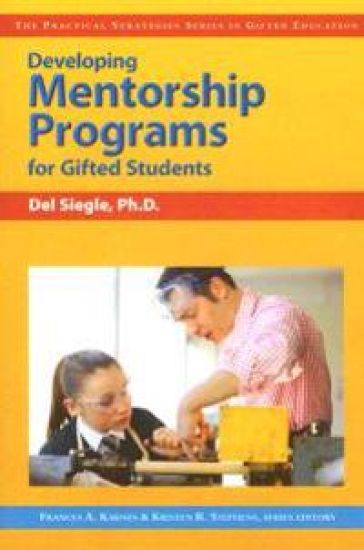
Developing Mentorship Programs for Gifted Students

Developing Mentorship Programs for Gifted Students

Del Siegle; Frances Karnes; Kristen R. Stephens

Prufrock Press
2005
nidottu
Mentorship programs can provide motivated gifted and talented students with an opportunity to apply inductive thinking and problem-solving skills to advanced content that is often associated with real-life situations. They need to investigate the complexities and interrelationships among disciplines that can only be discovered with assistance from highly knowledgeable experts. As gifted students develop their interests and talents in a chosen area of study, it is often necessary to structure learning experiences with out-of-school mentors. This guide offers practical strategies for starting and developing a mentoring program. From structuring a program, to selecting a mentor and monitoring progress, to ensuring success, this book provides an excellent introduction to the topic.
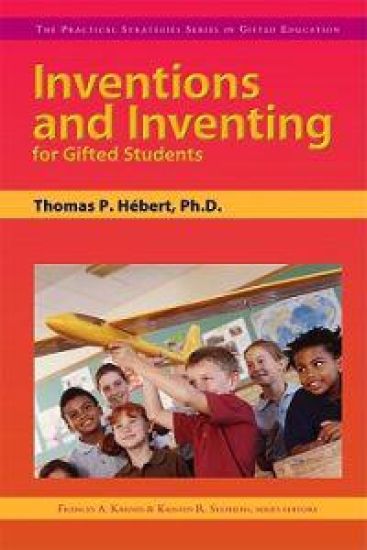
Inventions and Inventing for Gifted Students

Inventions and Inventing for Gifted Students

Frances Karnes; Thomas Paul Hebert; Kristen Stephens

Prufrock Press
2005
nidottu
Inventing involves creativity applied to a problem-solving process, which can be taught. Through teaching instructional units on inventing, multiple creative skills are infused into one unit. Teachers who provide their students with such instruction see inventions as a natural way of packaging creativity training in an authentic and meaningful way. Applying creative thinking skills and a knowledge of a field of study to create exciting inventions is at the heart of the inventing process. This guide offers a practical introduction to the inventing process: getting students interesting in inventing, teaching the inventing process, patenting new product ideas, participating in inventions conventions and competitions, and an extensive listing of print and Web-based resources. This is one of the books in Prufrock Press' popular Practical Strategies Series in Gifted Education. This series offers a unique collection of tightly focused books that provide a concise, practical introduction to important topics concerning the education of gifted children. The guides offer a perfect beginner's introduction to key information about gifted and talented education.
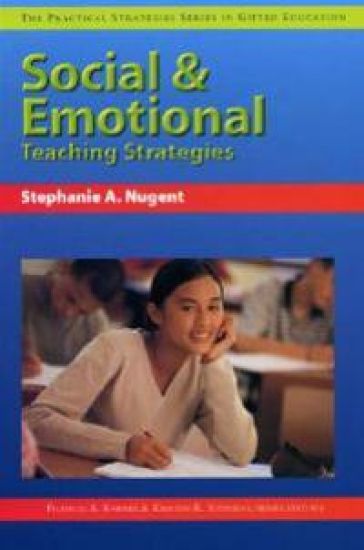
Social and Emotional Teaching Strategies

Social and Emotional Teaching Strategies

Stephanie Ferguson; Frances Karnes; Kristen R. Stephens

Prufrock Press
2005
nidottu
Elements associated with social and emotional education include a wide range of personal attributes, including value systems, attitudes, interests, feelings and emotions, interpersonal relationships, and character and leadership. With so many factors linked to social and emotional education, the affective domain should be given a priority in school curricula. However, prior to crises or overt threats, schools have traditionally paid little attention to the social and emotional needs of the student body. The author explains the necessity of social and emotional education in nurturing the development of gifted students and offers strategies for the classroom that work for both groups and individuals.
Questioning Strategies for Teaching the Gifted: The Practical Strategies Series in Gifted Education

Questioning Strategies for Teaching the Gifted: The Practical Strategies Series in Gifted Education

Elizabeth Shaunessy; Frances Karnes; Kristen R. Stephens

Prufrock Press
2005
nidottu
In order to stimulate creative development among gifted students, the use of questioning techniques has proven to be a successful strategy for encouraging purposeful inquiry. Students need to learn to generate alternatives to solving real-world problems, and teachers can help them do this by regularly incorporating divergent questions in the classroom. Teachers can incorporate questions effectively by knowing the various purposes, types, and intended outcomes and by establishing a classroom climate that promotes active engagement, exploration, and inquiry to further student achievement.