Kirjojen hintavertailu – 12 859 829 kirjaa ja 27 kauppaa

Kirjailija

Francesco Buscemi

Kirjat ja teokset yhdessä paikassa: 8 kirjaa, julkaisuja vuosilta 2018–2025, suosituimpiin kuuluu From Body Fuel to Universal Poison. Vertaile teosten hintoja ja tarkista saatavuus suomalaisista kirjakaupoista.

8 kirjaa

Kirjojen julkaisuvuodet: 2018–2025.

Arms Politics

Arms Politics

Francesco Buscemi

CORNELL UNIVERSITY PRESS
2025
pokkari

Halvin toimitettuna 40,60 €

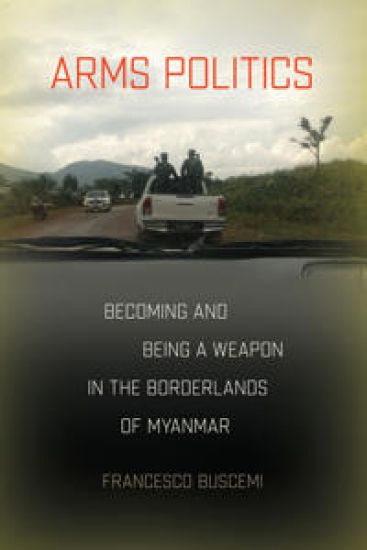
In Arms Politics, Francesco Buscemi tells the story of the ceasefire, disarmament, and rearmament of the Ta'ang movement in Myanmar's Shan State through an analysis of the formation of the Palaung State Liberation Front/Ta'ang National Liberation Army (PSLF/TNLA). With a focus on the circulation of weapons through the post-1991 ceasefire, disarmament, and rearmament years, Buscemi explores how "becoming and being" an armed force leads to the "becoming and being" of a rebel polity. Buscemi argues that the governance of arms and weaponry by rebel movements such as the PSLF/TNLA shapes historically and spatially complex relationships among leadership, rank-and-file, civilians, and civil society groups. Furthermore, he demonstrates that it is through the acquisition of weapons and the governing of armed collectives that rebel movements reproduce and shape the collective identity of their polity and its political geography. Against the backdrop of the world's longest ongoing armed conflict, Arms Politics shows how the processes and practices of governing weapons shape social and spatial relations of rule at the edges of state authority.
Arms Politics

Arms Politics

Francesco Buscemi

CORNELL UNIVERSITY PRESS
2025
sidottu
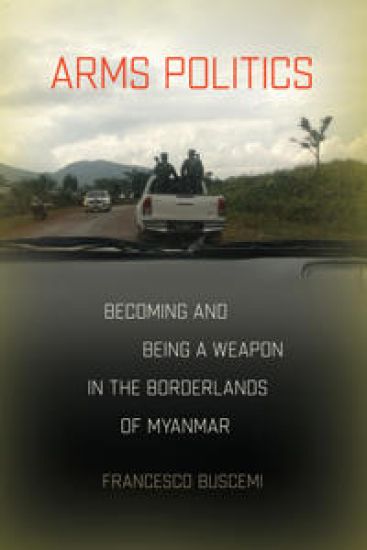
In Arms Politics, Francesco Buscemi tells the story of the ceasefire, disarmament, and rearmament of the Ta'ang movement in Myanmar's Shan State through an analysis of the formation of the Palaung State Liberation Front/Ta'ang National Liberation Army (PSLF/TNLA). With a focus on the circulation of weapons through the post-1991 ceasefire, disarmament, and rearmament years, Buscemi explores how "becoming and being" an armed force leads to the "becoming and being" of a rebel polity. Buscemi argues that the governance of arms and weaponry by rebel movements such as the PSLF/TNLA shapes historically and spatially complex relationships among leadership, rank-and-file, civilians, and civil society groups. Furthermore, he demonstrates that it is through the acquisition of weapons and the governing of armed collectives that rebel movements reproduce and shape the collective identity of their polity and its political geography. Against the backdrop of the world's longest ongoing armed conflict, Arms Politics shows how the processes and practices of governing weapons shape social and spatial relations of rule at the edges of state authority.
The Island on an Island

The Island on an Island

Francesco Buscemi

Common Ground Research Networks
2025
sidottu
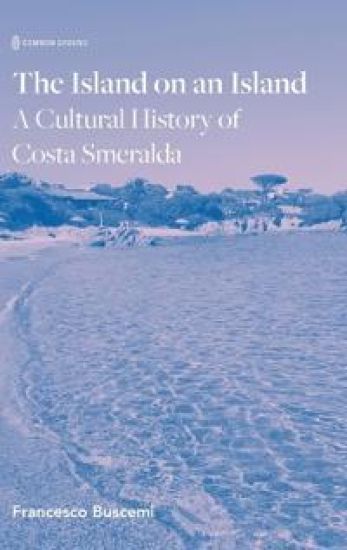
Can we recreate a holiday experience from the 1960s or 1990s in a world that changes so rapidly? This book argues that tourism is not merely a break from daily life but an ever-evolving current, an integral part of our culture and society that never remains fixed. The Island on an Island: History, Media Construction and Uncertain Future of Costa Smeralda examines how northeast Sardinia-one of the most stunning areas in the world-became an artificial paradise, continually adapting to new scenarios in order to present tourists with the latest version of paradise they desire. The media system has played a pivotal role, actively shaping this construction; since the 1990s, media itself has become the very substance of what is communicated. This process perfectly illustrates Jean Baudrillard's insight that the media create maps of reality which overlap the real territory, to the point where people no longer perceive actual reality but only its mediated versions. Over time, many layers-both literal and figurative-have been added to Costa Smeralda, obscuring the original land, which peasants and shepherds once sold cheaply to wealthy entrepreneurs. In tandem, media and tourism have always created the ideal environment for whoever happened to be in power. Now that this trend is slowly coming to an end, no one knows which destination will become the next paradise. It is clear, however, that emerging forms of cultural, experiential, and sustainable tourism have little in common with today's Costa Smeralda-suggesting that its current model is in need of adjustment.
Pasta, Pizza and Propaganda

Pasta, Pizza and Propaganda

Francesco Buscemi

INTELLECT
2022
sidottu
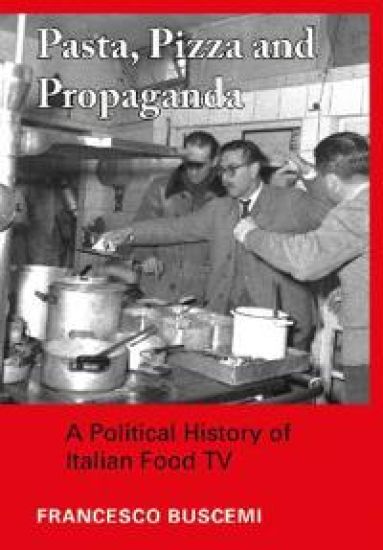
This book aims to develop a political history of Italian ‘good food’ on national television, and the central role of food in Italian culture. The focus is highly original and this is a unique interdisciplinary study at the intersection between food studies, media studies and politics. The three protagonists of Pasta, Pizza and Propaganda are food, television and politics. These are the three main characters that interrelate, collaborate and fight behind the scenes, while in front of the camera the writers, intellectuals and celebrity chefs talk about, prepare or taste the best Italian dishes. The book retraces the history of Italian food television from a political point of view: the early shows of the pioneers under strict Catholic control in the 1950s and 1960s, the left-wing political twist of the 1970s, the conservative riflusso or resurgence of the 1980s, the disputed Berlusconian era and the rise of the celebrity chefs, which, for better or for worse, makes Italy similar to the other western countries. The history of Italy since the mid-1950s is retold through the lenses of food television. This lively book demonstrates that cooking spaghetti in a TV studio is a political act, and tries to uncover how it is possible that, while watching on TV how to make pizza, we become citizens. The primary readership will be an academic audience, including those in the disciplines of food studies, media studies, politics and Italian studies, as well as potentially for those interested in Italian sociology and anthropology. There may be a potential wider readership because of the popularity of Italian food and food television.
Feeling Political

Feeling Political

Ute Frevert; Kerstin Maria Pahl; Francesco Buscemi; Philipp Nielsen; Agnes Arndt; Michael Amico; Karsten Lichau; Hannah Malone; Julia Wambach; Juliane Brauer; Caroline Moine

Springer Nature Switzerland AG
2022
sidottu
Historicizing both emotions and politics, this open access book argues that the historical work of emotion is most clearly understood in terms of the dynamics of institutionalization. This is shown in twelve case studies that focus on decisive moments in European and US history from 1800 until today. Each case study clarifies how emotions were central to people’s political engagement and its effects. The sources range from parliamentary buildings and social movements, to images and speeches of presidents, from fascist cemeteries to the International Criminal Court. Both the timeframe and the geographical focus have been chosen to highlight the increasingly participatory character of nineteenth- and twentieth-century politics, which is inconceivable without the work of emotions.
Feeling Political

Feeling Political

Ute Frevert; Kerstin Maria Pahl; Francesco Buscemi; Philipp Nielsen; Agnes Arndt; Michael Amico; Karsten Lichau; Hannah Malone; Julia Wambach; Juliane Brauer; Caroline Moine

Springer Nature Switzerland AG
2022
nidottu
Historicizing both emotions and politics, this open access book argues that the historical work of emotion is most clearly understood in terms of the dynamics of institutionalization. This is shown in twelve case studies that focus on decisive moments in European and US history from 1800 until today. Each case study clarifies how emotions were central to people’s political engagement and its effects. The sources range from parliamentary buildings and social movements, to images and speeches of presidents, from fascist cemeteries to the International Criminal Court. Both the timeframe and the geographical focus have been chosen to highlight the increasingly participatory character of nineteenth- and twentieth-century politics, which is inconceivable without the work of emotions.
From Body Fuel to Universal Poison

From Body Fuel to Universal Poison

Francesco Buscemi

Springer International Publishing AG
2019
nidottu
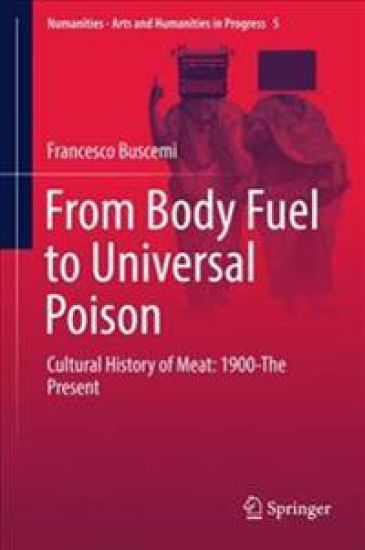
This book explores our changing relationship with meat as food. Half storytelling and half historic work, it analyzes the way in which humans have dealt with the idea of eating animals in the Western world, from 1900 to the present. The story part of the book follows the rise and fall of meat, and illustrates how this type of food has become a problem in a more emotional way. The historical component informs and offers readers key data. The author draws on theories of circular societies, smart cities and smart countries to explain how and why forms of meat production that were common in the past have since all but disappeared. Both components, however, explain why meat has been important and why it has now become a problem. In tracing the fall of meat, the author identifies a host of dilemmas. These include fossil energy, pollution, illnesses caused by eating meat, factory farming, and processed foods. Lastly, the book offers a possible solution. The answer focuses on new forms of meat obtained without killing animals and in a sense resembles renewable energy. Overall, this unique cultural history offers revealing insights into how meat affects social relations, interpersonal relationships, and humanity as a whole.
From Body Fuel to Universal Poison

From Body Fuel to Universal Poison

Francesco Buscemi

Springer International Publishing AG
2018
sidottu
This book explores our changing relationship with meat as food. Half storytelling and half historic work, it analyzes the way in which humans have dealt with the idea of eating animals in the Western world, from 1900 to the present. The story part of the book follows the rise and fall of meat, and illustrates how this type of food has become a problem in a more emotional way. The historical component informs and offers readers key data. The author draws on theories of circular societies, smart cities and smart countries to explain how and why forms of meat production that were common in the past have since all but disappeared. Both components, however, explain why meat has been important and why it has now become a problem. In tracing the fall of meat, the author identifies a host of dilemmas. These include fossil energy, pollution, illnesses caused by eating meat, factory farming, and processed foods. Lastly, the book offers a possible solution. The answer focuses on new forms of meat obtained without killing animals and in a sense resembles renewable energy. Overall, this unique cultural history offers revealing insights into how meat affects social relations, interpersonal relationships, and humanity as a whole.