Kirjojen hintavertailu – 12 903 735 kirjaa ja 27 kauppaa
Kirjailija
Francesco Cavatorta
Kirjat ja teokset yhdessä paikassa: 9 kirjaa, julkaisuja vuosilta 2010–2027, suosituimpiin kuuluu Rethinking Islamic Politics in Tunisia. Vertaile teosten hintoja ja tarkista saatavuus suomalaisista kirjakaupoista.
The emergence of Islamist and Salafi movements – the actors of Islamist Politics – has been a critical area of scholarship on the Middle East and North Africa. But there is no theoretical framework to understand political Islam as a phenomenon that includes both Islamic ideology and modern activism. This book uses the Gramscian concept of political activism to provide this much-needed perspective. As Arab societies have had a similar historical development and trajectory to the society Gramsci was analyzing, his ideas are shown to be particularly relevant for understanding the post-2011 democratization and politicization of Islamist and Salafi movements. Based on the case study of the Tunisian Islamist movement, al-Nahda, and the Tunisian Salafi movement, Ansar al-Sharia, political Islam is given a useful explanatory framework to explain how the ideological/theological side of Islamic activism realizes itself into practical political action. The book establishes the term ‘Islamic politics’ to describe this combination of socio-religious mobilization - commonly defined as dawa - and political organization, including party or revolutionary organizations. Furthermore, the authors show that Islamists and Salafists can be described as ‘post-Islamist’ in the same way communist parties became ‘post-communist’ and ‘post-ideological’. Written by two renowned experts on political Islam, the innovative theoretical framework used here can explain the development and behaviour of Islamist groups in other contexts, moving scholarship beyond traditional approaches.
Studies of the Arab world since the 2011 uprisings have fluctuated between extolling the explanatory power of the democratization paradigm or the validity of the authoritarian resilience framework. It is through these two theoretical lenses that political developments across the region have been largely interpreted. These two paradigms though fail to capture the actual complexity of the changes - or lack thereof - that have characterised the region since 2011 because their focus is on elites and institutions (the macro-story). When one examines the attitudes of citizens a different story emerges (the micro-story). The central puzzle of this research builds on the paradox of what citizens in three Arab countries think about their political systems. Reflecting on the longer-term trends in the region and using recent survey data, the book investigates and explains the high level of dissatisfaction of citizens in countries that have experienced radically different post-uprising trajectories.
This textbook offers a systematic and up-to-date introduction to politics and society in the Middle East. Taking a thematic approach that engages with core theory as well as a wide range of research, it examines postcolonial political, social and economic developments in the region, while also scrutinising the domestic and international factors that have played a central role in these developments. Topics covered include the role of religion in political life, gender and politics, the Israel-Palestine conflict, civil war in Syria, the ongoing threat posed by Islamist groups such as Islamic State as well as the effects of increasing globalisation across the MENA. Following the ongoing legacy of the Arab Spring, it pays particular attention to the tension between processes of democratization and the persistence of authoritarian rule in the region. This new edition offers: - Coverage of the latest developments, with expanded coverage of the military and security apparatus, regional conflict and the Arab uprisings - Textboxes linking key themes to specific historical events, figures and concepts - Comparative spotlight features focusing on the politics and governance of individual countries. This is an ideal resource for undergraduate and postgraduate students approaching Middle Eastern politics for the first time.
This textbook offers a systematic and up-to-date introduction to politics and society in the Middle East. Taking a thematic approach that engages with core theory as well as a wide range of research, it examines postcolonial political, social and economic developments in the region, while also scrutinising the domestic and international factors that have played a central role in these developments. Topics covered include the role of religion in political life, gender and politics, the Israel-Palestine conflict, civil war in Syria, the ongoing threat posed by Islamist groups such as Islamic State as well as the effects of increasing globalisation across the MENA. Following the ongoing legacy of the Arab Spring, it pays particular attention to the tension between processes of democratization and the persistence of authoritarian rule in the region. This new edition offers: - Coverage of the latest developments, with expanded coverage of the military and security apparatus, regional conflict and the Arab uprisings - Textboxes linking key themes to specific historical events, figures and concepts - Comparative spotlight features focusing on the politics and governance of individual countries. This is an ideal resource for undergraduate and postgraduate students approaching Middle Eastern politics for the first time.
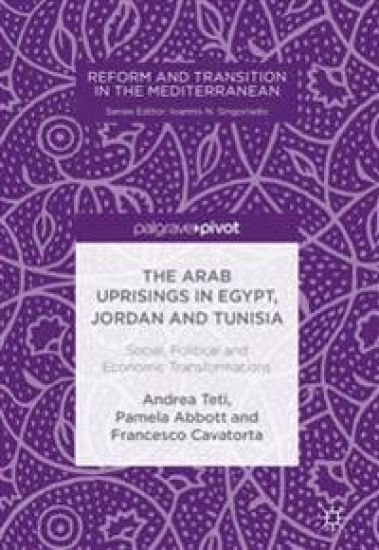
The Arab Uprisings were unexpected events of rare intensity in Middle Eastern history – mass, popular and largely non-violent revolts which threatened and in some cases toppled apparently stable autocracies. This volume provides in-depth analyses of how people perceived the socio-economic and political transformations in three case studies epitomising different post-Uprising trajectories – Tunisia, Jordan and Egypt – and drawing on survey data to explore ordinary citizens’ perceptions of politics, security, the economy, gender, corruption, and trust. The findings suggest the causes of protest in 2010-2011 were not just political marginalisation and regime repression, but also denial of socio-economic rights and regimes failure to provide social justice. Data also shows these issues remain unresolved, and that populations have little confidence governments will deliver, leaving post-Uprisings regimes neither strong nor stable, but fierce and brittle. This analysis has direct implications both for policy and for scholarship on transformations, democratization, authoritarian resilience and ‘hybrid regimes’.
The Arab Uprisings were unexpected events of rare intensity in Middle Eastern history – mass, popular and largely non-violent revolts which threatened and in some cases toppled apparently stable autocracies. This volume provides in-depth analyses of how people perceived the socio-economic and political transformations in three case studies epitomising different post-Uprising trajectories – Tunisia, Jordan and Egypt – and drawing on survey data to explore ordinary citizens’ perceptions of politics, security, the economy, gender, corruption, and trust. The findings suggest the causes of protest in 2010-2011 were not just political marginalisation and regime repression, but also denial of socio-economic rights and regimes failure to provide social justice. Data also shows these issues remain unresolved, and that populations have little confidence governments will deliver, leaving post-Uprisings regimes neither strong nor stable, but fierce and brittle. This analysis has direct implications both for policy and for scholarship on transformations, democratization, authoritarian resilience and ‘hybrid regimes’.
The transition paradigm has traditionally viewed civil society activism as an essential condition for the establishment of democracy. The democracy promotion strategies of Western policy-makers have, therefore, been based on strengthening civil society in authoritarian settings in order to support the development of social capital -to challenge undemocratic regimes. This book questions the validity of the link between an active associational life and democratization. It examines civil society in the Arab world in order to illustrate how authoritarian constraints structure civil society dynamics in the region in ways that hinder transition to democracy. Building on innovative theoretical work and drawing on empirical data from extensive fieldwork in the region, this study demonstrates how the activism of civil society in five different Arab countries strengthens rather than weakens authoritarian practices and rule. Through an analysis of the specific legal and political constraints on associational life, and the impact of these on relations between different civic groups, and between associations and state authorities, the book demonstrates that the claim that civil society plays a positive role in processes of democratic transformation is highly questionable. Offering a broad and alternative vision of the state of civil society in the region, this book will be an important contribution to studies on Middle Eastern politics, democratization and civil society activism.
The transition paradigm has traditionally viewed civil society activism as an essential condition for the establishment of democracy. The democracy promotion strategies of Western policy-makers have, therefore, been based on strengthening civil society in authoritarian settings in order to support the development of social capital -to challenge undemocratic regimes. This book questions the validity of the link between an active associational life and democratization. It examines civil society in the Arab world in order to illustrate how authoritarian constraints structure civil society dynamics in the region in ways that hinder transition to democracy. Building on innovative theoretical work and drawing on empirical data from extensive fieldwork in the region, this study demonstrates how the activism of civil society in five different Arab countries strengthens rather than weakens authoritarian practices and rule. Through an analysis of the specific legal and political constraints on associational life, and the impact of these on relations between different civic groups, and between associations and state authorities, the book demonstrates that the claim that civil society plays a positive role in processes of democratic transformation is highly questionable. Offering a broad and alternative vision of the state of civil society in the region, this book will be an important contribution to studies on Middle Eastern politics, democratization and civil society activism.