

Kirjailija
Francesco Orsi
Kirjat ja teokset yhdessä paikassa: 7 kirjaa, julkaisuja vuosilta 2015–2025, suosituimpiin kuuluu Make Germany Great Again. Vertaile teosten hintoja ja tarkista saatavuus suomalaisista kirjakaupoista.
7 kirjaa
Kirjojen julkaisuvuodet: 2015–2025.

"Make Germany Great Again - Ein radikaler Plan f r die Zukunft"Deutschland - das Land der Ingenieure, Dichter und Denker - steckt in der Krise. Ein Land, das einst als Motor Europas galt, scheint heute den Anschluss zu verlieren. B rokratische Tr gheit, wirtschaftlicher Stillstand, politische Ideenlosigkeit und ein zunehmender gesellschaftlicher Pessimismus drohen, die einstige St rke Deutschlands zu erodieren. Doch was ist schiefgelaufen? Und vor allem: Wie k nnen wir das ndern?" Make Germany Great Again" ist kein gew hnliches Buch. Es ist eine schonungslose Abrechnung mit den Vers umnissen der Vergangenheit - und gleichzeitig eine inspirierende Vision f r eine bessere Zukunft. Mit einem scharfen Blick und radikalen Ideen wagt es sich dorthin, wo viele andere nur z gerlich bleiben: mitten in die kontroversen Themen, die das Land spalten. Es ist eine Provokation, ein Aufruf und eine Anleitung zugleich. Dieses Buch ist keine Werbung f r eine bestimmte Ideologie. Es ist gleichzeitig konservativ, progressiv, radikal und pragmatisch. Es fordert den Leser heraus, etablierte Denkmuster zu hinterfragen, neue Perspektiven zuzulassen und sich mit unbequemen Wahrheiten auseinanderzusetzen. Was erwartet Sie in diesem Buch? Dieses Buch ist keine trockene Abhandlung, sondern ein leidenschaftlicher und provokativer Blick auf die Realit t. Es ist in sieben pr gnante Abschnitte gegliedert, die sich von einer pers nlichen Bestandsaufnahme ber die Analyse der deutschen Schw chen bis hin zu konkreten Reformvorschl gen und einer Vision f r 2035 erstrecken. Jede Seite fordert heraus, inspiriert und l sst den Leser mit der Frage zur ck: "Was kann ich selbst tun, um mein Land zu ver ndern?" Von den verschlafenen Chancen der Digitalisierung ber die Notwendigkeit einer Bildungsrevolution bis hin zur radikalen Idee, Deutschland milit risch neutral zu machen - dieses Buch bleibt keine Antwort schuldig. Es zeigt, wie Deutschland von einer Verwaltungsgesellschaft zu einer Innovationsnation werden kann. Es erkl rt, warum die Politik mutiger werden muss - und warum B rger Verantwortung bernehmen m ssen. Warum dieses Buch anders istIn einer Zeit, in der politische Lager verh rtet sind und Debatten oft in ideologischen Sch tzengr ben enden, schl gt "Make Germany Great Again" einen v llig anderen Weg ein. Es nimmt sich das Beste aus allen Richtungen - die liberalen Ideen der Wirtschaftsf rderung, die gr nen Ans tze f r Klimaschutz, die konservativen Werte von Ordnung und Disziplin, und die sozialen Visionen von Gerechtigkeit und Teilhabe. Es verbindet sie zu einer radikalen Vision, die das Potenzial hat, Deutschland wieder stark zu machen. Doch dieses Buch bleibt nicht bei Visionen stehen. Es liefert konkrete Vorschl ge: Wie B rokratie abgebaut werden kann, wie Deutschland zum Technologief hrer wird, warum die Renten reformiert werden m ssen und wie man den gesellschaftlichen Zusammenhalt st rkt. Eine Einladung zur DiskussionDieses Buch wird polarisieren. Es wird geliebt, gehasst, diskutiert und hinterfragt werden. Und genau das ist seine St rke. "Make Germany Great Again" ist kein Buch, das einfache Antworten gibt - es ist ein Buch, das zum Nachdenken anregt. Es will nicht best tigen, was Sie bereits glauben, sondern Sie dazu bringen, neue Perspektiven einzunehmen. Wenn Sie bereit sind, sich auf kontroverse Ideen einzulassen, wenn Sie sich nicht mit Mittelma zufriedengeben und wenn Sie glauben, dass Deutschland mehr kann, als es heute zeigt, dann ist dieses Buch f r Sie. Seien Sie Teil der Ver nderungDeutschland braucht keine Verwaltung seiner Probleme - es braucht Visionen, Mut und Menschen, die bereit sind, Verantwortung zu bernehmen. "Make Germany Great Again" ist mehr als ein Buch. Es ist ein Weckruf, ein Appell und eine Anleitung f
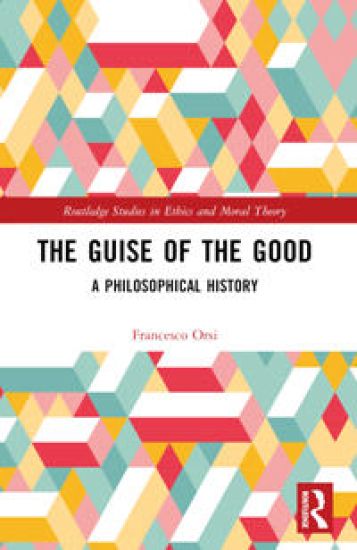
This is the first book to trace the doctrine of the guise of the good throughout the history of Western philosophy. It offers a chronological narrative exploring how the doctrine was formulated, the arguments for and against it, and the broader role it played in the thought of different philosophers. In recent years there has been a rich debate about whether value judgment or value perception must form an essential part of mental states such as emotions and desires, and whether intentional actions must always be done for reasons that seem good to the agent. This has sparked new theoretical interest in the classical doctrine of the guise of the good: whenever we desire (to do) something, we see it under the guise of the good; that is, we conceive of what we desire as good, desirable, or justified by reasons, in some way or another. This book offers a systematic historical treatment of the guise of the good. The chapters span from Ancient and Medieval philosophy (Socrates, Plato, Aristotle, Augustine, and Aquinas), through the early modern period (Hobbes, Spinoza, Locke, Hume, and Kant) and up to Elizabeth Anscombe's rediscovery in the 20th century after a period of relative neglect. Together they demonstrate how history can offer potential new models of the guise of the good—or new arguments against it—as well as to give a sense of how the guise of the good can bear on other philosophical issues. The Guise of the Good: A Philosophical History is an excellent resource for scholars and students working on the history of ethics, philosophy of action, and practical reason.

Praktilise eetika käsiraamat. õpik gümnaasiumidele ja kõrgkoolidele
Francesco Orsi; Marten Juurik; Mari Kooskora; Kristi Lõuk; Mats Volberg; Halliki Harro-Loit; Helena Eenmaa; Kadri Simm; Margit Sutrop; Marek Volt
Tartu ülikooli kirjastus
2024
sidottu
Praktilise eetika käsiraamat. Opik gümnaasiumidele ja kõrgkoolideleMiks dopingu kasutamine spordis on taunitav? Kas halb inimene võib olla suurepärane kunstnik? Kas "räpased käed" poliitikas on paratamatus? Eetika on filosoofia haru, milles otsitakse vastust ja põhjendusi küsimusele, mis on õige ja mis vale. Praktiline eetika seob süstemaatilise mõtlemise abil moraalifilosoofia ja päriselu. Siinse käsiraamatu peatükid ei paku püstitatud küsimustele lõpplahendusi, vaid on pigem alguspunkt mõistlikule arutelule ja edasimõtlemisele. Käsiraamatus tutvustavad autorid olulisemaid debatte, selgitavad tähtsamaid mõisteid ning pakuvad valitud näiteid elulistest olukordadest. Raamat algab sissejuhatusega praktilisse eetikasse, sellele järgnevad peatükid keskkonnaeetikast, bioeetikast, kunstieetikast, spordieetikast, poliitikast ja eetikast, perekonnaelust ja eetikast, seksi ja võimu asümmeetriate eetikast, tehnoloogiast ja eetikast, kutse-eetikast, teaduseetikast ja teadlase eetikast, kommunikatsiooni, meedia ja ajakirjanduse eetikast ning ärieetikast. Raamat pakub taustateadmisi ning arendab arutlusoskust oma seisukoha kujundamiseks, läbimõeldud otsusteks ja nende veenvaks esitamiseks ja kaitsmiseks. Lisaks leiab lugeja harjutusi ning arutlusküsimusi, mille najal oma seisukohtade üle mõtiskleda. Opikuna saavad raamatut kasutada näiteks gümnaasiumiõpilased ning kõrgkoolide eri valdkondade sissejuhatavate kursuste tudengid. Autorid usuvad, et põnevat lugemist jätkub ka kõigile teistele. Raamatu e-versioon pälvis 2023. aasta parima eestikeelse kõrgkooliõpiku auhinna.
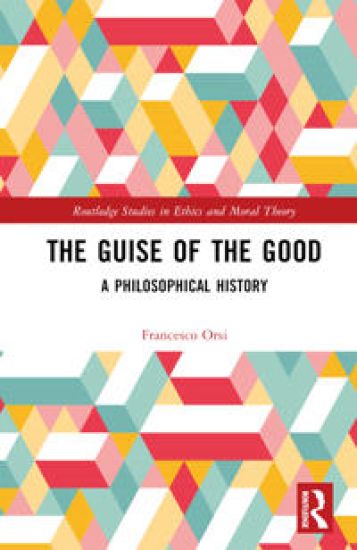
This is the first book to trace the doctrine of the guise of the good throughout the history of Western philosophy. It offers a chronological narrative exploring how the doctrine was formulated, the arguments for and against it, and the broader role it played in the thought of different philosophers. In recent years there has been a rich debate about whether value judgment or value perception must form an essential part of mental states such as emotions and desires, and whether intentional actions must always be done for reasons that seem good to the agent. This has sparked new theoretical interest in the classical doctrine of the guise of the good: whenever we desire (to do) something, we see it under the guise of the good; that is, we conceive of what we desire as good, desirable, or justified by reasons, in some way or another. This book offers a systematic historical treatment of the guise of the good. The chapters span from Ancient and Medieval philosophy (Socrates, Plato, Aristotle, Augustine, and Aquinas), through the early modern period (Hobbes, Spinoza, Locke, Hume, and Kant) and up to Elizabeth Anscombe's rediscovery in the 20th century after a period of relative neglect. Together they demonstrate how history can offer potential new models of the guise of the good—or new arguments against it—as well as to give a sense of how the guise of the good can bear on other philosophical issues. The Guise of the Good: A Philosophical History is an excellent resource for scholars and students working on the history of ethics, philosophy of action, and practical reason.

What is it for a car, a piece of art or a person to be good, bad or better than another? In this first book-length introduction to value theory, Francesco Orsi explores the nature of evaluative concepts used in everyday thinking and speech and in contemporary philosophical discourse. The various dimensions, structures and connections that value concepts express are interrogated with clarity and incision. Orsi provides a systematic survey of both classic texts including Plato, Aristotle, Kant, Moore and Ross and an array of contemporary theorists. The reader is guided through the moral maze of value theory with everyday examples and thought experiments. Rare stamps, Napoleon's hat, evil demons, and Kant's good will are all considered in order to probe our intuitions, question our own and philosophers' assumptions about value, and, ultimately, understand better what we want to say when we talk about value.

What is it for a car, a piece of art or a person to be good, bad or better than another? In this first book-length introduction to value theory, Francesco Orsi explores the nature of evaluative concepts used in everyday thinking and speech and in contemporary philosophical discourse. The various dimensions, structures and connections that value concepts express are interrogated with clarity and incision. Orsi provides a systematic survey of both classic texts including Plato, Aristotle, Kant, Moore and Ross and an array of contemporary theorists. The reader is guided through the moral maze of value theory with everyday examples and thought experiments. Rare stamps, Napoleon's hat, evil demons, and Kant's good will are all considered in order to probe our intuitions, question our own and philosophers' assumptions about value, and, ultimately, understand better what we want to say when we talk about value.