Kirjojen hintavertailu – 12 859 819 kirjaa ja 27 kauppaa

Kirjailija

Francis Bacon

Kirjat ja teokset yhdessä paikassa: 609 kirjaa, julkaisuja vuosilta 1810–2026, suosituimpiin kuuluu La Nueva Atlántida: Spanish Version. Vertaile teosten hintoja ja tarkista saatavuus suomalaisista kirjakaupoista.

609 kirjaa

Kirjojen julkaisuvuodet: 1810–2026.

Novum Organum (Spanish Edition)

Novum Organum (Spanish Edition)

Francis Bacon

Createspace Independent Publishing Platform
2016
nidottu
El Novum Organum (o Indicaciones Relativas a la Interpretaci n de la Naturaleza) es la obra principal del fil sofo brit nico Francis Bacon, quien conceb a la ciencia como t cnica, capaz de dar al ser humano el dominio sobre la naturaleza. El Novum organum trata sobre la l gica del procedimiento t cnico-cient fico, una l gica contrapuesta a la aristot lica (cuyo tratado se titulaba, precisamente, organon), y que seg n Bacon resultaba buena s lo para la disputa verbal. Es necesario que la inteligencia humana se apropie de instrumentos eficaces para dominar la naturaleza. Este instrumento son los experimentos que interpretan y dan forma a los datos de la experiencia sensible. Es necesario librarse de los prejuicios que obstaculizan las nuevas ideas. Los prejuicios son los " dolos" que Bacon clasifica de la siguiente manera: dolos de la tribu (Idola tribu), que son aquellos prejuicios comunes al g nero humano. dolos de la caverna (Idola specus), aquellos que proceden de la educaci n y h bitos de cada persona. dolos de la plaza p blica, o foro (Idola fori), aquellos nacidos del uso del lenguaje. dolos del teatro (Idola theatri), aquellos nacidos de la falsa filosof a, que no es otra cosa que una f bula puesta en escena.1
Essays of Francis Bacon: Counsels, Civil and Moral

Essays of Francis Bacon: Counsels, Civil and Moral

Francis Bacon

Createspace Independent Publishing Platform
2016
nidottu
Though Bacon considered the Essays "but as recreation of my other studies", he was given high praise by his contemporaries. Later researches made clear the extent of Bacon's borrowings from the works of Montaigne, Aristotle and other writers, but the Essays have nevertheless remained in the highest repute. The 19th century literary historian Henry Hallam wrote that "They are deeper and more discriminating than any earlier, or almost any later, work in the English language".
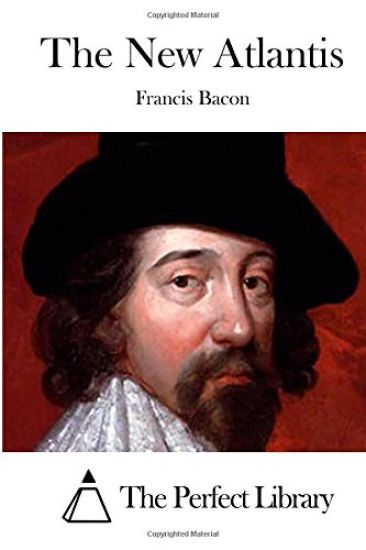
The New Atlantis: An Incomplete Utopian Novel

The New Atlantis: An Incomplete Utopian Novel

Francis Bacon

Createspace Independent Publishing Platform
2016
nidottu
The New AtlantisBy Sir Francis BaconAn Incomplete Utopian NovelNew Atlantis is an incomplete utopian novel by Sir Francis Bacon, published in 1627. In this work, Bacon portrayed a vision of the future of human discovery and knowledge, expressing his aspirations and ideals for humankind. The novel depicts the creation of a utopian land where "generosity and enlightenment, dignity and splendour, piety and public spirit" are the commonly held qualities of the inhabitants of the mythical Bensalem. The plan and organisation of his ideal college, Salomon's House (or Solomon's House), envisioned the modern research university in both applied and pure sciences. INTRODUCTORY NOTEBacon's literary executor, Dr. Rowley, published "The New Atlantis" in 1627, the year after the author's death. It seems to have been written about 1623, during that period of literary activity which followed Bacon's political fall. None of Bacon's writings gives in short apace so vivid a picture of his tastes and aspirations as this fragment of the plan of an ideal commonwealth. The generosity and enlightenment, the dignity and splendor, the piety and public spirit, of the inhabitants of Bensalem represent the ideal qualities which Bacon the statesman desired rather than hoped to see characteristic of his own country; and in Solomon's House we have Bacon the scientist indulging without restriction his prophetic vision of the future of human knowledge. No reader acquainted in any degree with the processes and results of modern scientific inquiry can fail to be struck by the numerous approximations made by Bacon's imagination to the actual achievements of modern times. The plan and organization of his great college lay down the main lines of the modern research university; and both in pure and applied science he anticipates a strikingly large number of recent inventions and discoveries. In still another way is "The New Atlantis" typical of Bacon's attitude. In spite of the enthusiastic and broad-minded schemes he laid down for the pursuit of truth, Bacon always had an eye to utility. The advancement of science which he sought was conceived by him as a means to a practical end the increase of man's control over nature, and the comfort and convenience of humanity. For pure metaphysics, or any form of abstract thinking that yielded no "fruit," he had little interest; and this leaning to the useful is shown in the practical applications of the discoveries made by the scholars of Solomon's House. Nor does the interest of the work stop here. It contains much, both in its political and in its scientific ideals, that we have as yet by no means achieved, but which contain valuable elements of suggestion and stimulus for the future.
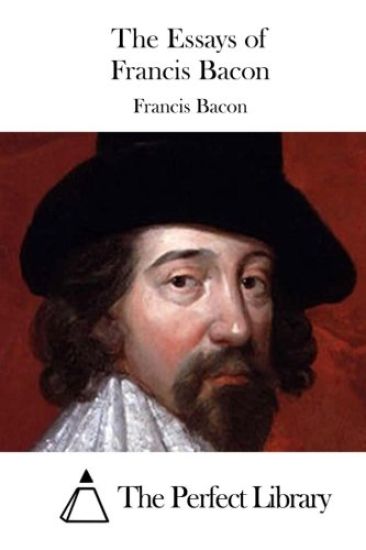
Bacon's Essays

Bacon's Essays

Francis Bacon

Cambridge University Press
2015
pokkari
Originally printed in 1906 as a limited edition of two hundred and fifty copies, this book contains the essays of Francis Bacon, drawn from the edition of 1625. Bacon covers a variety of topics in his essays, including cunning, atheism, love and goodness. This book will be of value to anyone with an interest in Bacon's work or seventeenth-century philosophy.