

Kirjailija
Francis Bacon
Kirjat ja teokset yhdessä paikassa: 609 kirjaa, julkaisuja vuosilta 1810–2026, suosituimpiin kuuluu La Nueva Atlántida: Spanish Version. Vertaile teosten hintoja ja tarkista saatavuus suomalaisista kirjakaupoista.
609 kirjaa
Kirjojen julkaisuvuodet: 1810–2026.
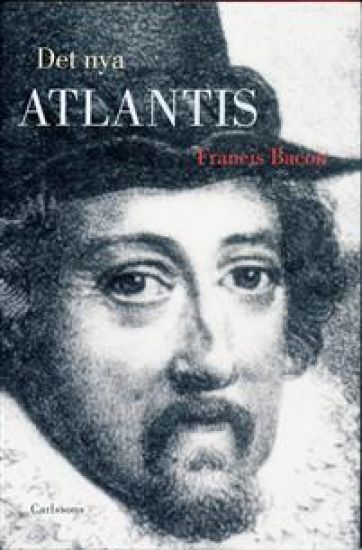
"Francis Bacon var den förste som insåg vetenskapens betydelse för samhället. Han var själv både filosof och politiker, men hans stora insats ligger i skärningspunkten mellan dessa två verksamheter. Han gjorde vetenskapen till en samhällelig faktor ... Få tänkare torde ha varit så aktuella under så lång tid som Bacon." Så skriver professor Tore Frängsmyr i sin inledning till denna utgåva av Det nya Atlantis. Detta verk, som i sitt lilla format är en storslagen utopi, skrev Francis Bacon under sina sista år på 1620-talet. Till formen är den en berättelse om några sjöfarare som påträffar en märklig civilisation på ön Bensalem. Översättningen är gjord av idéhistorikern Olof Hägerstrand.
Preparative Toward Natural And Experimental History
Francis Bacon
KESSINGER PUBLISHING CO
2004
pokkari
Novum Organum True Directions Concerning The Interpretation Of Nature
Francis Bacon
Kessinger Pub
2004
pokkari
Essays, Civil and Moral; New Atlantis; Areopagitica; Tractate on Education; Religio Medici
Francis Bacon; Charles W. Eliot
KESSINGER PUBLISHING CO
2004
pokkari
Essays, Civil and Moral; New Atlantis; Areopagitica; Tractate on Education; Religio Medici
Francis Bacon; Charles W. (EDT) Eliot
Kessinger Pub
2004
sidottu
The Tale of the Shakespeare Epitaph 1888
Francis Bacon; Edward Gordon (TRN) Clark
Kessinger Pub
2003
pokkari
Keys for Deciphering the Greatest Work of Sir Francis Bacon (1916)
Francis Bacon
KESSINGER PUBLISHING CO
2003
pokkari
Friendship
Marcus Tullius Cicero; Francis Bacon; Ralph Waldo Emerson
Fredonia Books (NL)
2002
pokkari
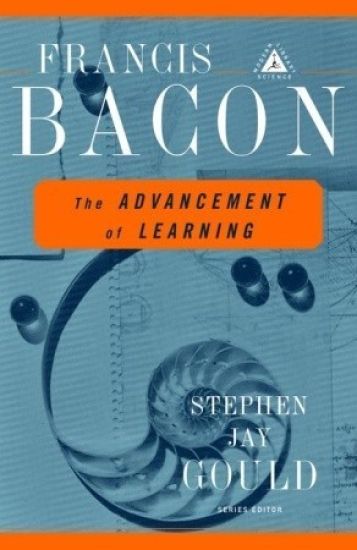
The Advancement of Learning
FRANCIS BACON
Modern Library Inc
2001
pokkari
Halvin toimitettuna 21,70 €
Francis Bacon, lawyer, statesman, and philosopher, remains one of the most effectual thinkers in European intellectual history. We can trace his influence from Kant in the 1700s to Darwin a century later. The Advancement of Learning, first published in 1605, contains an unprecedented and thorough systematization of the whole range of human knowledge. Bacon’s argument that the sciences should move away from divine philosophy and embrace empirical observation would forever change the way philosophers and natural scientists interpret their world.
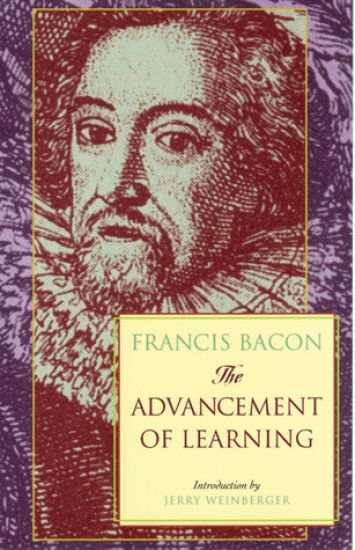
This seminal philosophical treatise, originally penned in 1605 and considered the first major philosophical work written in English, also offers the first description of science as a tool to improve the human condition. This breakthrough work of the English Renaissance hailed new times and new possibilities for the human species. Bacon catalogues the current state of learning, the obstacles to its progress, and his own plans for its revitalisation. Newly designed and reset as an inexpensive paperback, this edition makes available a work that has significantly defined the modern era.
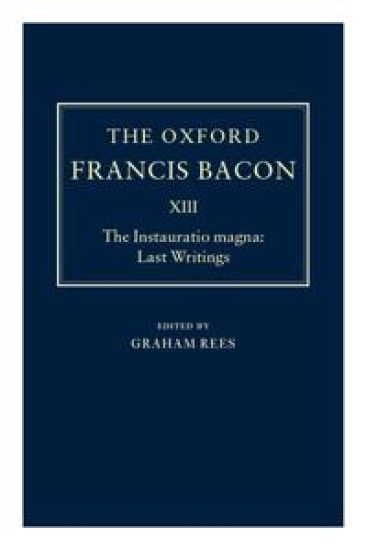
This volume belongs to the first new critical edition of the works of Francis Bacon (1561-1626) to have been produced since the nineteenth century. The edition presents the works in broadly chronological order and according to the best principles of modern textual scholarship. The seven works in the present volume belong to the final completed stages (Parts III-V) of Bacon's hugely ambitious six-part sequence of philosophical works, collectively entitled Instauratio magna (1620-6). All are presented in the original Latin with new facing-page translations. Three of the seven texts (substantial works in two cases, and all sharing a startlingly improbable textual history) are published and translated here for the first time: these are an early version of the Historia densi, the 'lost' Abecedarium, and the Historia de animato & inanimato. Another - the Prodromi sive anticipationes philosophiae secundae - has likewise never been translated before. Together with their commentaries and the introduction they open the way to important new understandings of Bacon's mature philosophical thought.