Kirjojen hintavertailu – 12 903 725 kirjaa ja 27 kauppaa

Kirjailija

Francis Barker

Kirjat ja teokset yhdessä paikassa: 6 kirjaa, julkaisuja vuosilta 1994–2013, suosituimpiin kuuluu Literature Politics & Theory. Vertaile teosten hintoja ja tarkista saatavuus suomalaisista kirjakaupoista.

6 kirjaa

Kirjojen julkaisuvuodet: 1994–2013.

Literature Politics & Theory

Literature Politics & Theory

Francis Barker; Peter Hulme; Margaret Iversen; Diana Loxley

Routledge
2013
nidottu
First Published in 2002. Modes and categories inherited from the past no longer seem to fit the reality experienced by a new generation. ‘New Accents’ is intended as a positive response to the initiative offered by such a situation. Each volume in the series will seek to encourage rather than resist the process of change, to stretch rather than reinforce the boundaries that currently define literature and its academic study. The present selection of papers, made from nearly two hundred published, represents in some measure the diversity of the work at the eight Essex Sociology of Literature Conferences.

Literature Politics & Theory

Literature Politics & Theory

Francis Barker; Peter Hulme; Margaret Iversen; Diana Loxley

Routledge
2002
sidottu
First Published in 2002. Modes and categories inherited from the past no longer seem to fit the reality experienced by a new generation. ‘New Accents’ is intended as a positive response to the initiative offered by such a situation. Each volume in the series will seek to encourage rather than resist the process of change, to stretch rather than reinforce the boundaries that currently define literature and its academic study. The present selection of papers, made from nearly two hundred published, represents in some measure the diversity of the work at the eight Essex Sociology of Literature Conferences.

Colonial Discourse / Postcolonial Theory

Colonial Discourse / Postcolonial Theory

Francis Barker; Peter Hulme; Margaret Iverson

Manchester University Press
1996
nidottu
The issues of colonialism and imperialism have recently come to the forefront of thinking in the humanities. Disciplines such as history, literature and anthropology are taking stock of their extensive and usually unacknowledged legacy of Empire. At the same time, contemporary cultural theory has had to respond to post-colonial pressure, with its different registers and agendas. This volume ranges, geographically, from Brazil to India and South Africa, from the Andes to the Caribbean and the USA. This range is matched by a breadth of historical perspectives. Central to the whole volume is a critique of the very idea of the "postcolonial" itself. Contributors include Annie Coombes, Simon During, Peter Hulme, Neil Lazarus, David Lloyd, Anne McClintock, Zita Nunes, Benita Parry, Graham Pechey, Mary Louise Pratt, Renato Rosaldo and Gayatri Chakravorty Spivak.
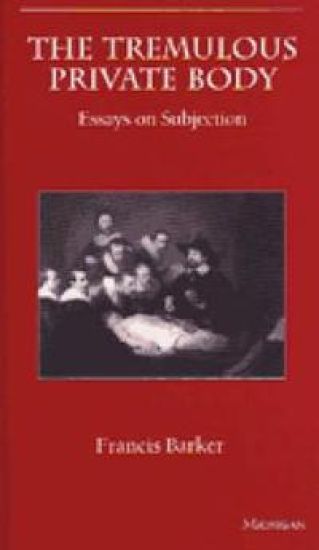
The Tremulous Private Body

The Tremulous Private Body

Francis Barker

The University of Michigan Press
1995
nidottu
This ambitious and immensely readable study helped establish Francis Barker's reputation on both sides of the Atlantic,. Now available in paperback with a revised preface from the author, The Tremulous Private Body studies several seventeenth-century texts to document the birth of the modern, self-possessed subject and the consequent waning of the modern body. Francis Barker draws on the theoretical work of Foucault, Derrida, and Lacan and the Marxism of Louis Althusser to interpret the works of Pepys, Shakespeare, Milton, Descartes, Marvell, and Rembrandt. The Tremulous Private Body engages the central themes of postmodernism--discourse, sexuality, textuality, and power--but it is not a poststructuralist work, rejecting many of the positions characteristic of poststructuralism, particularly its tendency to depoliticize discourse. The book's intense and challenging style weaves together its contemporary theoretical preoccupations and its reflection on historical material into a single, penetrating analysis of the structure of modern culture. It suggests how discourse today is complicit in the wider forms of dominance that define our world.
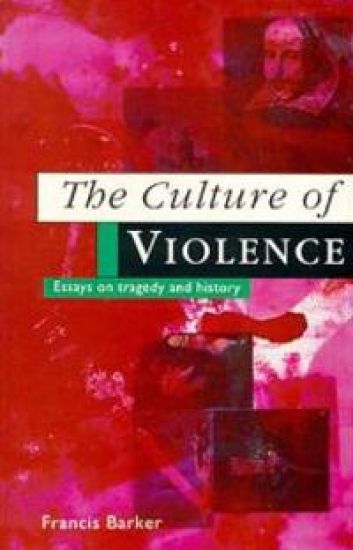
The Culture of Violence: Essays on Tragedy and History

The Culture of Violence: Essays on Tragedy and History

Francis Barker

University of Chicago Press
1994
nidottu
'Culture' and 'violence' have always been regarded as antithetical terms. In The Culture of Violence, Francis Barker takes a different view. Central to his argument is the contention that, contrary to post-Enlightenment humanist, liberal and conservative thought, 'culture' does not necessarily stand in opposition to political inequality and social injustice, but may be complicit with the oppressive exercise of power. The book focuses on Shakespearean tragedy and on the historicism and culturalism of much present-day cultural theory. Barker's analysis moves dialectically backwards and forwards between these two moments in order to illuminate aspects of early modern culture, and to critique the ways in which the complicity between culture and violence has been occluded. Rejecting the tendency of both modernism and post-modernism to homogenise historical time, Barker argues for a genuinely new, 'diacritical' understanding of the violence of history.