Kirjojen hintavertailu – 12 859 819 kirjaa ja 27 kauppaa

Kirjailija

Francis Beaumont

Kirjat ja teokset yhdessä paikassa: 238 kirjaa, julkaisuja vuosilta 1996–2026, suosituimpiin kuuluu The Works Of Francis Beaumont And John Fletcher / [edited By P.a. Daniel ... Et Al.. Vertaile teosten hintoja ja tarkista saatavuus suomalaisista kirjakaupoista.

238 kirjaa

Kirjojen julkaisuvuodet: 1996–2026.

The Dramatic Works in the Beaumont and Fletcher Canon: Volume 2, The Maid's Tragedy, A King and No King, Cupid's Revenge, The Scornful Lady, Love's Pilgrimage
This is the second volume in a ten-volume series of the critical old-spelling texts of the plays in the Beaumont and Fletcher canon, in which the texts are established on modern bibliographical principles. Each play is preceded by detailed notes on the text of the play, and is followed by textual notes, lists of variants, emendations of accidentals, and an historical collation. A general note of the principles on which the text of this edition was established is contained in Volume I.
The Dramatic Works in the Beaumont and Fletcher Canon: Volume 9, The Sea Voyage, The Double Marriage, The Prophetess, The Little French Lawyer, The Elder Brother, The Maid in the Mill
This is the ninth volume in a ten-volume series of the critical old-spelling texts of the plays in the Beaumont and Fletcher canon, in which the texts are established on modern bibliographical principles. This volume contains the texts of six plays written by Fletcher and his collaborators, William Rowley and Philip Massinger. Each play is introduced by a discussion of the text and authorship, has variant readings in footnotes, and is followed by full textual notes and lists of press-variants, emendations of accidentals and historical collations.
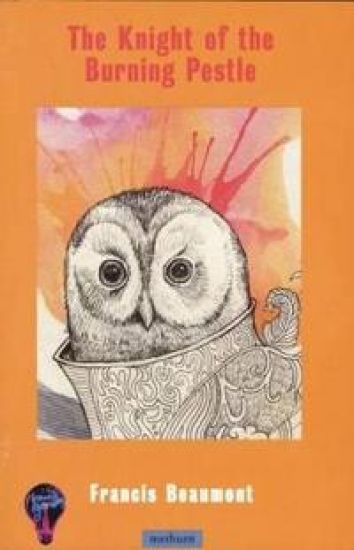
The Knight Of The Burning Pestle

The Knight Of The Burning Pestle

Francis Beaumont

Methuen Drama
2005
nidottu
Riotous comedy from Shakespeare's successor A grocer and his wife dissatisfied by a play's progress invade the stage and commandeer the play to suit their tastes. They cast their apprentice Rafe in an heroic leading role as the gallant Knight whose banner bears the symbol of the grocer's trade, a pestle. A chaotic play within a play erupts, as each group attempts to carry on despite the unscripted interventions. Meanwhile two young lovers, separated by class and convention, struggle to keep their romance on the rails amidst the disruption. Written in 1607 by Francis Beaumont at the age of 23 who succeeded Shakespeare as the chief dramatist to the King's Men, The Knight of the Burning Pestle was one of the earliest anarchic English comedies. It was revived in September 2005 by the Mercury Theatre Company, the Young Vic and BITE:05, Barbican, as part of YOUNG GENIUS.
The Knight of the Burning Pestle

The Knight of the Burning Pestle

Francis Beaumont

Methuen Drama
2002
nidottu
'Let him kill a lion with a pestle, husband; let him kill a lion with a pestle.' So exclaims the Grocer's wife who, with her husband and servants, is attending one of the London's elite playhouses where a theatre comany has just begun to perform. Peeved at the fact that all the plays they see are satires on the lives and values of London's citizenry, the Grocer and his wife interrupt and demand a play that instead contains chivalric quests and courtly love. What's more, they nominate their apprentice Rafe to take on the hero's role of the knight in this entirely new play. The author, Francis Beaumont, ends up not just satirising the grocers' naive taste for romance but parodying his own example of citizen comedy. This play-within-a-play becomes a pastiche of contemporary plays that scorned those who were not courtiers or at least gentlemen or ladies. Like Cervantes in Don Quixote, Beaumont exposes the folly of those that take representations for realities, but also celebrates their idealism and love of adventure. The editor, Michael Hattaway, is editor of plays by Shakespeare and Jonson as well as of several volumes of critical essays, and author of Elizabethan Popular Theatre, Hamlet: The Critics Debate, and Renaissance and Reformations: An Introduction to Early Modern English Literature. He is Professor Emeritus of English Literature in the University of Sheffield.
The Knight of the Burning Pestle

The Knight of the Burning Pestle

Francis Beaumont

Nick Hern Books
2001
nidottu
Drama Classics: The World's Great Plays at a Great Little Price Francis Beaumont's The Knight of the Burning Pestle is a five-act satire on chivalric romances, generally considered the earliest whole parody (or pastiche) play in English. The play's structure is that of a play within a play. The intended performance of The London Merchant - the tale of an apprentice's efforts to win the hand of his master's daughter - is interrupted by a request from the audience to stage the story of a heroic grocer who kills a lion with a pestle. Rafe is dragged from the audience to play this hero. Both stories get muddled up and the conventions of theatre get thoroughly mauled. The play was first performed at Blackfriars Theatre, London, in 1607. This edition in the Nick Hern Books Drama Classics series is edited and introduced by Colin Counsell.
The Dramatic Works in the Beaumont and Fletcher Canon: Volume 10, The Honest Man's Fortune, Rollo, Duke of Normandy, The Spanish Curate, The Lover's Progress, The Fair Maid of the Inn, The Laws of Candy
This is the tenth and final volume in a ten-volume series of the critical old-spelling texts of the plays in the Beaumont and Fletcher canon, in which the texts are established on modern bibliographical principles. This volume contains the texts of six plays written by Fletcher and his collaborators, Nathan Field, Philip Massinger, Ben Jonson, George Chapman, John Ford and John Webster. Each play is introduced by a discussion of the text and authorship, has variant readings in footnotes, and is followed by full textual notes and lists of press-variants, emendations of accidentals and historical collations. At the back of this concluding volume there is a useful index showing how the plays are distributed between the volumes, and a table giving the authorship of the plays.