Kirjojen hintavertailu – 12 903 724 kirjaa ja 27 kauppaa

Kirjailija

Francis D. Cogliano

Kirjat ja teokset yhdessä paikassa: 11 kirjaa, julkaisuja vuosilta 1996–2026, suosituimpiin kuuluu Revolutionary America, 1763-1815. Vertaile teosten hintoja ja tarkista saatavuus suomalaisista kirjakaupoista.

11 kirjaa

Kirjojen julkaisuvuodet: 1996–2026.

Thomas Jefferson Survives

Thomas Jefferson Survives

Peter S. Onuf; Francis D. Cogliano; Annette Gordon-Reed

W W NORTON CO LTD
2026
sidottu
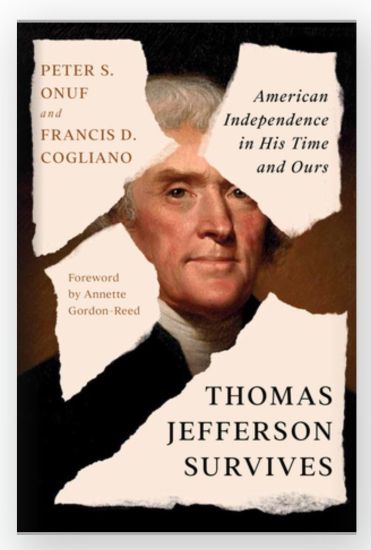
Fifty years after signing the Declaration of Independence, John Adams reassured the nation from his deathbed, “Thomas Jefferson survives”. Unaware that Jefferson had died hours earlier, Adams was in a larger sense correct: Jefferson had been immortalised in the American imagination. Today, Jefferson has effectively become a partisan talisman—jettisoned by the left for his moral failings, embraced and repurposed by the right as an avatar of white nationalism. Dissatisfied with the reductive clichés that now define Jefferson’s legacy, Peter S. Onuf and Francis D. Cogliano restore the founding father to his historical context, elucidating how Jefferson’s understanding of history shaped his responses to the crises of his time, how he conceived of the physical entity that became the United States and how he articulated a new national identity in 1776. Through their search for understanding, Onuf and Cogliano demonstrate not only why Jefferson matters but how his wisdom can be applied today. Peter S. Onuf and Annette Gordon-Reed’s “Most Blessed of the Patriarchs” was praised as: "An important book…[R]ichly rewarding. It is full of fascinating insights about Jefferson." —Gordon S. Wood, The New York Review of Books “A fresh and layered analysis...” –Peter Baker, The New York Times Book Review
A Revolutionary Friendship

A Revolutionary Friendship

Francis D. Cogliano

HARVARD UNIVERSITY PRESS
2026
pokkari
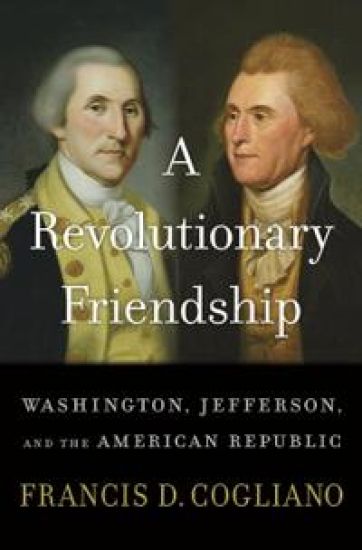
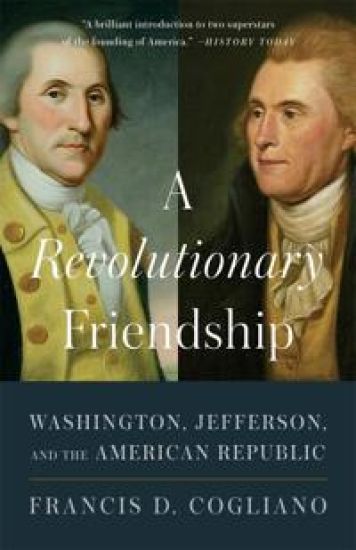
The first full account of the relationship between George Washington and Thomas Jefferson, countering the legend of their enmity while drawing vital historical lessons from the differences that arose between them. Martha Washington's worst memory was her husband's death. Her second worst was Thomas Jefferson's awkward visit to pay respects to his estranged friend. Yet this estrangement has obscured the fact that for three decades prior, the two men enjoyed a productive relationship. Precisely because they shared so much, their disagreements have something important to teach us. While Washington favored a traditional aristocracy, Jefferson preferred a more meritocratic approach whereby elites would vie for elected office on the basis of education and skills. And while Washington emphasized strong central government, Jefferson sought to diffuse power across the states. Still, as Francis Cogliano argues, common convictions equally defined their relationship: a passion for American independence and republican government, as well as commitments to commerce and westward expansion. Both men also developed skeptical views of slavery, even as they did little to abolish it. The differences between the two statesmen mirrored political fissures of the early United States, as the unity of the revolutionary moment gave way to competing visions for a new nation. A Revolutionary Friendship captures the dramatic and unsettling reality that there was no single founding ideal--only compromise between friends and rivals.
A Revolutionary Friendship

A Revolutionary Friendship

Francis D. Cogliano

HARVARD UNIVERSITY PRESS
2024
sidottu
The first full account of the relationship between George Washington and Thomas Jefferson, countering the legend of their enmity while drawing vital historical lessons from the differences that arose between them. Martha Washington’s worst memory was the death of her husband. Her second worst was Thomas Jefferson’s awkward visit to pay his respects subsequently. Indeed, by the time George Washington had died in 1799, the two founders were estranged. But that estrangement has obscured the fact that for most of their thirty-year acquaintance they enjoyed a productive relationship. Precisely because they shared so much, their disagreements have something important to teach us. In constitutional design, for instance: Whereas Washington believed in the rule of traditional elites like the Virginia gentry, Jefferson preferred what we would call a meritocratic approach, by which elites would be elected on the basis of education and skills. And while Washington emphasized a need for strong central government, Jefferson favored diffusion of power across the states. Still, as Francis Cogliano argues, common convictions equally defined their relationship: a passion for American independence and republican government, as well as a commitment to westward expansion and the power of commerce. They also both evolved a skeptical view of slavery, eventually growing to question the institution, even as they took only limited steps to abolish it. What remains fascinating is that the differences between the two statesmen mirrored key political fissures of the early United States, as the unity of revolutionary zeal gave way to competing visions for the new nation. A Revolutionary Friendship brilliantly captures the dramatic, challenging, and poignant reality that there was no single founding ideal—only compromise between friends and sometime rivals.
Revolutionary America, 1763-1815

Revolutionary America, 1763-1815

Francis D. Cogliano

TAYLOR FRANCIS LTD
2022
sidottu

Halvin toimitettuna 216,80 €

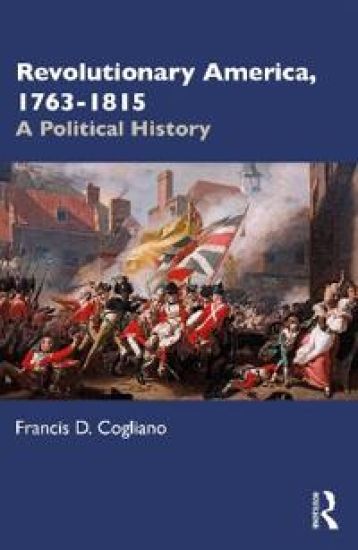
Now in its 4th edition, Revolutionary America explains the crucial events in the history of the United States between 1763 and 1815, when settlers in North America rebelled against British rule, won their independence in a long and bloody struggle, and created an enduring republic. Centering the narrative on the politics of the early republic, Revolutionary America presents a concise history of the War of Independence and lays a distinctive foundation for students and scholars of the early American republic. Francis D. Cogliano pays particular attention to the experiences of those who were excluded from the immediate benefits and rights secured by the creation of the American republic, including women, Native Americans, and Black Americans. This fourth edition contains fully revised chapters to incorporate the insights of the latest scholarship. It also includes: A new introduction that engages the 1619 versus 1776 debate An updated and revised bibliography to reflect the most recent literature Consideration of the degree to which the Revolution transformed American societyThis book is essential reading for undergraduate classes in American History and the history of the Revolutionary War.
The Atlantic Enlightenment

The Atlantic Enlightenment

Francis D. Cogliano

Routledge
2016
nidottu
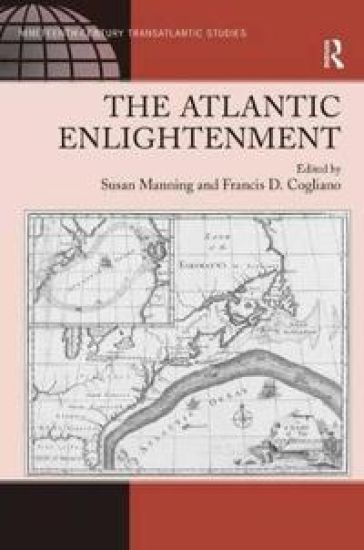
Transatlantic studies, especially during the enlightenment period, is of increasing critical interest amongst scholars. But was there an Atlantic Enlightenment? This interdisciplinary collection harnesses the work of some of the most prominent figures in the fields of literature; intellectual, cultural, and social history; geography; and political science to examine the emergence of the Atlantic as one of the key conceptual paradigms of eighteenth century studies. In this spirit, the contributors offer new insights into the conditions that generated a major transatlantic genre of writing; addressing questions of race, political economy, and the transmission of Enlightenment ideas in literary, political, historical, and religious contexts. Whether examining John Witherspoon's evolution from Calvinist theologian to Revolutionary theorist, or Adam Smith's reception in the antebellum United States, the essays remind us that the transatlantic traffic in ideas moved from west to east, from east to west, and in patterns that both complicate and enrich what we thought we knew about the vectors of transmission in this pivotal period.
Revolutionary America, 1763-1815

Revolutionary America, 1763-1815

Francis D. Cogliano

TAYLOR FRANCIS LTD
2011
nidottu
Now in its 4th edition, Revolutionary America explains the crucial events in the history of the United States between 1763 and 1815, when settlers in North America rebelled against British rule, won their independence in a long and bloody struggle, and created an enduring republic. Centering the narrative on the politics of the early republic, Revolutionary America presents a concise history of the War of Independence and lays a distinctive foundation for students and scholars of the early American republic. Francis D. Cogliano pays particular attention to the experiences of those who were excluded from the immediate benefits and rights secured by the creation of the American republic, including women, Native Americans, and Black Americans. This fourth edition contains fully revised chapters to incorporate the insights of the latest scholarship. It also includes: A new introduction that engages the 1619 versus 1776 debate An updated and revised bibliography to reflect the most recent literature Consideration of the degree to which the Revolution transformed American societyThis book is essential reading for undergraduate classes in American History and the history of the Revolutionary War.
Thomas Jefferson

Thomas Jefferson

Francis D. Cogliano

University of Virginia Press
2008
nidottu
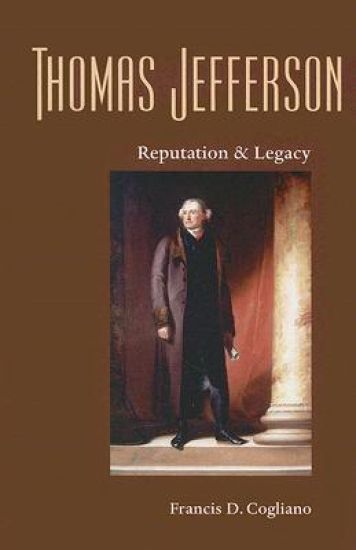
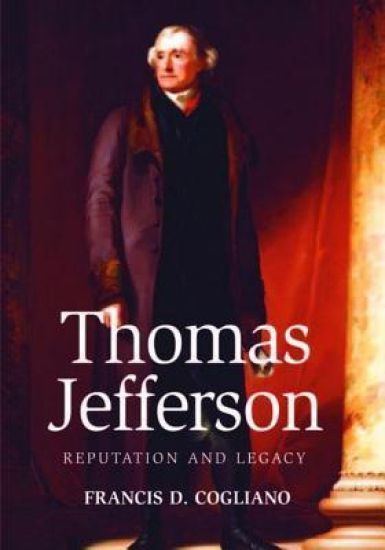
In his probing new study, Francis Cogliano focuses on Thomas Jefferson's relation to history, both as the context in which he lived, and as something he made considerable, and conscious, efforts to influence. He was acutely aware that he would be judged by posterity, and he believed that the fate of the republican experiment depended to a large extent on how it was rendered by historians. The first half of the book situates Jefferson's ideas about history within the context of eighteenth-century historical thought. It then considers the efforts Jefferson made to shape the way the history of his life and times would be written: through the careful preservation of most of his personal and public papers, and through the institutions he left behind, including his home, Monticello, and the University of Virginia. The second half of the book considers the results of Jefferson's efforts to shape historical writings about himself and his period, which have issued forth in an unbroken stream from his day to our own. Although Jefferson seemed to have achieved apotheosis in the years following World War II, his rise above controversy was short-lived. Earlier political questions were replaced by arguments over race, class, and gender, and recent scholarship has criticized Jefferson's attitudes and actions with regard to civil liberties, Native Americans, slaves, and women, not least in the context of debates surrounding his relationship with his slave, Sally Hemings. Our complex feelings about Jefferson's relation to these issues are a reflection of the man who helped engineer their place in our historical discourse.
The Atlantic Enlightenment

The Atlantic Enlightenment

Francis D. Cogliano

Ashgate Publishing Limited
2008
sidottu
Transatlantic studies, especially during the enlightenment period, is of increasing critical interest amongst scholars. But was there an Atlantic Enlightenment? This interdisciplinary collection harnesses the work of some of the most prominent figures in the fields of literature; intellectual, cultural, and social history; geography; and political science to examine the emergence of the Atlantic as one of the key conceptual paradigms of eighteenth century studies. In this spirit, the contributors offer new insights into the conditions that generated a major transatlantic genre of writing; addressing questions of race, political economy, and the transmission of Enlightenment ideas in literary, political, historical, and religious contexts. Whether examining John Witherspoon's evolution from Calvinist theologian to Revolutionary theorist, or Adam Smith's reception in the antebellum United States, the essays remind us that the transatlantic traffic in ideas moved from west to east, from east to west, and in patterns that both complicate and enrich what we thought we knew about the vectors of transmission in this pivotal period.
Thomas Jefferson

Thomas Jefferson

Francis D. Cogliano

Edinburgh University Press
2006
sidottu
This first major study of Thomas Jefferson's reputation in nearly fifty years is concerned with Jefferson and history--both as something Jefferson made and something that he sought to shape. Jefferson was acutely aware that he would be judged by posterity and he deliberately sought to influence history's judgment of him. He did so, it argues, in order to promote his vision of a global republican future. It begins by situating Jefferson's ideas about history within the context of eighteenth-century historical thought, and then considers the efforts Jefferson made to shape the way the history of his life and times would be written: through the careful preservation of his personal and public papers and his home, Monticello, near Charlottesville, Virginia. The second half of the book considers the results of Jefferson's efforts to shape historical writing by examining the evolution of his reputation since the Second World War. Recent scholarship has examined Jefferson's attitudes and actions with regard to Native Americans, African slaves, women and civil liberties and found him wanting. Jefferson has continued to be a controversial figure; DNA testing proving that he fathered children by his slave Sally Hemings being the most recent example, perhaps encapsulating this best of all. This is the first major study to examine the impact of the Hemings controversy on Jefferson's reputation. Key Features *The first study of Jefferson's reputation to be published since 1960 *Considers the impact of slavery on Jefferson's reputation and Jefferson's relationship with slavery *Explores the history of the Sally Hemings controversy
No King, No Popery

No King, No Popery

Francis D. Cogliano

Praeger Publishers Inc
1996
sidottu
This book explores the complex relationship between anti-Catholicism, or anti-popery to use the contemporary term, and the American Revolution in New England. Anti-Catholicism was among the most common themes in colonial New England culture. Nonetheless, New Englanders entered into an alliance with French Catholics against Protestant Britons during the American Revolution. As New Englanders traditionally associated Catholicism with tyranny and oppression, they were able to extend these feelings to the popish British upon the passage of the Quebec Act. As a consequence, anti-popery helped enable New Englanders to make the intellectual transition that war with Britain required. During the Revolution, anti-popery became less popular as the American rebels relied on Catholic France for aid. By the end of the revolutionary era, Catholics were extended legal toleration in all of the New England states. The book's conclusion explores the change in religious tolerance and the decline of anti-popery with a study of New England's first Catholic parish.