
Kirjailija
Francis Green
Kirjat ja teokset yhdessä paikassa: 15 kirjaa, julkaisuja vuosilta 1977–2026, suosituimpiin kuuluu Calendar of Documents & Deeds. Vertaile teosten hintoja ja tarkista saatavuus suomalaisista kirjakaupoista.
15 kirjaa
Kirjojen julkaisuvuodet: 1977–2026.


More than three billion people are at work across the globe, and it takes up a huge chunk of the time humans spend on this planet. Policymakers say they want to see "more and better jobs" or "decent work for all" but are good jobs expanding, and if so for whom? Or are bad jobs taking over? In Hard at Work, Francis Green presents a new, up-to-date account of job quality to understand the immense variety and range of jobs, as well as the evolution of these jobs in the twenty-first century. Drawing on economics, industrial relations, sociology, psychology, and ergonomics, as well as new data sources from countries around the world, Green constructs a unified and interdisciplinary conceptual framework that illustrates the impacts of job quality on our health and wellbeing. He finds that while some work environments can be meaningful, well-paced, safe, well-paid, and supportive, others can be tightly controlled, low-paid, dangerous, insecure, and fast-paced. With this broad picture of job quality, Green turns to various issues that impact workers--the failure to improve job quality and workers' wellbeing at work despite long-term economic growth, the declining share of labor income, the general increase in work demands, and the prospects for job quality in the new automated world of work. Original and authoritative, Hard at Work provides a global and comprehensive understanding of job quality that raises important questions for this emerging field. This is an open access title available under the terms of a CC BY-NC-ND 4.0 International license. It is free to read on the Oxford Academic platform and offered as a free PDF download from OUP and selected open access locations.

'Thoroughly researched and written with such calm authority, yet makes you want to scream with righteous indignation' John O'Farrell‘We can expect the manifesto-writers at the next general election to pass magpie-like over these chapters ... The appeal to act is heartfelt’ Financial Times___________________Includes a new chapter, 'Moving Ahead?'Britain’s private, fee-paying schools are institutions where children from affluent families have their privileges further entrenched through a high-quality, richly-resourced education. Engines of Privilege contends that, in a society that mouths the virtues of equality of opportunity, of fairness and of social cohesion, the educational apartheid separating private schools from our state schools deploys our national educational resources unfairly; blocks social mobility; reproduces privilege down the generations; and underpins a damaging democratic deficit in our society. Francis Green and David Kynaston carefully examine options for change, while drawing on the valuable lessons of history. Clear, vigorous prose is combined with forensic analysis to powerful effect, illuminating the painful contrast between the importance of private schools in British society and the near-absence of serious, policy-shaping debate.___________________'An excoriating account of the inequalities perpetuated by Britain’s love affair with private schools' The Times

Before You Move a Muscle, Move Your Mind: 10 Essential Principles for Success with Weight Loss, Fitness & Health Goals
Francis Green
Independently Published
2019
nidottu
Most of us can't make our weight loss and fitness goals the center of our lives, but we do need to make them a part of our lives, especially when we consider the health benefits. Struggling to integrate exercise, weight loss and healthy eating plans into our lives is a common occurrence. For most of us, it's the reason we give up after starting a goal. In Before You Move a Muscle, Francis outlines an alternative approach to achieving fitness goals used to help military members who struggled to meet their fitness and weight requirements. When they faced a yearly waist measurement that could mean the end of their career, they needed to approach their goals with a determination to succeed. That's what's covered in this book. Before You Move a Muscle describes ten principles that must be addressed before you start your plan. These ten principles led to success in weight loss, work performance and many other long-term goals that required lifestyle commitments. It's not the workouts or the diets that sink many of us. It's our inability to adapt to the changes in our environment that induce failure. Our lives are too complex to assume we can insert a fitness goal without any resistance. This book shows you how to navigate that internal resistance before it negatively affects your goal. Pick up your copy today by clicking the BUY NOW button at the top of this page.


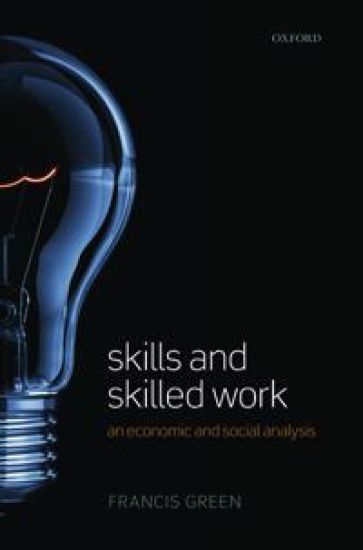
Skills are frequently in the news and in the public eye in every country. Stories highlight concerns about education and literacy standards, grades, learning by rote, and university students being unprepared for work, as well as debates surrounding internships and apprenticeships, and social exclusion through skills policy. The recent financial crisis has forced education and training to take a back seat, and has caused an increase in youth unemployment. Skill and skilled work are widely considered important for promoting both prosperity and social justice. But how do we define skill? Skills and Skilled Work brings together multiple perspectives- economics, sociology, management, psychology, and political science- to present an original framework for understanding skills, skilled work, and surrounding policies. Focussing on common themes across countries, it establishes the concept and measurement of skill, and investigates the role of employers, workers, and other social actors. It considers a variety of skill problems and how a social response from the government can be understood. Based on the findings of economics, management science, and theories of social determination, it develops a rationale for social intervention beyond market failure. This book weighs up both the prospects and the limitations of what can be achieved for societies with a better emphasis on skills and skilled work, and it promotes the study of skill in modern economies as a distinct sub-field.



Since the early 1980s, a vast number of jobs have been created in the affluent economies of the industrialized world. Many workers are doing more skilled and fulfilling jobs, and getting paid more for their trouble. Yet it is often alleged that the quality of work life has deteriorated, with a substantial and rising proportion of jobs providing low wages and little security, or requiring unusually hard and stressful effort. In this unique and authoritative formal account of changing job quality, economist Francis Green highlights contrasting trends, using quantitative indicators drawn from public opinion surveys and administrative data. In most affluent countries average pay levels have risen along with economic growth, a major exception being the United States. Skill requirements have increased, potentially meaning a more fulfilling time at work. Set against these beneficial trends, however, are increases in inequality, a strong intensification of work effort, diminished job satisfaction, and less employee influence over daily work tasks. Using an interdisciplinary approach, Demanding Work shows how aspects of job quality are related, and how changes in the quality of work life stem from technological change and transformations in the politico-economic environment. The book concludes by discussing what individuals, firms, unions, and governments can do to counter declining job quality.
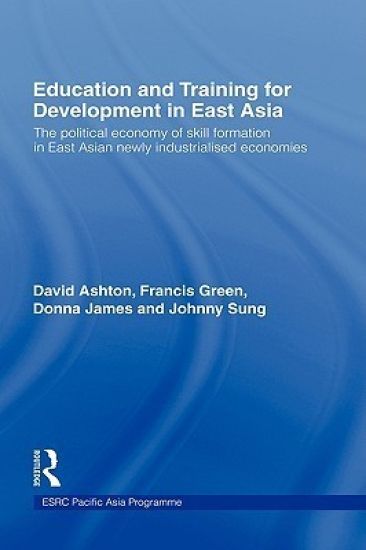
Education and Training for Development in East Asia
David Ashton; Francis Green; Donna James; Johnny Sung
Routledge
1999
sidottu
The East Asian miracle, or its supposed demise, is always news. The Four Tiger economies of Hong Kong, Singapore, Taiwan and South Korea have experienced some of the fastest rates of economic growth ever achieved. This book provides the first detailed analysis of the development of education and training systems in Asia, and the relationship with the process of economic growth.
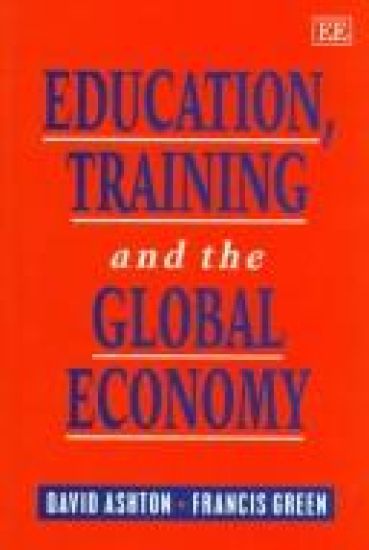
Education, Training and the Global Economy
David Ashton; Francis Green
Edward Elgar Publishing Ltd
1997
nidottu
Across the industrialized and developing world, education and training are regarded as paramount to economic growth, but this view is rarely questioned or analysed. This major book is an in-depth multi-disciplinary investigation of the link between modern economies and education and training systems. Education, Training and the Global Economy takes issue with the notion that simply more or better education and training will inevitably bring economic success. The authors examine theoretical approaches to education and training before surveying empirical data and our knowledge of current skills trends in the global economy. The institutional and historical determinants of routes to low or high skill formation in industrialized economies are thoroughly considered. Particular attention is paid to the new routes to skill formation found in the dynamic Pacific Rim economies. This book will be welcomed by researchers, policymakers and students concerned with training, education and labour economics.
Education, Training and the Global Economy
David Ashton; Francis Green
Edward Elgar Publishing Ltd
1996
sidottu
Across the industrialized and developing world, education and training are regarded as paramount to economic growth, but this view is rarely questioned or analysed. This major book is an in-depth multi-disciplinary investigation of the link between modern economies and education and training systems. Education, Training and the Global Economy takes issue with the notion that simply more or better education and training will inevitably bring economic success. The authors examine theoretical approaches to education and training before surveying empirical data and our knowledge of current skills trends in the global economy. The institutional and historical determinants of routes to low or high skill formation in industrialized economies are thoroughly considered. Particular attention is paid to the new routes to skill formation found in the dynamic Pacific Rim economies. This book will be welcomed by researchers, policymakers and students concerned with training, education and labour economics.