Kirjojen hintavertailu – 12 859 827 kirjaa ja 27 kauppaa

Kirjailija

Francis Hill

Kirjat ja teokset yhdessä paikassa: 6 kirjaa, julkaisuja vuosilta 2007–2019, suosituimpiin kuuluu Once on the Summer Range. Vertaile teosten hintoja ja tarkista saatavuus suomalaisista kirjakaupoista.

6 kirjaa

Kirjojen julkaisuvuodet: 2007–2019.

Entrepreneurship Education and Training

Entrepreneurship Education and Training

Colette Henry; Francis Hill; Claire Leitch

Routledge
2019
nidottu
This title was first published in 2003. The book covers the areas of: entrepreneurship and economic development; entrepreneurship theories (traditional and alternative); entrepreneurship education and training programmes; a comparative European analysis of entrepreneurship programmes; a profile of the aspiring entrepreneur; assessing effectiveness; and a framework for the design and development of entrepreneurship training programmes. Readers should gain a significant insight into the effectiveness of entrepreneurship training programmes from both the programme providers' and participants' point of view. Key features of the book include: an up-to-date review of the literature in this field; a comparative analysis of entrepreneurship programmes with a European perspective; an in-depth treatment of the effectiveness issue both on a qualitative and quantitative basis, and a longitudinal study involving a control and comparator group. The framework proposed by the authors should be applicable on a European scale.
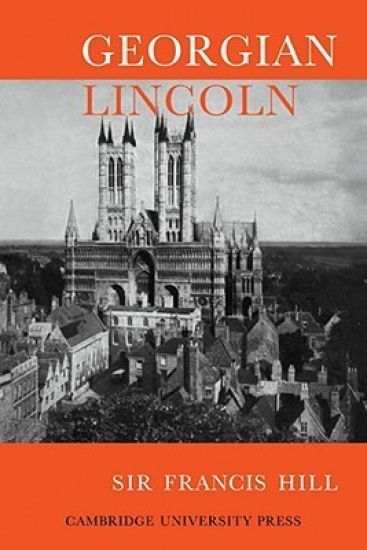
Georgian Lincoln

Georgian Lincoln

Francis Hill

Cambridge University Press
2008
pokkari
Sir Francis Hill continues in this volume his majestic history of his native city. Medieval Lincoln appeared in 1948, and was reissued in 1965; Tudor and Stuart Lincoln was published in 1956. This third volume, first published in 1966, covers the period of the industrial revolution and parliamentary reform, the time of' the Napoleonic war and the post-war depression. As in previous volumes, local history is taken as a microcosm of the social history of the nation. Sir Francis works from primary sources, many of them unpublished; these give the feel of the period in a direct and vivid way. Since Lincoln was a county town, a cathedral city, a centre of trade and an industrial centre, its history is in many ways representative of English history as a whole.
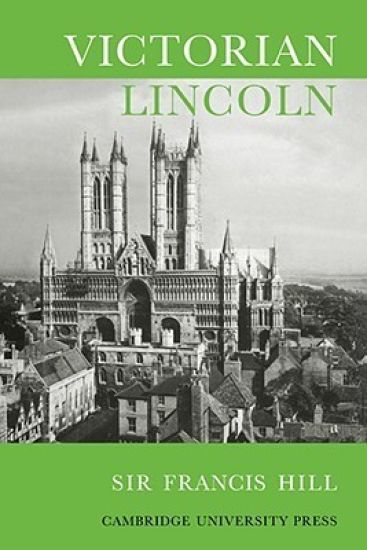
Victorian Lincoln

Victorian Lincoln

Francis Hill

Cambridge University Press
2008
pokkari
Drawing from a wide range of local sources, Sir Francis describes Lincoln as it underwent major change: with the advent of the railways, this ancient cathedral city, hitherto predominantly a market centre, became an industrial city. Sir Francis discusses all aspects of life in the Victorian city, political and municipal reform, the continuing influence of the gentry, the growth of non-confomity and the recovery of Anglicanism, the awakening of the cathedral to new life, and population growth with its attendant social problems - housing, public health and education. Throughout, the author's personal knowledge of the city enables him to give the feel of the period in a fascinating and vivid way. This volume will be of great interest to specialists in nineteenth-century history, and, like the others in the series, to local historians and people who care for the city.
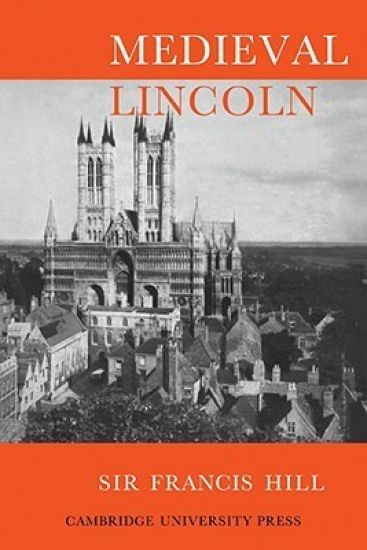
Medieval Lincoln

Medieval Lincoln

Francis Hill

Cambridge University Press
2008
pokkari
Sir Francis Hill's volumes on the history of the City of Lincoln are a historical monument for which it is not easy to think of a parallel. Written by a distinguished (and very busy) public man, they are works of patient scholarship. They give a survey of the growth and development of one of England's ancient boroughs: a county town, a cathedral city, and a centre of trade and industry. Medieval Lincoln, first published in 1948 and now reprinted, is recognized as a model of what local history should be. It is based on primary sources, it is local without being parochial, and uses a close study as a key to medieval history as a whole. The plan is mainly chronological; Lincoln is studied from Roman times to the fifteenth century. There are also chapters on certain topics of particular local interest: the minster, the castle and the bail, parish churches and religious houses, the Jews, the Mayor and Commonalty, communications and trade, and fields and pastures. There are seven Appendices; twenty-two plates; and the figures include useful detailed maps.