Kirjojen hintavertailu – 12 903 724 kirjaa ja 27 kauppaa
Kirjailija
Francis J. Gavin
Kirjat ja teokset yhdessä paikassa: 8 kirjaa, julkaisuja vuosilta 2012–2026, suosituimpiin kuuluu Ledarskap och statskonst : studier i makt. Vertaile teosten hintoja ja tarkista saatavuus suomalaisista kirjakaupoista.
Philip Zelikow; Anna Wieslander; Lucy Ward; Edward Stringer; Nathan Shachar; Michael Scott; Kori Schake; Andreas Rödder; Iskander Rehman; Sergey Radchenko; Alina Polyakova; Gudrun Persson; Kenneth Payne; Charles Moore; Munira Mirza; Henrik Meinander; Rory Medcalf; James Marriott; Fredrik Logevall; Alexander Lee; Julian Jackson; Katja Hoyer; Oleksii Goncharenko; Francis J. Gavin; Kentaro Fujimoto; Daisy Dunn; Claire Coutinho; J.C.D. Clark; David Butterfield; Kristin Ven Bruusgaard; Elisabeth Braw; John Bew; Benedetta Berti
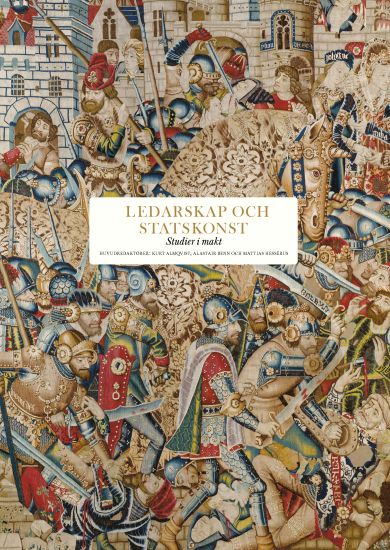
Machiavellis observation om ledarskapets svåra balansgång är lika relevant i vår tid, som den en gång var i 1500-talets Florens. Kinas framväxt, Rysslands attack mot Ukraina och den växande politiska och ekonomiska närvaron i den globala södern har aktualiserat frågan om vikten av kompetent ledarskap inom politiskt styre. Denna antologi utforskar utmaningarna för ledarskap och statskonst i en allt mer komplex värld och ställer frågan huruvida vi kan skapa politiska eliter som är kapabla att på ett säkert vis vägleda väst genom de många prövningar vi står inför. Genom att se till vårt förflutna såväl som till vår samtid undersöker världsledande forskare och skribenter hur ledarskapsidéer har utvecklats genom historien för att ge oss en större förståelse för statskonsten och för vilka färdigheter och organisationer som krävs för att driva små stater, stora imperier och allt däremellan. Boken finns även i engelsk utgåva.
David Abulafia; Ali Ansari; Richard Bratby; Mary Bridges; Caroline Burt; David Butterfield; Edward Chancellor; Marie Kawthar Daouda; Eloise Davies; Ulrike Franke; Francis J. Gavin; Magnus Henrekson; William Inboden; Shashank Joshi; Knut N. Kjaer; Kwasi Kwarteng; Charlie Laderman; Ian Leslie; Nicklas Berild Lundblad; Iain Martin; Jade McGlynn; Mario Pisani; Alina Polyakova; Sergey Radchenko; Mick Ryan; Paul Tucker; Rikard Westerberg; Adrian Wooldridge; David Wootton; Linda Yueh
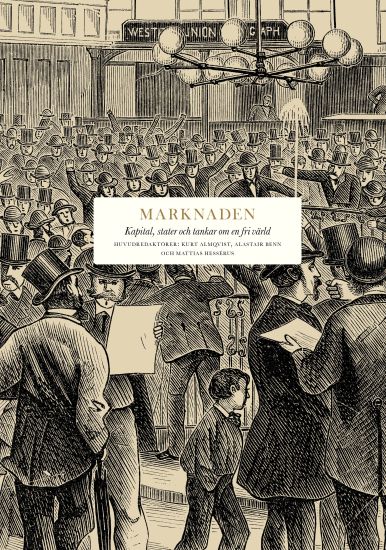
Från det romerska torget till digitala valutor – hur har marknaden utvecklats under historiens gång och hur kan den komma att se ut i framtiden? Denna antologi gör en djupdykning i marknadsutvecklingen och tittar närmare på marknaders avgörande roll i att utforma samtiden men tar också upp den brännande frågan om hur vi ska navigera mot en hållbar framtid. I tankeväckande essäer skrivna av internationella forskare, politiker och andra sakkunniga utforskas marknadens dynamik. Med utgångspunkt i de antika torgen och i det medeltida Europas marknader undersöker författarna hur tekniska framsteg, konsumentbeteende och geopolitisk strategi – till exempel den politik som utövades under Reagan-eran – har format nutida marknader. Slutligen tar boken upp de utmaningar för stabiliteten på marknaden som utgörs av auktoritära stater och AI. Boken finns även i engelsk utgåva, The Market.
Att använda historien för att förbättra politiken kan verka självklart. Om vi har goda kunskaper om det förflutna borde vi kunna fatta bättre beslut i dag. Men hur får vi tillgång till den historiekunskapen, och hur bör den användas? Tyvärr görs det sällan på ett bra sätt, och historiker och beslutsfattare samverkar sällan. I sin nya bok visar Francis J. Gavin på de många sätt historisk kunskap kan hjälpa oss att förstå och navigera i den komplexa och ofta förvirrande värld som omger oss. I sin mest användbara form är historia samtidigt en praktik, ett omdöme och en lyhördhet inför det förflutna – en disciplin i ordets bästa bemärkelse, snarare än ett avgränsat studiefält. I Tänka historiskt presenterar Gavin en historisk känslighet med kraft att komplicera våra antaganden, göra det främmande bekant och det bekanta främmande. Det historiska tänkandet kräver att vi, utan att helt upphäva vårt moraliska omdöme, försöker förstå andra på deras egna villkor.
A compelling and insightful argument for historical study as a way to understand and navigate the complex, often confusing world of decision-making It seems obvious that we should use history to improve policy. If we have a good understanding of the past, it should enable better decisions in the present, especially in the extraordinarily consequential worlds of statecraft and strategy. But how do we gain that knowledge? How should history be used? Sadly, it is rarely done well, and historians and decision-makers seldom interact. But in this remarkable book, Francis J. Gavin explains the many ways historical knowledge can help us understand and navigate the complex, often confusing world around us. Good historical work convincingly captures the challenges and complexities the decisionmaker faces. At its most useful, history is less a narrowly defined field of study than a practice, a mental awareness, a discernment, and a responsiveness to the past and how it unfolded into our present world—a discipline in the best sense of the word. Gavin demonstrates how a historical sensibility helps us to appreciate the unexpected; complicates our assumptions; makes the unfamiliar familiar and the familiar unfamiliar; and requires us, without entirely suspending moral judgment, to try to understand others on their own terms. This book is a powerful argument for thinking historically as a way for readers to apply wisdom in encountering what is foreign to them.
The underlying structure, incentives and costs shaping international relations, state behaviour and the nature of power are profoundly different today to how they were in the past, in ways that are scarcely recognised and widely misunderstood. For much of history, world politics was marked by profound scarcity in resources, information and security. A series of historical revolutions has largely tamed this scarcity in ways few could have imagined. These revolutions, however, have generated new, potentially catastrophic challenges for the world – the problems of plenty. In this Adelphi book, Francis J. Gavin argues that the institutions, practices, theories and policies that helped explain and largely tamed scarcity by generating massive prosperity, and which were sometimes used to justify punishing conquest, are often unsuitable for addressing the problems of plenty. Successful grand strategy in this new age of abundance requires new thinking. New conceptual lenses, innovative policies and processes, and transformed institutions will be essential for confronting and solving the problems of plenty, without undermining the expanding efforts against scarcity.
Exploring what we know - and don't know - about how nuclear weapons shape American grand strategy and international relations. The world first confronted the power of nuclear weapons when the United States dropped atomic bombs on Hiroshima and Nagasaki in August 1945. The global threat of these weapons deepened in the following decades as more advanced weapons, aggressive strategies, and new nuclear powers emerged. Ever since, countless books, reports, and articles - and even a new field of academic inquiry called 'security studies' - have tried to explain the so-called nuclear revolution. Francis J. Gavin argues that scholarly and popular understanding of many key issues about nuclear weapons is incomplete at best and wrong at worst. Among these important, misunderstood issues are: how nuclear deterrence works; whether nuclear coercion is effective; how and why the United States chose its nuclear strategies; why countries develop their own nuclear weapons or choose not to do so; and, most fundamentally, whether nuclear weapons make the world safer or more dangerous. These and similar questions still matter because nuclear danger is returning as a genuine threat. Emerging technologies and shifting great-power rivalries seem to herald a new type of cold war just three decades after the end of the U. S.-Soviet conflict that was characterized by periodic prospects of global Armageddon. Nuclear Weapons and American Grand Strategy helps policymakers wrestle with the latest challenges. Written in a clear, accessible, and jargon-free manner, the book also offers insights for students, scholars, and others interested in both the history and future of nuclear danger.
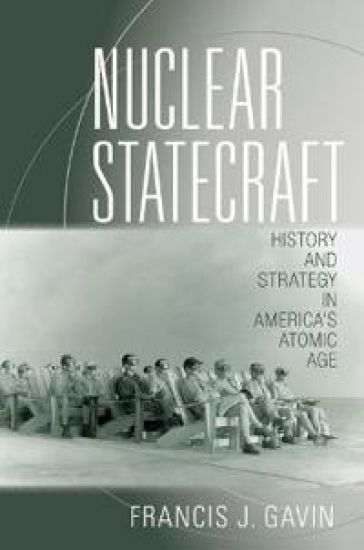
"Gavin not only succeeds in disentangling postwar nuclear history from the US-Soviet rivalry of the Cold War, but provides a deeper and more complex understanding of the long-term effects of nuclear weapons on Great Power relations."— Matthew Jones â• International Affairs We are at a critical juncture in world politics. Nuclear strategy and policy have risen to the top of the global policy agenda, and issues ranging from a nuclear Iran to the global zero movement are generating sharp debate. The historical origins of our contemporary nuclear world are deeply consequential for contemporary policy, but it is crucial that decisions are made on the basis of fact rather than myth and misapprehension. In Nuclear Statecraft, Francis J. Gavin challenges key elements of the widely accepted narrative about the history of the atomic age and the consequences of the nuclear revolution. On the basis of recently declassified documents, Gavin reassesses the strategy of flexible response, the influence of nuclear weapons during the Berlin Crisis, the origins of and motivations for U. S. nuclear nonproliferation policy, and how to assess the nuclear dangers we face today. In case after case, he finds that we know far less than we think we do about our nuclear history. Archival evidence makes it clear that decision makers were more concerned about underlying geopolitical questions than about the strategic dynamic between two nuclear superpowers. Gavin's rigorous historical work not only tells us what happened in the past but also offers a powerful tool to explain how nuclear weapons influence international relations. Nuclear Statecraft provides a solid foundation for future policymaking.