Kirjojen hintavertailu – 12 859 818 kirjaa ja 27 kauppaa
Kirjailija
Francis L. F. Lee
Kirjat ja teokset yhdessä paikassa: 12 kirjaa, julkaisuja vuosilta 2010–2025, suosituimpiin kuuluu Communication, Public Opinion, and Globalization in Urban China. Vertaile teosten hintoja ja tarkista saatavuus suomalaisista kirjakaupoista.
As China is increasingly integrated into the processes of economic, political, social, and cultural globalization, important questions arise about how Chinese people perceive and evaluate such processes. At the same time, international communication scholars have long been interested in how local, national, and transnational media communications shape people’s attitudes and values. Combining these two concerns, this book examines a range of questions pertinent to public opinion toward globalization in urban China: To what degree are the urban residents in China exposed to the influences from the outside world? How many transnational social connections does a typical urban Chinese citizen have? How often do they consume foreign media? To what extent are they aware of the notion of globalization, and what do they think about it? Do they believe that globalization is beneficial to China, to the city where they live, and to them personally? How do people’s social connections and communication activities shape their views toward globalization and the outside world? This book tackles these and other questions systematically by analyzing a four-city comparative survey of urban Chinese residents, demonstrating the complexities of public opinion in China. Media consumption does relate, though by no means straightforwardly, to people’s attitudes and beliefs, and this book provides much needed information and insights about Chinese public opinion on globalization. It also develops fresh conceptual and empirical insights on issues such as public opinion toward US-China relations, Chinese people’s nationalistic sentiments, and approaches to analyze attitudes toward globalization.
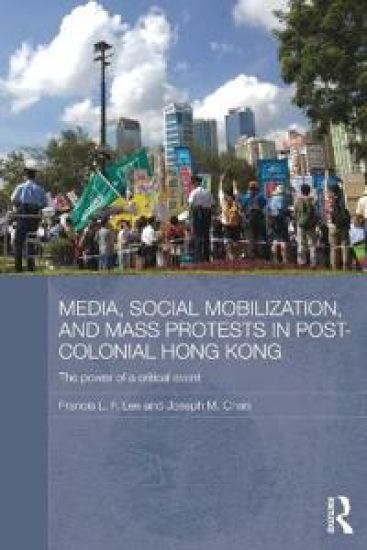
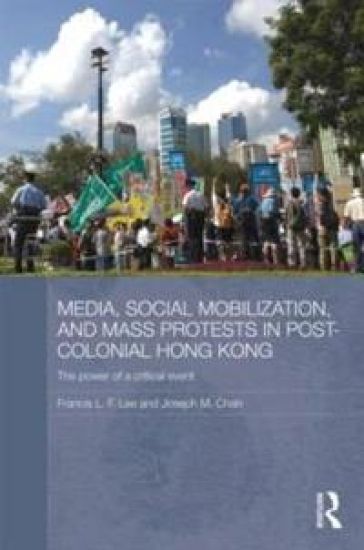
Since 2003, Hong Kong has witnessed a series of large-scale protests which have constituted the core of a reinvigorated pro-democracy movement. What drove tens of thousands of citizens to the street on a yearly basis to protest? What were the social and organizational bases of the protest movement? How did media and public discourses affect the protests’ formation and mobilization? How did the protesters understand their own actions and the political environment? This book tackles such questions by using a wide range of methods, including population and protest onsite surveys, media content analysis, and in-depth interviews with activists, politicians, and protest participants. It provides an account of the "self-mobilization processes" behind the historic July 1, 2003 protest, and how the protest kick-started new political dynamics and discursive contestations in the public arena which not only turned a single protest into a series of collective actions constituting a movement, but also continually shaped the movement’s characteristics and influence. The book is highly pertinent to readers interested in political development in Hong Kong, and as a case study on "the power of critical events," the book also has broad implications on the study of both media politics and social movements in general.
Elucidates the political dynamics that link the Umbrella Movement to the anti-extradition protests and helps explain the key character of the latter movement. Presenting an analytical account of the relational dynamics linking the 2014 Umbrella Movement and the 2019 anti-extradition protests in Hong Kong, Pro-Democracy Contention in Hong Kong aims to explain not only the relationship between two spectacular protest campaigns but also why the anti-extradition protests exhibited a high degree of internal solidarity and public sympathy toward confrontational and at times violent protest actions. The analysis moves beyond the typical focus on the peaks of social mobilization to examine the contingent and dynamic evolution of the pro-democracy movement in Hong Kong. Drawing upon a range of research materials, including in-depth interviews with protesters and leading activists, surveys of protesters conducted onsite, population opinion surveys, systematic analyses of media materials, and examination of the verdicts of protest-related court cases, Francis L. F. Lee offers theoretical insights on various important issues in the study of social movements, including, among others, the possibility of movement transformation during abeyance, the relationship between protest events and elections, the role of ideological brokers in movement dynamics, and the nature of spontaneous protests. Readers interested in Chinese and Hong Kong politics or interested in social movement studies and analyses of political dynamics in hybrid regimes will find value in Lee's analysis.
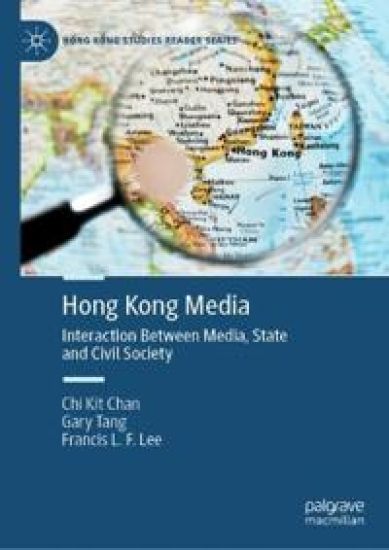
This book explores the challenges to news professionalism and media autonomy stemming from the state, market pressure, the digitalization of communication, and a polarized civil society in Hong Kong. China is tightening its control over post-handover Hong Kong, which includes press freedom. Harsh market competition, coupled with shifting readership from mainstream media to digital platforms, is squeezing the business viability of media organizations. The polarization of civil society in post-handover Hong Kong had degraded consensual values upon which news professionalism relies. Journalists have had to reorient news professionalism and media power in the midst of state-society tension, market pressure, and the shifting communication mode driven by digitalization. These are the key questions for Hong Kong media. This dynamic intervention will be of interest to journalists, scholars of civil society, and scholars of Asian politics.
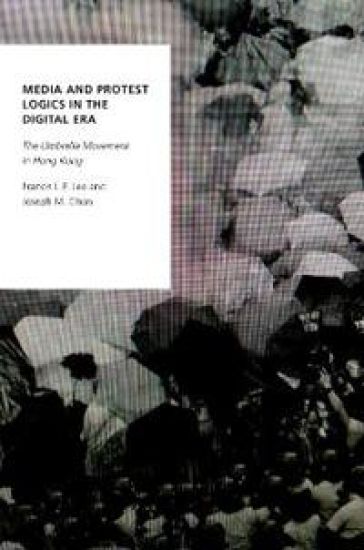
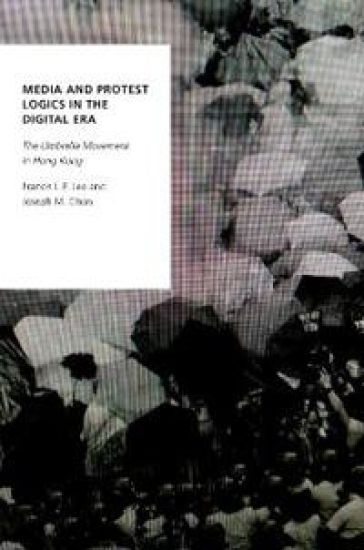
Digital and social media are increasingly integrated into the dynamics of protest movements around the world. They strengthen the mobilization power of movements, extend movement networks, facilitate new modes of protest participation, and give rise to new protest formations. Meanwhile, conventional media remains an important arena where protesters and their targets contest for public support. This book examines the role of the media -- understood as an integrated system comprised of both conventional media institutions and digital media platforms -- in the formation and dynamics of the Umbrella Movement in Hong Kong. For 79 days in 2014, Hong Kong became the focus of international attention due to a public demonstration for genuine democracy that would become known as the Umbrella Movement. During this time, twenty percent of the local population would join the demonstration, the most large-scale and sustained act of civil disobedience in Hong Kong's history -- and the largest public protest campaign in China since the 1989 student movement in Beijing. On the surface, this movement was not unlike other large-scale protest movements that have occurred around the world in recent years. However, it was distinct in how bottom-up processes evolved into a centrally organized, programmatic movement with concrete policy demands. In this book, Francis L. F. Lee and Joseph M. Chan connect the case of the Umbrella Movement to recent theorizations of new social movement formations. Here, Lee and Chan analyze how traditional mass media institutions and digital media combined with on-the-ground networks in such a way as to propel citizen participation and the evolution of the movement as a whole. As such, they argue that the Umbrella Movement is important in the way it sheds light on the rise of digital-media-enabled social movements, the relationship between digital media platforms and legacy media institutions, the power and limitations of such occupation protests and new "action logics," and the continual significance of old protest logics of resource mobilization and collective action frames. Through a combination of protester surveys, population surveys, analyses of news contents and social media activities, this book reconstructs a rich and nuanced account of the Umbrella Movement, providing insight into numerous issues about the media-movement nexus in the digital era.
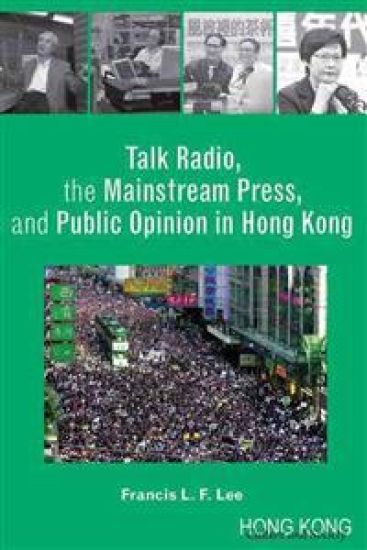
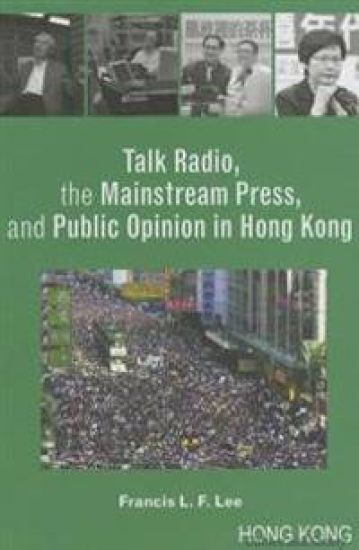
Phone-in programmes on public and commercial radio channels have been a staple of popular Hong Kong politics since the 1990s. In the absence of a fully democratic system, they have played an influential role in channeling and mediating public opinion. This work examines the phenomenon of talk radio in Hong Kong, using as its analytical framework the idea of re-mediation. It argues that the circulation and re-circulation of talk radio content through the mainstream media is crucial in explaining the medium's social prominence and influence. The process has not only widened the dissemination of talk radio content, but has also established talk radio as a channel for free political expression, giving it a role in shaping serious debate not seen in many other societies. Drawing on interviews with radio personnel, analysis of radio and newspaper content, and audience surveys, Talk Radio explores the vital and influential world of Hong Kong's phone-in programmes. The book will be of interest to scholars of politics, media studies, and cultural studies both in Hong Kong and overseas.