
Kirjailija
Francis La Flesche
Kirjat ja teokset yhdessä paikassa: 27 kirjaa, julkaisuja vuosilta 1972–2026, suosituimpiin kuuluu The Osage Tribe, Two Versions of the Child-naming Rite. Vertaile teosten hintoja ja tarkista saatavuus suomalaisista kirjakaupoista.
27 kirjaa
Kirjojen julkaisuvuodet: 1972–2026.
A Dictionary of the Osage Language
Francis LA Flesche; George V. (CON) Labadie
Kessinger Pub
2007
pokkari
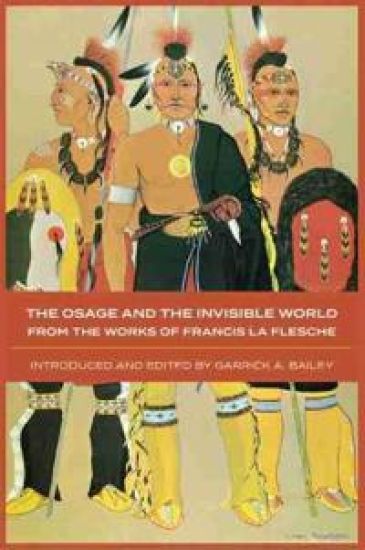
Francis La Flesche (1857-1932), Omaha Indian and anthropologist with the Bureau of American Ethnology, published an enormous body of work on the religion of the Osage Indians, all gathered from the most knowledgeable Osage religious leaders of their day. Yet his writings have been largely overlooked because they were published piecemeal over the course of twenty-five years and never adequately collected or analyzed. In this book, Garrick A. Bailey brings together in a clear, understandable way La Flesche's data for two important Osage religious ceremonies--the ""Songs of Wa-xo'-be,"" an initiation into a clan priesthood, and the Rite of the Chiefs, an initiation into a tribal priesthood. To put La Flesche's work into perspective, Bailey offers a short biography of this prolific Native American scholar and an overview of traditional Osage religious beliefs and practices.
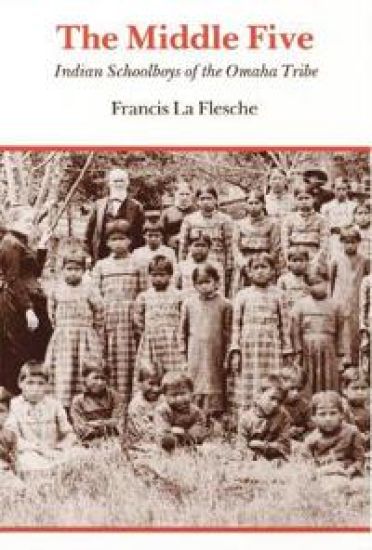
The Middle Five, first published in 1900, is an account of Francis La Flesche's life as a student in a Presbyterian mission school in northeastern Nebraska about the time of the Civil War. It is a simple, affecting tale of young Indian boys midway between two cultures, reluctant to abandon the ways of their fathers, and puzzled and uncomfortable in their new roles of "make-believe white men." The ambition of the Indian parents for their children, the struggle of the teachers to acquaint their charges with a new world of learning, and especially the problems met by both parents and teachers in controlling and directing schoolboy exuberance contribute to the authen-ticity of this portrait of the "Universal Boy," to whom La Flesche dedicated his book. Regarded by anthropologists as a classic of Native American literature, it is one of those rare books that are valued by the specialist as authentic sources of information about Indian culture and yet can be recommended wholeheartedly to the general reader, especially to young people in high school and the upper grades, as a useful corrective to the often distorted picture of Indian life seen in movies, comics, and television.
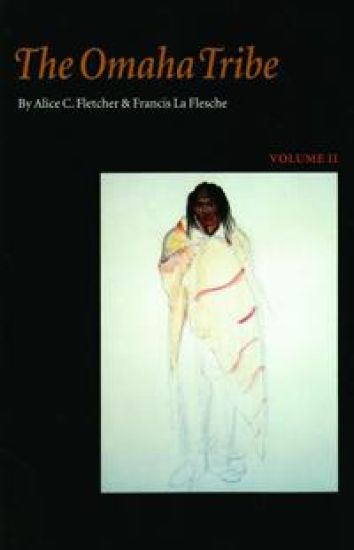
The Omaha Tribe, Volume 2
Alice C. Fletcher; Francis La Flesche
University of Nebraska Press
1972
pokkari
Originally published in 1911 by the Bureau of American Ethnology, The Omaha Tribe is an irreplaceable classic, the collaboration of a pioneering anthropologist and a prominent Omaha ethnologist. Volume II takes up the language, social life, music, religion, warfare, healing practices, and death and burial customs of the Omahas. The first volume covered tribal origins and early history, organization and government, various beliefs and rites, and food gathering.
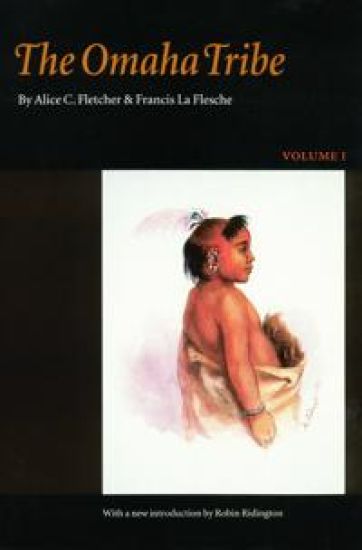
The Omaha Tribe, Volume 1
Alice C. Fletcher; Francis La Flesche
University of Nebraska Press
1972
pokkari
The Omaha Tribe is considered by some anthropologists to be the most important and comprehensive study ever written about a Native American tribe. First published in 1911 as a report of the Bureau of American Ethnology, this classic treatise is based on twenty-nine years of study and observation in the field. "Nothing has been borrowed from other observers," Alice C. Fletcher asserts. "Only original material gathered directly from the native people has been used, and the writer has striven to make so far as possible the Omaha his own interpreter." Volume I is devoted to tribal origins and early history, beliefs about the environment, rites pertaining to the individual, tribal organization and government, the sacred pole, and the quest for food. Volume II, also available as a Bison Book, considers language, social life, music, religion, warfare, treatment of disease, and death and burial customs.