Kirjojen hintavertailu – 12 859 818 kirjaa ja 27 kauppaa

Kirjailija

Francis Ponge

Kirjat ja teokset yhdessä paikassa: 7 kirjaa, julkaisuja vuosilta 1994–2026, suosituimpiin kuuluu FREDRIK WRETMAN: LOOKING FOR ALICE FINE. Vertaile teosten hintoja ja tarkista saatavuus suomalaisista kirjakaupoista.

7 kirjaa

Kirjojen julkaisuvuodet: 1994–2026.

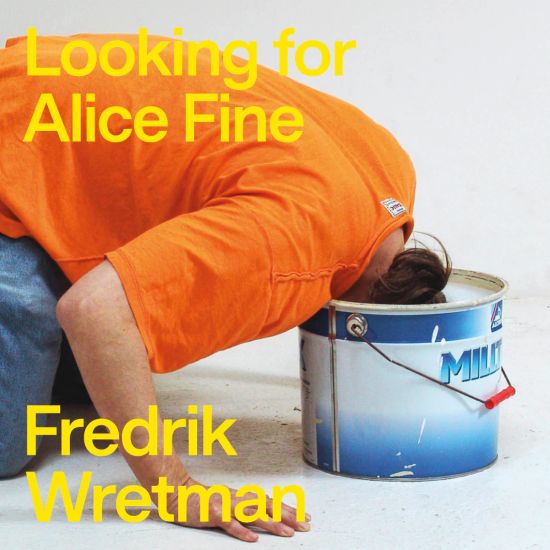
FREDRIK WRETMAN: LOOKING FOR ALICE FINE

FREDRIK WRETMAN: LOOKING FOR ALICE FINE

Eva-Lotta Holm Flach; Bo Nilsson; Francis Ponge; Adam Rosenkvist; Jesper Svennbro; Dan Wolgers

Art Theory Publishing
2026
pahvisivuinen
Vad är det han letar efter? Finns Wretman som frånvaro? Under ett halvsekel har Fredrik Wretmans konstnärskap förundrat och förbryllat. LOOKING FOR ALICE FINE är en monografi där fem författare med inlevelse speglar Fredrik Wretmans verk och ger sin personliga bild i fria berättelser om ett distinkt konstnärskap ämnat åt begrundan av vad konst är. Med perspektiv på viss omorientering ges läsaren möjlighet att följa de långa utvecklingslinjerna och närma sig ett både andligt och lekfullt konstnärskap, som undandrar sig klassificerande etiketter. "Skulpturen Looking for Alice Fine är ett porträtt av den sökande konstnären. Eller konstnären som vill bli ett med sitt medium och försvinna in i sin målning eller sitt måleri. För mig är konstnärligt arbete och meditation två sidor av samma mynt. De är olika sätt att få kontakt med sitt omedvetna och ett sätt att börja tänka. Man hittar ett tillstånd där tankarna vandrar för sig själva, utan att styras." Intervju från boken med Fredrik Wretman av Eva-Lotta Holm Flach
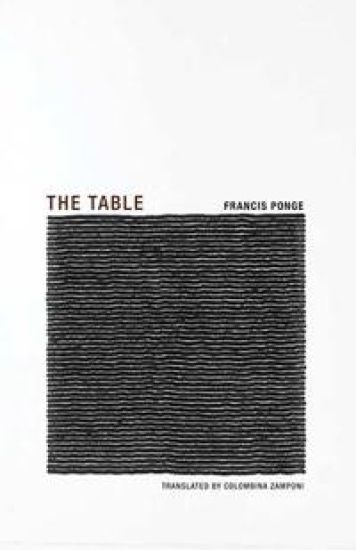
The Table

The Table

Francis Ponge

Wakefield Press
2017
pokkari
The final chapter in Francis Ponge’s interrogation of unassuming objects Written from 1967 to 1973 over a series of early mornings in seclusion in his country home, The Table offers a final chapter in Francis Ponge’s interrogation of the unassuming objects in his life: in this case, the table upon which he wrote. In his effort to get at the presence lying beneath his elbow, Ponge charts out a space of silent consolation that lies beyond (and challenges) scientific objectivity and poetic transport. This is one of Ponge’s most personal, overlooked, and—because it was the project he was working on when he died—his least processed works. It reveals the personal struggle Ponge engaged in throughout all of his writing, a hesitant uncertainty he usually pared away from his published texts that is at touching opposition to the manufactured, “durable mother” of the table on and of which he here writes.
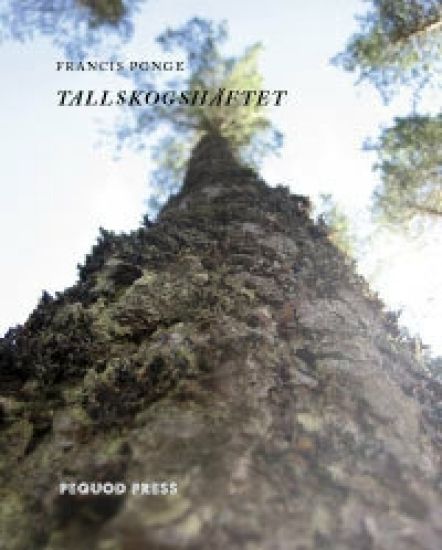
Tallskogshäftet

Tallskogshäftet

Francis Ponge

Pequod Press
2006
nidottu
Ponges sakliga betraktelse av en tallskog för oss rakt in i diskussioner om språk, moral och skönhet, men är mest av allt en kärleksförklaring till just tallskogen. Boken utkom på franska 1947 och finns nu för första gången på svenska i översättning av Malte Persson.
Soap

Soap

Francis Ponge

Stanford University Press
1998
sidottu
". . . And now, dear reader, for your intellectual toilet, here is a little piece of soap. Well handled, we guarantee it will be enough. Let us hold this magic stone." The poet Francis Ponge (1899-1988) occupied a significant and unchallenged place in French letters for over fifty years, attracting the attention and admiration of generations of leading intellectuals, writers, and painters, a notable feat in France, where reputations are periodically reassessed and undone with the arrival of new literary and philosophical schools. Soap occupies a crucial, pivotal position in Ponge's work. Begun during the German occupation when he was in the Resistance, though completed two decades later, it determined, according to Ponge, the form of almost all his postwar writing. With this work, he began to turn away from the small, perfect poem toward a much more open form, a kind of prose poem which incorporates a laboratory or workshop, recounting its own process of coming into being along with the final result. The outcome is a new form of writing, which one could call "processual poetry." Ponge's later work, from Soap on, is a very important tool in the questioning and rethinking of literary genres, of poetry and prose, of what is literature. There is a blurring of boundaries between Soap and soap (which was hard to come by during the Resistance and is also, of course, metaphorical for a larger social restitution). Soap contains the sum of Ponge's aesthetics and materialist ethics and his belief in the supremacy of language as it becomes the object of the text. In the words of Serge Gavronsky, "this work, perhaps one of the longest running metaphors in literature, slowly unwinds, bubbles in verbal inventions, and finally evaporates, leaving the water slightly troubled, slightly darker, but the hands clean, really clean. . . . Out of murky literary habits, Ponge has devised a way of cleaning his text, and through it, man himself, his vocabulary, and as a consequence, his way of being in the world."
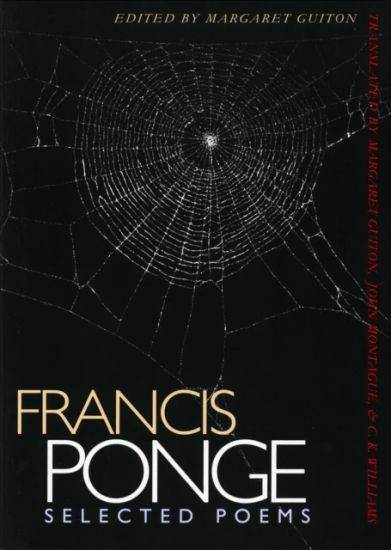
Selected Poems | Francis Ponge

Selected Poems | Francis Ponge

Francis Ponge; C.K. Williams

Wake Forest University Press
1994
nidottu
Through translations by two major contemporary poets and a scholar intimate with the Ponge canon, this volume offers selections of mostly earlier poetry —Le parti pris des choses, Pièces, Proêmes, and Nouveau nouveau recueil—as representative of the strongest work of this modern French master.