

Kirjailija
Francis Stevens
Kirjat ja teokset yhdessä paikassa: 39 kirjaa, julkaisuja vuosilta 2000–2025, suosituimpiin kuuluu The Heads of Cerberus. Vertaile teosten hintoja ja tarkista saatavuus suomalaisista kirjakaupoista.
39 kirjaa
Kirjojen julkaisuvuodet: 2000–2025.



Famous Fantastic Mysteries #4
Francis Stevens; Ralph Milne Farley; A Merritt
Popular Publications
2025
pokkari
Initially published by The Frank A. Munsey Company, Famous Fantastic Mysteries was dedicated to reprinting the rare science fiction and fantasy stories from the early years of Argosy, The All-Story, and The Cavalier. Famous Fantastic Mysteries is one of the most important science fiction pulps. The January 1940 issue contains classic stories by A. Merritt, Fancis Stevens, Ralph Milne Farley, and Garret Smith, among others.

Exposed to a high-tech dust that can transport people from one dimension to another, three travelers must try to escape the totalitarian Philadelphia of 2118. When three people in Philadelphia inhale dust developed by a scientist who has discovered parallel universes, they are transported into an interdimensional no-man s land that is populated by supernatural beings. From there, they go on to an alternate-future version of Philadelphia a frightening dystopian nation-state in which citizens are numbered, not named. How will they escape? In The Heads of Cerberus and Other Stories, introduced by Lisa Yaszek, you will find this world-bending story as well as five others written by Francis Stevens, the pseudonym of Gertrude Barrows Bennett, a pioneering science fiction and fantasy adventure writer from Minneapolis who made her literary debut at the precocious age of 17. Often celebrated as 'the woman who invented dark fantasy,' Bennett possessed incredible range; her groundbreaking stories produced largely between 1904 and 1919 suggest that she is better understood as the mother of modern genre fiction writ large. Bennett s work has anticipated everything from the work of Philip K. Dick to Superman comics to The Hunger Games, making it as relevant now as it ever was. Francis Stevens (Gertrude Barrows Bennett, 1884-1948) was the first American woman to publish widely in fantasy and science fiction. Her five short stories and seven longer works of fiction, all of which appeared in pulp magazines such as Argosy, All-Story Weekly, and Weird Tales, would influence everyone from H. P Lovecraft to C. L. Moore.

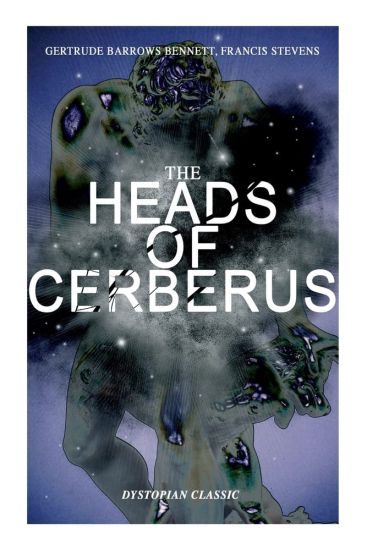
The Heads of Cerberus (Dystopian Classic)
Gertrude Barrows Bennett; Francis Stevens
e-artnow
2022
pokkari
What would you do if inhaling a mysterious dust transports you to a future totalitarian Philadelphia in 2118 AD where you are face to face with the mythical and ferocious three headed dog Cerberus? Who will succeed in killing you first - the government or the beast? Find out for yourself in this dystopian sci-fi classic Gertrude Barrows Bennett (1883-1948) was the first major female writer of fantasy and science fiction in the United States, publishing her stories under the pseudonym Francis Stevens. Bennett wrote a number of highly acclaimed fantasies between 1917 and 1923 and has been called "the woman who invented dark fantasy."

Serapion and Other Stories (1920) is a collection of stories by Francis Stevens. Using her well-known pseudonym, Gertrude Barrows Bennett published some of the twentieth century’s greatest science fiction stories and novels. “Serapion” been recognized as a powerful tale of dark fantasy for investigation of demonic possession and the occult, and remains central to Stevens’ reputation as a pioneering author of fantasy and science fiction. “‘Get! Get out!’ adjured that brutally vulgar voice. Then it changed to a whining, female treble: ‘You are young, Clayton Barbour; young and soft to the soft, cruel hand that would mold you. You are easy to mold as clay-clay-Clayton-clay! Evil hangs over you--black evil! Flee from the damned Clayton Barbour. Go home--you!’” Against his better judgment, Clay Barbour ignores the advice of his friend Nils Berquist and attends a séance at the home of well-known spiritualists James and Alicia Moore. In the dim, candlelit room, a “fifth presence” named Serapion reveals himself to Barbour, claiming to offer happiness and success to the young man. Terrified at first, Barbour soon welcomes Serapion into his life, unwittingly opening the door to disaster for himself and his loved ones. Presented alongside some of Stevens’ lesser known tales of science fiction and occult inquiry, “Serapion” is a masterpiece of dark fantasy and a cautionary tale that continues to haunt a century after it appeared in print. With a beautifully designed cover and professionally typeset manuscript, this edition of Francis Stevens’ Serapion and Other Stories is a classic work of American science fiction reimagined for modern readers.

The Citadel of Fear (1918) is a science fiction novel by Francis Stevens. Using her well-known pseudonym, Gertrude Barrows Bennett published some of the twentieth century’s greatest science fiction stories and novels. The Citadel of Fear, her debut novel, has been recognized as a powerful tale of the lost world genre of adventure and remains central to Stevens’ reputation as a pioneering author of fantasy and science fiction. As the Great War rages on, two Irish American prospectors journey across the Mexican desert in search of fortune. Lucky to survive the heat and harsh conditions, they discover a dense jungle rumored to be the home of a lost tribe of Aztecs devoted to the serpent god Quetzalcoatl. Despite their fears, Kennedy and Colin O’Hara remain determined to complete their mission, no matter the cost. Venturing through the darkness of the jungle, they find the underground city of Tlapallam, where a group of assailants takes Kennedy prisoner. Left to return alone through the desert, O’Hara vows to return for his friend. Published at the height of Stevens’ career as a popular storyteller in the nation’s leading fantasy magazines, The Citadel of Fear is a lost world novel in the tradition of H. Rider Haggard and Edgar Rice Burroughs that continues to entertain and astound over a century after it appeared in print. With a beautifully designed cover and professionally typeset manuscript, this edition of Francis Stevens’ The Citadel of Fear is a classic work of American science fiction reimagined for modern readers.

Claimed (1920) is a science fiction novel by Francis Stevens. Using her well-known pseudonym, Gertrude Barrows Bennett published some of the twentieth century’s greatest science fiction stories and novels. Claimed, her final novel, has been recognized as a powerful tale of dark fantasy for its combination of nautical adventure and the occult, and remains central to Stevens’ reputation as a pioneering author of fantasy and science fiction. “From where we stood the illusion of ruins was nearly perfect, and indeed—who knows?—we may to-day have looked upon the last surviving trace of some ancient city, flung up from the abyss that engulfed it ages before the brief history we have of the race of man began.” On a voyage at sea, a merchant vessel chances upon a recently formed volcanic island. Unable to stay for long, mesmerized by the geometric rock formations reaching their pinnacle at its smoldering center, they take a memento of their discovery: a small, rectangular block of a metallic green color, perfect for carving into a sea chest. Eventually, the artifact makes its way into the collection of Jesse J. Robinson, a famous antiquarian from Tremont, a town located along the Delaware River. When Robinson and his niece Leilah fall victim to powerful hallucinations, Doctor John Vanaman is brought in to help. Soon, he launches an investigation into the nature of the box, tracking down its original owner and the dealer who sold it to Robinson. To his horror, they seem to have succumbed to the same madness plaguing the antiquarian’s home. With a beautifully designed cover and professionally typeset manuscript, this edition of Francis Stevens’ Claimed is a classic work of American science fiction reimagined for modern readers.

The Heads of Cerberus (1919) is a science fiction novel by Francis Stevens. Originally serialized in The Thrill Book, a popular pulp magazine, The Heads of Cerberus was recognized as “perhaps the first science fiction fantasy to use the alternate time-track, or parallel worlds, idea” by anthologist and critic Groff Conklin. Noted for its satirical tone and dystopian themes, The Head of Cerberus remains central to Stevens’ reputation as a pioneering author of fantasy and science fiction. In 1918, three friends from Philadelphia discover a strange powdery substance. Before they can find out what it is or where it came from, they are transported to the year 2118. Somehow, the city has come under complete totalitarian control, forcing the vast majority of its poor citizens to live in constant fear of death and imprisonment. Names have been replaced by identification numbers and annual contests run by the ruthless overseer leave families torn apart by violence and death. With her eye on the present, writing at a time of war and increasing political division, Stevens tells a story about a future both strange and all too familiar, warning her readers about the dangers of unchecked power through the guise of fantasy and adventure. With a beautifully designed cover and professionally typeset manuscript, this edition of Francis Stevens’ The Heads of Cerberus is a classic work of American science fiction reimagined for modern readers.

Discovering a lost city in the Mexican jungle, two adventurers embark on a terrifying journey. Disturbing ancient gods and nightmare creatures, they find a hidden civilization of Aztecs and bring dark magic into the modern world. With a potent cocktail of romance, revenge and swampish evil this book is one of the earliest examples of fantasy and remains an enthralling read. Gertrude Barrows Bennett, writing as Francis Stevens, is often regarded as the founder of dark fantasy and was admired by H. P. Lovecraft amongst many, with some ranking her alongside Mary Shelley in impact and imaginative power. Foundations of Feminist Fiction. The early 1900s saw a quiet revolution in literature dominated by male adventure heroes. Both men and women moved beyond the norms of the male gaze to write from a different gender perspective, sometimes with female protagonists, but also expressing the universal freedom to write on any subject whatsoever.

This book has been formatted to the highest digital standards and adjusted for readability on all devices. The story is set on an island separated from the rest of the world, on which evolution has taken a different course. The Nightmare resembles Edgar Rice Burroughs' The Land That Time Forgot, which was published a year later. While Bennett had submitted The Nightmare under her own name, she had asked to use a pseudonym, Jean Vail, if it was published. The magazine's editor instead chose to use Francis Stevens, which she stuck to for rest of her writings as well. Excerpt: ""I never met a burglar, but if I ever should it would be embarrassing to point a pistol at him and not be able to fire it off. I admire the heroes of burglar stories. They're always such efficient people.

This book has been formatted to the highest digital standards and adjusted for readability on all devices. One of Bennett's most famous novel, Claimed, narrates the tale of a supernatural artifact which summons an ancient and powerful god to early 20th century New Jersey. Augustus T. Swift called the novel, ""One of the strangest and most compelling science fantasy novels you will ever read""). Excerpt: ""From where we stood the illusion of ruins was nearly perfect, and indeed ""who knows?"" we may today have looked upon the last surviving trace of some ancient city, flung up from the abyss that engulfed it ages before the brief history we have of the race of man began. I would have liked to investigate the ""ruins"" more closely, but thought best not to attempt it. From many fissures hot, ill-smelling, and probably poisonous vapor is still pouring up, and though the rock is sufficiently cool so that it is possible to walk on it, I deemed it safer to confine exploration to a comparatively small space near our landing-place.

Adventures on the Go, Book 2
Darryle Purcell; Michael Brian; Francis Stevens
OffBeatReads
2021
pokkari
This WINTER issue of ADVENTURES ON THE GO packs a LOT of punch. Immerse yourself in the blood of The Vampyre from 1819. Francis Stevens offers up a time when women are the ruling sex in Friend Island. You can enjoy one of our new and original stories, you can choose SMEE--a hide-n-seek tale that will supply you with goosebumps. And that's not all. For a variety of reading entertainment pick up an issue, take it with you, and always be ready for anADVENTURE

Most psychological disorders involve distressful emotions, yet emotions are often regarded as secondary in the etiology and treatment of psychopathology. This book offers an alternative model of psychotherapy, using the patient’s emotions as the focal point of treatment. This unique text approaches emotions as the primary source of intervention, where emotions are appreciated, experienced, and learned from as opposed to being regulated solely. Based on the latest developments in affective neuroscience, Dr. Stevens applies science-based interventions with a sequential approach for helping patients with psychological disorders. Chapters focus on how to use emotional awareness, emotional validation, self-compassion, and affect reconsolidation in therapeutic practice. Interventions for specific emotions such as anger, abandonment, jealousy, and desire are also addressed. This book is essential reading for clinicians practicing psychotherapy, social workers and licensed mental health counselors, as well as anyoe interested in the emotional science behind the brain.

Most psychological disorders involve distressful emotions, yet emotions are often regarded as secondary in the etiology and treatment of psychopathology. This book offers an alternative model of psychotherapy, using the patient’s emotions as the focal point of treatment. This unique text approaches emotions as the primary source of intervention, where emotions are appreciated, experienced, and learned from as opposed to being regulated solely. Based on the latest developments in affective neuroscience, Dr. Stevens applies science-based interventions with a sequential approach for helping patients with psychological disorders. Chapters focus on how to use emotional awareness, emotional validation, self-compassion, and affect reconsolidation in therapeutic practice. Interventions for specific emotions such as anger, abandonment, jealousy, and desire are also addressed. This book is essential reading for clinicians practicing psychotherapy, social workers and licensed mental health counselors, as well as anyoe interested in the emotional science behind the brain.

Serapion and Other Stories (1920) is a collection of stories by Francis Stevens. Using her well-known pseudonym, Gertrude Barrows Bennett published some of the twentieth century’s greatest science fiction stories and novels. “Serapion” been recognized as a powerful tale of dark fantasy for investigation of demonic possession and the occult, and remains central to Stevens’ reputation as a pioneering author of fantasy and science fiction. “‘Get! Get out!’ adjured that brutally vulgar voice. Then it changed to a whining, female treble: ‘You are young, Clayton Barbour; young and soft to the soft, cruel hand that would mold you. You are easy to mold as clay-clay-Clayton-clay! Evil hangs over you--black evil! Flee from the damned Clayton Barbour. Go home--you!’” Against his better judgment, Clay Barbour ignores the advice of his friend Nils Berquist and attends a séance at the home of well-known spiritualists James and Alicia Moore. In the dim, candlelit room, a “fifth presence” named Serapion reveals himself to Barbour, claiming to offer happiness and success to the young man. Terrified at first, Barbour soon welcomes Serapion into his life, unwittingly opening the door to disaster for himself and his loved ones. Presented alongside some of Stevens’ lesser known tales of science fiction and occult inquiry, “Serapion” is a masterpiece of dark fantasy and a cautionary tale that continues to haunt a century after it appeared in print. With a beautifully designed cover and professionally typeset manuscript, this edition of Francis Stevens’ Serapion and Other Stories is a classic work of American science fiction reimagined for modern readers.

The Heads of Cerberus (1919) is a science fiction novel by Francis Stevens. Originally serialized in The Thrill Book, a popular pulp magazine, The Heads of Cerberus was recognized as “perhaps the first science fiction fantasy to use the alternate time-track, or parallel worlds, idea” by anthologist and critic Groff Conklin. Noted for its satirical tone and dystopian themes, The Head of Cerberus remains central to Stevens’ reputation as a pioneering author of fantasy and science fiction. In 1918, three friends from Philadelphia discover a strange powdery substance. Before they can find out what it is or where it came from, they are transported to the year 2118. Somehow, the city has come under complete totalitarian control, forcing the vast majority of its poor citizens to live in constant fear of death and imprisonment. Names have been replaced by identification numbers and annual contests run by the ruthless overseer leave families torn apart by violence and death. With her eye on the present, writing at a time of war and increasing political division, Stevens tells a story about a future both strange and all too familiar, warning her readers about the dangers of unchecked power through the guise of fantasy and adventure. With a beautifully designed cover and professionally typeset manuscript, this edition of Francis Stevens’ The Heads of Cerberus is a classic work of American science fiction reimagined for modern readers.

Claimed (1920) is a science fiction novel by Francis Stevens. Using her well-known pseudonym, Gertrude Barrows Bennett published some of the twentieth century’s greatest science fiction stories and novels. Claimed, her final novel, has been recognized as a powerful tale of dark fantasy for its combination of nautical adventure and the occult, and remains central to Stevens’ reputation as a pioneering author of fantasy and science fiction. “From where we stood the illusion of ruins was nearly perfect, and indeed—who knows?—we may to-day have looked upon the last surviving trace of some ancient city, flung up from the abyss that engulfed it ages before the brief history we have of the race of man began.” On a voyage at sea, a merchant vessel chances upon a recently formed volcanic island. Unable to stay for long, mesmerized by the geometric rock formations reaching their pinnacle at its smoldering center, they take a memento of their discovery: a small, rectangular block of a metallic green color, perfect for carving into a sea chest. Eventually, the artifact makes its way into the collection of Jesse J. Robinson, a famous antiquarian from Tremont, a town located along the Delaware River. When Robinson and his niece Leilah fall victim to powerful hallucinations, Doctor John Vanaman is brought in to help. Soon, he launches an investigation into the nature of the box, tracking down its original owner and the dealer who sold it to Robinson. To his horror, they seem to have succumbed to the same madness plaguing the antiquarian’s home. With a beautifully designed cover and professionally typeset manuscript, this edition of Francis Stevens’ Claimed is a classic work of American science fiction reimagined for modern readers.