Kirjojen hintavertailu – 12 903 724 kirjaa ja 27 kauppaa

Kirjailija

Franco Moretti

Kirjat ja teokset yhdessä paikassa: 11 kirjaa, julkaisuja vuosilta 1988–2019, suosituimpiin kuuluu Graphs, Maps, Trees. Vertaile teosten hintoja ja tarkista saatavuus suomalaisista kirjakaupoista.

11 kirjaa

Kirjojen julkaisuvuodet: 1988–2019.

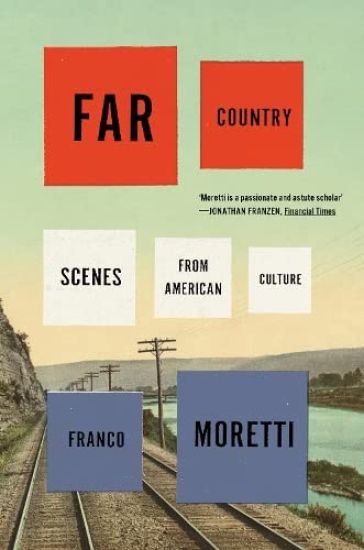
Far Country

Far Country

Franco Moretti

Verso Books
2019
sidottu
A dazzling account of the development of American cultural hegemony from one of the world's leading literary theorists. Franco Moretti, acclaimed author of Graphs, Maps, Trees and Distant Reading, distils a lifetime of teaching and research to present "the university, in the form of an essay". Ranging from poetry and the novel to theatre and the visual arts, Far Country juxtaposes canonical figures in American art and letters with European counterparts-Whitman and Baudelaire, Hemingway and Joyce, Miller and Brecht, Hopper and Vermeer-charting ruptures in the medium of form that have transformed the cultural landscape on either side of the Atlantic over the past century.
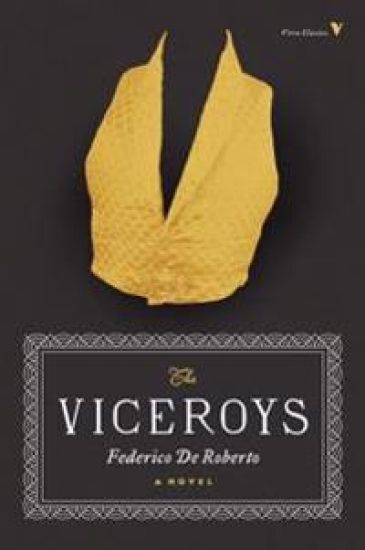
The Viceroys

The Viceroys

Federico Roberto; Franco Moretti

Verso Books
2016
nidottu
A lost literary classic, written in 1894, The Viceroys is one of the most acclaimed masterworks of Italian realism. The novel follows three generations of the aristocratic Uzeda family as it struggles to hold on to power in the face of the cataclysmic changes rocking Sicily. As Garibaldi's triumphs move Italy toward unification, the Uzedas try every means to retain their position. De Roberto's satirical and mordant pen depicts a cast of upper-class schemers, headed by the old matriarch, Donna Teresa, and exemplified by her arrogant and totally unscrupulous son, Consalvo, who rises to political eminence through lip service, double-dealing, and hypocrisy. The Viceroys is a vast dramatic panorama: a new world fighting to shrug off the viciousness and iniquities of the old.
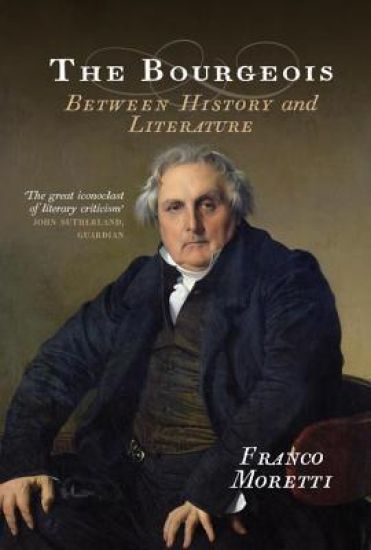
The Bourgeois

The Bourgeois

Franco Moretti

Verso Books
2014
nidottu
"The bourgeois ... Not so long ago, this notion seemed indispensable to social analysis; these days, one might go years without hearing it mentioned. Capitalism is more powerful than ever, but its human embodiment seems to have vanished. 'I am a member of the bourgeois class, feel myself to be such, and have been brought up on its opinions and ideals,' wrote Max Weber, in 1895. Who could repeat these words today? Bourgeois 'opinions and ideals'-what are they?" Thus begins Franco Moretti's study of the bourgeois in modern European literature-a major new analysis of the once-dominant culture and its literary decline and fall. Moretti's gallery of individual portraits is entwined with the analysis of specific keywords-"useful" and "earnest," "efficiency," "influence," "comfort," "roba"-and of the formal mutations of the medium of prose. From the "working master" of the opening chapter, through the seriousness of nineteenth-century novels, the conservative hegemony of Victorian Britain, the "national malformations" of the Southern and Eastern periphery, and the radical self-critique of Ibsen's twelve-play cycle, the book charts the vicissitudes of bourgeois culture, exploring the causes for its historical weakness, and for its current irrelevance.
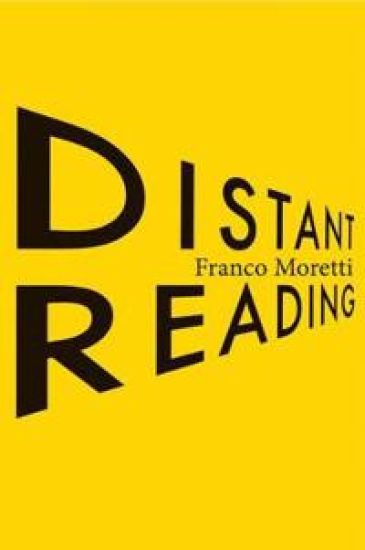
Distant Reading

Distant Reading

Franco Moretti

Verso Books
2013
sidottu
How does a literary historian end up thinking in terms of z-scores, principal component analysis, and clustering coefficients? The essays in Distant Reading led to a new and often contested paradigm of literary analysis. In presenting them here Franco Moretti reconstructs his intellectual trajectory, the theoretical influences over his work, and explores the polemics that have often developed around his positions. From the evolutionary model of "Modern European Literature," through the geo-cultural insights of "Conjectures of World Literature" and "Planet Hollywood," to the quantitative findings of "Style, inc." and the abstract patterns of "Network Theory, Plot Analysis," the book follows two decades of conceptual development, organizing them around the metaphor of "distant reading," that has come to define - well beyond the wildest expectations of its author - a growing field of unorthodox literary studies.
Distant Reading

Distant Reading

Franco Moretti

Verso Books
2013
nidottu

Halvin toimitettuna 27,60 €

How does a literary historian end up thinking in terms of z-scores, principal component analysis, and clustering coefficients? The essays in Distant Reading led to a new and often contested paradigm of literary analysis. In presenting them here Franco Moretti reconstructs his intellectual trajectory, the theoretical influences over his work, and explores the polemics that have often developed around his positions. From the evolutionary model of "Modern European Literature," through the geo-cultural insights of "Conjectures of World Literature" and "Planet Hollywood," to the quantitative findings of "Style, inc." and the abstract patterns of "Network Theory, Plot Analysis," the book follows two decades of conceptual development, organizing them around the metaphor of "distant reading," that has come to define-well beyond the wildest expectations of its author-a growing field of unorthodox literary studies.
Graphs, Maps, Trees

Graphs, Maps, Trees

Alberto Piazza; Franco Moretti

Verso Books
2007
nidottu
In this groundbreaking book, Franco Moretti argues that literature scholars should stop reading books and start counting, graphing, and mapping them instead. In place of the traditionally selective literary canon of a few hundred texts, Moretti offers charts, maps and time lines, developing the idea of "distant reading" into a full-blown experiment in literary historiography, in which the canon disappears into the larger literary system. Charting entire genres-the epistolary, the gothic, and the historical novel-as well as the literary output of countries such as Japan, Italy, Spain, and Nigeria, he shows how literary history looks significantly different from what is commonly supposed and how the concept of aesthetic form can be radically redefined.
The Way of the World

The Way of the World

Franco Moretti

Verso Books
2000
nidottu

Halvin toimitettuna 31,30 €

Wilhelm Meister, Elizabeth Bennet, Julien Sorel, Rastignac, Jane Eyre, Bazaroz, Dorothea Brooke ... the golden age of the European novel discovers a new collective protagonist: youth. It is problematic and restless youth-"strange" characters, as their own creators often say-arising from the downfall of traditional societies. But even more than that, youth is the symbolic figure for European modernity: that sudden mix of great expectations and lost illusions that the bourgeois world learns to "read", and to accept, as if it were a novel. The Way of the World, with its unique combination of narrative theory and social history, interprets the Bildungsroman as the great cultural mediator of nineteenth-century Europe: a form which explores the many strange compromises between revolution and restoration, economic take-off and aesthetic pleasure, individual autonomy and social normality. This new edition includes an additional final chapter on the collapse of the Bildungsroman in the years around the First World War (a crisis which opened the way for modernist experiments), and a new preface in which the author looks back at The Way of the World in the light of his more recent work.
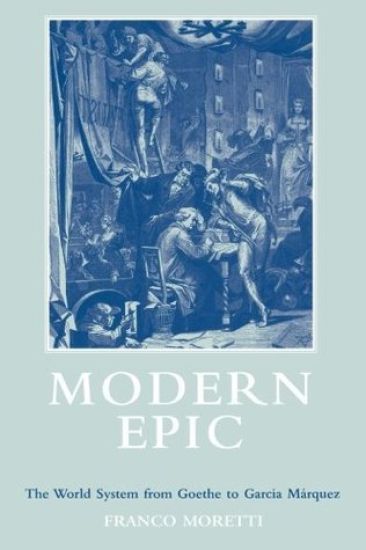
Modern Epic

Modern Epic

Franco Moretti

Verso Books
1996
nidottu
"Take Faust, what is it? A 'tragedy', as its author states? A great philosophical tale? A collection of lyrical insights? Who can say. How about Moby-Dick? Encyclopedia, novel or romance? Or even a 'singular medley,' as one anonymous 1851 review put it? ... 'It is no longer a novel,' T. S. Eliot said of Ulysses. But if not novels, then what are they?" Literary history has long been puzzled by how to classify and treat these aesthetic monuments. In this highly original and interdisciplinary work, Franco Moretti builds a theory of the modern epic: a sort of super-genre that has provided many of the "sacred texts" of Western literary culture. He provides a taxonomy capable of accommodating Faust, Moby-Dick, The Nibelung's Ring, Ulysses, The Cantos, The Waste Land, The Man Without Qualities and One Hundred Years of Solitude. For Moretti the significance of the modern epic reaches well beyond the aesthetic sphere: it is the form that represents the European domination of the planet, and establishes a solid consent around it. Political ambition and formal inventiveness are here continuously entwined, as the representation of the world system stimulates the technical breakthroughs of polyphony, reverie and leitmotif; of the stream of consciousness, collage and complexity. Opening with an analysis of Goethe's Faust and the different historical roles of epic and the novel, Moretti moves through a discussion of Wagner's Ring and on to a sociology of modernist technique. He ends with a fascinating interpretation of "magic realism" as a compromise formation between a number of modernist devices and the return of narrative interest, and suggests that the west's enthusiastic reception of these texts (and One Hundred Years of Solitude in particular) constitutes a ritual self-absolution for centuries of colonialism.

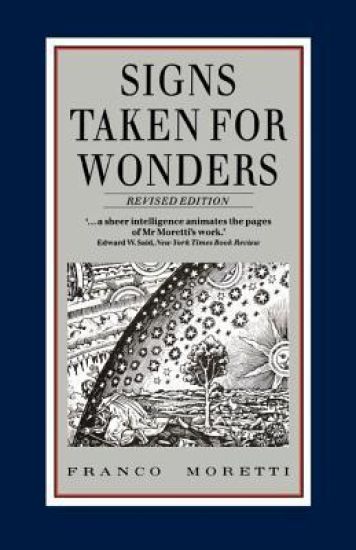
Signs Taken for Wonders

Signs Taken for Wonders

Franco Moretti

Verso Books
1988
nidottu

Halvin toimitettuna 31,30 €

Shakespearean tragedy and Dracula, Sherlock Holmes and Ulysses, Frankenstei and The Waste Land-all are celebrated "wonders" of modern literature, whether in its mandarin or popular form. However, it is the fact that these texts are so central to our contemporary notion of literature that sometimes hinders our ability to understand them. Franco Moretti applies himself to this problem by drawing skillfully on structuralist, sociological and psycho-analytic modes of enquity in order to read these texts as literary systems which are tokens of wider cultural and political realities. In the process, Moretti offers us compelling accounts of various literary genres, explores the relationships between high and mass culture in this century, and considers the relevance of tragic, Romantic and Darwinian views of the world.