Kirjojen hintavertailu – 12 903 725 kirjaa ja 27 kauppaa

Kirjailija

François Furet

Kirjat ja teokset yhdessä paikassa: 9 kirjaa, julkaisuja vuosilta 1965–2014, suosituimpiin kuuluu Fascism and Communism. Vertaile teosten hintoja ja tarkista saatavuus suomalaisista kirjakaupoista.

Nimi esiintyy myös muodoissa: Francois Furet

9 kirjaa

Kirjojen julkaisuvuodet: 1965–2014.

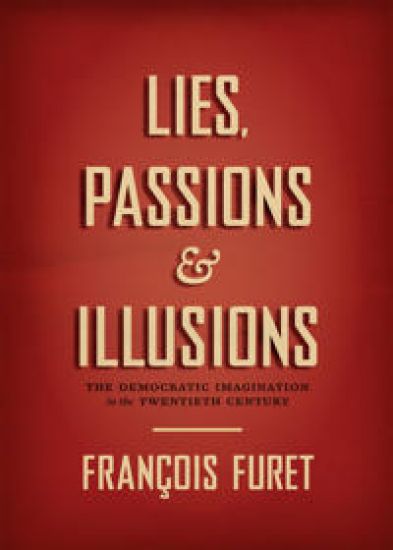
Lies, Passions, and Illusions

Lies, Passions, and Illusions

François Furet

University of Chicago Press
2014
sidottu
Francois Furet needs little introduction. Widely considered one of the leading historians of the French Revolution, he was a maverick for his time, shining a critical light on the entrenched Marxist interpretations that prevailed during the mid-twentieth century. Shortly after his death in 1997, the New York Review of Books called him "one of the most influential men in contemporary France." Lies, Passions, and Illusions is a fitting capstone to this celebrated author's oeuvre: a late-career conversation with philosopher Paul Ricoeur on the twentieth century writ large, a century of violence and turmoil, of unprecedented wealth and progress, in which history advanced, for better or worse, in quantum leaps. This conversation would be, sadly, Furet's last - he died while Ricoeur was completing his edits. Ricoeur did not want to publish his half without Furet's approval, so what remains is Furet's alone, an astonishingly cohesive meditation on the political passions of the twentieth century. With strokes at once broad and incisive, he examines the many different trajectories that nations of the West have followed over the past hundred years. It is a dialogue with history as it happened but also as a form of thought. It is a dialogue with his critics, with himself, and with those major thinkers - from Tocqueville to Hannah Arendt - whose ideas have shaped our understanding of the tragic dramas and upheavals of the modern era. It is a testament to the crucial role of the historian, a reflection on how history is made and lived, and how the imagination is a catalyst for political change. Whether new to Furet or deeply familiar with his work, readers will find thought-provoking assessments on every page, a deeply moving look back at one of the most tumultuous periods of history and how we might learn and look forward from it.

Fascism and Communism

Fascism and Communism

Francois Furet; Ernst Nolte

University of Nebraska Press
2004
pokkari
In his major work on communism, the international bestseller The Passing of an Illusion, the eminent French historian François Furet devoted a lengthy footnote to German historian Ernst Nolte's interpretation of fascism. Nolte responded, a correspondence ensued, and the result was the remarkable exchange presented in this volume. Fascism and Communism offers readers the rare opportunity to witness and learn from a confrontation between two of the world's most distinguished historians over one of the most serious subjects of our time. Each from a different perspective, Furet and Nolte offer compelling arguments for the common genealogy of these two ideologies as well as reasons for the intellectual community's rejection of this explosive thesis throughout the twentieth century. This discussion leads to a deeper understanding of the nature of totalitarianism as well as the trajectory and interpretation of modern European history.
Fascism and Communism

Fascism and Communism

Francois Furet; Ernst Nolte

University of Nebraska Press
2001
sidottu
In his major work on communism, the international bestseller The Passing of an Illusion, the eminent French historian Francois Furet devoted a lengthy footnote to German historian Ernst Nolte's interpretation of fascism. Nolte responded, a correspondence ensued, and the result was the remarkable exchange presented in this volume. Fascism and Communism offers readers the rare opportunity to witness and learn from a confrontation between two of the world's most distinguished historians over one of the most serious subjects of our time. Each from a different perspective, Furet and Nolte offer compelling arguments for the common genealogy of these two ideologies as well as reasons for the intellectual community's rejection of this explosive thesis throughout the twentieth century. This discussion leads to a deeper understanding of the nature of totalitarianism as well as the trajectory and interpretation of modern European history.
The Passing of an Illusion

The Passing of an Illusion

François Furet

University of Chicago Press
2000
nidottu
A study of Communism and a history of the myth of Communism as perpetuated by its admirers. Francois Furet illuminates how the support for Communism and its embodiment, the Soviet Union, became virtually synonymous with "anti-Fascism" and how this strategic arrangement reverberated through the West. During the first half of the 20th century, to be against the Soviet Union (and its Communism), argues Furet, was tantamount to betraying the fight against Fascism, despite the fact that both Fascism and Communism ultimately spring from the same nationalist impulse. Thus the struggle against Fascism resulted in the sanitizing or glorification of Communism. This whitewashing of the Soviet regime's excesses not only kept alive the myth and attractiveness of the Communist promise but had complex moral, intellectual, and political ramifications for the West. This book is a history of the ideological passions that have fueled and characterized the modern era. It serves as an effort to revise the understanding of the 20th century at the "fin de siecle".
The Passing of an Illusion

The Passing of an Illusion

Francois Furet

University of Chicago Press
1999
sidottu
A study of Communism and a history of the myth of Communism as perpetuated by its admirers. Francois Furet illuminates how the support for Communism and its embodiment, the Soviet Union, became virtually synonymous with "anti-Fascism" and how this strategic arrangement reverberated through the West. During the first half of the 20th century, to be against the Soviet Union (and its Communism), argues Furet, was tantamount to betraying the fight against Fascism, despite the fact that both Fascism and Communism ultimately spring from the same nationalist impulse. Thus the struggle against Fascism resulted in the sanitizing or glorification of Communism. This whitewashing of the Soviet regime's excesses not only kept alive the myth and attractiveness of the Communist promise but had complex moral, intellectual, and political ramifications for the West. This book is a history of the ideological passions that have fueled and characterized the modern era. It serves as an effort to revise the understanding of the 20th century at the "fin de siecle".
The French Revolution

The French Revolution

François Furet

JOHN WILEY AND SONS LTD
1996
nidottu
This volume, comprising Part I of the authors classic work Revolutionary France 1770-1880, offers a vivid narrative and radical reinterpretation of the years surrounding the momentous events of 1789 and their aftermath. During this period there were not one, but two revolutions: by intent the first was egalitarian, the second- Bonapartes authoritarian. The tension between the two characterized the period and was to shape the Republic that eventually emerged from the ruins of the ancien regime.
Interpreting the French Revolution

Interpreting the French Revolution

François Furet

Cambridge University Press
1981
pokkari

Halvin toimitettuna 39,30 €

The French Revolution is an historical event unlike any other. It is more than just a topic of intellectual interest: it has become part of a moral and political heritage. But after two centuries, this central event in French history has usually been thought of in much the same terms as it was by its contemporaries. There have been many accounts of the French Revolution, and though their opinions differ, they have often been commemorative or anniversary interpretations of the original event. The dividing line of revolutionary historiography, in intellectual terms, is therefore not between the right and the left, but between commemorative and conceptual history, as exemplified respectively in the works of Michelet and Tocquevifle. In this book, François Furet analyses how an event like the French Revolution can be conceptualised, and identifies the radically new changes the Revolution produced as well as the continuity it provided, albeit under the appearance of change. This question has become a riddle for the European left, answered neither by Marx nor by the theorists of our own century. In his analysis of the tragic relevance of the Revolution, Furet both refers to contemporary experience and discusses various elements in the work of Alexis de Tocclueville and that of Augustin Cochin, which has never been systematically applied by historians of the Revolution. Furet’s book is based on the complementary ideas of these two writers in an attempt to cut through the apparent and misleading clarity of various contradictory views of the Revolution, and to help decipher some of the enigmatic problems of revolutionary ideology. It will be of value to historians of modern Europe and their students; to political, social and economic historians; to sociologists; and to students of political thought.