Kirjojen hintavertailu – 12 859 828 kirjaa ja 27 kauppaa

Kirjailija

François Vaillancourt

Kirjat ja teokset yhdessä paikassa: 4 kirjaa, julkaisuja vuosilta 2010–2013, suosituimpiin kuuluu The Economics of the Multilingual Workplace. Vertaile teosten hintoja ja tarkista saatavuus suomalaisista kirjakaupoista.

4 kirjaa

Kirjojen julkaisuvuodet: 2010–2013.

The Economics of the Multilingual Workplace

The Economics of the Multilingual Workplace

François Grin; Claudio Sfreddo; François Vaillancourt

Routledge
2013
nidottu
This book proposes a path-breaking study of the economics of multilingualism at work, proposing a systematic approach to the identification and measurement of the ways in which language skills and economic performance are related. Using the instruments of economic investigation, but also explicitly relating the analysis to the approaches to multilingualism at work developed in the language sciences, this interdisciplinary book proposes a systematic, step-by-step exploration of the issue. Starting from a general identification of the linkages between multilingualism and processes of value creation, it reviews the contributions of linguistics and economics before developing a new economic model of production in which language is taken into account. Testing of the model using data from two countries provides quantitative estimations of the influence of multilingualism on economic processes, showing that foreign language skills can make a considerable contribution to a country’s GDP. These findings have significant implications for language policy and suggest strategies helping language planners to harness market forces for increased effectiveness.
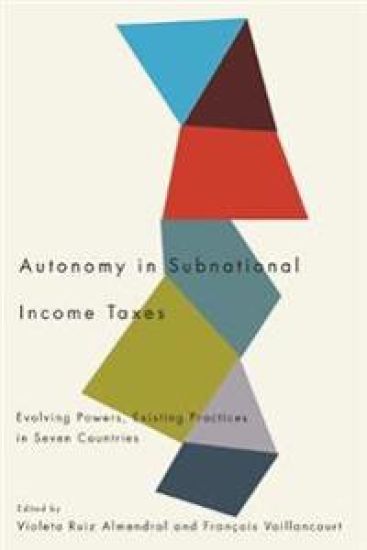
Autonomy in Subnational Income Taxes

Autonomy in Subnational Income Taxes

Violeta Ruiz Almendral; François Vaillancourt

McGill-Queen's University Press
2013
sidottu
There are important differences between constituent units of federal or quasi-federal states in OECD countries with respect to both powers for taxation of personal income and the use made of such powers, if any. Subnational Tax Autonomy in OECD Federations examines tax autonomy as a powerful tool in setting tax rates. Two key issues are examined in detail: first, why proposals giving more power to set tax rates have been implemented (Spain), put forward (UK), stalled (Belguim), or set aside (Germany), and second, how such powers are used in federations whose constituent units have them (Canada, Switzerland, and the United States).
Autonomy in Subnational Income Taxes

Autonomy in Subnational Income Taxes

Violeta Ruiz Almendral; François Vaillancourt

McGill-Queen's University Press
2013
nidottu
There are important differences between constituent units of federal or quasi-federal states in OECD countries with respect to both powers for taxation of personal income and the use made of such powers, if any. Subnational Tax Autonomy in OECD Federations examines tax autonomy as a powerful tool in setting tax rates. Two key issues are examined in detail: first, why proposals giving more power to set tax rates have been implemented (Spain), put forward (UK), stalled (Belguim), or set aside (Germany), and second, how such powers are used in federations whose constituent units have them (Canada, Switzerland, and the United States).
The Economics of the Multilingual Workplace

The Economics of the Multilingual Workplace

François Grin; Claudio Sfreddo; François Vaillancourt

Routledge
2010
sidottu
This book proposes a path-breaking study of the economics of multilingualism at work, proposing a systematic approach to the identification and measurement of the ways in which language skills and economic performance are related. Using the instruments of economic investigation, but also explicitly relating the analysis to the approaches to multilingualism at work developed in the language sciences, this interdisciplinary book proposes a systematic, step-by-step exploration of the issue. Starting from a general identification of the linkages between multilingualism and processes of value creation, it reviews the contributions of linguistics and economics before developing a new economic model of production in which language is taken into account. Testing of the model using data from two countries provides quantitative estimations of the influence of multilingualism on economic processes, showing that foreign language skills can make a considerable contribution to a country’s GDP. These findings have significant implications for language policy and suggest strategies helping language planners to harness market forces for increased effectiveness.