Kirjojen hintavertailu – 12 903 724 kirjaa ja 27 kauppaa

Kirjailija

Frank Aragbonfoh Abumere

Kirjat ja teokset yhdessä paikassa: 14 kirjaa, julkaisuja vuosilta 2021–2027, suosituimpiin kuuluu Decolonisation and Postcolonial Migration. Vertaile teosten hintoja ja tarkista saatavuus suomalaisista kirjakaupoista.

14 kirjaa

Kirjojen julkaisuvuodet: 2021–2027.

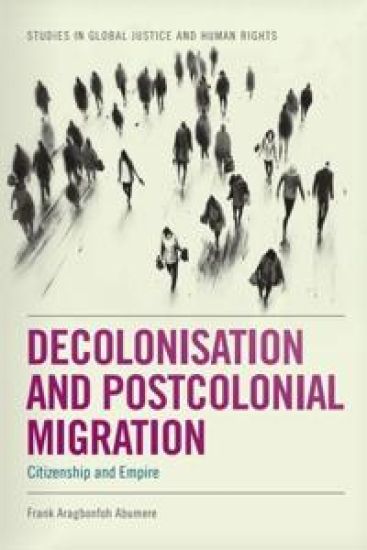
Decolonisation and Postcolonial Migration

Decolonisation and Postcolonial Migration

Frank Aragbonfoh Abumere

Edinburgh University Press
2027
Nidottu
This book reconceptualises the relational approach to global justice to analyse what and why former colonial states owe their former colonies. While arguments for lifting restrictions on a former empire’s citizens right to enter the metropolis are usually based on cosmopolitan egalitarian grounds (the universal equality of persons) and humanitarian grounds, Abumere’s postcolonial relational approach bases the argument for lifting such restrictions on the grounds of: the colonial historical relationship between former colonial states and their former colonies; and specifically, the historical injustice that characterised the relationship.
African Migrants in Africa and Europe

African Migrants in Africa and Europe

Frank Aragbonfoh Abumere

Springer Nature Switzerland AG
2025
sidottu
This book juxtaposes two realities of our world. On the one hand, the extensity, intensity and velocity of the current form of globalization amplified the role of globalization in the migrations and movements of people, and consequently amplified the centrality of the migrations and movements of people in our contemporary world. On the other hand, in spite of globalization: (i) migration is a problematic phenomenon, and (ii) Africans remain 'outsiders' in Europe, and Africans from some African states remain 'outsiders' in other African states. Understanding (i) and (ii) is crucial to understanding the current plight of African migrants. Taking his cue from Alexander Wendt's (1992) social constructivist argument that 'anarchy is what states make of it', Frank Abumere shows how and why the problem of identity, rather than the problem of securitization, is the fundamental problem when dealing with the problem of migration.
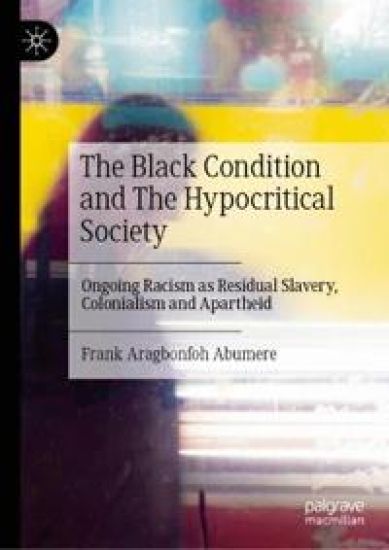
The Black Condition and The Hypocritical Society

The Black Condition and The Hypocritical Society

Frank Aragbonfoh Abumere

Springer Nature Switzerland AG
2025
sidottu
This book examines the enduring legacies of slavery, colonialism, and apartheid, arguing that these are not merely historical events but ongoing injustices shaping systemic racism today. Through a six-fold framework, the book explores the links between the past and present (the residuality objective), the possibility of future injustices (the probability objective), and the necessity of rectificatory justice. The book also proposes pathways for addressing these legacies (the way-forward objective) while encouraging Black and African communities to focus on empowerment and resilience beyond demands for rectification (the beyond rectification and realistic resolution objectives). With a critical eye on the ongoing impacts of slavery, colonialism, and apartheid, the author challenges the notion that these injustices are mere historical relics. Instead, this book demonstrates how their residues are embedded in the systemic racism that persists today. It calls for a reckoning with the past to dismantle the structures of racism in the present.
Decolonisation and Postcolonial Migration

Decolonisation and Postcolonial Migration

Frank Aragbonfoh Abumere

EDINBURGH UNIVERSITY PRESS
2025
sidottu

Halvin toimitettuna 87,40 €

This book reconceptualises the relational approach to global justice to analyse what and why former colonial states owe their former colonies. While arguments for lifting restrictions on a former empire's citizens right to enter the metropolis are usually based on cosmopolitan egalitarian grounds (the universal equality of persons) and humanitarian grounds, Abumere's postcolonial relational approach bases the argument for lifting such restrictions on the grounds of: the colonial historical relationship between former colonial states and their former colonies; and specifically, the historical injustice that characterised the relationship.
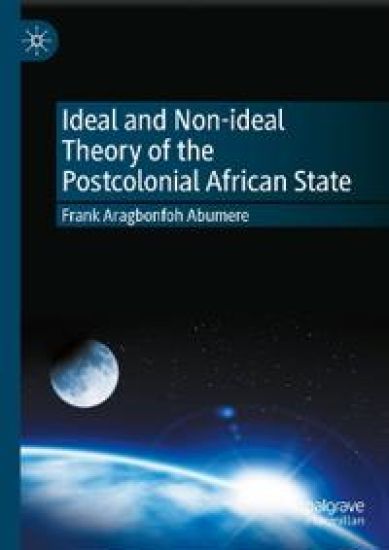
Ideal and Non-ideal Theory of the Postcolonial African State

Ideal and Non-ideal Theory of the Postcolonial African State

Frank Aragbonfoh Abumere

Springer International Publishing AG
2025
sidottu
The fundamental question asked in this book is: what is the basic structure of the postcolonial African state? Taking the postcolonial African state as it is and as it ought to be, Frank Abumere defines the basic structure of the postcolonial African state as how the scope and contents of the rights and obligations that govern the vertical and horizontal relationships within the postcolonial African state are determined. In his conception of the basic structure of the postcolonial African state, on the one hand, vertical relationship is the relationship between the state and its citizens and residents, what the state owes to its citizens and residents, and what they owe to the state. On the other hand, horizontal relationships are the relationships among citizens (and residents) and what they owe to one another.
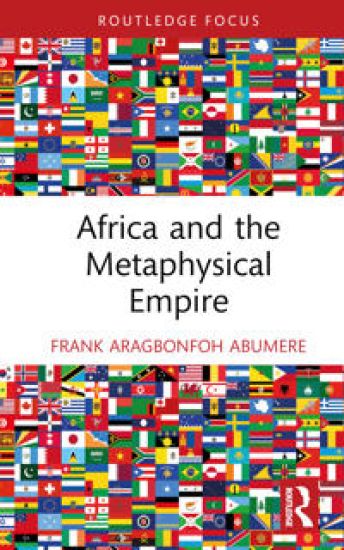
Africa and the Metaphysical Empire

Africa and the Metaphysical Empire

Frank Aragbonfoh Abumere

TAYLOR FRANCIS LTD
2025
sidottu
This book investigates whether African cultures can appropriate some useful aspects of Western cultures, or whether doing so risks falling into the metaphysical empire and diluting African identity. Ngugi wa Thiong’o and Ndlovu-Gatsheni characterise the metaphysical empire as an intangible non-physical and non-geographical invasion of the mental universe of formerly colonised peoples. As mutual exclusivists, they argue that authentic decolonization necessitates a complete dissociation of the African and her culture from colonial heritage. However, cultural appropriationists such as Wole Soyinka, Chinua Achebe and Chimamanda Ngozi Adichie argue that the African adoption of colonial heritage such as the English language is in no way antithetical to decolonization. This book delves into the debate by exploring the strengths and weaknesses of cultural appropriationism and, on the other hand, testing the validity of mutual exclusivism. The book demonstrates that cultural appropriation without falling into the metaphysical empire is possible, but that this poses important questions about the nature of the decolonization project itself, and where it should start and stop. A more accommodative decolonization would recognize the relationship between cultural universals and particulars, whilst also creating room for cultural appropriation. Ultimately, the book argues that both cultural appropriationists and mutual exclusivists must simultaneously renounce absolutism. By being amenable to a fusion of horizons, discourse can move beyond the decolonization fallacy of arguing that things are always either/or. This original and important contribution to the metaphysical empire debate will be a seminal read for researchers across the fields of philosophy, political science, African studies, and Black studies.
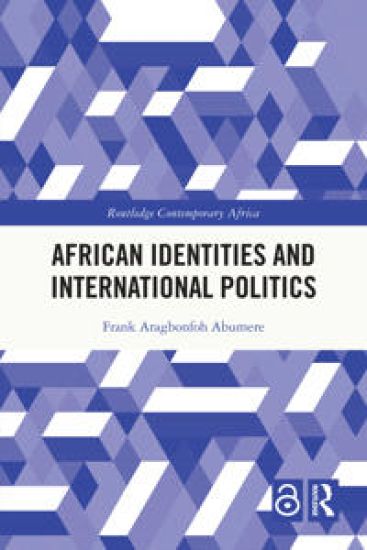
African Identities and International Politics

African Identities and International Politics

Frank Aragbonfoh Abumere

TAYLOR FRANCIS LTD
2024
nidottu
Using the lenses of realism, liberalism, the English School and constructivism, this book explains how the divisions and differences in African identities affect African international politics. This book explores the African condition in the twenty-first century. It analyses how geographical, racial, ethnic, linguistic, religious and power differences shape continental and intercontinental relations in Africa through the creation of identities and values which militate against intra-continental or regional relations. The author assesses inclusionary and exclusionary, rational and irrational relationships, interactions and non-interactions which occur between geographical, linguistic, racial and religious entities in Africa. He suggests that, in these moments, one entity will negatively relate, interact or refuse to interact with another entity for the gains of the former and to the detriment of the latter or even to the detriment of both entities. Divided into two parts, the first part of the book employs an ecumenical approach to discuss the divisions and differences that disunite Africa as a continent and Africans as a people and how they affect African international politics. Part II goes on to explore how this ‘othering’ can be superseded by non-discriminatory, unifying and positive identities and values. Examining the possibility of creating identities and values that can unite Africa as a continent and Africans as a people, this book will be of interest to scholars of African politics, international relations and political theory. The Open Access version of this book, available at http://www.taylorfrancis.com, has been made available under a Creative Commons Attribution-Non Commercial-No Derivatives 4.0 license
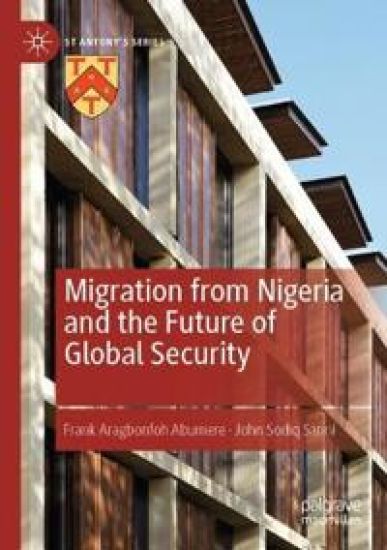
Migration from Nigeria and the Future of Global Security

Migration from Nigeria and the Future of Global Security

Frank Aragbonfoh Abumere; John Sodiq Sanni

Springer International Publishing AG
2023
nidottu
This book explores the possible (actual, potential and imagined) future security threats migration from Nigeria could pose to Europe, the United States of America, Canada and to some extent Australia. The negative consequences of terrorism, resource curse, extreme poverty, bad governance and illiteracy are highly likely to compound the already existing migration (both legal and illegal migration) from Nigeria to Europe. Given the current nationalist and populist tendencies in the United States of America and many parts of Europe, which have amplified the securitization of migration, the authors argue that the continuous high influx of legal and illegal migrants from Africa is a potential global security case.
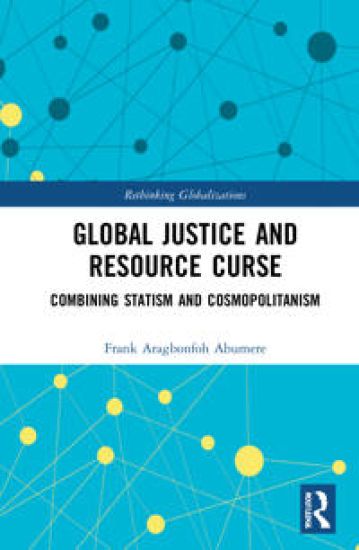
Global Justice and Resource Curse

Global Justice and Resource Curse

Frank Aragbonfoh Abumere

TAYLOR FRANCIS LTD
2023
nidottu
This book explores whether any theory alone is sufficiently capable of resolving the complexity of global justice, arguing that a combination of statism and cosmopolitanism is needed. In current times, xenophobia, nationalism and populism have amplified othering in both domestic and international politics. In global justice, the dichotomy between the ‘polis’ and the ‘cosmopolis’ separates statism from cosmopolitanism. Using resource curse as a complex case of global justice, the author demonstrates how neither statism nor cosmopolitanism alone are sufficient but goes on to argue that a combination of the two theories is simultaneously necessary and sufficient to resolve the complexity of global justice. He demonstrates how statism is primarily applied to the institutional dimensions of resource curse and only secondarily applied to the interactional dimensions, while cosmopolitanism is applied to the interactional dimensions but only secondarily applied to the institutional dimensions, and therefore a combination of both theories is needed to resolve the problem of resource curse – using the strength of the former to compensate for the weakness of the latter, and vice versa. Global justice is widely taught and researched as one of the most important areas in political philosophy and political theory. This book will be of great interest to students and researchers, philosophers and political scientists of African politics, political theory, political philosophy, international relations and international development.
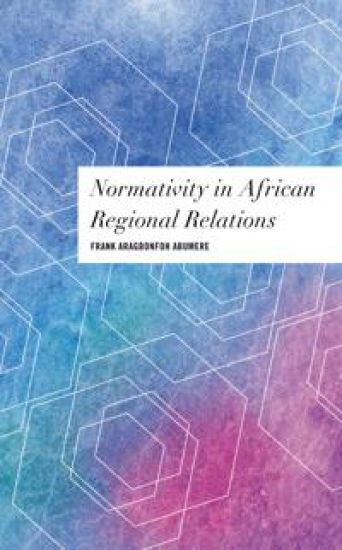
Normativity in African Regional Relations

Normativity in African Regional Relations

Frank Aragbonfoh Abumere

BLOOMSBURY PUBLISHING PLC
2022
sidottu
In cases that involve domination of, and discrimination against, minorities, the most common solution is the promotion of minority rights. However, this book contends that in the context of migrant minorities in Africa, appealing to minority rights is not a workable solution due to the historical abuses and discrimination of minorities both within and across African states. Through insightful philosophical analysis, Abumere argues for a new normative international relations among African states, which includes the adoption of minority rights, but does not rely on them. He analyses the possible consequences of the newly ratified African Continental Free Trade Agreement, looking at how it may encourage a more integrated Africa, but also may increase the chances of domination and discrimination against minorities. The author shows how normative international relations may be used to prevent the domination and discrimination of migrant minorities.
Migration from Nigeria and the Future of Global Security

Migration from Nigeria and the Future of Global Security

Frank Aragbonfoh Abumere; John Sodiq Sanni

Springer International Publishing AG
2022
sidottu
This book explores the possible (actual, potential and imagined) future security threats migration from Nigeria could pose to Europe, the United States of America, Canada and to some extent Australia. The negative consequences of terrorism, resource curse, extreme poverty, bad governance and illiteracy are highly likely to compound the already existing migration (both legal and illegal migration) from Nigeria to Europe. Given the current nationalist and populist tendencies in the United States of America and many parts of Europe, which have amplified the securitization of migration, the authors argue that the continuous high influx of legal and illegal migrants from Africa is a potential global security case.
African Identities and International Politics

African Identities and International Politics

Frank Aragbonfoh Abumere

TAYLOR FRANCIS LTD
2022
sidottu
Using the lenses of realism, liberalism, the English School and constructivism, this book explains how the divisions and differences in African identities affect African international politics. This book explores the African condition in the twenty-first century. It analyses how geographical, racial, ethnic, linguistic, religious and power differences shape continental and intercontinental relations in Africa through the creation of identities and values which militate against intra-continental or regional relations. The author assesses inclusionary and exclusionary, rational and irrational relationships, interactions and non-interactions which occur between geographical, linguistic, racial and religious entities in Africa. He suggests that, in these moments, one entity will negatively relate, interact or refuse to interact with another entity for the gains of the former and to the detriment of the latter or even to the detriment of both entities. Divided into two parts, the first part of the book employs an ecumenical approach to discuss the divisions and differences that disunite Africa as a continent and Africans as a people and how they affect African international politics. Part II goes on to explore how this ‘othering’ can be superseded by non-discriminatory, unifying and positive identities and values. Examining the possibility of creating identities and values that can unite Africa as a continent and Africans as a people, this book will be of interest to scholars of African politics, international relations and political theory. The Open Access version of this book, available at http://www.taylorfrancis.com, has been made available under a Creative Commons Attribution-Non Commercial-No Derivatives 4.0 license
Global Justice and Resource Curse

Global Justice and Resource Curse

Frank Aragbonfoh Abumere

Taylor Francis Ltd
2021
sidottu
This book explores whether any theory alone is sufficiently capable of resolving the complexity of global justice, arguing that a combination of statism and cosmopolitanism is needed. In current times, xenophobia, nationalism and populism have amplified othering in both domestic and international politics. In global justice, the dichotomy between the ‘polis’ and the ‘cosmopolis’ separates statism from cosmopolitanism. Using resource curse as a complex case of global justice, the author demonstrates how neither statism nor cosmopolitanism alone are sufficient but goes on to argue that a combination of the two theories is simultaneously necessary and sufficient to resolve the complexity of global justice. He demonstrates how statism is primarily applied to the institutional dimensions of resource curse and only secondarily applied to the interactional dimensions, while cosmopolitanism is applied to the interactional dimensions but only secondarily applied to the institutional dimensions, and therefore a combination of both theories is needed to resolve the problem of resource curse – using the strength of the former to compensate for the weakness of the latter, and vice versa. Global justice is widely taught and researched as one of the most important areas in political philosophy and political theory. This book will be of great interest to students and researchers, philosophers and political scientists of African politics, political theory, political philosophy, international relations and international development.