Kirjojen hintavertailu – 12 869 978 kirjaa ja 27 kauppaa

Kirjailija

Frank Dikötter

Kirjat ja teokset yhdessä paikassa: 31 kirjaa, julkaisuja vuosilta 1995–2027, suosituimpiin kuuluu Red Dawn Over China. Vertaile teosten hintoja ja tarkista saatavuus suomalaisista kirjakaupoista.

Nimi esiintyy myös muodoissa: Frank Dikotter

31 kirjaa

Kirjojen julkaisuvuodet: 1995–2027.

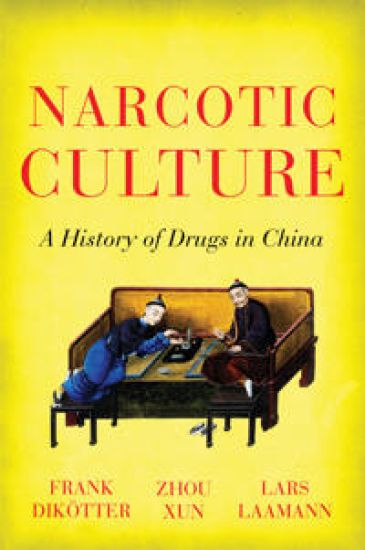
Narcotic Culture

Narcotic Culture

Frank Dikotter; Zhou Xun; Lars Peter Laamann

C Hurst Co Publishers Ltd
2016
nidottu
To this day, the perception persists that China was a civilisation defeated by imperialist Britain's most desirable trade commodity, opium - a drug that turned the Chinese into cadaverous addicts in the iron grip of dependence. But, as this new edition of Narcotic Culture brilliantly shows, the real scandal in Chinese history was not the expansion of the drug trade by Britain in the early nineteenth century, but rather the failure of the British to grasp the consequences of prohibition. They reveal that opium actually had few harmful effects on either health or longevity; in fact, it was prepared and appreciated in highly complex rituals with inbuilt constraints preventing excessive use. Opium was even used as a medicinal panacea in China before the availability of aspirin and penicillin. But as a result of the British effort to eradicate opium, the Chinese turned from the relatively benign use of that drug to heroin, morphine, cocaine, and countless other psychoactive substances. The transition from a tolerated opium culture to a system of prohibition produced a 'cure' that was far worse than the disease. Delving into a history of drugs and their abuses, Narcotic Culture is part revisionist history of imperial and twentieth-century Britain and part sobering portrait of the dangers of prohibition.
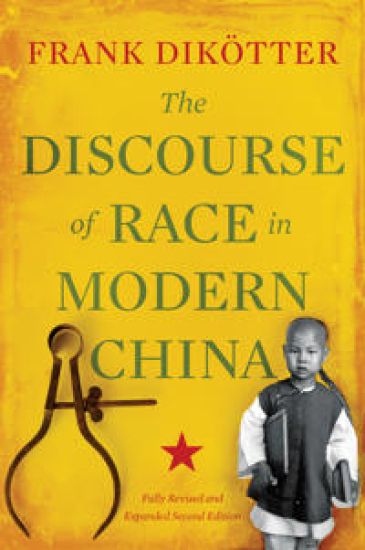
The Discourse of Race in Modern China

The Discourse of Race in Modern China

Frank Dikotter

C Hurst Co Publishers Ltd
2015
nidottu
First published in 1992, The Discourse of Race in Modern China rapidly became a classic, showing for the first time on the basis of detailed evidence how and why racial categorisation be- came so widespread in China. After the country's devastating defeat against Japan in 1895, leading reformers like Yan Fu, Liang Qichao and Kang Youwei turned away from the Confucian classics to seek enlightenment abroad, hoping to find the keys to wealth and power on the distant shores of Europe. Instead, they discovered the notion of 'race', and used new evolutionary theories from Charles Darwin and Herbert Spencer to present a universe red in tooth and claw in which 'yellows' competed with 'whites' in a deadly struggle for survival. After the fall of the empire in 1911, prominent politicians and writers in republican China continued to measure, classify and rank people from around the world ac- cording to their supposed biological features, all in the name of science. Racial thinking remains popular in the People's Republic of China, as serologists, geneticists and anthropometrists continue to interpret human variation in terms of 'race'. This new edition has been revised and expanded to include a new chapter taking the reader up to the twenty-first century.
The Age of Openness: China Before Mao

The Age of Openness: China Before Mao

Frank Dikötter

University of California Press
2008
nidottu
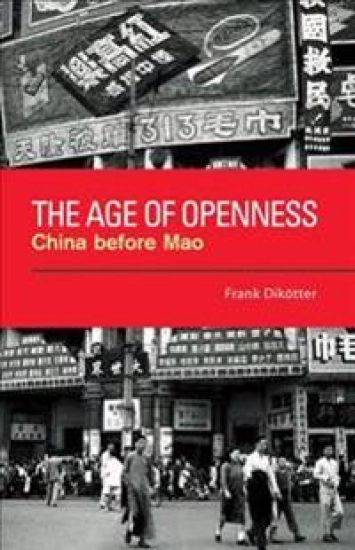
The era between empire and communism is routinely portrayed as a catastrophic interlude in China's modern history. But in this book, Frank Dik tter shows that the first half of the twentieth century was characterized by unprecedented openness. He argues that from 1900 to 1949, all levels of Chinese society were seeking engagement with the rest of the world and that pursuit of openness was particularly evident in four areas: governance, including advances in liberties and the rule of law; greater freedom of movement within the country and outside it; the spirited exchange of ideas in the humanities and sciences; and thriving and open markets and the resulting sustained growth in the economy. Copub: Hong Kong University Press
The Age of Openness – China before Mao

The Age of Openness – China before Mao

Frank Dikotter

Hong Kong University Press
2008
nidottu
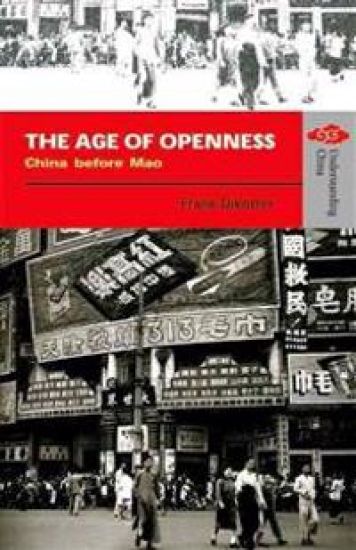
The era between empire and communism is routinely portrayed as a catastrophic interlude in China's modern history, but this engagingly written book shows instead that the first half of the twentieth century witnessed a qualitatively unprecedented trend towards openness. Frank Dikotter argues that the years from 1900 to 1949 were characterised at all levels of society by engagement with the world, and that the pursuit of openness was particularly evident in four areas: in governance and the advance of the rule of law and of newly acquired liberties; in freedom of movement in and out of the country; in open minds thriving on ideas from the humanities and sciences; and in open markets and sustained growth in the economy. Freedom of association, freedom to travel, freedom of religion, freedom to trade and relative freedom of speech wrought profound changes in the texture of everyday life. While globalisation itself was a vector of cultural diversification, pre-existing constellations of ideas, practices and institutions did not simply vanish on contact with the rest of the world, but on the contrary expanded even further, just as much as local industries diversified thanks to their inclusion into a much larger global market. Arguably the country was at its most diverse in its entire history on the eve of World War II - in terms of politics, society, culture and the economy. Accessible to general readers, while providing an integration of ideas that will be valuable for specialists, this book presents a fresh way of approaching the history of modern China.
Things Modern

Things Modern

Frank Dikotter

C Hurst Co Publishers Ltd
2006
sidottu
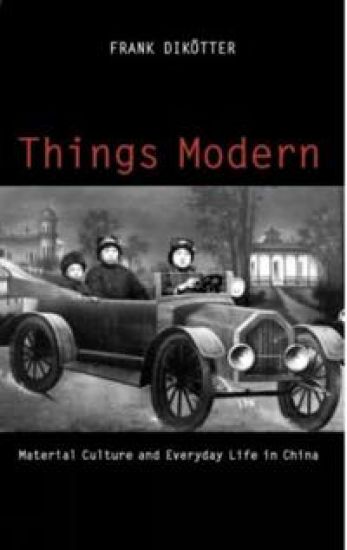
How do people relate to things? Much has been written about social movements in modern China, but next to nothing is known about the revolution which transformed the texture of everyday life. This is the first book to map the many changes in the material landscape of China from the mid nineteenth century to the advent of communism in 1949. In the late nineteenth century anything local was increasingly rejected as a signifier of backwardness, while imported goods were embraced as prestige symbols. Modernity had to be brought home to propel the country into the world of 'civilised' nations and join a universal march towards progress. But contrary to other parts of the world, for instance Africa and Latin America, the material goods and technological innovations associated with foreign modernity were not merely imported for elite consumption; they were copied locally and rapidly made available to much larger sections of the population. Debunking the myth of 'hostility toward alien things' which is claimed to have slowed down China's inclusion in the global economy, Dikotter in this richly illustrated book analyses how a very pragmatic attitude towards material goods prevailed, as most consumers bought the new and discarded the old without misgivings. They not only embraced new commodities, but rapidly started producing them for an export market in the twentieth century: cheap goods made in China can be found everywhere today, just as porcelain made in China pervaded the world several centuries ago. If an essential element of a rapidly changing world is the capacity to innovate, could China be more in tune with modernity than Europe?
Crime, Punishment and the Prison in China

Crime, Punishment and the Prison in China

Frank Dikotter

C Hurst Co Publishers Ltd
2002
sidottu
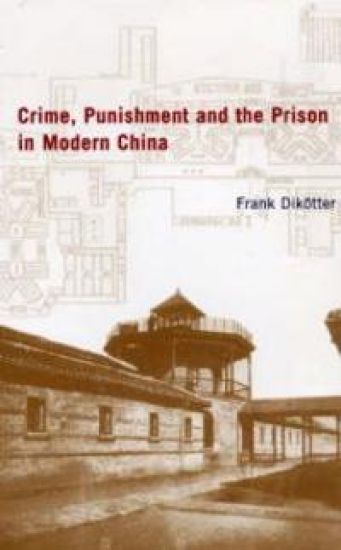
Full title: 'Crime, Punishment and the Prison in Modern China'. An examination of the enormous changes in Chinese society in the first half of the 20th century through the lens of the Chinese prison system. It explores the profound effects of superimposing Western-derived models of repentance and rehabilitation on traditional crime and punishment.
Crime, Punishment, and the Prison in Modern China

Crime, Punishment, and the Prison in Modern China

Frank Dikötter

Columbia University Press
2002
sidottu
Based on extensive research and many newly discovered sources, Crime, Punishment, and the Prison in Modern China examines the radical changes in Chinese society during the first half of the twentieth century through the lens of the Chinese prison system. More than a simple history of prison rules or penal administration, this book explores the profound effects and lasting repercussions of the superimposition of Western-derived models of repentance and rehabilitation on traditional Chinese categories of crime and punishment. A society's prisons reflect much about its notions not only of law and order and the rights of the individual, but of human nature itself, its tractability and capacity to change. In China during the tumultuous years from 1895 to 1949, these notions were transformed in dramatic ways. Frank Dikotter identifies penal reform as a radical modern tool to achieve an indigenous Chinese vision of social cohesion and the rule of virtue. Modernizing elites in China viewed the reformation of criminals as a constitutive part of a project of a national regeneration in which good order, economic development, and state power could only be obtained by shaping obedient subjects. This groundbreaking account of the evolution of Chinese penal theory is brought together with a richly textured portrait of daily life behind bars. Petty villains, abusive guards, ambitious wardens, and idealist reformers people its pages and vividly trace China's complicated movement from empire to republic to communist state.
Imperfect Conceptions

Imperfect Conceptions

Frank Dikötter

Columbia University Press
1998
sidottu
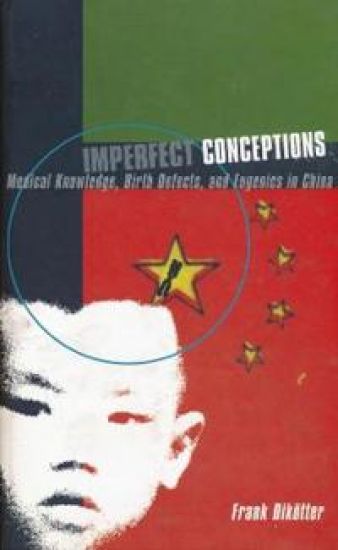
In 1995 the People's Republic of China passed a controversial Eugenics Law, which, after a torrent of international criticism, was euphemistically renamed the Maternal and Infant Health Law. Aimed at "the implementation of premarital medical checkups" to ensure that neither partner has any hereditary, venereal, reproductive, or mental disorders, the ordinance implies that those deemed "unsuitable for reproduction" should undergo sterilization or abortion or remain celibate in order to prevent "inferior births." Using this recent statute as a springboard, Frank Dikotter explores the contexts and history of eugenics in both Communist China and Taiwan. Dikotter shows how beginning in Late Imperial China, Western eugenics was imported and combined with existing fears of cultural, racial, or biological degeneration in Chinese society, leading to government regulation of sexual reproduction. Imperfect Conceptions is a revealing look at the cultural history of medical explanations of birth defects that demonstrates how Chinese assumptions about the relationship of the individual to society form the very core of their attitudes toward procreation. Dikotter explains the patrilineal model of descent, where a person is viewed as the culmination of his or her ancestors and is held responsible for the health of all future generations. By this logic, a pregnant woman's behavior and attitude directly influence the well-being of her baby, and a deformed or retarded child reflects a moral failing on the part of the parents. Dikotter also shows how the holistic medicine practiced in China blurs any distinction between individual and environment so that people are held responsible for illness. Drawing on cultural, social, economic, and political approaches, Dikotter goes beyond a simple authoritarian model to provide a more complex view of eugenic policy, showing how a variety of voices including those of popular journalists, social reformers, medical writers, sex educators, university professors, and politicians all disseminate information that supports rather than questions the state's program. Imperfect Conceptions reveals how Chinese cultural currents-fear and fascination with the deviant and the urge to draw clear boundaries between the normal and the abnormal-have combined with medical discourse to form a program of eugenics that is viewed with alarm by the rest of the world.
Imperfect Conceptions

Imperfect Conceptions

Frank Dikotter

C Hurst Co Publishers Ltd
1998
sidottu
Frank Dikotter's work analyzes the relationship between medicine and ideas about reproduction in China, from the late Ming to the present. Drawing on sources ranging from treatises on reproductive disorders to flyers advertising freak shows, he shows how the notion of reproduction as a potentially dangerous phenomenon - one that has to be strictly regulated to safeguard the nation's eugenic future - permeated Chinese society. The process was accelerated by the appropriation of genetics and embryology in the late 19th century and by the publication of works of "popular medicine". These historical developments engendered the view that individuals - who were always represented in relation to the larger patrilineal collectivity - should be accountable not only for their own reproductive behaviour, but also for the health of future offspring. Such sentiments still hold sway today. Since Deng Xiaoping's accession to power, human genetics has come to occupy centre stage, as a growing number of socially undesirable traits, including criminality, are attributed to "bad" genes, which the state seeks to regulate in order to restrict such "inferior births". The final part of the book looks at the social, political and cultural context of the controversial eugenics law passed in China in 1995, which potentially endows local cadres and medical authorities with the power of life and death. The ethical and political implications of this legislation are closely scrutinized.
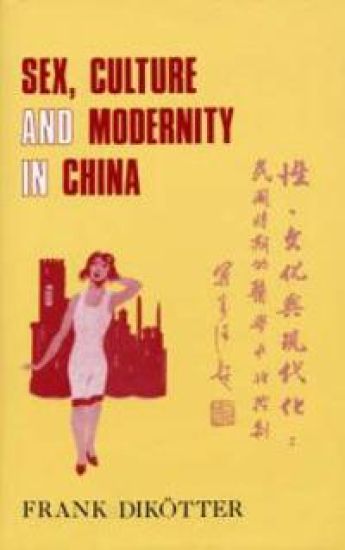
Sex, Culture and Society in Modern China

Sex, Culture and Society in Modern China

Frank Dikotter

C Hurst Co Publishers Ltd
1995
sidottu
"Sex" emerged as an independent field of study during the New Culture Movement (1915-21). The anatomy of the reproductive system, the physiology of internal secretions, the nature of sex, the determination of sexual differences, the mechanisms of reproduction, the genetic foundation of sexual differentiation and other related issues were investigated by a rapidly growing number of social thinkers. The result was a flood of pamphlets, booklets, surveys and studies, breaking what was called the conspiracy of silence around the "mystery of sex" or "xingshenmi". New society, it was claimed, had the right to investigate human sexual life scientifically. This book combines the history of science and cultural history to provide a study of the reconceptualization of human sexuality and reproduction. It focuses on the period between the Sino-Japanese War of 1894-5 and the communist takeover in 1949, an era of transition marked by the gradual introduction of new thought systems from the West. Notions of "sex" in modern China were based on "new" ideas about anatomy, physiology and heredity; they were also part of an alternative paradigm defined by evolutionary notions of time and space. "Sex, Culture and Society in Modern China" is based on an analysis of both medical and lay texts such as handbooks, marriage guides, and introductions to physiology and sexual hygiene. Texts of scientific popularization are examined in detail, since they provide valuable information on how scientific ideas were re-interpreted and integrated into an indigenous conceptual framework that was marked by a continuity with the past. Texts belonging to the higher levels of culture are equally important, since many members of the academic community in Republican China were influenced by the introduction of evolutionary biology, embryology, anatomy, physiology, and medicine. Within all cultural levels, however, social prejudice and gender bias converged in the use of biology to reconstruct new social categories: the regulation of sexuality became instrumental in the maintenance of social norms.