

Kirjailija
Frank E Grizzard
Kirjat ja teokset yhdessä paikassa: 9 kirjaa, julkaisuja vuosilta 1985–2009, suosituimpiin kuuluu George Washington. Vertaile teosten hintoja ja tarkista saatavuus suomalaisista kirjakaupoista.
Nimi esiintyy myös muodoissa: Frank E. Grizzard
9 kirjaa
Kirjojen julkaisuvuodet: 1985–2009.
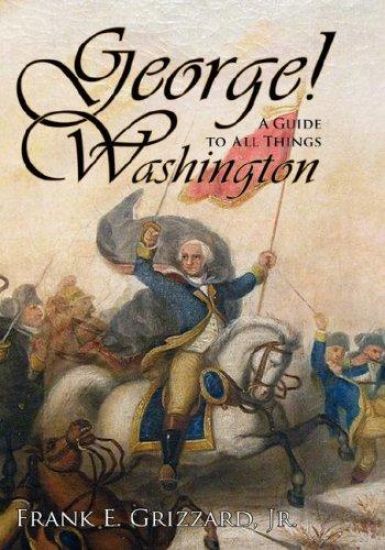
George! A comprehensive guide devoted exclusively to George Washington. The subject range goes beyond the conventional, and includes much about his personal and family life, correspondence, business dealings and more. The illustrated, A_Z format and approach incorporates Washington's own words with those of his contemporaries. Most of the book is based on primary source research, written in a bright, contemporary style. Once you've read this volume, you will know the real George Washington.
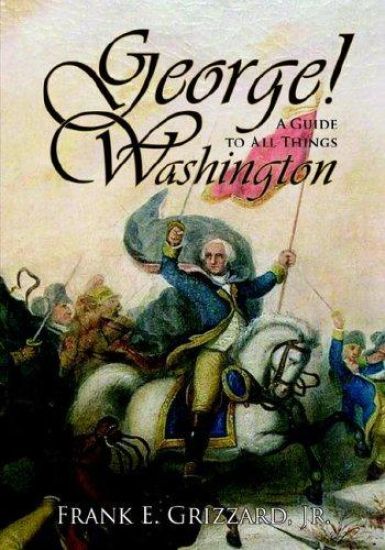
This comprehensive guide includes much about Washington's personal and family life, correspondence, business dealings and more. The illustrated, A-to-Z format and approach incorporates Washington's own words with those of his contemporaries.
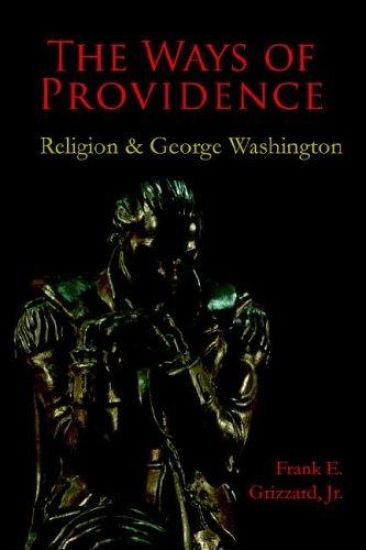
The Ways of Providence, Religion and George Washington
Frank E Grizzard
Mariner Companies, Inc.
2005
pokkari
"An indispensable reference to the life and times of America's indispensable man."--James C Rees, Mount Vernon Ladies' Association." ... we are in the hands of a master of his craft and subject."--John Buchanan, "Journal of Military History."
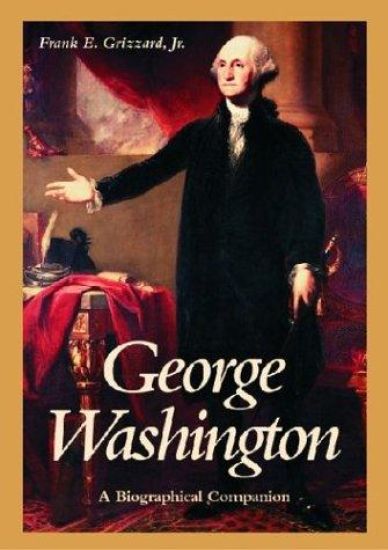
This encyclopedia offers an A–Z retrospective of George Washington's life, career, and historical significance, based in large part on Washington's own words and those of his contemporaries. George Washington dominated his era like few other Americans. Yet the complexity of the historic events he was involved in and the sheer magnitude of his correspondence—the most voluminous in colonial America—can be overwhelming for researchers. The goal of this volume is to make the larger-than-life figure of George Washington accessible to modern researchers. In its 200 entries readers will discover a detailed and surprising portrait. Washington was not a cold, aloof, and unknowable man, but was extremely convivial by nature; a general who commanded the Continental army without pay but was a better administrator than military strategist; a man of deeds whose appearance was, according to one contemporary, "truly noble and majestic;" a man known to his contemporaries for his complete honesty. Includes people who played a seminal role in Washington's life: Martha Dandridge Custis Washington, John Hancock, Robert Dinwiddie, James Rumsey, and othersExplores Washington's many business interests: distillery, fisheries, Great Kanawha tracts, Mount Vernon, surveying
The Papers of George Washington v.3; Revolutionary War Series;Jan.-March 1776
George Washington; Philander D. Chase; Dorothy Twohig; Frank E. Grizzard
University of Virginia Press
1988
sidottu
Volume 3 covers the final months of the siege of Boston. It opens with General Washington proclaiming the commencement of the remodeled Continental army on New Year's Day 1776 and closes at the end of March as he prepares to depart for New York in the wake of the British evacuation of Boston. Washington's correspondence and orders for this period reveal an uncompromising attitude toward reconciliation with Britain and a single-minded determination to engage the enemy forces in Boston before the end of the winter. Washington's bold proposal to attack Boston across the frozen back bay in the middle of February was rejected as too risky by a council of war, but the council did approve occupying the strategic Dorchester Heights overlooking the city and harbor. During the last weeks of February and the first days of March, Washington devoted himself to mobilizing artillery and gunpowder for a massive cannonade of Boston and assembling materials for portable fortifications to be erected on the frozen soil of Dorchester Heights. The successful execution of this operation on the night of 4 March failedto provoke General William Howe into assaulting the American lines and thereby open the way to counterattack on the city as Washington hoped it would. It did, however, compel the British to withdraw from Boston in haste a few days later, giving Washington and his army a spirit of confidence with which to embark on the New York campaign. The volume also includes a number of documents relating to Washington's private affairs in Virginia, the most important of which are eight letters from his Mount Vernon manager Lund Washington.
The Papers of George Washington V.2; Revolutionary War Series;Sept.-Dec.1775
George Washington; Philander D. Chase; Dorothy Twohig; Frank E. Grizzard
University of Virginia Press
1987
sidottu
This volume covers the middle months of the siege of Boston when George Washington faced the delicate task of disbanding one army and recruiting another, all within musket shot of the British forces. Throughout the fall of 1775, assisted and sometimes thwarted by congressmen, New England officials, and fellow officers, Washington laid plans not merely to keep a besieging force around Boston and provide his men with winter necessities but also to remodel the army to make it more efficient and truly continental, intermixing officers and men without regard to their colonial identity. The numerous official letters Washington wrote and received during this period, his daily general orders, the records of his councils of war, and the minutes of his important October conference reveal a competent military administrator and a committed patriot attempting to create a professional American army which would transcend the narrow localism of the colonial past well in advance of the Declaration of Independence. Unwilling to risk an attack on the main British army in Boston during the fall of 1775, Washington encouraged and monitored two major offensive efforts elsewhere: the outfitting of a small fleet of armed vessels to disrupt the flow of British supplies by sea to Boston and Canada and the two-pronged invasion of Canada led by Richard Montgomery and Benedict Arnold. Washington also dealt with the treasonous intrigues of Benjamin Church and John Connolly and with the burning of the seaport of Falmouth. He also received several unsolicited schemes for attacking the British fleet in Boston harbor, a steady stream of personal pleadings for discharges, and a laudatory verse written by the black poet Phillis Wheatley. Substantial portions of Washington's correspondence for this period concern his personal business and family affairs. Most notable are the fourteen letters from his Mount Vernon manager, Lund Washington. They offer rare views into the daily operations of the plantation as well as into Washington's finances and land dealings. They provide valuable information about plans for remodeling the mansion house, proposals for defending it against British attack, and Martha Washington's travels culminating in her journey to join her husband at Cambridge.
The Papers of George Washington v.1; Revolutionary War Series;June-Sept.1775
George Washington; Philander D. Chase; Dorothy Twohig; Frank E. Grizzard
University of Virginia Press
1985
sidottu
Volume 1 of the Revolutionary War Series begins with Washington's address of 16 June 1775 accepting command of the Continental army and continues to the middle of September 1775. The focus of the volume is on Washington's initial effort to make an effective fighting force out of the green provincial army that he found besieging the city of Boston. His military letters and orders for these three months deal extensively with his reorganization of the army, the instituting of new administrative procedures and standards of discipline, the teaching of duties to both officers and men, and the measures taken to overcome the army's perplexing supply problems, most notably the alarming shortage of gunpowder. They also touch on matters of strategy and tactics relating to schemes for reducing the British garrison in Boston, the arming of American vessels to intercept enemy supplies at sea, and the planning for Benedict Arnold's bold march to Quebec. Much of the information upon which Washington based his decisions is contained in the letters that he received from his numerous correspondents. Included here are detailed reports of British military activities in and about Boston, along with the New England coast, in Canada, and in Virginia, as well as news of legislative actions and recommendations of men, to fill positions both high and low in the Continental army. Supplementing the portrait of Washington the general provided by his official correspondence are a number of letters to and from relatives and friends in Virginia. These offer a more intimate view of the private man and his personal affairs. Of particular interest are the two letters that he wrote in June 1775 from Philadelphia to Martha Washington, rare survivals of the correspondence that Mrs. Washington destroyed shortly before her death.