Kirjojen hintavertailu – 12 903 735 kirjaa ja 27 kauppaa

Kirjailija

Frank E. Vandiver

Kirjat ja teokset yhdessä paikassa: 13 kirjaa, julkaisuja vuosilta 1992–2024, suosituimpiin kuuluu The Civil War Diary of Josiah Gorgas. Vertaile teosten hintoja ja tarkista saatavuus suomalaisista kirjakaupoista.

13 kirjaa

Kirjojen julkaisuvuodet: 1992–2024.

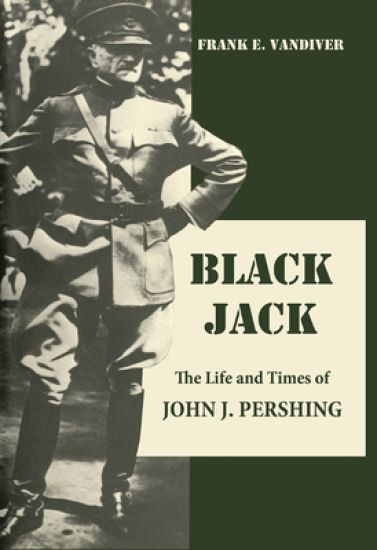
Black Jack

Black Jack

Frank E. Vandiver

Texas A M University Press
2024
sidottu
A full-bodied portrait of a remarkable American, plus new insights into American and international military history and a fresh view of the United States's rise to power. Frank E. Vandiver focuses on the qualities of and challenges to Pershing the soldier without losing sight of the man who wore the uniform.
War Memoirs: Autobiographical Sketch and Narrative of the War Between the States

War Memoirs: Autobiographical Sketch and Narrative of the War Between the States

Jubal Anderson Early; Frank E. Vandiver

Literary Licensing, LLC
2012
sidottu
War Memoirs: Autobiographical Sketch And Narrative Of The War Between The States is a book written by Jubal Anderson Early, a Confederate general who fought in the American Civil War. The book is a first-hand account of the war, as Early was a participant in many of the major battles and campaigns of the conflict. The book is divided into two parts: an autobiographical sketch and a narrative of the war. The autobiographical sketch covers Early's early life, his education, and his early military career. The narrative of the war covers Early's experiences in the Confederate army, from his early service in Virginia to his later campaigns in the Shenandoah Valley and elsewhere. Early's account of the war is notable for its frankness and its attention to detail. He describes the battles he fought in, the strategies he employed, and the mistakes he made. He also provides insights into the personalities of the other generals and officers he served with, as well as the soldiers he commanded. War Memoirs: Autobiographical Sketch And Narrative Of The War Between The States is a valuable historical document, providing a unique perspective on the American Civil War from the point of view of a Confederate general. It is a must-read for anyone interested in the history of the Civil War or the military history of the United States. This scarce antiquarian book is a facsimile reprint of the old original and may contain some imperfections such as library marks and notations. Because we believe this work is culturally important, we have made it available as part of our commitment for protecting, preserving, and promoting the world's literature in affordable, high quality, modern editions, that are true to their original work.
The Civil War Diary of Josiah Gorgas

The Civil War Diary of Josiah Gorgas

Josiah Gorgas; Frank E. Vandiver; Eugene Campbell Barker

Literary Licensing, LLC
2011
sidottu
The Civil War Diary of Josiah Gorgas is a historical book written by Josiah Gorgas, a Confederate general in the American Civil War. The book is a collection of Gorgas' personal diary entries during the war, offering a first-hand account of the events that took place during the conflict. Through his diary, Gorgas provides insight into the daily life of soldiers and civilians during the war, including battles, troop movements, and the struggles of everyday life. He also discusses his personal experiences and thoughts, including his views on the war and the Confederate cause. The book is divided into chapters that cover different periods of the war, from the early days of the conflict to the final days of the Confederacy. Gorgas' writing style is straightforward and candid, providing readers with a clear and unfiltered view of the war from a Confederate perspective. Overall, The Civil War Diary of Josiah Gorgas is a valuable historical document that offers a unique perspective on one of the most significant events in American history. It is a must-read for anyone interested in the Civil War or American history in general. This scarce antiquarian book is a facsimile reprint of the old original and may contain some imperfections such as library marks and notations. Because we believe this work is culturally important, we have made it available as part of our commitment for protecting, preserving, and promoting the world's literature in affordable, high quality, modern editions, that are true to their original work.
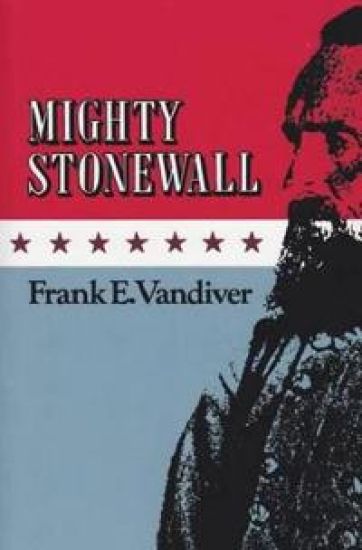
Mighty Stonewall

Mighty Stonewall

Frank E. Vandiver

Texas A M University Press
2006
nidottu
Confederate General Thomas Jonathan Jackson was undoubtedly one of the most influential military commanders of the Civil War. Had he not met his death early in May, 1863, his influence could well have changed the course of the war. Frank E. Vandiver's detailed research and zestful writing style provide a vivid description of Stonewall's boyhood, West Point training, early career, years of teaching at the Virginia Military Institute, and Civil War campaigns. Here, too, are insights into Jackson's personal life and his deep religious feelings, which were so influential on his military thought and actions.
How America Goes to War

How America Goes to War

Frank E. Vandiver

Praeger Publishers Inc
2005
sidottu
With American involvement in Iraq in the forefront of national news coverage and in the minds of many citizens, questions concerning America's involvement in past conflicts have once again arisen. This is the story of how the United States has gone to war and how the evolution of the nation's war-making apparatus has mirrored the nation's rise to global power. It focuses on the president's role as commander-in-chief vis-a-vis Congress from George Washington to George W. Bush. Conflicts range from the War of 1812 to the Mexican and Civil Wars, the two World Wars, conflicts in Southeast Asia, and recent wars in the Middle East. Topics include Congress's role in various wars, the evolution of the War Department to the Department of Defense, as well as developments in weapons, tactics, and strategy. Wars have played an integral role in America's transformation from a continental power into a world force. Over time, America's war making has favored and continues to favor the expansion of the President's role at the expense of the Congress. America's future will be determined in large part by the way in which the nation chooses and engages in military pursuits. Questions about how and when we go to war have never been so vital or relevant. This thought-provoking one volume overview serves as a quick introduction to these important issues.
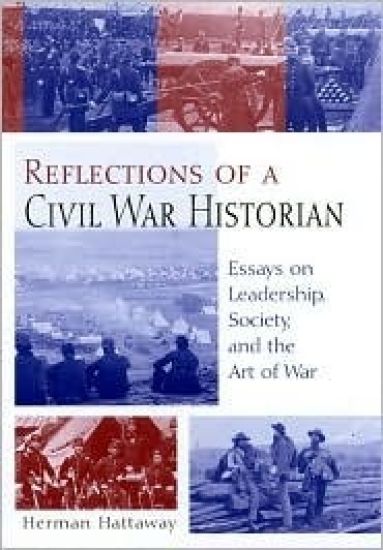
Reflections of a Civil War Historian

Reflections of a Civil War Historian

Herman Hattaway; Frank E. Vandiver

University of Missouri Press
2003
sidottu
Born in New Orleans, Herman Hattaway grew up in the Deep South. While it might not seem such a stretch for him to have become one of the foremost authorities on the Civil War and Southern history, Hattaway was actually at a loss for a career choice when he stumbled into the class of Professor T. Harry Williams at Louisiana State University. Williams's lectures and writings were so inspiring to Hattaway that he became a regular in his classes, receiving his B. A., M. A., and Ph. D. all under the professor's tutelage. This collection of essays is a compendium of Hattaway's writings from throughout his more-than-forty-year career. He is the author or coauthor of five books that were selections of the History Book Club - Jefferson Davis: Confederate President; Shades of Blue and Gray: An Introductory Military History of the Civil War; Why the South Lost the Civil War; How the North Won: A Military History of the Civil War; and General Stephen D. Lee. He is also the author of the text for Gettysburg to Vicksburg: The Five Original Civil War Battlefield Parks. Hattaway is a captivating historian who always seeks to engage others in the study of history. He has made many important scholarly contributions to our understanding of the Civil War, including new information on the military use of balloons, the relevance of religion in warfare, and the nature of good (and bad) military leadership. This book will appeal to the many historians and others who have been influenced by Hattaway over the years. It demonstrates how he has evolved as a historian and brings to light many essays that were never before published or published only in obscure journals.
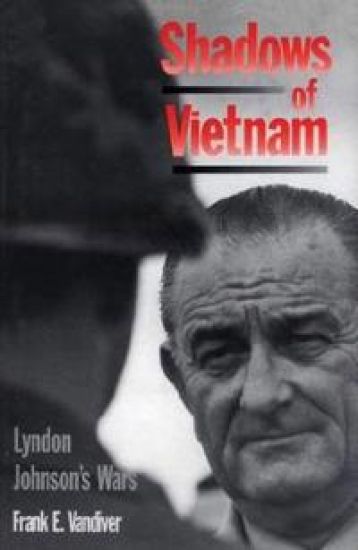
Shadows of Vietnam

Shadows of Vietnam

Frank E. Vandiver

Texas A M University Press
1997
sidottu
It is still not popular - perhaps it never will be - to be sympathetic to Lyndon Johnson. Vandiver stops short of that but is, in the tradition of the biographer, empathetic with him. Readers may disagree with some aspects of this thought-provoking portrayal, but, as Vandiver has done for Stonewall Jackson and Black Jack Pershing, he offers an understanding of a major wartime figure as he likely saw himself. His purpose is to show what Johnson knew, felt, feared, and tried to do. This, then, is the Vietnam War through Lyndon Johnson's eyes, with Vandiver providing perspective and the missing puzzle pieces not available to Johnson at the time. Vandiver offers a broad, sweeping synthesis of the scholarship on Johnson's war presidency, along with new insights culled from numerous and extensive interviews and a far-reaching immersion in the primary documents housed in archives around the country. He provides an unusual combination of politico-military analysis with on-the-scene battle narratives, dramatically juxtaposing for the reader the reality in Vietnam with the perceptions of it in Washington. Compellingly addressing long-standing questions of whether the White House had become isolated from public opinion and whether Johnson was hardened to the voices raised against the war, Vandiver shows the president as a man who agonized, raged, and grew in response to crises in Vietnam and at home. In the most complete account yet of the period from late 1967 to LBJ's decision not to run for re-election, he probes the shifting honesty of the president's men on the Vietnam scene and identifies a playbill of White House villains who, over the years, have often been cast as heroes. He argues thatJohnson entered the war honestly - fully believing that Russia and China were serious threats and convinced by his Tuesday Lunch advisors that aiding South Vietnam was essential to maintaining America's international reputationbut without confidence in his foreign policy role. In
The Journals of Josiah Gorgas, 1857-1878

The Journals of Josiah Gorgas, 1857-1878

Josiah Gorgas; Frank E. Vandiver

The University of Alabama Press
1995
sidottu
This collection of Gorgas journals covers three important decades of the 19th-century South - the antebellum period, Civil War years and the postbellum period. It provides information on Victorian family life, military events, and the political and economic conditions faced by many Southerners.
Rebel Brass

Rebel Brass

Frank E. Vandiver

Louisiana State University Press
1993
nidottu
Throughout the years of its existence the Confederacy was caught up in a massive war effort that finally touched all elements of life in the South. In the way it was fought the Civil War was unlike any wars that had preceded it and thus presented special strategic challenges to military leaders. In Rebel Brass, Frank E. Vandiver discusses the nature and effectiveness of the Confederacy's high command, the men who composed it, the decisions they made, and the influences that shaped their policies. Vandiver presents not only a concise description of the machinery of the Confederate high command but also sharp analyses of the figures who dominated the system. His portraits of Jefferson Davis, George W. Randolph, James A. Seddon, and Stephen R. Mallory are among the best sketches we have of these Confederate leaders. Vandiver contends that the South's strong adherence to the principle of states' rights had a profound impact on the war effort, affecting the strategic thinking of its leaders and impeding efforts to form an efficient, centralized command system. Nowhere was the lack of a strong central command more evident than in logistics, the complicated process of moving, provisioning, and quartering troops. Throughout the war the South's management of logistical operations was often confused and inept. In the end, Vandiver finds, it was the nature of the southern character and southern culture that spelled doom for the Confederate cause.
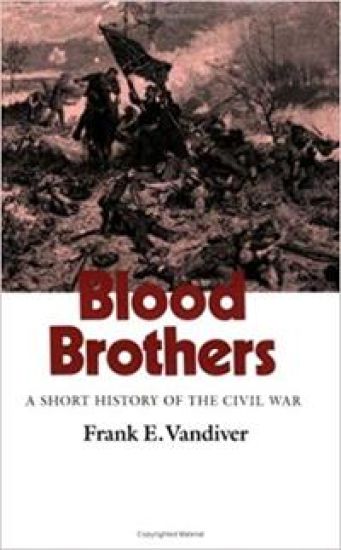
Blood Brothers

Blood Brothers

Frank E. Vandiver

Texas A M University Press
1992
sidottu
Brothers by blood before the war; brothers in blood after. The blood mingled in the Civil Was became the symbol and perverse source of indissoluble union between two sections, two ways of life, two visions of the future, and even two revolutions. In riveting detail, veteran Civil War historian Frank E. Vandiver recounts the campaigns and major battles of the first war of the Industrial Revolution, with its machinery, firepower, and engineering beyond imagination. With provocative insight, he traces a picture of the war as rooted in the character and vision of its two leaders and their two sectional revolutions. In the North, Abraham Lincoln built a massive war effort by expanding executive authority, sometimes in ways beyond the Constitution. Not only emancipation, but also new monetary policies, new forms of commercial organization and production, and new ways of raising and commanding armies made a different United States, shaped for world power. In the service of the Confederacy, Jefferson Davis, a states’ righter, became a Confederate nationalist. Keeping up the fight forced him and many Southerners to accept both a centralization and an industrialization they hated. When the dream was lost and the country gone, vestiges of this revolution would make the Southern system compatible with the new economic, social, and political system that had emerged in the North. The South might look back fondly, but it was readier than it knew for what would come: a new union, one and finally indivisible.

Blood Brothers

Blood Brothers

Frank E. Vandiver

Texas A M University Press
1992
nidottu
Brothers by blood before the war; brothers in blood after. The blood mingled in the Civil Was became the symbol and perverse source of indissoluble union between two sections, two ways of life, two visions of the future, and even two revolutions. In riveting detail, veteran Civil War historian Frank E. Vandiver recounts the campaigns and major battles of the first war of the Industrial Revolution, with its machinery, firepower, and engineering beyond imagination. With provocative insight, he traces a picture of the war as rooted in the character and vision of its two leaders and their two sectional revolutions. In the North, Abraham Lincoln built a massive war effort by expanding executive authority, sometimes in ways beyond the Constitution. Not only emancipation, but also new monetary policies, new forms of commercial organization and production, and new ways of raising and commanding armies made a different United States, shaped for world power. In the service of the Confederacy, Jefferson Davis, a states’ righter, became a Confederate nationalist. Keeping up the fight forced him and many Southerners to accept both a centralization and an industrialization they hated. When the dream was lost and the country gone, vestiges of this revolution would make the Southern system compatible with the new economic, social, and political system that had emerged in the North. The South might look back fondly, but it was readier than it knew for what would come: a new union, one and finally indivisible.