Kirjojen hintavertailu – 12 859 827 kirjaa ja 27 kauppaa

Kirjailija

Frank Ellis

Kirjat ja teokset yhdessä paikassa: 9 kirjaa, julkaisuja vuosilta 1992–2018, suosituimpiin kuuluu Social Protection in Africa. Vertaile teosten hintoja ja tarkista saatavuus suomalaisista kirjakaupoista.

9 kirjaa

Kirjojen julkaisuvuodet: 1992–2018.

Barbarossa 1941

Barbarossa 1941

Frank Ellis

University Press of Kansas
2018
nidottu
Operation Barbarossa, Hitler's plan for invading the Soviet Union, has by now become a familiar tale of overreach, with the Germans blinded to their coming defeat by their initial victory, and the Soviet Union pushing back from the brink of destruction with courageous exploits both reckless and relentless. And while much of this version of the story is true, Frank Ellis tells us in Barbarossa 1941, it also obscures several important historical truths that alter our understanding of the campaign. In this new and intensive investigation of Operation Barbarossa, Ellis draws on a wealth of documents declassified over the past twenty years to challenge the conventional treatment of a critical chapter in the history of World War II. Ellis's close reading of an exceptionally wide range of German and Russian sources leads to a reevaluation of Soviet intelligence assessments of Hitler's intentions; Stalin's complicity in his nation's slippage into existential slaughter; and the influence of the Stalinist regime's reputation for brutality—and a fear of Stalin's expansionist inclinations—on the launching and execution of Operation Barbarossa. Ellis revisits two major controversies relating to Barbarossa—the Soviet pre-emptive strike thesis put forward in Viktor Suvorov's book Icebreaker; and the view of the infamous Commissar Order, dictating the execution of a large group of Soviet POWs, as a unique piece of Nazi malevolence. Ellis also analyzes the treatment of Barbarossa in the work of three Soviet-Russian writers—Vasilii Grossman, Alexander Bek, and Konstantin Simonov—and in the first-ever translation of the diary kept by a German soldier in 20th Panzer Division, brings the campaign back to the daily realities of dangers and frustrations encountered by German troops.

The Stalingrad Cauldron

The Stalingrad Cauldron

Frank Ellis

University Press of Kansas
2013
sidottu
The encirclement of the German 6th Army at Stalingrad in mid-November 1942 and its final collapse in February 1943 was a signature defeat for Hitler, as more than 100,000 of his soldiers were marched off into captivity. Frank Ellis tackles this oft-told tale from the unique perspective of the German officers and men trapped inside the Red Army's ever-closing ring of forces. This approach makes palpable the growing desperation of an army that began its campaign confident of victory but that long before the end could see how hopeless their situation had become. Highlighting these pages are three previously unpublished German army division accounts, translated here for the first time by Ellis. Each of these translations follows the combat experiences of a specific division—the 76th Infantry, the 94th Infantry, and the 16th Panzer—and take readers into the cauldron (or Kessel) that was Stalingrad. Together they provide a ground-level view of the horrific fighting and yield insights into everything from tactics and weapons to internal disputes, the debilitating effects of extreme cold and hunger, and the Germans' astonishing sense of duty and the abilities of their junior leaders. Along with these first-hand accounts, Ellis himself takes a new and closer look at a number of fascinating but somewhat neglected or misunderstood aspects of the Stalingrad cauldron including sniping, desertion, spying, and the fate of German prisoners. His coverage of sniping is especially notable for new insights concerning the duel that allegedly took place between Soviet sniper Vasilii Zaitsev and a German sniper, Major Konings, a story told in the film Enemy at the Gates (2001). Ellis also includes an incisive reading of Oberst Arthur Boje's published account of his capture, interrogation, and conviction for war crimes, and explores the theme of reconciliation in the works of two Stalingrad veterans, Kurt Reuber and Vasilii Grossman. Rich in anecdotal detail and revealing moments, Ellis's historical mosaic showcases an army that managed to display a vital resilience and professionalism in the face of inevitable defeat brought on by its leaders. It makes for compelling reading for anyone interested in one of the Eastern Front's monumental battles.
The Damned and the Dead

The Damned and the Dead

Frank Ellis

University Press of Kansas
2011
sidottu
The confrontation between the Wehrmacht and the Red Army on the Eastern Front of World War II was defined by incalculable suffering, destruction, casualties, and heroism. While many historians have chronicled the epic nature of that arena of war, it has largely been left to Russian novelists to fully express the intense human dimensions of that conflict. Frank Ellis’s groundbreaking study provides the first comprehensive survey of that impressive body of literature. Canvassing a wide spectrum of works by Soviet and post-Soviet writers, many of whom were war veterans themselves, Ellis uncovers themes both common to war literature in general and distinctive to the Soviet experience. He recalls the earliest works in this genre by Emmanuil Kazakevich, Grigorii Baklanov, and IUrii Bondarev; presents a long overdue assessment of Vasil’ Bykov’s work, which focuses on the partisan war in Bykov’s native Belorussia; and brings into sharp focus the powerful Stalingrad novels of Vasilii Grossman, Konstantin Simonov, Viktor Nekrasov, and Bondarev. He also provides keen insights into the heroic portraits of Stalin in the fiction of Ivan Stadniuk and Vladimir Bogomolov and examines three important war novels published during the 1990s: Viktor Astaf’ev’s The Damned and the Dead, Georgii Vladimov’s The General and His Army, and Vladimir But’s Heads-Tails. One of the many threads running throughout Ellis’s study is the dilemma of the Red Army soldier condemned to serve a regime that was utterly paranoid regarding the allegiances of its own armies, so much so that Soviet soldiers often felt as threatened by the Soviet government as they did by the German armies. Many of these novels reinforce the now well-known fact that Stalin devoted considerable resources to ferreting out soldiers whose actions (or inactions) suggested disloyalty to his repressive regime. A few of them—such as Grossman’s Life and Fate—became battlegrounds in their own right, pitting Soviet writers against Soviet censors in a struggle over the public memory of the war. Russia’s memories of World War II are forever tied to the suffering of its people. Ellis’s rich and revealing work shows us why.
Social Protection in Africa

Social Protection in Africa

Frank Ellis; Stephen Devereux; Phillip White

Edward Elgar Publishing Ltd
2009
nidottu
This timely book makes accessible to a broad audience the ideas, principles and practicalities of establishing effective social protection in Africa. It focuses on the major shift in strategy for tackling hunger and vulnerability, from emergency responses mainly in the form of food transfers to predictable cash transfers to the chronically poorest social groups. The first part of the book comprises nine theme chapters, covering vulnerability, targeting, delivery, coordination, cost-effectiveness, market impacts, and asset effects, while the second part consists of fifteen social protection case studies. The continuous interplay between these two parts makes for a unique contribution to the contemporary literature on social protection. The book takes a positive and forward looking view regarding the feasibility of achieving successful social transfers to the poorest in Africa; nevertheless, a critical stance is taken where appropriate, and unresolved strategic issues regarding the targeting, coverage and scale of social transfers are highlighted. Social Protection in Africa is an essential read for personnel, advisors and consultants working for aid donors, United Nations agencies, NGOs and governments on social transfer programmes in sub-Saharan African countries. In addition, the book represents a valuable resource for training courses on social protection, and will be vital reading for Masters level students and researchers studying emergency relief, social protection, vulnerability and poverty reduction in low-income countries.
Social Protection in Africa

Social Protection in Africa

Frank Ellis; Stephen Devereux; Phillip White

Edward Elgar Publishing Ltd
2009
sidottu
This timely book makes accessible to a broad audience the ideas, principles and practicalities of establishing effective social protection in Africa. It focuses on the major shift in strategy for tackling hunger and vulnerability, from emergency responses mainly in the form of food transfers to predictable cash transfers to the chronically poorest social groups. The first part of the book comprises nine theme chapters, covering vulnerability, targeting, delivery, coordination, cost-effectiveness, market impacts, and asset effects, while the second part consists of fifteen social protection case studies. The continuous interplay between these two parts makes for a unique contribution to the contemporary literature on social protection. The book takes a positive and forward looking view regarding the feasibility of achieving successful social transfers to the poorest in Africa; nevertheless, a critical stance is taken where appropriate, and unresolved strategic issues regarding the targeting, coverage and scale of social transfers are highlighted. Social Protection in Africa is an essential read for personnel, advisors and consultants working for aid donors, United Nations agencies, NGOs and governments on social transfer programmes in sub-Saharan African countries. In addition, the book represents a valuable resource for training courses on social protection, and will be vital reading for Masters level students and researchers studying emergency relief, social protection, vulnerability and poverty reduction in low-income countries.
Paracetamol

Paracetamol

Frank Ellis

Royal Society of Chemistry
2002
nidottu
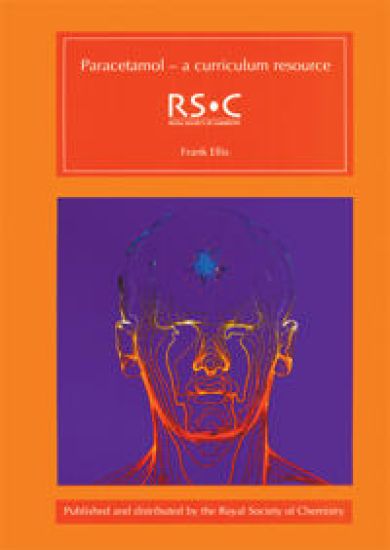
First made in the late 19th century, paracetamol is now widely used in a variety of pharmaceutical products. It is used as a painkiller and to reduce the temperature of patients with a fever. Aimed at post-16 students, this book provides a series of classroom activities, both written and practical, relating to paracetamol. The activities can be carried out singly, or as a coherent package, and are supported by a guide for teachers and technicians.
From Glasnost to the Internet

From Glasnost to the Internet

Frank Ellis

Palgrave Macmillan
1998
sidottu
The Soviet collapse of 1991 - the Great August liberation - demonstrated the total exhaustion of Marxist-Leninist agitation and propaganda. It was no longer possible to live on slogans. The failure of Soviet agitprop is also the failure of Soviet censorship the latter being a unique institution in anti-thought. In From Glasnost to the Internet Ellis analyses the consequences of censorship, before tackling the media legislation of the Russian Federation and the new dangers to the free flow of information emerging both within and outside the Russian Federation.
Peasant Economics

Peasant Economics

Frank Ellis

Cambridge University Press
1993
pokkari
This is a revised and expanded edition of a popular textbook on the economics of farm households in developing countries. The second edition retains the same building blocks designed to explore household decision-making in a social context. Key topics are efficiency, risk, time allocation, gender, agrarian contracts, farm size and technological change. For these and other topics, household economic behaviour represents the outcome of social interactions within the household, and market interactions outside the household. A new chapter on the environment combines exposition of economic tools not previously covered in the book with examination of household and community decision-making in relation to environmental resources.
Agricultural Policies in Developing Countries

Agricultural Policies in Developing Countries

Frank Ellis

Cambridge University Press
1992
pokkari
This textbook considers the methods used by governments to change the economic and social framework within which agricultural production takes place: by influencing the prices of farm inputs and outputs, by modifying agricultural institutions, and by promoting new technologies in agriculture. The book is organised around a central set of eight policy chapters, covering topics of price policy, marketing policy, input policy, credit policy, mechanisation policy, land reform policy, research policy and irrigation policy. These chapters are preceded by material covering the nature of policy, in the context of the market versus state debate, and the principles used by economists to undertake agricultural policy analysis. They are followed by chapters that examine the status of women in agricultural policy, and that summarise aspects of food policy not covered in the main chapters. This book is designed for undergraduate and graduate students taking courses related to agricultural policy, agricultural economics, or rural development in developing countries. It will also be accessible to the non-specialist reader who wishes to obtain an overview of the individual policy topics covered.