Kirjojen hintavertailu – 12 903 735 kirjaa ja 27 kauppaa
Kirjailija
Frank Field
Kirjat ja teokset yhdessä paikassa: 17 kirjaa, julkaisuja vuosilta 1991–2024, suosituimpiin kuuluu Education and the Urban Crisis. Vertaile teosten hintoja ja tarkista saatavuus suomalaisista kirjakaupoista.
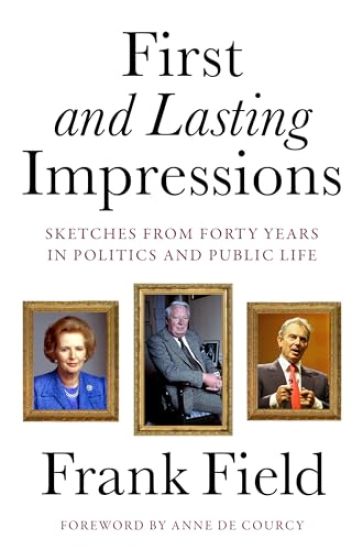
These essays capture Frank Field’s personal reflections on influential figures in public life across his remarkable 40-year political journey which was spent campaigning against poverty and injustice. Lord Field's candid observations provide a captivating record of his encounters with key public figures, and as such offers a unique and insightful perspective on those who have shaped our social and political landscape.
'For the past half-century Frank Field has been an outstanding parliamentarian, social reformer and champion of the disadvantaged. He joined the Labour Party at the age of 16 and was expelled from it at the age of 78.' -Brian & Rachel Griffiths'Frank Field is one of the most important, iconoclastic and remarkable politicians of his generation. This book is told with his Christian belief, regrets and all, and his trademark searing honesty.' -Nick TimminsIn the increasingly dirty world of British politics, one man has stood out for unimpeachable integrity – the former Labour Member of Parliament for Birkenhead, Frank Field. In this touching but also profound memoir, the veteran former Labour MP and social campaigner Frank Field reveals the poverty of his own childhood and the deep and lasting effect of his Christian socialism. Field has spent his life fighting poverty in Britain, and has found allies on all sides of the political spectrum. In this book, Field talk about his activism, his foundational work with the Child Poverty Action Group and his work passing legislation for the Minimum Living Wage. He explains why he has dedicated his life to speaking out against the corruption of greed and power and writes with great alacrity about the titans of his political age, including Tony Blair and Margaret Thatcher. In the end, Field’s zeal for reform was too much for too many people, and, in 2015, he was deselected by his own local Labour party. Politics, Poverty and Belief is an implicit indictment of modern British politics – the world of cash for questions, Partygate and all the rest – in which the poor get poorer and the rich get richer.
'For the past half-century Frank Field has been an outstanding parliamentarian, social reformer and champion of the disadvantaged. He joined the Labour Party at the age of 16 and was expelled from it at the age of 78.' -Brian & Rachel Griffiths'Frank Field is one of the most important, iconoclastic and remarkable politicians of his generation. This book is told with his Christian belief, regrets and all, and his trademark searing honesty.' -Nick TimminsIn the increasingly dirty world of British politics, one man has stood out for unimpeachable integrity – the former Labour Member of Parliament for Birkenhead, Frank Field. In this touching but also profound memoir, the veteran former Labour MP and social campaigner Frank Field reveals the poverty of his own childhood and the deep and lasting effect of his Christian socialism. Field has spent his life fighting poverty in Britain, and has found allies on all sides of the political spectrum. In this book, Field talk about his activism, his foundational work with the Child Poverty Action Group and his work passing legislation for the Minimum Living Wage. He explains why he has dedicated his life to speaking out against the corruption of greed and power and writes with great alacrity about the titans of his political age, including Tony Blair and Margaret Thatcher. In the end, Field’s zeal for reform was too much for too many people, and, in 2015, he was deselected by his own local Labour party. Politics, Poverty and Belief is an implicit indictment of modern British politics – the world of cash for questions, Partygate and all the rest – in which the poor get poorer and the rich get richer.
One of the nation's most widely respected MPs traces his political journey and issues a stark warning about the dangers to democracy presented by Labour under Jeremy Corbyn
In his famous report of 1942, the economist and social reformer William Beveridgewrote that the war was a 'revolutionary moment in the world's history' and so a time 'forrevolutions, not for patching.' The Beveridge Report outlined the welfare state that Attlee'sgovernment would go on to implement after 1946, instituting, for the first time, a nationalsystem of benefits to protect all from 'cradle to the grave.' Since then the welfare system hasbeen patched, beset by muddled thinking and short-termism. The government spends overGBP171bn a year on welfare and yet, since the Beveridge Report, there has been no strategicreview of the system. Compare that to Defence which, with its comparatively small budgetof GBP35bn, is subject to a strategic review at least every decade. Reform of the welfare systemneed not mean dismantlement, but serious questions must be asked about how a welfarestate as we understand it remains sustainable into the 21st century.
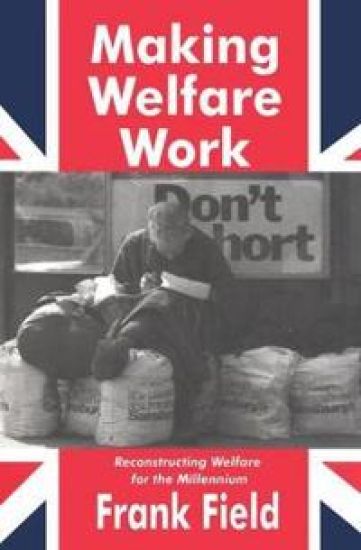
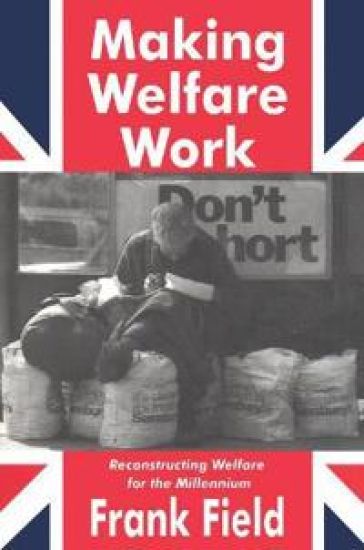
The welfare system in the United Kingdom is broken. The number of claims has escalated and so, in consequence, have welfare expenditures. The social system does not encourage welfare recipients to become independent. Half the population of the United Kingdom lives in households drawing one of the major means-tested benefits. Research documents that means-tests paralyze self-help, discourage self--im-provement, and tax honesty while at the same time rewarding claimants for being either inactive or -deceitful. In Making Welfare Work, Frank Field challenges the current political orthodoxy, particularly its emphasis on the role of legislation alone in bringing about social improvement in a welfare state. Field argues that the impact legislation has on personal character is pivotal to human advance in a welfare state. Welfare reconstruction needs to address and channel the differing roles of self-interest, self-improvement, and altruism, which are among the great driving forces in human character. A successful welfare state must reinforce these important forces which influence our nature because to create an imbalance between these three motive forces will always undermine welfare's objectives. Field discusses in detail aspects of modern British society in dire need of change. These include the drug trade, benefit traps, permanent adolescence, the rise of part-time work, inequality in incomes, excluding the disabled, single parents, and the very elderly, for example. This clearly delineated, well-researched blueprint for success will be important reading for politicians and policymakers in all industrialized nations. Its author is well-positioned to revise and review the welfare policies of democratic -societies.
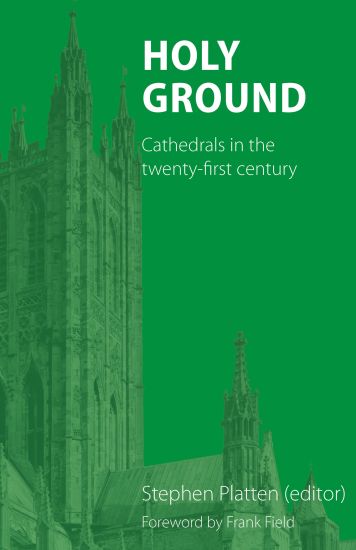
Cathedrals are one area of the church's life where increasingly the unchurched and half-believer encounter God, and where the institutions of our society instinctively engage with the Christian gospel. Holy Ground digs deep into the life of England's cathedrals, and discusses such diverse topics as finance, growth, heritage, liturgy, and art.
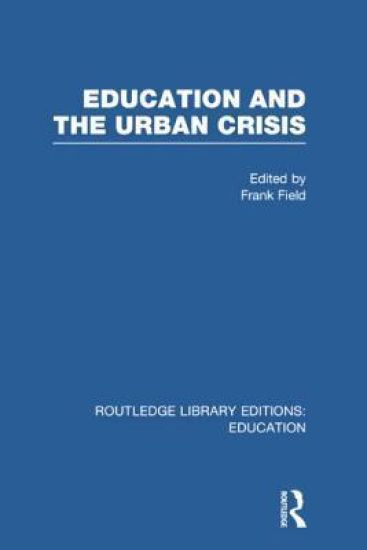
Based on two conferences, this volume explores trends during the 1960s and 1970s in inner city areas in the United Kingdom. It describes how the inner city is losing jobs and skilled workers and, as the population falls, the number of disadvantaged people and those claiming benefits is increasing. To what extent, the book asks, does the educational system contribute to or alleviate Britain’s urban crisis? In answering this question, the contributors examine the complex interrelationships between educational, economic and social problems, and point out that one of the major weaknesses of the present educational system in Britain is that it is in no way linked to the labour market. They suggest how schools could be better linked to local employment opportunities while at the same time offering more culturally varied educational opportunities. They also analyze Britain’s urban programme and show that it in no way matches up to what is required if poverty – which is seen as the root of the urban crisis – is to be eradicated.
Based on two conferences, this volume explores trends during the 1960s and 1970s in inner city areas in the United Kingdom. It describes how the inner city is losing jobs and skilled workers and, as the population falls, the number of disadvantaged people and those claiming benefits is increasing. To what extent, the book asks, does the educational system contribute to or alleviate Britain’s urban crisis? In answering this question, the contributors examine the complex interrelationships between educational, economic and social problems, and point out that one of the major weaknesses of the present educational system in Britain is that it is in no way linked to the labour market. They suggest how schools could be better linked to local employment opportunities while at the same time offering more culturally varied educational opportunities. They also analyze Britain’s urban programme and show that it in no way matches up to what is required if poverty – which is seen as the root of the urban crisis – is to be eradicated.
How are Christians and others inspired to work together in government? What ideals do they have in common in this cynical age? One answer, known as English Idealism, was put forward by T. H. Green. It sprang from Christian belief and formed a public ideology. As a leading politician and churchman, Frank Field illustrates his understanding of English Idealism through the life and work of five people who have inspired him in his political career. He looks at: two Archbishops of Canterbury - the Temples, father and son - who helped to build up this public ideology; George Bell who, as Bishop of Chichester during World War II, had the courage to be a lone voice campaigning against the policy of obliteration bombing of German cities; William Beveridge - this country's key reformer of welfare; Eleanor Rathbone, one of the greatest M. P.s, who campaigned to build an inclusive citizenship.
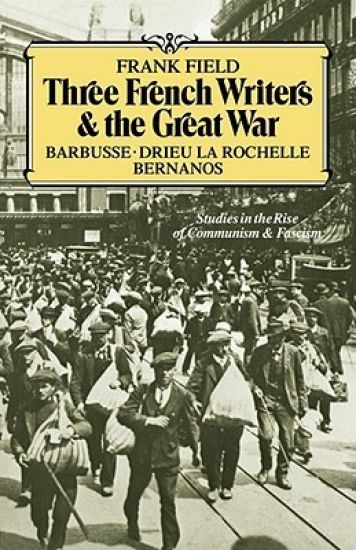
The impact of the First World War on European society and the rise of Communism and Fascism are important subjects that concern all students of recent history. The object of this book is to study these themes through the careers of three French writers: Henri Barbusse, Drieu la Rochelle and Georges Bernanos. Each of these writers served in the war and was subsequently attracted towards Communism or Fascism. Barbusse first achieved fame through his anti-war novel Le Feu, but in the years after 1918 he made a new career for himself as a rallying point for Communist sympathizers amongst the French intellectuals. After becoming one of the most intelligent and sophisticated advocates of Fascism in the 1930s, Drieu la Rochelle opted for a policy of collaboration with the Germans in 1940 and committed suicide in 1945. Bernanos moved to a position very close to Fascism in the 1930s, but his experiences in the Spanish Civil War, experiences that he so memorably described in Les grands cimeliires sous la lune, made him devote the remaining years of his life to an attack on all forms of totalitarianism.
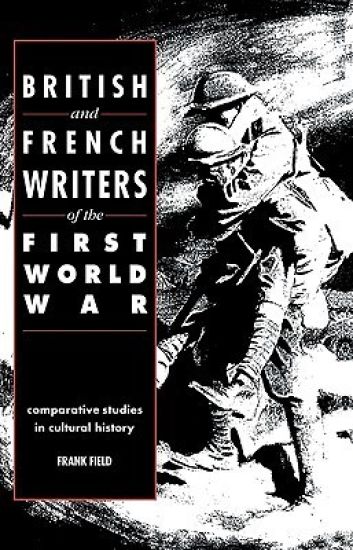
The First World War dealt a profound shock to European society. In this original and stimulating book, the historian Frank Field looks at the experiences of France and Britain during the war years as revealed in the work of some of their most prominent writers responding to the unfolding catastrophe. Brooke, Wells, Shaw, Kipling, Lawrence, Owen and Rosenberg are set alongside Jaurès, Barrès, Maurras, Péguy, Psichari and Rolland, as case studies of the war's impact on intellectual life in their respective countries. The comparative perspective reveals deep differences between the French and the British experience, and yet a shared ordeal marked by the terrible ironies attendant on the shattering of common ideals. Literary images of war as a purification rite were effaced by the bloody realities of the conflict and the prophecies of writers who came to feel increasingly distanced from the essential innocence of the world before 1914 took on a new tone, grimly apocalyptic or bitterly disillusioned.
The welfare system in the United Kingdom is broken. The number of claims has escalated and so, in consequence, have welfare expenditures. The social system does not encourage welfare recipients to become independent. Half the population of the United Kingdom lives in households drawing one of the major means-tested benefits. Research documents that means-tests paralyze self-help, discourage self--im-provement, and tax honesty while at the same time rewarding claimants for being either inactive or -deceitful. In Making Welfare Work, Frank Field challenges the current political orthodoxy, particularly its emphasis on the role of legislation alone in bringing about social improvement in a welfare state. Field argues that the impact legislation has on personal character is pivotal to human advance in a welfare state. Welfare reconstruction needs to address and channel the differing roles of self-interest, self-improvement, and altruism, which are among the great driving forces in human character. A successful welfare state must reinforce these important forces which influence our nature because to create an imbalance between these three motive forces will always undermine welfare's objectives. Field discusses in detail aspects of modern British society in dire need of change. These include the drug trade, benefit traps, permanent adolescence, the rise of part-time work, inequality in incomes, excluding the disabled, single parents, and the very elderly, for example. This clearly delineated, well-researched blueprint for success will be important reading for politicians and policymakers in all industrialized nations. Its author is well-positioned to revise and review the welfare policies of democratic -societies.
The First World War dealt a profound shock to European society. In this original and stimulating book, the historian Frank Field looks at the experiences of France and Britain during the war years as revealed in the work of some of their most prominent writers responding to the unfolding catastrophe. Brooke, Wells, Shaw, Kipling, Lawrence, Owen and Rosenberg are set alongside Jaurès, Barrès, Maurras, Péguy, Psichari and Rolland, as case studies of the war’s impact on intellectual life in their respective countries. The comparative perspective reveals deep differences between the French and the British experience, and yet a shared ordeal marked by the terrible ironies attendant on the shattering of common ideals. Literary images of war as a purification rite were effaced by the bloody realities of the conflict and the prophecies of writers who came to feel increasingly distanced from the essential innocence of the world before 1914 took on a new tone, grimly apocalyptic or bitterly disillusioned. This challenging study, crossing boundaries in an interdisciplinary spirit, produces a fertile conjunction of insights into the impact of the First World War on modern intellectual and literary history.