Kirjojen hintavertailu – 12 875 392 kirjaa ja 26 kauppaa

Kirjailija

Frank Furedi

Kirjat ja teokset yhdessä paikassa: 35 kirjaa, julkaisuja vuosilta 1989–2026, suosituimpiin kuuluu The War Against the Past. Vertaile teosten hintoja ja tarkista saatavuus suomalaisista kirjakaupoista.

Nimi esiintyy myös muodoissa: Frank Füredi

35 kirjaa

Kirjojen julkaisuvuodet: 1989–2026.

Wasted

Wasted

Frank Furedi

Continuum Publishing Corporation
2011
nidottu

Halvin toimitettuna 32,10 €

Furedi turns his attention to the education system, skilfully analysing current processes and providing a way forward. Never has so much attention been devoted to education. Everyone - government ministers, social commentators and parents obsess about its problems. Yet we rarely ask why? Why is education a source of such concern? Why do many of the solutions proposed actually make matters worse? Tony Blair's 'education, education, education' slogan placed education at the forefront of political agendas. But, perhaps the 'policisation' of education is part of the problem. Today, education is valued for its potential contribution to economic development, but it is no longer considered important for itself. Increasingly, the promotion of education has little to do with the value of learning per se or with the importance of 'being taught about societies' achievements, so future generations have the intellectual ability to advance still further. Education has been emptied of its content. This book is a brilliant piece of analysis. It peers into the hollowness of the education debates and, drawing on thinkers from the ancient Greeks to modern critics, it sets out what we need from our schools.

Invitation to Terror

Invitation to Terror

Frank Furedi

Continuum International Publishing Group Ltd.
2009
nidottu
Frank Furedi's claim that the social attitude of the West inadvertently invites acts of terrorism is an unsettling thought, but one that must be addressed in open discussion. Frank Furedi argues that Western culture appears to feed off a diet of terror and inadvertently offers its enemies an invitation to be terrorised. We have not developed an intellectual framework in which to be able to confront the fear of terrorism. The language we use betrays confusion about the threat we face and therefore undermines our capacity to engage with it. Beginning with the question of 'Why do they hate us?' we find ourselves unsure of who 'they' are. Even more unsettling is the realisation that we are not quite sure of who 'we' are. In this startling and original book Frank Furedi engages with some of the most fundamental questions confronting society today. We are in a global conflict that appears so confusing that we are not even certain what to call it. The failure to conceptualize the issues at stake is demonstrated by the absence of consensus around even what words to describe the meaning of the present conflict and enemy. Suddenly governments stop speaking about the War on Terror and talk about the Long War. The shift in terminology often betrays confusion about the issues at stake. Lack of clarity about what this war is about, who are the protagonists, its scope and duration dominates discussions on this conflict. Meaningless terms often represent an attempt to evade. In this case they express confusion and the inability to make sense of life in the twenty-first century.
Paranoid Parenting

Paranoid Parenting

Frank Furedi

Continuum International Publishing Group Ltd.
2008
nidottu

Halvin toimitettuna 31,40 €

Dr Furedi's ideas on how to stop disabling today's youth and instead bring out their full potential is invaluable advice to all parents, carers and teachers." Paranoid Parenting" is an important book that shows how parental fears have been stoked and families harmed as a consequence. It ought to be read by every sensible individual interested in regaining a sane viewpoint that advances children's well-being. It seems that every day there is a warning about your children: everything from cots, babysitters, schools, supermarkets and public parks pose a danger. We are told that children's health, safety and welfare and constantly at risk. Based on sociological research as well as dozens of interviews, this book will bolster your confidence in your own judgements and enable you to bring up self-assured, imaginative, capable children. If you want to understand why adults act like children and children act like adults - in short, if you want to understand why raising children today is harder than ever before - read this book.
Culture of Fear Revisited

Culture of Fear Revisited

Frank Furedi

Continuum International Publishing Group Ltd.
2006
nidottu
Fear has become an ever-expanding part of life in the West in the twenty-first century. We live in terror of disease, abuse, stranger danger, environmental devastation and terrorist onslaught. We are bombarded with reports of new concerns for our safety and that of our children, and urged to take greater precautions and seek more protection. But compared to the past, or to the developing world, people in contemporary Western societies have much less familiarity with pain, suffering, debilitating disease and death. We actually enjoy an unprecedented level of personal safety. When confronted with events like the destruction of the World Trade Centre, fear for the future is inevitable. But what happened on September 11th 2001 was in many ways an old fashioned act of terror, representing the destructive side of the human passions. Frank Furedi argues that the greater danger in our culture is the tendency to fear achievements representing a more constructive side of humanity. We panic about GM food, about genetic research, about the health dangers of mobile phones. The facts often fail to support the scare stories about new or growing risks to our health and safety. Our obsession with theoretical risks is in danger of distracting society from dealing with the old-fashioned dangers that have always threatened our lives. In this new edition, Furedi relates his own thinking on the sociology of fear to the thought of earlier thinkers such as Darwin and Fred and to the sociological tradition of Durkheim, C. Wright Mills, Anthony Giddens and others.
Where Have All the Intellectuals Gone?

Where Have All the Intellectuals Gone?

Frank Furedi

Continuum International Publishing Group Ltd.
2006
nidottu

Halvin toimitettuna 37,70 €

The intellectual is an endangered species. In place of such people as Bertrand Russell, Raymond Williams or Hannah Arendt - people with genuine learning, breadth of vision and a concern for public issues - we now have only facile pundits, think tank apologists and spin-doctors. In the age of the knowledge economy, we have somehow managed to combine the widest ever participation in higher education with the most dumbed-down of cultures. In this urgent and passionate book, Frank Furedi explains the essential contribution of intellectuals both to culture and to democracy - and why we need to recreate a public sphere in which intellectuals and the general public can talk to each other again.
Politics of Fear

Politics of Fear

Frank Furedi

Continuum International Publishing Group Ltd.
2005
sidottu
The terms "left" and "right" pervade all our discussions of politics. But do they mean anything any more? And is it really satisfactory to reduce all our political debate to these two terms? Furedi shows how contemporary and recent developments, including the Cold War, the Culture Wars and Third Way-type managerialism, have created the need for a new conception of politics with an adequate conception of humanity - one that "remoralises" politics by taking humans seriously, recognises the centrality of morality and discussions of right and wrong, and utilises our imaginations. Furedi proposes a new, and inevitably controversial, humanist politics to escape the trap of 20th century political ideology.
Therapy Culture:Cultivating Vu

Therapy Culture:Cultivating Vu

Frank Furedi

Routledge
2003
nidottu
Therapy Culture explores the powerful influence of therapeutic imperative in Anglo-American societies. In recent decades virtually every sphere of life has become subject to a new emotional culture. Professor Furedi suggests that the recent cultural turn toward the realm of the emotions coincides with a radical redefinition of personhood. Increasingly vulnerability is presented as the defining feature of people's psychology. Terms like people 'at risk', 'scarred for life' or 'emotional damage' evoke a unique sense of powerlessness. Furedi questions the widely accepted thesis that the therapeutic turn represents an enlightened shift towards emotions. He claims that therapeutic culture is primarily about imposing a new conformity through the management of people's emotions. Through framing the problem of everyday life through the prism of emotions, therapeutic culture incites people to feel powerless and ill. Drawing on developments in popular culture, political and social life, Furedi provides a path-breaking analysis of the therapeutic turn.
Therapy Culture:Cultivating Vu

Therapy Culture:Cultivating Vu

Frank Furedi

Routledge
2003
sidottu
First published in 2004. Therapy Culture explores the powerful influence of therapeutic imperative in Anglo-American societies. In recent decades virtually every sphere of life has become subject to a new emotional culture. Professor Furedi suggests that the recent cultural turn towards the realm of the emotions coincides with a radical redefinition of personhood. Increasingly, vulnerability is presented as the defining feature of people's psychology. Terms like 'at risk', 'scarred for life' or 'emotional damage' evoke a unique sense of powerlessness. Furedi questions widely accepted thesis that the therapeutic culture is primarily about imposing a new conformity through the management of people's emotions. Through framing the problem of everyday life through the prism of emotions, therapeutic culture incites people to feel powerless and ill. Drawing on developments in popular culture, political and social life, Furedi provides a path-breaking analysis of the therapeutic turn.
The Silent War

The Silent War

Frank Füredi

Pluto Press
1998
pokkari
Racial identity has been central to twentieth-century Western imagination. Yet, argues Frank Füredi, advocates of racial identity have long felt uncomfortable with the racialised global order they created. In The Silent War, Frank Füredi provides a radical exploration of the origins of the Anglo-American race relations industry, arguing that its emergence was driven by a conservative impulse of damage limitation; white racial fears and the internal crisis of confidence of the Anglo-American elites helping to transform racial thinking into a defensive philosophy of race relations. Füredi reveals how this shift in the conceptualisation of race is reflected in the management of international relations and demonstrates how, by the 1940s, Western powers were reluctant to openly use the discourse of race in international affairs. The Silent War examines the extent of the silent race agenda in the postwar era and helps explain why North–South affairs continue to be influenced by the issue of race.
Population and Development

Population and Development

Frank Füredi

Polity Press
1997
nidottu

Halvin toimitettuna 32,70 €

Some fear that population growth is the major threat facing humanity. Others argue that the link between population growth and insecurity is unproven. This book discusses both sides of this debate, examining how the arguments have evolved, and questioning the assumptions of the main protagonists.
Population and Development

Population and Development

Frank Füredi

Polity Press
1997
sidottu
Many experts believe that population growth is the greatest threat facing humanity. Others argue that the link between population growth and insecurity is unproven. This concise and provocative book discusses both sides of this debate, examining the way the arguments have changed and evolved, and questioning the assumptions of the main protagonists. Furedi argues that the western preoccupation with population growth reveals more about the internal concerns of western societies than the socio-economic development of the south. He suggests that attempts to establish a causal link between increases in population and poverty lead to a pragmatic, even manipulative approach to the issue of development. Examining a broad range of key debates and controversies - the 'population bomb' in Asia, the culture of a distinct regime of African fertility, the role of education in stabilizing population growth in Kerala - he contends that the marginalization of the goal of development is the outcome of a narrow concern with population policies. He fears that the recent shift of the population agenda towards the problems of the environment, gender equality and reproductive health is informed by a similar opportunistic pragmatism. Challenging and original, this book will be essential reading for students and specialists in development studies, sociology, and population studies, and for anyone interested in the debates surrounding world population growth.
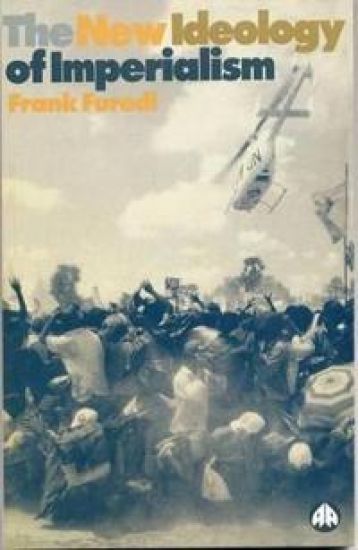
New Ideology of Imperialism

New Ideology of Imperialism

Frank Füredi

Pluto Press
1994
pokkari
During the nineteenth-century vast areas of the underdeveloped world were invaded and colonised under the justification of Anti Slavery and the Civilising Mission. In this powerful analysis, Furedi demonstrates how, in the late twentieth century, the major nations of the West are again intervening in the Third World - this time legitimising their actions on new moral grounds. Furedi's multidisciplinary study examines the language, nature and origins of the new moral justification for such massive intervention. Furedi argues that, in the wake of the collapse of Soviet communism, the West now presents the Third World as the major threat to international stability, offering Western democracy and financial systems as the solution, thus providing a 'new moral imperative' for rebuilding a viable imperialist ideology. Furedi examines this new anti-Third World view and concludes that we are experiencing the rehabilitation of the imperialist ideas that are depriving post colonial societies of their own moral authority.
The Mau Mau War in Perspective

The Mau Mau War in Perspective

Frank Furedi

James Currey
1989
pokkari
Aimed at students of African politics and political sociologists interested in rural revolution and revolt. Although Mau Mau was militarily crushed in the mid-fifties, the struggle for land rights was only contained in Kenya's post-independence era. Kikuyu squatters on European estates who formed the backbone of this movement are the main subject of this book. Furedi breaks new ground in following the story of the participants of the rural movement during the decade after the defeat of Mau Mau. New archival sources and interviews provide exciting material on the mechanics of decolonisation and on the containment of rural radicalism in Kenya. North America: Ohio U Press; Kenya: EAEP