Kirjojen hintavertailu – 12 903 725 kirjaa ja 27 kauppaa
Kirjailija
Frank H. P. Fitzek
Kirjat ja teokset yhdessä paikassa: 7 kirjaa, julkaisuja vuosilta 2006–2025, suosituimpiin kuuluu Quantum Communication Networks. Vertaile teosten hintoja ja tarkista saatavuus suomalaisista kirjakaupoista.
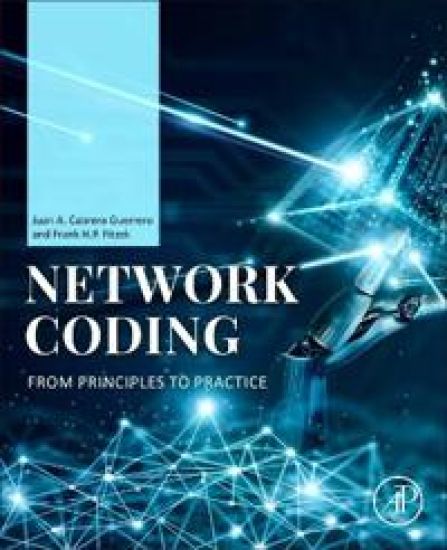
Network Coding: From Principles to Practice explains the fundamentals of network coding from a practical perspective, helping engineers in industry and researchers in academia wanting to deploy network coding in their simulations and real-life applications. The book takes a practical, problem-based learning approach to network coding using guided software simulations. With this book the reader will: Understand the fundamental principles behind network coding Learn how to implement a network coding software library Use a network coding library to test the fundamental principles Be able to produce code that can quickly be adapted for their specific research Understand the reasoning of more advanced and latest-researched network coding topics such as reliable distributed storage, partial packet recovery, etc. Network Coding: From Principles to Practice is suitable for Undergraduates, post-graduates, academic researchers and engineers in industry who want to understand and implement the fundamental principles of network coding.
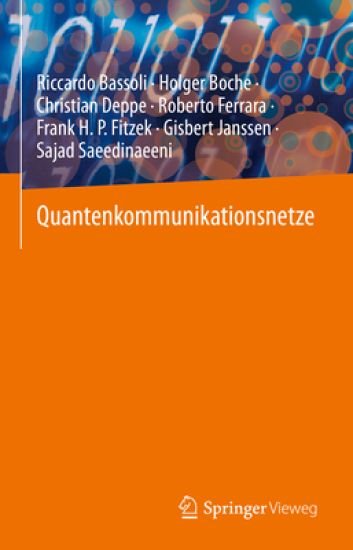
Dieses Buch bietet ein Tutorial über Quantenkommunikationsnetze. Die Autoren erörtern aktuelle Paradigmenwechsel in Kommunikationsnetzen, die erforderlich sind, um die einfachen Transportkonzepte der vorherrschenden Netze um Rechen- und Speicherfunktionen zu ergänzen. Sie zeigen, wie diese "softwarisierten" Lösungen neue Wege beschreiten, um Latenzzeiten zu reduzieren und die Ausfallsicherheit zu erhöhen. Die Autoren erörtern, wie diese Lösungen trotz der ihnen innewohnenden Probleme aufgrund der eingeführten Rechenlatenz und des Energieverbrauchs durch hybride klassisch-quantische Kommunikationsnetze gelöst werden können. Das Buch bringt Quantennetzwerke, Quanteninformationstheorie, Quantencomputer und Quantensimulation zusammen.
This book provides a tutorial on quantum communication networks. The authors discuss current paradigm shifts in communication networks that are needed to add computing and storage to the simple transport ideas of prevailing networks. They show how these ‘softwarized’ solutions break new grounds to reduce latency and increase resilience. The authors discuss how even though these solutions have inherent problems due to introduced computing latency and energy consumption, the problems can be solved by hybrid classical-quantum communication networks. The book brings together quantum networking, quantum information theory, quantum computing, and quantum simulation.
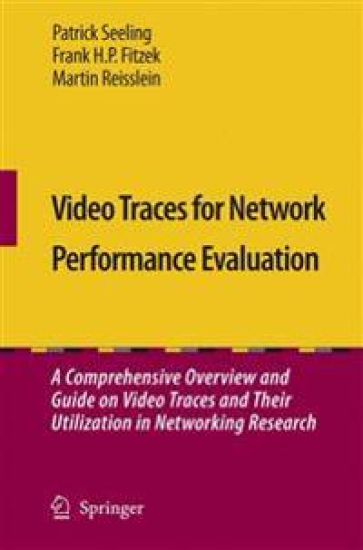
Multimedia networking applications and, in particular, the transport of c- pressed video are expected to contribute signi?cantly to the tra?c in the future Internet and wireless networks. For transport over networks, video is typically encoded (i. e. , compressed) to reduce the bandwidth requirements. Even compressed video, however, requires large bandwidths of the order of hundred kbps or Mbps. In addition, compressed video streams typically - hibit highly variable bit rates (VBR) as well as long range dependence (LRD) properties. This, in conjunction with the stringent Quality of Service (QoS) requirements (loss and delay) of video tra?c, makes the transport of video tra?covercommunicationnetworksachallengingproblem. Asaconsequence, in the last decade the networking research community has witnessed an - plosion in research on all aspects of video transport. The characteristics of video tra?c, video tra?c modeling, as well as protocols and mechanisms for the e?cient transport of video streams, have received a great deal of interest among networking researchers and network operators and a plethora of video transport schemes have been developed. For developing and evaluating video transport mechanisms and for - search on video networking in general, it is necessary to have available some characterizationofthevideo. Generally,therearethreedi?erentwaystoch- acterize encoded video for the purpose of networking research: (i)video tra?c model,(ii) video bit stream, and (iii) video tra?c trace.
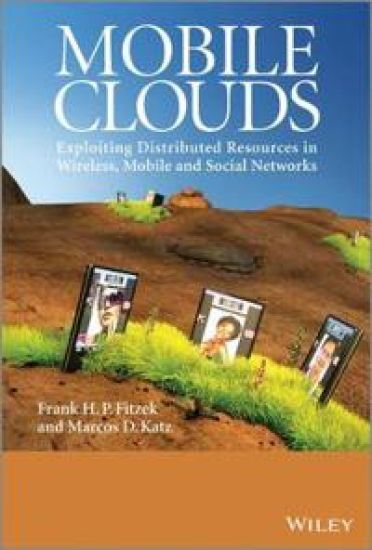
Includes a preface written by Professor Leonard Kleinrock, Distinguished Professor of Computer Science, UCLA, USA This book discusses and explores the concept of mobile cloud, creating an inspiring research space for exploiting opportunistic resource sharing, and covering from theoretical research approaches to the development of commercially profitable ideas. A mobile cloud is a cooperative arrangement of dynamically connected communication nodes sharing opportunistic resources. In this book, authors provide a comprehensive and motivating overview of this rapidly emerging technology. The book explores how distributed resources can be shared by mobile users in very different ways and for various purposes. The book provides many stimulating examples of resource-sharing applications. Enabling technologies for mobile clouds are also discussed, highlighting the key role of network coding. Mobile clouds have the potential to enhance communications performance, improve utilization of resources and create flexible platforms to share resources in very novel ways. Energy efficient aspects of mobile clouds are discussed in detail, showing how being cooperative can bring mobile users significant energy saving. The book presents and discusses multiple examples of mobile clouds applications, based on both existing commercial initiatives as well as proof-of-concept test-beds. Visions and prospects are also discussed, paving the way for further development. As mobile networks and social networks become more and more reliant on each other, the concept of resource sharing takes a wider and deeper meaning, creating the foundations for a global real-time multidimensional resource pool, the underlying infrastructure for shareconomy. Above all, this is an inspiring book for anyone who is concerned about the future of wireless and mobile communications networks and their relationship with Social networks. Key Features: Provides fundamental ideas and promising concepts for exploiting opportunistic cooperation and cognition in wireless and mobile networksGives clear definitions of mobile clouds from different perspectivesAssociates mobile and wireless networks with social networks, creating a vast fertile ground for novel developments in both research and practical applicationsConsiders research directions, emerging trends and visions This book is an excellent resource for wireless/networking researchers in industry and academia, students and mobile phone programmers. Managers interested in new technology developments, service providers, network operators, and those working in the gaming industry will also find the book insightful.
Multimedia networking applications and, in particular, the transport of c- pressed video are expected to contribute signi?cantly to the tra?c in the future Internet and wireless networks. For transport over networks, video is typically encoded (i. e. , compressed) to reduce the bandwidth requirements. Even compressed video, however, requires large bandwidths of the order of hundred kbps or Mbps. In addition, compressed video streams typically - hibit highly variable bit rates (VBR) as well as long range dependence (LRD) properties. This, in conjunction with the stringent Quality of Service (QoS) requirements (loss and delay) of video tra?c, makes the transport of video tra?covercommunicationnetworksachallengingproblem. Asaconsequence, in the last decade the networking research community has witnessed an - plosion in research on all aspects of video transport. The characteristics of video tra?c, video tra?c modeling, as well as protocols and mechanisms for the e?cient transport of video streams, have received a great deal of interest among networking researchers and network operators and a plethora of video transport schemes have been developed. For developing and evaluating video transport mechanisms and for - search on video networking in general, it is necessary to have available some characterizationofthevideo. Generally,therearethreedi?erentwaystoch- acterize encoded video for the purpose of networking research: (i)video tra?c model,(ii) video bit stream, and (iii) video tra?c trace.