

Kirjailija
Frank Köhler
Kirjat ja teokset yhdessä paikassa: 10 kirjaa, julkaisuja vuosilta 2010–2026, suosituimpiin kuuluu Deutsche Panzertechnik. Vertaile teosten hintoja ja tarkista saatavuus suomalaisista kirjakaupoista.
Nimi esiintyy myös muodoissa: Frank Kohler
10 kirjaa
Kirjojen julkaisuvuodet: 2010–2026.


Tabellenbuch für Metallbautechnik
Eckhard Ignatowitz; Michael Fehrmann; Gerhard Lämmlin; Alfred Weingartner; Dagmar Köhler; Hans-Joachim Pahl; Frank Köhler; Esther Lang; Stephanie Hierl
Europa Lehrmittel Verlag
2026
Nidottu

Instrumente und Phasen des Planungsprozesses von Dienstleistungen
Frank Köhler
GRIN Verlag
2022
nidottu

Service Empowerment. Wie wichtig ist der Faktor Mensch in der Dienstleistung?
Frank Köhler
GRIN Verlag
2022
nidottu

Die Methode "Mystery Shopping" im Dienstleistungsbereich. Chancen und Risiken für Unternehmen und Mitarbeiter
Frank Köhler
GRIN Verlag
2022
nidottu

Erfolgsfaktoren für den Projekterfolg. Methoden und Prozesse im Projektmanagement
Frank Köhler
GRIN Verlag
2022
nidottu

Selbstcoaching als Instrument einer modernen Personalentwicklung
Frank Köhler
GRIN Verlag
2022
nidottu

Persönlichkeitstests im Recruiting. Möglichkeiten und Bedenken für die Personalführung
Frank Köhler
GRIN Verlag
2022
nidottu
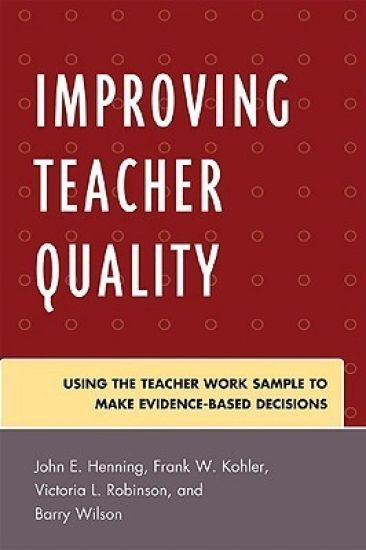
Improving Teacher Quality
John Henning; Frank Kohler; Victoria Robinson; Barry Wilson
Rowman Littlefield Education
2010
nidottu
The teacher work sample (TWS) has become increasingly widely adopted as an end-of-program, performance-based assessment for student teachers. Improving Teacher Quality offers a comprehensive introduction to teacher work sample methodology for teacher educators, student teachers, student teacher supervisors, cooperating teachers, program coordinators, and school administrators. This well-organized and clearly written guide shows how implementation of the TWS can catalyze a series of widespread changes in assessment, teaching, and program improvement. The authors use their extensive experience to describe how to implement the TWS in a carefully sequenced progression that includes creating a valid and reliable system of scoring, teaching reflective thinking skills, making program improvements, and conducting research with TWS data. Helpful suggestions are provided throughout for those interested in adopting the TWS as a performance-based assessment in their teacher education program, those interested in how the TWS can provide evidence of minimal competency, and those interested in how the TWS can provide data for making program improvements.