

Kirjailija
Frank Wedekind
Kirjat ja teokset yhdessä paikassa: 254 kirjaa, julkaisuja vuosilta 1965–2027, suosituimpiin kuuluu Rabbi Esra. Vertaile teosten hintoja ja tarkista saatavuus suomalaisista kirjakaupoista.
254 kirjaa
Kirjojen julkaisuvuodet: 1965–2027.

"""Without crime I became a criminal. Without payment I became a whore"" Munich, 1906. Klara lives with her singing teacher and his wife. But when a backstreet abortionist is arrested, a secret emerges which theatens to destroy the household's respectability. Frank Wedekind was the great rebel of European theatre, best known for Spring Awakening and the Lulu Plays. In Musik he delivers a blistering attack on middle-class hyprocrisy and double-standards. This exhiliarating adaptation by Neil Fleming opened The Last Waltz Season at the Arcola Theatre, London in March 2005."
Genießerisch mit dem Gaumen reisen: Landschaften, Kultur und Kulinarisches haben es dem Autor Werner Teufl angetan. Seine Heimat Deutschland und deren schmackhafte Schätze aus Küche und Keller liegen ihm dabei natürlich besonders am Herzen und auf der Zunge. Seine Tour durch deutsche Lande stellt bekannte und unbekannte Spezialitäten ebenso vor wie Kochkünstler, Schlemmerrouten und -plätze sowie sinnenfreudige Feste.


Nicholas Wright's version of Wedekind's celebrated erotic masterpiece is the first to be based on the author's original text, restoring the clarity, the daring and the sexual explicitness of a modern masterpiece written a hundred years before its time. Lulu is the story of the decline and fall of a young woman possessed of a fatal combination of sexuality and innocence. She passes from German and Parisian high society to the streets of Jack the Ripper's London – destroying, and ultimately destroyed by, her lovers. Wedekind originally wrote his extraordinary 'monster tragedy' a full twenty years before the First World War. Finding no-one prepared to stage it on account of its sexual candour, he toned it down and rewrote it as two full-length dramas, which is how The Lulu Plays were published and produced throughout most of the twentieth century. Nicholas Wright's version, based on Wedekind's original text, reveals the author's original conception for the play. It was premiered at the Almeida Theatre, London, in 2001.

Frühlings Erwachen. EinFach Deutsch Unterrichtsmodelle
Frank Wedekind; Stefan Rogal
Schoeningh Verlag
2000
nidottu
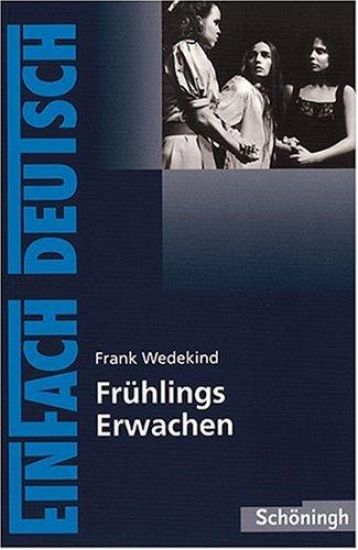
A tragi-comedy of teenage sex. Its fourteen-year-old heroine, Wendla, is killed by abortion pills. The young Moritz, terrorized by the world around him, and especially by his teachers, shoots himself. The ending seems likely to be the suicide of Moritz'sfriend, Melchior, but in a confrontation with a mysterious stranger (the famous Masked Man) he finally manages to shed his illusions and face the consequences.

German playwright Frank Wedekind has profoundly influenced modern drama, and became an inspiration to Brecht and Reinhardt among others. In this extraordinary play, Franziska, a 'female Faust', is consumed by a deep thirst for self-knowledge. She makes a pact a Mephistophelean impresario who grants her two years of pleasure and brilliant success in her operatic career as long as she becomes his wife and vassal. But, in an unusual twist, Franziska is not destined for eternal damnation. This is the first version of Franziska to be published in the English language and has been adapted by award-winning poet Eleanor Brown.

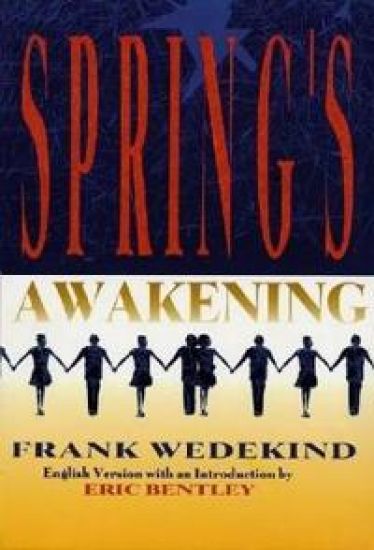
"The complete script to Frank Wedekind's symphony - or rather a cacophony - of deotic sexual rhetorics. Eric Bentley's achievement here as translator is a beautifully playable and juicy English; his larger gift is the opening to us of what must be ranked as among the supreme masterpieces of nineteenth-century theater." - Donald Lyons, The New Criterion
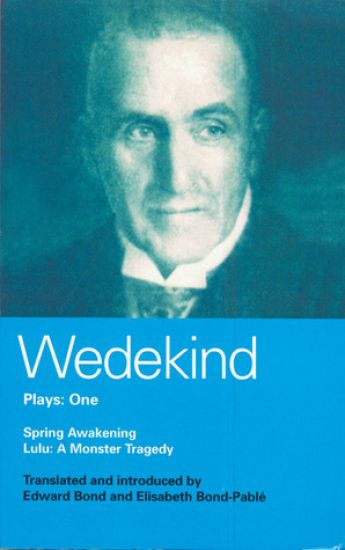
Wedekind's expressionist plays influenced the whole course of modern dramaA moralist who wore the mask of an immoralist, Wedekind was the terror of the German bourgeoisie. His work was censored and the original Lulu play was not even published during his lifetime; Wedekind toned it down and adapted it to make two plays: Pandora's Box and Earth-Spirit. The version in this volume, Lulu: A Monster Tragedy, is based on the first manuscript, presenting the original sexually voracious heroine to a British audience for the first time. The volume also contains Spring Awakening, "a work of great compassion that still has a lot to teach us about the dangers of battening down adolescent sex..." (Guardian). The translation of Spring Awakening ("scrupulously faithful both to Wedekind's irony and his poetry" The Times) was commissioned by the National Theatre and that of Lulu: A Monster Tragedy ("the Bonds' version is sharper and funnier than its predecessors" Guardian) was toured nationally. Both plays are complemented by the translators' historically illuminating introductions.

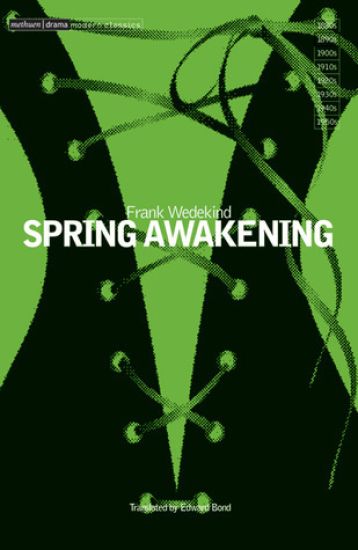
Wedekind's play about adolescent sexuality is as disturbing today as when it was first produced Wedekind's notorious play Spring Awakening was written in 1891 but had to wait the greater part of a century before it received its first complete performance in Britain, at the National Theatre in 1974. The production was highly praised, much of its strength deriving from this translation by Edward Bond and Elisabeth Bond Pable, 'scrupulously faithful both to Wedekind's irony and his poetry.' The Times This translation of Spring Awakening was first performed at the National Theatre, London on 24 May 1974. For this edition the translator, Edward Bond, has written a note on the play and a factual introduction to Wedekind's life and work.

Frank Wedekind: Der Marquis von Keith. Schauspiel in f nf Aufz gen Edition Holzinger. Taschenbuch Berliner Ausgabe, 2018, 4. Auflage Durchgesehener Neusatz mit einer Biographie des Autors bearbeitet und eingerichtet von Michael Holzinger Entstanden 1898/1900, Erstdruck unter dem Titel M nchner Scenen. Nach dem Leben aufgezeichnet in: Die Insel (Berlin), 1. Jg., 1900, Heft 7-9. Urauff hrung am 11.10.1901 in Berlin. Textgrundlage ist die Ausgabe: Frank Wedekind: Werke in drei B nden. Herausgegeben und eingeleitet von Manfred Hahn, Berlin und Weimar: Aufbau, 1969. Herausgeber der Reihe: Michael Holzinger Reihengestaltung: Viktor Harvion Umschlaggestaltung unter Verwendung des Bildes: Frank Wedekind (Fotografie, um 1917) Gesetzt aus der Minion Pro, 10 pt.