Kirjojen hintavertailu – 12 859 828 kirjaa ja 27 kauppaa

Kirjailija

Frans de Waal

Kirjat ja teokset yhdessä paikassa: 35 kirjaa, julkaisuja vuosilta 1998–2026, suosituimpiin kuuluu Minds I've Met. Vertaile teosten hintoja ja tarkista saatavuus suomalaisista kirjakaupoista.

35 kirjaa

Kirjojen julkaisuvuodet: 1998–2026.

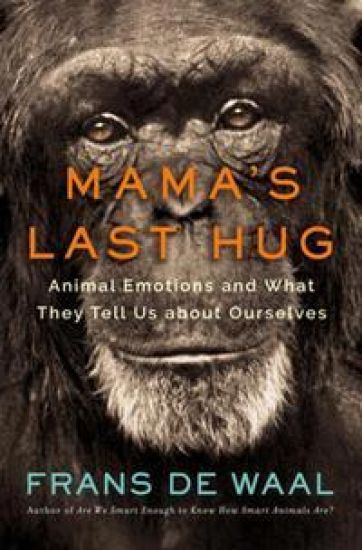
Mama's Last Hug

Mama's Last Hug

Frans de Waal

WW Norton Co
2019
sidottu
Frans de Waal has spent four decades at the forefront of animal research. Following up on the best-selling Are We Smart Enough to Know How Smart Animals Are?, which investigated animal intelligence, Mama's Last Hug delivers a fascinating exploration of the rich emotional lives of animals. Mama's Last Hug begins with the death of Mama, a chimpanzee matriarch who formed a deep bond with biologist Jan van Hooff. When Mama was dying, van Hooff took the unusual step of visiting her in her night cage for a last hug. Their goodbyes were filmed and went viral. Millions of people were deeply moved by the way Mama embraced the professor, welcoming him with a big smile while reassuring him by patting his neck, in a gesture often considered typically human but that is in fact common to all primates. This story and others like it form the core of de Waal's argument, showing that humans are not the only species with the capacity for love, hate, fear, shame, guilt, joy, disgust, and empathy. De Waal discusses facial expressions, the emotions behind human politics, the illusion of free will, animal sentience, and, of course, Mama's life and death. The message is one of continuity between us and other species, such as the radical proposal that emotions are like organs: we don't have a single organ that other animals don't have, and the same is true for our emotions. Mama's Last Hug opens our hearts and minds to the many ways in which humans and other animals are connected, transforming how we view the living world around us.
Olemmeko riittävän älykkäät tunnistamaan, kuinka älykkäitä eläimet ovat?

Olemmeko riittävän älykkäät tunnistamaan, kuinka älykkäitä eläimet ovat?

Frans de Waal

Terra Cognita
2018
nidottu

Halvin toimitettuna 37,50 €

Kädellisten tutkija Frans de Waal kerää tässä teoksessa tutkimustiedon eläinten älykkäästä käyttäytymisestä. Osoittautuu, että älykkyys ei ole ihmisen erottava ominaisuus, vaan eläimet toimivat omissa ympäristöissään tavoilla, joita voi vain sanoa älykkääksi. Frans de Waalin mielestä on aika arvioida eläinten älykkyys uudelleen ja luopua ennakkoluuloihimme perustuneesta virheellisestä ylimielestämme tässä asiassa.
Are We Smart Enough to Know How Smart Animals Are?

Are We Smart Enough to Know How Smart Animals Are?

Frans De Waal

Granta Books
2017
nidottu

Halvin toimitettuna 19,90 €

From world-renowned biologist Frans de Waal, a groundbreaking work which challenges everything we think we know about animal intelligence. 'A remarkable book by a remarkable scientist' Edward O Wilson author of The Social Conquest of Earth What separates your mind from the mind of an animal? Maybe you think it's your ability to design tools, your sense of self, or your grasp of past and future - all traits that have helped us define ourselves as the pre-eminent species on Earth. But in recent decades, claims of human superiority have been eroded by a revolution in the study of animal cognition. Take the way octopuses use coconut shells as tools, or how elephants can classify humans by age, gender, and language. Take Ayumu, the young male chimpanzee at Kyoto University who demonstrates his species' exceptional photographic memory. Based on research on animals including crows, dolphins, parrots, sheep, wasps, bats, whales, chimpanzees and bonobos, Frans de Waal reveals the scope and depth of animal intelligence, explaining how we have grossly underestimated non-human brains. With astonishing stories of animal cognition, Are We Smart Enough to Know How Smart Animals Are? challenges everything you thought you knew about animal - and human - intelligence. 'A lively, punchy and rigorous review of 20 years of academic studies of animals' mental lives, written by one of the most prominent thinkers in the field... an important corrective to human exceptionalism' Sunday Times
Are We Smart Enough to Know How Smart Animals Are?

Are We Smart Enough to Know How Smart Animals Are?

Frans de Waal

W. W. Norton Company
2017
nidottu

Halvin toimitettuna 21,70 €

Hailed as a classic, Are We Smart Enough to Know How Smart Animals Are? explores the oddities and complexities of animal cognition--in crows, dolphins, parrots, sheep, wasps, bats, chimpanzees, and bonobos--to reveal how smart animals really are, and how we've underestimated their abilities for too long. Did you know that octopuses use coconut shells as tools, that elephants classify humans by gender and language, and that there is a young male chimpanzee at Kyoto University whose flash memory puts that of humans to shame? Fascinating, entertaining, and deeply informed, de Waal's landmark work will convince you to rethink everything you thought you knew about animal--and human--intelligence.
Are We Smart Enough to Know How Smart Animals Are?

Are We Smart Enough to Know How Smart Animals Are?

Frans De Waal

WW Norton Co
2016
sidottu

Halvin toimitettuna 33,10 €

What separates your mind from an animal's? Maybe you think it's your ability to design tools, your sense of self, or your grasp of past and future-all traits that have helped us define ourselves as the planet's preeminent species. But in recent decades, these claims have eroded, or even been disproven outright, by a revolution in the study of animal cognition. Take the way octopuses use coconut shells as tools; elephants that classify humans by age, gender, and language; or Ayumu, the young male chimpanzee at Kyoto University whose flash memory puts that of humans to shame. Based on research involving crows, dolphins, parrots, sheep, wasps, bats, whales, and of course chimpanzees and bonobos, Frans de Waal explores both the scope and the depth of animal intelligence. He offers a firsthand account of how science has stood traditional behaviorism on its head by revealing how smart animals really are, and how we've underestimated their abilities for too long. People often assume a cognitive ladder, from lower to higher forms, with our own intelligence at the top. But what if it is more like a bush, with cognition taking different forms that are often incomparable to ours? Would you presume yourself dumber than a squirrel because you're less adept at recalling the locations of hundreds of buried acorns? Or would you judge your perception of your surroundings as more sophisticated than that of a echolocating bat? De Waal reviews the rise and fall of the mechanistic view of animals and opens our minds to the idea that animal minds are far more intricate and complex than we have assumed. De Waal's landmark work will convince you to rethink everything you thought you knew about animal-and human-intelligence.
Primates and Philosophers

Primates and Philosophers

Frans de Waal

Princeton University Press
2016
pokkari

Halvin toimitettuna 20,30 €

Can virtuous behavior be explained by nature, and not by human rational choice? "It's the animal in us," we often hear when we've been bad. But why not when we're good? Primates and Philosophers tackles this question by exploring the biological foundations of one of humanity's most valued traits: morality. In this provocative book, renowned primatologist Frans de Waal argues that modern-day evolutionary biology takes far too dim a view of the natural world, emphasizing our "selfish" genes and reinforcing our habit of labeling ethical behavior as humane and the less civilized as animalistic. Seeking the origin of human morality not in evolution but in human culture, science insists that we are moral by choice, not by nature. Citing remarkable evidence based on his extensive research of primate behavior, de Waal attacks "Veneer Theory," which posits morality as a thin overlay on an otherwise nasty nature. He explains how we evolved from a long line of animals that care for the weak and build cooperation with reciprocal transactions. Drawing on Darwin, recent scientific advances, and his extensive research of primate behavior, de Waal demonstrates a strong continuity between human and animal behavior. He probes issues such as anthropomorphism and human responsibilities toward animals. His compelling account of how human morality evolved out of mammalian society will fascinate anyone who has ever wondered about the origins and reach of human goodness. Based on the Tanner Lectures de Waal delivered at Princeton University's Center for Human Values in 2004, Primates and Philosophers includes responses by the philosophers Peter Singer, Christine M. Korsgaard, and Philip Kitcher and the science writer Robert Wright. They press de Waal to clarify the differences between humans and other animals, yielding a lively debate that will fascinate all those who wonder about the origins and reach of human goodness.
The Bonobo and the Atheist

The Bonobo and the Atheist

Frans de Waal

WW Norton Co
2014
nidottu

Halvin toimitettuna 21,50 €

For many years, de Waal has observed chimpanzees soothe distressed neighbors and bonobos share their food. Now he delivers fascinating fresh evidence for the seeds of ethical behavior in primate societies that further cements the case for the biological origins of human fairness. Interweaving vivid tales from the animal kingdom with thoughtful philosophical analysis, de Waal seeks a bottom-up explanation of morality that emphasizes our connection with animals. In doing so, de Waal explores for the first time the implications of his work for our understanding of modern religion. Whatever the role of religious moral imperatives, he sees it as a “Johnny-come-lately” role that emerged only as an addition to our natural instincts for cooperation and empathy. But unlike the dogmatic neo-atheist of his book’s title, de Waal does not scorn religion per se. Instead, he draws on the long tradition of humanism exemplified by the painter Hieronymus Bosch and asks reflective readers to consider these issues from a positive perspective: What role, if any, does religion play for a well-functioning society today? And where can believers and nonbelievers alike find the inspiration to lead a good life? Rich with cultural references and anecdotes of primate behavior, The Bonobo and the Atheist engagingly builds a unique argument grounded in evolutionary biology and moral philosophy. Ever a pioneering thinker, de Waal delivers a heartening and inclusive new perspective on human nature and our struggle to find purpose in our lives.
Bonobon och tio guds bud : på jakt efter humanism bland primater
Under lång tid har Fernissteorin dominerat synen på människans moral. Enligt den är moralen bara en tunn fernissa, som med nöd och näppe förmår dölja människans sanna natur, vilken är totalt självisk. Men på kort tid har denna uppfattning ändrats 180 grader. Nu råder bred enighet om att empati, altruism och samarbetsvilja inte bara är medfödda hos människor utan även hos många djur. En av de främsta företrädarna för detta nya paradigm är primatforskaren Frans de Waal. I flera tidigare böcker har han berättat om hur en rad däggdjur i hög grad besitter många av de egenskaper som vi kallar mänskliga. Det fortsätter han att göra även i Bonobon och tio guds bud, men denna gång tar han ytterligare ett steg för att plocka ner människan från hennes piedestal, nämligen att sätta in religionen i ett evolutionärt sammanhang. Fastän själv ateist betonar Frans de Waal att religion kan spela en positiv roll i samhället. Samtidigt är han skeptisk till den nyateistiska rörelsen, som han kritiserar för dogmatism, enligt de Waal ett långt större hot än religion i sig. OM FÖRFATTAREN Frans de Waal född i Nederländerna, verksam i USA sedan trettio år är en av världens mest kända primatforskare, vars böcker har nått en stor läsarskara på många olika språk. Hans vetenskapliga arbeten har publicerats i tidskrifter som Nature och Science och special­tidningar om djurbeteende. Frans de Waal är professor vid psykologiska institutionen vid Emory University och chef för Living Links Center vid Yerkes National Primate Research Center i Atlanta. Han är medlem i både Nationella vetenskapsakademin i USA och Kungliga nederländska vetenskapsakademin. 2007 utsågs han av Time till en av världens mest inflytelserika personer idag, och 2011 av Discover som en bland 47 (alla tiders) Stora vetenskapliga tänkare. UR BOKEN Mitt liv som toalettgroda I Australien är det inte ovanligt att hitta en bastant groda i toaletten. Även om man försöker bära ut den hoppar den glatt tillbaka ner i toalettstolen, där den håller sig fast med sina sugkoppsfötter under de tsunamier som vi männi­skor åstadkommer. Grodorna tycks inte ha något emot alla de mänskliga utsöndringar som virvlar runt i avloppet. Men det har jag! Jag kände mig som en toalettgroda under föregående sekels sista tre årtionden. Jag tvingades hålla fast med förtvivlad kraft varje gång det kom ut en bok om människans villkor, oavsett om den var skriven av biologer, antropologer eller vetenskapsjourna­lister, eftersom de flesta av dem förde fram ­tankegångar som var helt emot min syn på vår art. Man kan uppfatta människor antingen som goda av naturen men i stånd att göra ont, eller som onda av naturen men i stånd att göra gott. Jag råkar tillhöra det första lägret, men litteraturen ­betonade enbart den negativa sidan. Till och med positiva drag måste formuleras som ­problematiska. Djur och människor älskar sina familjer? Låt oss kalla det "nepotism". Schimpanser tillåter vänner att äta mat ur deras händer? Låt oss kalla det snatteri­ och "tiggeri". Det rådande tonläget var fullt av misstankar mot snällhet.
The Bonobo and the Atheist

The Bonobo and the Atheist

Frans de Waal

WW Norton Co
2013
sidottu
For many years, de Waal has observed chimpanzees soothe distressed neighbors and bonobos share their food. Now he delivers fascinating fresh evidence for the seeds of ethical behavior in primate societies that further cements the case for the biological origins of human fairness. Interweaving vivid tales from the animal kingdom with thoughtful philosophical analysis, de Waal seeks a bottom-up explanation of morality that emphasizes our connection with animals. In doing so, de Waal explores for the first time the implications of his work for our understanding of modern religion. Whatever the role of religious moral imperatives, he sees it as a “Johnny-come-lately” role that emerged only as an addition to our natural instincts for cooperation and empathy. But unlike the dogmatic neo-atheist of his book’s title, de Waal does not scorn religion per se. Instead, he draws on the long tradition of humanism exemplified by the painter Hieronymus Bosch and asks reflective readers to consider these issues from a positive perspective: What role, if any, does religion play for a well-functioning society today? And where can believers and nonbelievers alike find the inspiration to lead a good life? Rich with cultural references and anecdotes of primate behavior, The Bonobo and the Atheist engagingly builds a unique argument grounded in evolutionary biology and moral philosophy. Ever a pioneering thinker, de Waal delivers a heartening and inclusive new perspective on human nature and our struggle to find purpose in our lives.
The Age of Empathy: Nature's Lessons for a Kinder Society

The Age of Empathy: Nature's Lessons for a Kinder Society

Frans de Waal

Crown Publishing Group (NY)
2010
nidottu
In this thought-provoking book, the acclaimed author of Our Inner Ape examines how empathy comes naturally to a great variety of animals, including humans. Are we our brothers' keepers? Do we have an instinct for compassion? Or are we, as is often assumed, only on earth to serve our own survival and interests? By studying social behaviors in animals, such as bonding, the herd instinct, the forming of trusting alliances, expressions of consolation, and conflict resolution, Frans de Waal demonstrates that animals-and humans-are "preprogrammed to reach out." He has found that chimpanzees care for mates that are wounded by leopards, elephants offer "reassuring rumbles" to youngsters in distress, and dolphins support sick companions near the water's surface to prevent them from drowning. From day one humans have innate sensitivities to faces, bodies, and voices; we've been designed to feel for one another. De Waal's theory runs counter to the assumption that humans are inherently selfish, which can be seen in the fields of politics, law, and finance. But he cites the public's outrage at the U. S. government's lack of empathy in the wake of Hurricane Katrina as a significant shift in perspective-one that helped Barack Obama become elected and ushered in what perhaps could become an Age of Empathy. Through a better understanding of empathy's survival value in evolution, de Waal suggests, we can work together toward a more just society based on a more generous and accurate view of human nature. Written in layman's prose with a wealth of anecdotes, wry humor, and incisive intelligence, The Age of Empathy is essential reading for our embattled times. "An important and timely message about the biological roots of human kindness."--Desmond Morris, author of The Naked Ape
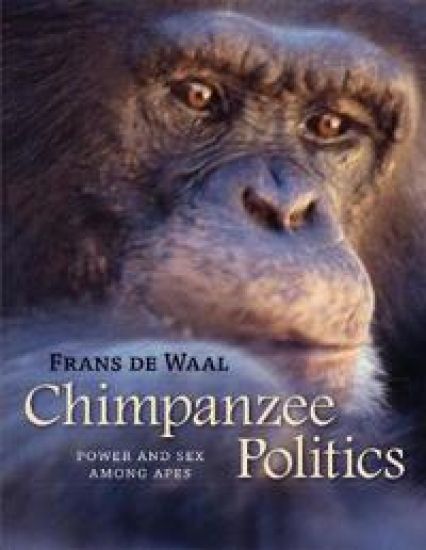
Chimpanzee Politics

Chimpanzee Politics

Frans de Waal

Johns Hopkins University Press
2007
pokkari

Halvin toimitettuna 37,90 €

The first edition of Frans de Waal's Chimpanzee Politics was acclaimed not only by primatologists for its scientific achievement but also by politicians, business leaders, and social psychologists for its remarkable insights into the most basic human needs and behaviors. Twenty-five years later, this book is considered a classic. Featuring a new preface that includes recent insights from the author, this anniversary edition is a detailed and thoroughly engrossing account of rivalries and coalitions-actions governed by intelligence rather than instinct. As we watch the chimpanzees of Arnhem behave in ways we recognize from Machiavelli (and from the nightly news), de Waal reminds us again that the roots of politics are older than humanity.
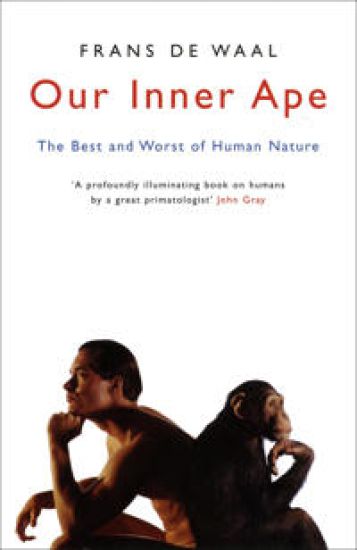
Our Inner Ape

Our Inner Ape

Frans de Waal

Granta Books
2006
nidottu

Halvin toimitettuna 19,90 €

We have long attributed man's violent, aggressive, competitive nature to his animal ancestry. But what if we are just as given to cooperation, empathy and morality by virtue of our genes? From a scientist and writer whom E. O. Wilson has called 'the world authority on primate social behavior' comes a lively look at the most provocative aspects of human nature - power, sex, violence, kindness, and morality - through our two closest cousins in the ape family. For nearly twenty years, Frans de Waal has worked with both the famously aggressive chimpanzee and the lesser-known egalitarian, erotic, matriarchal bonobo, two species whose DNA is nearly identical to that of humans. He brings these apes to life on every page, revealing their personalities, relationships and power struggles, creating an engrossing narrative that explores what their behaviour can teach us about ourselves and each other.
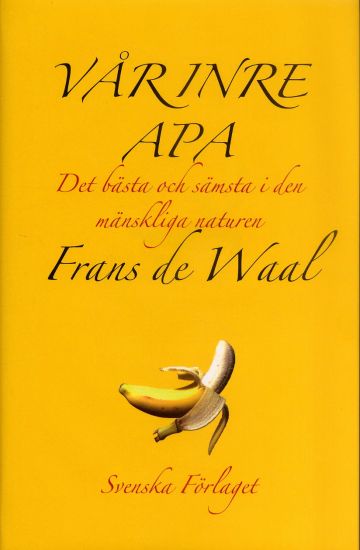
Vår inre apa : Det bästa och sämsta i den mänskliga naturen
Tänker vi på släktskapet mellan apa och människa tänker vi oftast på schimpansen. Betydligt mindre känd och helt väsensskild är en annan primat, som också har ett DNA som är nästan identiskt med människans: bonoboen. Till skillnad från schimpansens stundtals aggressiva och tävlingsinriktade beteende är den känslig och empatisk. Medan schimpansen är patriarkal är bonoboen matriarkal och dessutom utrustad med en rejäl sexuell aptit. Den ger en helt ny innebörd åt djungelns lag . I nästan tjugo år har den världsberömde antropologen Frans de Waal studerat de båda arterna. I Vår inre apa utforskar han fascinerande och skrämmande paralleller mellan apornas beteende och den mänskliga, motsägelsefulla, naturen. Frans de Waal betraktas som en av världens främsta primatologer och har skrivit fem tidigare böcker som översatts till 14 olika språk. Nu översätts han för första gången till svenska.