Kirjojen hintavertailu – 12 859 818 kirjaa ja 27 kauppaa

Kirjailija

Frans L. Leeuw

Kirjat ja teokset yhdessä paikassa: 4 kirjaa, julkaisuja vuosilta 2009–2017, suosituimpiin kuuluu Empirical Legal Research. Vertaile teosten hintoja ja tarkista saatavuus suomalaisista kirjakaupoista.

4 kirjaa

Kirjojen julkaisuvuodet: 2009–2017.

Empirical Legal Research

Empirical Legal Research

Frans L. Leeuw

Edward Elgar Publishing Ltd
2017
nidottu
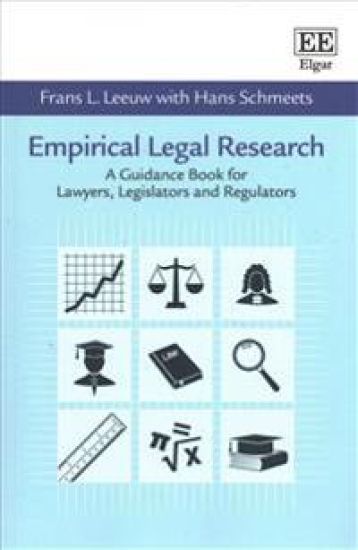
In 1788 John Adams created a sublime ambition for all nations - 'a government of laws and not of men'. In the intervening years we have come to learn that legislation itself works through the interpretations of the many men and women who work on the inside and the outside of the law. Effective regulation thus depends not only on scrupulous legal analysis, with its appeal to precedent, conceptual clarity and argumentation, but also on sound empirical research, which often reveals diversity in implementation, enforcement and observance of the law in practice. In this outstanding, worldly-wise book Leeuw and Schmeets demonstrate how to bridge the gap between the letter and the delivery of the law. It is packed with examples, cases and illustrations that will have international appeal. I recommend it to students and practitioners engaged across all domains of legislation and regulation.'- Ray Pawson, University of Leeds, UKEmpirical Legal Research describes how to investigate the roles of legislation, regulation, legal policies and other legal arrangements at play in society. It is invaluable as a guide to legal scholars, practitioners and students on how to do empirical legal research, covering history, methods, evidence, growth of knowledge and links with normativity. This multidisciplinary approach combines insights and approaches from different social sciences, evaluation studies, Big Data analytics and empirically informed ethics. The authors present an overview of the roots of this blossoming interdisciplinary domain, going back to legal realism, the fields of law, economics and the social sciences, and also to civilology and evaluation studies. The book addresses not only data analysis and statistics, but also how to formulate adequate research problems, to use (and test) different types of theories (explanatory and intervention theories) and to apply new forms of literature research to the field of law such as the systematic, rapid and realist reviews and synthesis studies. The choice and architecture of research designs, the collection of data, including Big Data, and how to analyze and visualize data are also covered. The book discusses the tensions between the normative character of law and legal issues and the descriptive and causal character of empirical legal research, and suggests ways to help handle this seeming disconnect. This comprehensive guide is vital reading for law practitioners as well as for students and researchers dealing with regulation, legislation and other legal arrangements.
Empirical Legal Research

Empirical Legal Research

Frans L. Leeuw

Edward Elgar Publishing Ltd
2016
sidottu
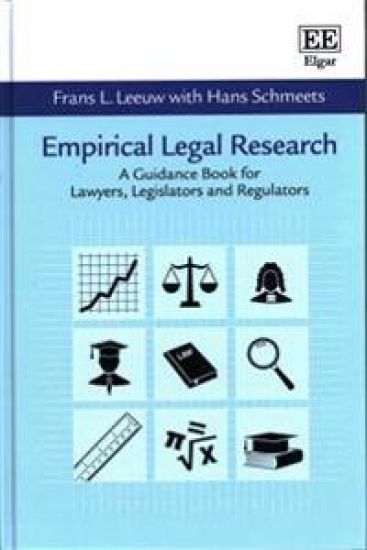
In 1788 John Adams created a sublime ambition for all nations - 'a government of laws and not of men'. In the intervening years we have come to learn that legislation itself works through the interpretations of the many men and women who work on the inside and the outside of the law. Effective regulation thus depends not only on scrupulous legal analysis, with its appeal to precedent, conceptual clarity and argumentation, but also on sound empirical research, which often reveals diversity in implementation, enforcement and observance of the law in practice. In this outstanding, worldly-wise book Leeuw and Schmeets demonstrate how to bridge the gap between the letter and the delivery of the law. It is packed with examples, cases and illustrations that will have international appeal. I recommend it to students and practitioners engaged across all domains of legislation and regulation.'- Ray Pawson, University of Leeds, UKEmpirical Legal Research describes how to investigate the roles of legislation, regulation, legal policies and other legal arrangements at play in society. It is invaluable as a guide to legal scholars, practitioners and students on how to do empirical legal research, covering history, methods, evidence, growth of knowledge and links with normativity. This multidisciplinary approach combines insights and approaches from different social sciences, evaluation studies, Big Data analytics and empirically informed ethics. The authors present an overview of the roots of this blossoming interdisciplinary domain, going back to legal realism, the fields of law, economics and the social sciences, and also to civilology and evaluation studies. The book addresses not only data analysis and statistics, but also how to formulate adequate research problems, to use (and test) different types of theories (explanatory and intervention theories) and to apply new forms of literature research to the field of law such as the systematic, rapid and realist reviews and synthesis studies. The choice and architecture of research designs, the collection of data, including Big Data, and how to analyze and visualize data are also covered. The book discusses the tensions between the normative character of law and legal issues and the descriptive and causal character of empirical legal research, and suggests ways to help handle this seeming disconnect. This comprehensive guide is vital reading for law practitioners as well as for students and researchers dealing with regulation, legislation and other legal arrangements.
The Evidence Book

The Evidence Book

Olaf Rieper; Frans L. Leeuw; Tom Ling

AldineTransaction
2011
nidottu
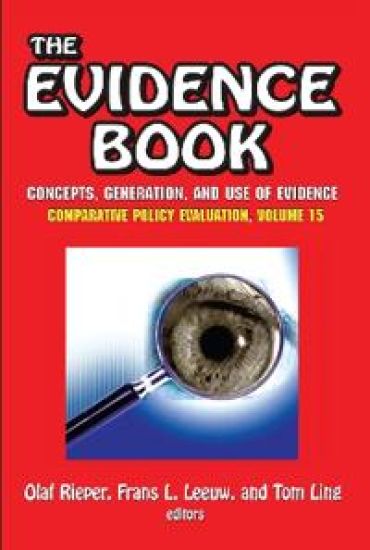
Knowledge grows as ideas are tested against each other. Agreement is not resolved simply by naming concepts but in the dialectical process of thesis, antithesis, and synthesis. There are many echoes of these debates in The Evidence Book. The contributors make claims for both practitioner wisdom and the voice of experience. Against this is posed the authority of experimental science and the randomized controlled trial. The contributors are concerned, in their own ways, with collecting, ranking, and analyzing evidence and using this to deliver evaluations. As an expert group, they are aware that the concept of evidence has been increasingly important in the last decade. As with other concepts, it too often escapes precise definition. Despite this, the growing importance of evidence has been advocated with enthusiasm by supporters who see it as a way of increasing the effectiveness and quality of decisions and of professional life. The willingness to engage in evidence-based policy and the means to do so is heavily constrained by economic, political, and cultural climates. This book is a marvelously comprehensive and utterly unique treatise on evidence-based policy. It is a wide-ranging contribution to the field of evaluation.
The Evidence Book

The Evidence Book

Olaf Rieper; Frans L. Leeuw; Tom Ling

AldineTransaction
2009
sidottu
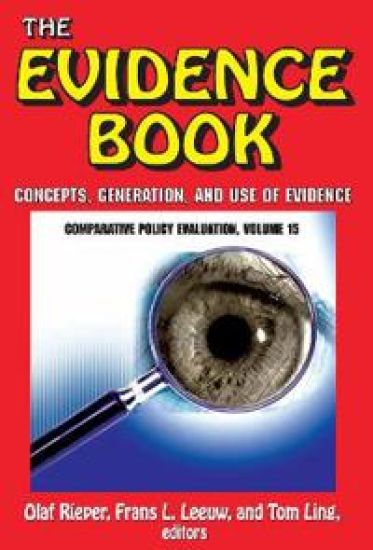
Knowledge grows as ideas are tested against each other. Agreement is not resolved simply by naming concepts but in the dialectical process of thesis, antithesis, and synthesis. There are many echoes of these debates in The Evidence Book. The contributors make claims for both practitioner wisdom and the voice of experience. Against this is posed the authority of experimental science and the randomized controlled trial. The contributors are concerned, in their own ways, with collecting, ranking, and analyzing evidence and using this to deliver evaluations. As an expert group, they are aware that the concept of evidence has been increasingly important in the last decade. As with other concepts, it too often escapes precise definition. Despite this, the growing importance of evidence has been advocated with enthusiasm by supporters who see it as a way of increasing the effectiveness and quality of decisions and of professional life. The willingness to engage in evidence-based policy and the means to do so is heavily constrained by economic, political, and cultural climates. This book is a marvelously comprehensive and utterly unique treatise on evidence-based policy. It is a wide-ranging contribution to the field of evaluation.