Kirjailija
Franz Boas
Kirjat ja teokset yhdessä paikassa: 137 kirjaa, julkaisuja vuosilta 1911–2026, suosituimpiin kuuluu The Central Eskimo. Vertaile teosten hintoja ja tarkista saatavuus suomalaisista kirjakaupoista.
137 kirjaa
Kirjojen julkaisuvuodet: 1911–2026.



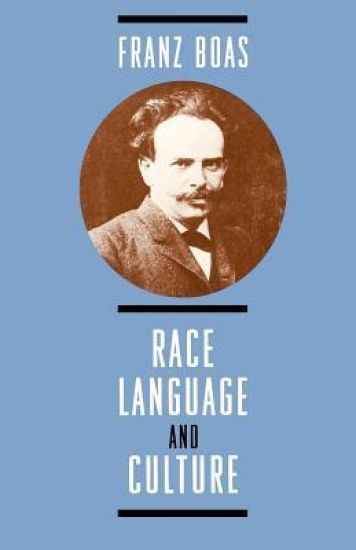
This volume is a collection of the most important essays written by Franz Boas on the science of anthropology." Franz Boas is the father of American anthropology and one of the founders of the field of modern anthropology. The book, Race, Language, and Culture, is a collection of some of his most important essays."—David Schneider, University of Chicago "An exceptional book. Exceptional because it brings into one volume sixty-two papers written by the most influential figure in American anthropology. . . . Exceptional in that it exhibits the wide range of interests and scientific exactness which made it possible for one man to exert such a profound influence on the growing science of anthropology. . . . This is a volume every student of anthropology will wish to possess; it will also have a wide distribution among other students of the social sciences, and all interested in the problems of race."—Fay-Cooper Cole, American Anthropologist
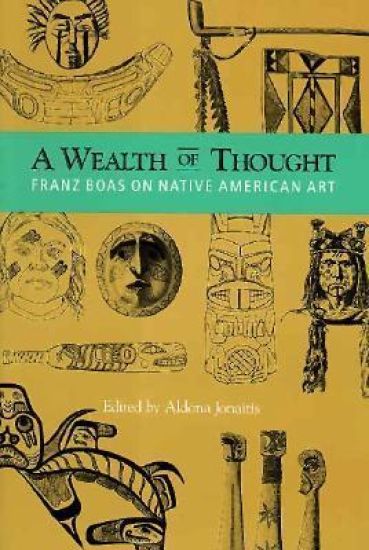
Although Franz Boas--one of the most influential anthropologists of the twentieth century--is best known for his voluminous writings on cultural, physical, and linguistic anthropology, he is also recognized for breaking new ground in the study of so-called primitive art. His writings on art have major historical value because they embody a profound change in art history. Nineteenth-century scholars assumed that all art lay on a continuum from primitive to advanced: artworks of all nonliterate peoples were therefore examples of early stages of development. But Boas's case studies from his own fieldwork in the Pacific Northwest demonstrated different tenets: the variety of history, the influence of diffusion, the symbolic and stylistic variation in art styles found among groups and sometimes within one group, and the role of imagination and creativity on the part of the artist. This volume presents Boas's most significant writings on art (dated 1889-1916), many originally published in obscure sources now difficult to locate. The original illustrations and an extensive, combined bibliography are included. Aldona Jonaitis's careful compilation of articles and the thorough historical and theoretical framework in which she casts them in her introductory and concluding essays make this volume a valuable reference for students of art history and Northwest anthropology, and a special delight for admirers of Boas.

Introduction to Handbook of American Indian Languages and Indian Linguistic Families of America North of Mexico
Franz Boas; J. W. Powell
University of Nebraska Press
1991
pokkari
Two major anthropological works study the roots, structure, and classification of Indian languages
"The Shaping of American Anthropology is a book which is outstanding in many respects. Stocking is probably the leading authority on Franz Boas; he understands Boas's contributions to American anthropology, as well as anthropology in general, very well. . . . He is, in a word, the foremost historian of anthropology in the world today. . . . The reader is both a collection of Boas's papers and a solid 23-page introduction to giving the background and basic assumptions of Boasian anthropology."—David Schneider, University of Chicago "While Stocking has not attempted to present a person biography, nevertheless Boas's personal characteristics emerge not only in his scholarly essays, but perhaps more vividly in his personal correspondence. . . . Stocking is to be commended for collecting this material together in a most interesting and enjoyable reader."—Gustav Thaiss, American Anthropologist



In this insightful study, Frank Boas connects aspects of human history with their manifestation in the modern world, describing such topics as race relations, nationalism and education. When this book was first published in the 1920s, the United States was grappling with racial tensions, with heightening discrimination against black Americans. As such Boas leads with the topic of race, exploring the cultural contrasts that occur between different races. The relationship between a person's country, and the ideology of nationalism, is explored. Ideas of eugenics, whereby humans breed according to desired traits, are investigated and their limitations explained. Later in the book, concepts such as crime in modern society, and concepts of cultural stability are examined. Frank Boas is commonly described as the 'Father of American Anthropology', in that he pioneered means of understanding the present of North America through the lens of its past. Noted for his strong opposition to pseudoscientific beliefs that sought to affirm faulty notions of racial superiority, Boas was likewise famous for asserting that no culture could be ranked as objectively better or worse - a concept known as cultural relativism. Ideas of evolving refinement, whereby a culture grows more sophisticated with age and interactions between people, are energetically dismissed.


In this landmark text of anthropology, Franz Boas profiles various groups of primitive peoples, analyzing their hereditary characteristics, morphology, language and cultures. Brimming with incisive analysis and fascinating interpretations of early man, Boas begins by acknowledging the sheer diversity of peoples in the world. The variation in language, physical appearance, cultural mores and traditions are extraordinary, with differing behavioral standards and practices unique to each. Though dealing with a formidable subject of global scope, the author proceeds with determination and intellectual rigor, demonstrating how geographic disparity, variations in climate, and divergent psychology resulted in distinct cultures. Famous for challenging existing views, including those of eugenics and white supremacy, The Mind of Primitive Man became a foundational text of modern anthropologic science. Its well-argued topics, rooted in the author's voracious study and experience, contradicted existing theories and assumptions of nature versus nurture, and the relationship between environment and human intelligence. For his part, Boas held out hope that anthropology would form a role in education, increasing tolerance for the differences between cultures, and acknowledgement of the value all have contributed.
In this landmark text of anthropology, Franz Boas profiles various groups of primitive peoples, analyzing their hereditary characteristics, morphology, language and cultures. Brimming with incisive analysis and fascinating interpretations of early man, Boas begins by acknowledging the sheer diversity of peoples in the world. The variation in language, physical appearance, cultural mores and traditions are extraordinary, with differing behavioral standards and practices unique to each. Though dealing with a formidable subject of global scope, the author proceeds with determination and intellectual rigor, demonstrating how geographic disparity, variations in climate, and divergent psychology resulted in distinct cultures. Famous for challenging existing views, including those of eugenics and white supremacy, The Mind of Primitive Man became a foundational text of modern anthropologic science. Its well-argued topics, rooted in the author's voracious study and experience, contradicted existing theories and assumptions of nature versus nurture, and the relationship between environment and human intelligence. For his part, Boas held out hope that anthropology would form a role in education, increasing tolerance for the differences between cultures, and acknowledgement of the value all have contributed.