
Kirjailija
Franz Fühmann
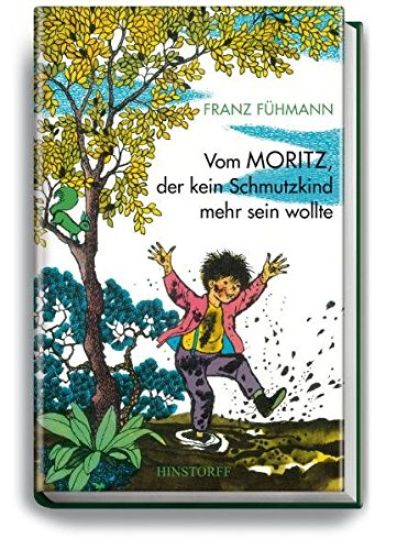
Kirjat ja teokset yhdessä paikassa: 18 kirjaa, julkaisuja vuosilta 2005–2024, suosituimpiin kuuluu Vom Moritz, der kein Schmutzkind mehr sein wollte. Vertaile teosten hintoja ja tarkista saatavuus suomalaisista kirjakaupoista.
Nimi esiintyy myös muodoissa: Franz Fuhmann
18 kirjaa
Kirjojen julkaisuvuodet: 2005–2024.

Science Fiktion
Franz Fühmann; Andrew B. B. Hamilton; Claire Van Den Broek
SEAGULL BOOKS LONDON LTD
2023
nidottu
A German twist on an Anglophone tradition, Science Fiktion provides a disturbing vision of the future from the other side of the Berlin Wall. When a young reader once asked Franz Fühmann if he considered his work to be science fiction, he was quick to deny it: he wanted nothing to do with the genre. As he began writing the stories that make up this volume, however, he found himself coming around to the idea of a hybrid genre—what he calls in German Saiäns-Fiktschen, "science fiktion" with a k. In seven interlocking stories, Science Fiktion offers a steampunk takedown of the logic of the Cold War. In this imagined future, two nations compete for global dominance: Uniterr, an exaggeration of the Eastern Bloc, in which personal freedom is curtailed and life regulated with cartoonish strictness; and Libroterr, in which the decadence of the West has been pushed beyond all reason. The stories follow three young citizens of Uniterr: Jirro, a young neutrinologist whose life is forever changed by a year spent abroad in Libroterr; Janno, a causologist condemned to a life of mediocrity in Uniterr’s bureaucracy for the briefest of impure thoughts; and Pavlo, an inventor and a drunkard, whose mind pushes against the limits of what his world allows. Through these three lives, Fühmann gradually unfolds the contours of their bizarre world in a master class of understated world-making. As the reader is swept up in the madness of Libroterr’s predator ads (which grab you on the street) and Uniterr’s mandatory mind readings, Fühmann’s dark comedy from the last century comes to seem all the more prescient in ours.
At the Burning Abyss – Experiencing the Georg Trakl Poem
Franz Fühmann; Isabel Fargo Cole
SEAGULL BOOKS LONDON LTD
2022
nidottu
Franz Fühmann’s magnum opus. At the Burning Abyss is a gripping and profoundly personal encounter with the great expressionist poet Georg Trakl. It is a taking stock of two troubled lives, a turbulent century, and the liberating power of poetry. Picking up where his last book, The Jew Car, left off, Fühmann probes his own susceptibility to ideology’s seductions—Nazism, then socialism—and examines their antidote, the goad of Trakl’s enigmatic verses. He confronts Trakl’s “unlivable life,” as his poetry transcends the panaceas of black-and-white ideology, ultimately bringing a painful, necessary understanding of “the whole human being: in victories and triumphs as in distress and defeat, in temptation and obsession, in splendor and in ordure.” In 1982, the German edition of At the Burning Abyss won the West German Scholl Siblings Prize, celebrating its “courage to resist inhumanity.” At a time of political extremism and polarization, has lost none of its urgency.
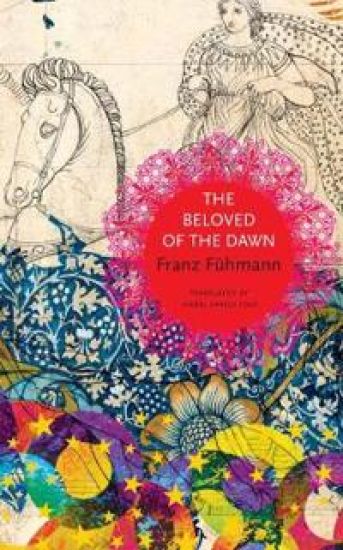
The Beloved of the Dawn
Franz Fühmann
Seagull Books London Ltd
2022
sidottu
Halvin toimitettuna 29,70 €
Four classical Greek myths retold with unexpected twists by an East German dissident. Franz Fühmann’s subversive retellings of four Greek legends were first published in East Germany in 1980. In them, Fühmann plumbs the ancient tales’ depths and makes them his own. Attuned to conflict and paradox, he sheds light on the complexities of sex and love, art and beauty, politics and power. In the title story, the love of the goddess Eos for the mortal Tithonos reveals the blessing and curse of transience, while “Hera and Zeus” probes the divine couple’s tumultuous relationship and its devastating consequences for a world embroiled in war. Fühmann’s unflinching account of Marsyas’ flaying by Apollo has been widely read as a dissident political statement that has lost none of its incisive force. At times charged with sensuality, and at others honed to a keen analytical edge, Fühmann’s shimmering prose is matched by Sunandini Banerjee’s exquisite collages.

The dignity of cognitively disabled people and the ethics of representing their lives are at the heart of an extraordinary yet little-known book first published in the former German Democratic Republic. Was für eine Insel in was für einem Meer, or What Kind of Island in What Kind of Sea (Rostock, Hinstorff, 1986) depicts residents of a church-run institution for people with cognitive disabilities in astonishing black-and-white photographs by Dietmar Riemann and in a probing, poignant essay by esteemed German writer Franz Fühmann. This important text, which moved from a medical model to a historical and cultural view of disability as an aspect of human identity and experience, is translated into English for the first time by Elizabeth Hamilton and includes reflections on the book and its impact. As fuller, global histories of disability are now being written, What Kind of Island in What Kind of Sea opens an essential window onto a formerly shuttered world, demonstrating the power of the arts to hone our capacity to perceive and appreciate human difference.


Originally published in 1962, Franz Fühmann’s autobiographical story cycle The Jew Car is a classic of German short fiction and an unparalleled examination of the psychology of National Socialism. Each story presents a snapshot of a personal and historical turning point in the life of the narrator, beginning with childhood anti-Semitism and moving to a youthful embrace—and then an ultimate rejection—of Nazi ideology. With scathing irony and hallucinatory intensity, reflections on the nature of memory, and the individual experience of history, the cycle acquires the weight of a novel.

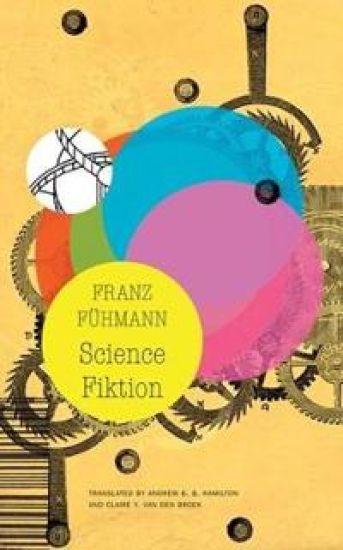
When a young reader once asked Franz Fühmann if he considered his work to be science fiction, he was quick to deny it: he wanted nothing to do with the genre. As he began writing the stories that make up this volume, however, he found himself coming around to the idea of a hybrid genre—what he calls in German Saiäns-Fiktschen, `science fiktion’ with a k. In seven interlocking stories, Science Fiktion offers a steampunk takedown of the logic of the Cold War. In this imagined future, two nations compete for global dominance: Uniterr, an exaggeration of the Eastern Bloc, in which personal freedom is curtailed and life regulated with cartoonish strictness; and Libroterr, in which the decadence of the West has been pushed beyond all reason. The stories follow three young citizens of Uniterr: Jirro, a young neutrinologist whose life is forever changed by a year spent abroad in Libroterr; Janno, a causologist condemned to a life of mediocrity in Uniterr’s bureacracy for the briefest of impure thoughts; and Pavlo, an inventor and a drunkard, whose mind pushes against the limits of what his world allows. Through these three lives, Fühmann gradually unfolds the contours of their bizarre world in a master class of understated world making. As the reader is swept up in the madness of Libroterr’s predator ads (which grab you on the street) and Uniterr’s mandatory mind readings, Fühmann’s dark comedy from the last century comes to seem all the more prescient in ours. A German twist on an Anglophone tradition, Science Fiktion provides a disturbing vision of the future from the other side of the Berlin Wall.
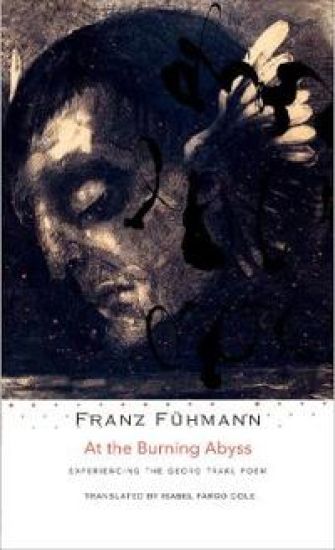
At the Burning Abyss is Franz Fuhmann's magnum opus a gripping and profoundly personal encounter with the great expressionist poet Georg Trakl. It is a taking stock of two troubled lives, a turbulent century, and the liberating power of poetry. Picking up where his last book, The Jew Car, left off, Fuhmann probes his own susceptibility to ideology's seductions Nazism, then socialism and examines their antidote, the goad of Trakl's enigmatic verses. He confronts Trakl's "unlivable life," as his poetry transcends the panaceas of black-and-white ideology, ultimately bringing a painful, necessary understanding of "the whole human being: in victories and triumphs as in distress and defeat, in temptation and obsession, in splendor and in ordure." In 1982, the German edition of At the Burning Abyss won the West German Scholl Siblings Prize, celebrating its "courage to resist inhumanity." At a time of political extremism and polarization, has lost none of its urgency.
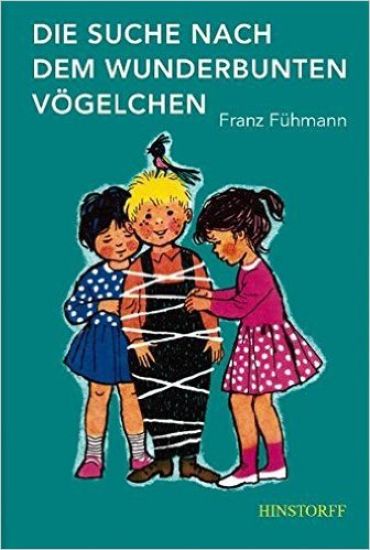
Mitten in der kugelrunden Stadt Käsebrot lag ein großer grüner Platz, mitten auf diesem großen grünen Platz stand ein buckliger brauner Baum, inmitten dieses buckligen braunen Baums fand sich ein kuscheliges blaues Nest, und mitten in diesem kuscheligen blauen Nest saß - das wunderbunte Vögelchen. Ein Vögelchen, so schön und bunt und einzigartig, dass nicht nur die Kinder im nahem Kinderheim es ins Herz geschlossen hatten; vielmehr war es so bekannt, dass sogar Menschen von weither in die KUGELRUNDE Stadt Käsebrot und auf den großen grünen Platz eilten, um es zu sehen. Bis eines Morgens ... Sie ist ein Klassiker der DDR-Kinderliteratur - Franz Fühmanns Geschichte vom wunderbunten Vögelchen, das eines Tages verschwand. Und das erst nach ereignisreicher Suche und mit Hilfe vieler Kinder sowie der Hauptwachmeister Löffelholz und Wiesel wiederentdeckt wurde - auch wenn es damit noch längst nicht gerettet sein sollte. Viele Jahre war eines der ersten Kinderbücher Franz Fühmanns nicht mehr lieferbar. Nun erscheint es auf vielfachen Leserwunsch wieder - ergänzt um ein Nachwort Ernst-Jürgen Walbergs, das von der Entstehung der Geschichte und ihrem zeitlichen Zusammenhang erzählt.
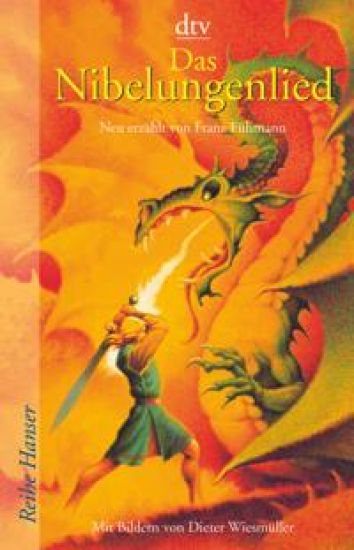
Mutige Männer und schöne Frauen , Liebe und Tod, Treue und Verrat - ›Das Nibelungenlied‹ erzöhlt von den ewigen Dingen - spannend bis zum letzten Schwerthieb Er trat von Kriemhild, doch er wagte nicht mehr, sie anzublicken. Die Königin aber sagte, wie es die Sitte gebot: ? Seid mir willkommen, Herr Siegfried, guter, edler Ritter!? Da wurde Siegfried über und über rot, und er verneigte sich vor der schönen, und sie fasste, wie es Brauch war, seine Hand, damit er sie durchs Spalier der Neugier zum Spaziergang geleite.

Franz Fühmanns geniales Sprachspielbuch. Ein Kinderbuchklassiker, ein (so Peter Härtling) "wunderbares und seltenes" Leseerlebnis