Kirjailija
Franz Liszt
Kirjat ja teokset yhdessä paikassa: 233 kirjaa, julkaisuja vuosilta 1852–2026, suosituimpiin kuuluu Sonata in B minor: for piano, S178 - Schirmer edition. Vertaile teosten hintoja ja tarkista saatavuus suomalaisista kirjakaupoista.
233 kirjaa
Kirjojen julkaisuvuodet: 1852–2026.

Liszt, F: Zigeuner Und Ihre Musik In Ungarn (1861)
Franz Liszt
KESSINGER PUBLISHING, LLC
2010
nidottu

Correspondence of Wagner and Liszt
Richard Wagner; Franz Liszt; Francis (TRN) Hueffer
Kessinger Pub
2009
pokkari

Correspondence of Wagner and Liszt
Richard Wagner; Franz Liszt
Cambridge University Press
2009
pokkari
Francis Hueffer (1845–89) was born and studied music in Germany, but moved to London in 1869 to pursue a career as a critic and writer on music. He edited the series 'The Great Musicians' for Novello and Co., was music critic of The Times, wrote libretti for some now-forgotten operas, and was an early advocate and interpreter to the British of Wagner. As well as writing Wagner in his own 'Great Musicians' series (1881), and Richard Wagner and the Music of the Future (1874), he translated the correspondence of Wagner and Liszt. This fascinating two-volume selection, published in 1888, covers the period 1841–61. Hueffer signals in his preface the importance to Wagner of the encouragement of Liszt – an established performer when Wagner was barely known and widely ridiculed, a musical mentor, an enthusiastic critic and eventually a father-in-law.

Correspondence of Wagner and Liszt
Richard Wagner; Franz Liszt
Cambridge University Press
2009
pokkari
Francis Hueffer (1845–89) was born and studied music in Germany, but moved to London in 1869 to pursue a career as a critic and writer on music. He edited the series 'The Great Musicians' for Novello and Co., was music critic of The Times, wrote libretti for some now-forgotten operas, and was an early advocate and interpreter to the British of Wagner. As well as writing Wagner in his own 'Great Musicians' series (1881), and Richard Wagner and the Music of the Future (1874), he translated the correspondence of Wagner and Liszt. This fascinating two-volume selection, published in 1888, covers the period 1841–61. Hueffer signals in his preface the importance to Wagner of the encouragement of Liszt – an established performer when Wagner was barely known and widely ridiculed, a musical mentor, an enthusiastic critic and eventually a father-in-law.
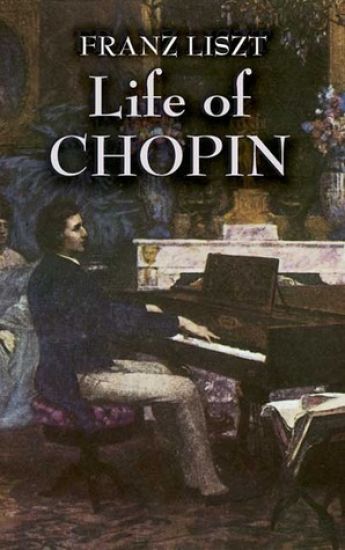
He lived in the shadow of death, painfully aware of the tuberculosis that would kill him prematurely. But Fr d ric Chopin attained immortality with his piano works, which endure as pinnacles of the instrument's repertoire. This biography by one of the nineteenth century's foremost pianists -- Chopin's friend and fellow artist, Franz Liszt -- offers a highly informed assessment of the Polish composer's musical legacy. It is further enlivened by the author's personal acquaintance with Chopin's other friends, who constituted the very cream of Parisian intellectual and artistic society. Born a year apart, Chopin and Liszt came of age in an era favorable to musical change, when audiences as well as performers were receptive to Romanticism's innovations. Liszt surveys the technical brilliance as well as the poetry of Chopin's masterpieces, including the "Adagio" from Piano Concerto No. 2 and Polonaise in F-sharp Minor. He also chronicles Chopin's progress from child prodigy to the darling of Parisian salons. A source of rare and unparalleled insights into Chopin's world of private anguish and public triumph, this memoir recounts the composer's loneliness as a Polish emigr , his tempestuous romance with George Sand, and his life among a glittering social set that included Balzac, Hugo, Berlioz, Delacroix, and Schumann.
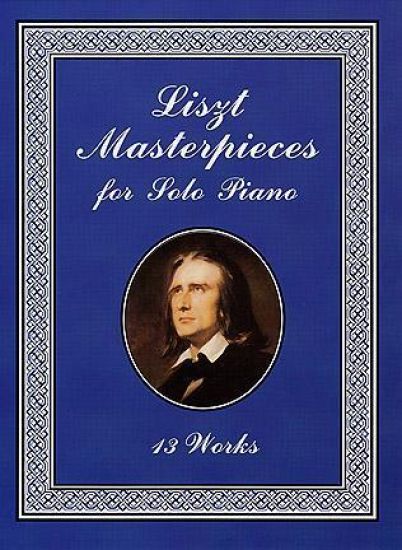
Masterpieces for Solo Piano
Franz Liszt
Dover Publications Inc.
2000
nidottu
Halvin toimitettuna 32,10 €


The Letters of Franz Liszt to Olga von Meyendorff, 1871–1886
Franz Liszt
Dumbarton Oaks Research Library Collection
1979
sidottu
These letters of Franz Liszt are a part of the Dumbarton Oaks Collection bequeathed to Harvard University by Mrs. Robert Woods Bliss in 1969. Written during the last sixteen years of Liszt's life, they are addressed to the Baroness Olga von Meyendorff, who shared his interests, though not always his views, in a broad field of disciplines--music, philosophy, theology, politics, literature--as well as his concern for persons both prominent and familial. The translation by William R. Tyler, who from 1969 to 1977 was Director of Dumbarton Oaks, is provided with notes and an Introduction by Edward N. Waters, widely recognized authority on Liszt and formerly Chief of the Music Division of the Library of Congress. Composed with warmth and humor, and not infrequently with some asperity, the letters reveal Liszt to have been an ardent, generous, and modest man, loyal and devoted to family and friends, pupils and colleagues alike. Though it was first intended to publish the letters in their original French as well as in translation, the cost of such a publication proved to be prohibitive. However, copies of the letters, or, when necessary, the letters themselves may be consulted by qualified readers at Dumbarton Oaks.