Kirjojen hintavertailu – 12 859 819 kirjaa ja 27 kauppaa
Kirjailija
Franz Liszt
Kirjat ja teokset yhdessä paikassa: 233 kirjaa, julkaisuja vuosilta 1852–2026, suosituimpiin kuuluu Sonata in B minor: for piano, S178 - Schirmer edition. Vertaile teosten hintoja ja tarkista saatavuus suomalaisista kirjakaupoista.
Sheet music for Franz Liszt's Transcendental Etudes, composed in 1851. This edition contains the following etudes: 1.) Preludio in C major2.) Molto vivace in A minor3.) Paysage in F major4.) Mazeppa in D minor5.) Feux follets in B-sharp major6.) Vision in G minor7.) Eroica in E-flat major8.) Wilde Jagd in C minor9.) Ricordanza in A-flat major10.) Allegro agitato molto in F minor11.) Harmonies du soir in D-flat major12.) Chasse-neige in B-flat minor
Sheet music for Franz Liszt's Six Consolations composed for the piano. This piano book contains the following pieces: No 1.) Andante Con MotoNo 2.) Un Poco Piu MossoNo 3.) Lento PlacidoNo 4.) Quasi AdagioNo 5.) AndantinoNo 6.) Allegretto Sempre Cantabile
Beethoven's Symphonies Numbers Six Through Nine, arranged for solo piano by Franz Liszt. "The name of Beethoven is sacred in art. His symphonies are at present universally acknowledged to be master-pieces; whoever seriously wishes to extend his knowledge or to produce new works can never devote too much reflection and study upon then. For this reason every way or manner of making them accessible and popular has a certain merit, nor are the rather numerous arrangements published so far without relative merit, though, for the most part, they seem to be of but little intrinsic value for deeper research. The poorest lithograph, the most faulty translation always gives an idea, indefinite though it be, of the genius of Michel Angelo, of Shakespeare, in the most incomplete piano-arrangement we recognize here and there the perhaps half effaced traces of the master's inspiration. By the development in technique and mechanism which the piano has gained of late, it is possible now to attain more and better results than have been attained so far. With the immense development of its harmonic power the piano seeks to appropriate more and more all orchestral compositions. In the compass of its seven octaves it can, with but a few exceptions, reproduce all traits, all combinations, all figuration's of the most learned, of the deepest tone-creations, and leaves to the orchestra no other advantages, than those of the variety of tone-colors and massive effects -- immense advantages, to be sure. Such has been my aim in the work I have undertaken and now lay before the musical world. I confess that I should have to consider it a rather useless employment of my time, if I had but added one more to the numerous hitherto published piano-arrangements, following in their rut; but I consider my time well employed if I have succeeded in transferring to the piano not only the grand outlines of Beethoven's compositions but also all those numerous fine details, and smaller traits that so powerfully contribute to the completion of the ensemble. My aim has been attained if I stand on the level with the intelligent engraver, the conscientious translator, who comprehend the spirit of a work and thus contribute to the knowledge of the great masters and to the formation of the sense for the beautiful. Rome, 1865. F. Liszt."
Sheet music for Beethoven's Symphonies Numbers One Through Five, arranged for solo piano by Franz Liszt. "The name of Beethoven is sacred in art. His symphonies are at present universally acknowledged to be master-pieces; whoever seriously wishes to extend his knowledge or to produce new works can never devote too much reflection and study upon then. For this reason every way or manner of making them accessible and popular has a certain merit, nor are the rather numerous arrangements published so far without relative merit, though, for the most part, they seem to be of but little intrinsic value for deeper research. The poorest lithograph, the most faulty translation always gives an idea, indefinite though it be, of the genius of Michel Angelo, of Shakespeare, in the most incomplete piano-arrangement we recognize here and there the perhaps half effaced traces of the master's inspiration. By the development in technique and mechanism which the piano has gained of late, it is possible now to attain more and better results than have been attained so far. With the immense development of its harmonic power the piano seeks to appropriate more and more all orchestral compositions. In the compass of its seven octaves it can, with but a few exceptions, reproduce all traits, all combinations, all figuration's of the most learned, of the deepest tone-creations, and leaves to the orchestra no other advantages, than those of the variety of tone-colors and massive effects -- immense advantages, to be sure. Such has been my aim in the work I have undertaken and now lay before the musical world. I confess that I should have to consider it a rather useless employment of my time, if I had but added one more to the numerous hitherto published piano-arrangements, following in their rut; but I consider my time well employed if I have succeeded in transferring to the piano not only the grand outlines of Beethoven's compositions but also all those numerous fine details, and smaller traits that so powerfully contribute to the completion of the ensemble. My aim has been attained if I stand on the level with the intelligent engraver, the conscientious translator, who comprehend the spirit of a work and thus contribute to the knowledge of the great masters and to the formation of the sense for the beautiful. Rome, 1865. F. Liszt."
Beethoven's Symphony Number Nine, arranged for solo piano by Franz Liszt. "The name of Beethoven is sacred in art. His symphonies are at present universally acknowledged to be master-pieces; whoever seriously wishes to extend his knowledge or to produce new works can never devote too much reflection and study upon then. For this reason every way or manner of making them accessible and popular has a certain merit, nor are the rather numerous arrangements published so far without relative merit, though, for the most part, they seem to be of but little intrinsic value for deeper research. The poorest lithograph, the most faulty translation always gives an idea, indefinite though it be, of the genius of Michel Angelo, of Shakespeare, in the most incomplete piano-arrangement we recognize here and there the perhaps half effaced traces of the master's inspiration. By the development in technique and mechanism which the piano has gained of late, it is possible now to attain more and better results than have been attained so far. With the immense development of its harmonic power the piano seeks to appropriate more and more all orchestral compositions. In the compass of its seven octaves it can, with but a few exceptions, reproduce all traits, all combinations, all figuration's of the most learned, of the deepest tone-creations, and leaves to the orchestra no other advantages, than those of the variety of tone-colors and massive effects -- immense advantages, to be sure. Such has been my aim in the work I have undertaken and now lay before the musical world. I confess that I should have to consider it a rather useless employment of my time, if I had but added one more to the numerous hitherto published piano-arrangements, following in their rut; but I consider my time well employed if I have succeeded in transferring to the piano not only the grand outlines of Beethoven's compositions but also all those numerous fine details, and smaller traits that so powerfully contribute to the completion of the ensemble. My aim has been attained if I stand on the level with the intelligent engraver, the conscientious translator, who comprehend the spirit of a work and thus contribute to the knowledge of the great masters and to the formation of the sense for the beautiful. Rome, 1865. F. Liszt." (English translation by C. E. R. Mueller.)
Sheet music for Beethoven's Symphony Number Three, arranged for solo piano by Franz Liszt. "The name of Beethoven is sacred in art. His symphonies are at present universally acknowledged to be master-pieces; whoever seriously wishes to extend his knowledge or to produce new works can never devote too much reflection and study upon then. For this reason every way or manner of making them accessible and popular has a certain merit, nor are the rather numerous arrangements published so far without relative merit, though, for the most part, they seem to be of but little intrinsic value for deeper research. The poorest lithograph, the most faulty translation always gives an idea, indefinite though it be, of the genius of Michel Angelo, of Shakespeare, in the most incomplete piano-arrangement we recognize here and there the perhaps half effaced traces of the master's inspiration. By the development in technique and mechanism which the piano has gained of late, it is possible now to attain more and better results than have been attained so far. With the immense development of its harmonic power the piano seeks to appropriate more and more all orchestral compositions. In the compass of its seven octaves it can, with but a few exceptions, reproduce all traits, all combinations, all figuration's of the most learned, of the deepest tone-creations, and leaves to the orchestra no other advantages, than those of the variety of tone-colors and massive effects -- immense advantages, to be sure. Such has been my aim in the work I have undertaken and now lay before the musical world. I confess that I should have to consider it a rather useless employment of my time, if I had but added one more to the numerous hitherto published piano-arrangements, following in their rut; but I consider my time well employed if I have succeeded in transferring to the piano not only the grand outlines of Beethoven's compositions but also all those numerous fine details, and smaller traits that so powerfully contribute to the completion of the ensemble. My aim has been attained if I stand on the level with the intelligent engraver, the conscientious translator, who comprehend the spirit of a work and thus contribute to the knowledge of the great masters and to the formation of the sense for the beautiful. Rome, 1865. F. Liszt."
Sheet music for Beethoven's Symphony Number Five, arranged for solo piano by Franz Liszt." The name of Beethoven is sacred in art. His symphonies are at present universally acknowledged to be master-pieces; whoever seriously wishes to extend his knowledge or to produce new works can never devote too much reflection and study upon then. For this reason every way or manner of making them accessible and popular has a certain merit, nor are the rather numerous arrangements published so far without relative merit, though, for the most part, they seem to be of but little intrinsic value for deeper research. The poorest lithograph, the most faulty translation always gives an idea, indefinite though it be, of the genius of Michel Angelo, of Shakespeare, in the most incomplete piano-arrangement we recognize here and there the perhaps half effaced traces of the master's inspiration. By the development in technique and mechanism which the piano has gained of late, it is possible now to attain more and better results than have been attained so far. With the immense development of its harmonic power the piano seeks to appropriate more and more all orchestral compositions. In the compass of its seven octaves it can, with but a few exceptions, reproduce all traits, all combinations, all figuration's of the most learned, of the deepest tone-creations, and leaves to the orchestra no other advantages, than those of the variety of tone-colors and massive effects -- immense advantages, to be sure. Such has been my aim in the work I have undertaken and now lay before the musical world. I confess that I should have to consider it a rather useless employment of my time, if I had but added one more to the numerous hitherto published piano-arrangements, following in their rut; but I consider my time well employed if I have succeeded in transferring to the piano not only the grand outlines of Beethoven's compositions but also all those numerous fine details, and smaller traits that so powerfully contribute to the completion of the ensemble. My aim has been attained if I stand on the level with the intelligent engraver, the conscientious translator, who comprehend the spirit of a work and thus contribute to the knowledge of the great masters and to the formation of the sense for the beautiful. Rome, 1865. F. Liszt."
Sheet music for Beethoven's Symphony Number Eight, arranged for solo piano by Franz Liszt." The name of Beethoven is sacred in art. His symphonies are at present universally acknowledged to be master-pieces; whoever seriously wishes to extend his knowledge or to produce new works can never devote too much reflection and study upon then. For this reason every way or manner of making them accessible and popular has a certain merit, nor are the rather numerous arrangements published so far without relative merit, though, for the most part, they seem to be of but little intrinsic value for deeper research. The poorest lithograph, the most faulty translation always gives an idea, indefinite though it be, of the genius of Michel Angelo, of Shakespeare, in the most incomplete piano-arrangement we recognize here and there the perhaps half effaced traces of the master's inspiration. By the development in technique and mechanism which the piano has gained of late, it is possible now to attain more and better results than have been attained so far. With the immense development of its harmonic power the piano seeks to appropriate more and more all orchestral compositions. In the compass of its seven octaves it can, with but a few exceptions, reproduce all traits, all combinations, all figuration's of the most learned, of the deepest tone-creations, and leaves to the orchestra no other advantages, than those of the variety of tone-colors and massive effects -- immense advantages, to be sure. Such has been my aim in the work I have undertaken and now lay before the musical world. I confess that I should have to consider it a rather useless employment of my time, if I had but added one more to the numerous hitherto published piano-arrangements, following in their rut; but I consider my time well employed if I have succeeded in transferring to the piano not only the grand outlines of Beethoven's compositions but also all those numerous fine details, and smaller traits that so powerfully contribute to the completion of the ensemble. My aim has been attained if I stand on the level with the intelligent engraver, the conscientious translator, who comprehend the spirit of a work and thus contribute to the knowledge of the great masters and to the formation of the sense for the beautiful. Rome, 1865. F. Liszt."
Sheet music for Beethoven's Symphony Number Seven, arranged for solo piano by Franz Liszt." The name of Beethoven is sacred in art. His symphonies are at present universally acknowledged to be master-pieces; whoever seriously wishes to extend his knowledge or to produce new works can never devote too much reflection and study upon then. For this reason every way or manner of making them accessible and popular has a certain merit, nor are the rather numerous arrangements published so far without relative merit, though, for the most part, they seem to be of but little intrinsic value for deeper research. The poorest lithograph, the most faulty translation always gives an idea, indefinite though it be, of the genius of Michel Angelo, of Shakespeare, in the most incomplete piano-arrangement we recognize here and there the perhaps half effaced traces of the master's inspiration. By the development in technique and mechanism which the piano has gained of late, it is possible now to attain more and better results than have been attained so far. With the immense development of its harmonic power the piano seeks to appropriate more and more all orchestral compositions. In the compass of its seven octaves it can, with but a few exceptions, reproduce all traits, all combinations, all figuration's of the most learned, of the deepest tone-creations, and leaves to the orchestra no other advantages, than those of the variety of tone-colors and massive effects -- immense advantages, to be sure. Such has been my aim in the work I have undertaken and now lay before the musical world. I confess that I should have to consider it a rather useless employment of my time, if I had but added one more to the numerous hitherto published piano-arrangements, following in their rut; but I consider my time well employed if I have succeeded in transferring to the piano not only the grand outlines of Beethoven's compositions but also all those numerous fine details, and smaller traits that so powerfully contribute to the completion of the ensemble. My aim has been attained if I stand on the level with the intelligent engraver, the conscientious translator, who comprehend the spirit of a work and thus contribute to the knowledge of the great masters and to the formation of the sense for the beautiful. Rome, 1865. F. Liszt."
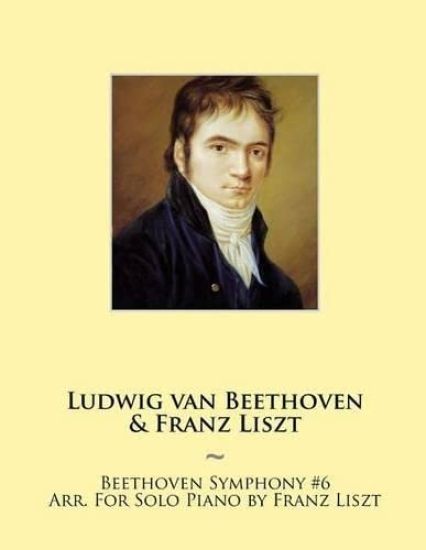
Beethoven's Symphony Number Six, arranged for solo piano by Franz Liszt. "The name of Beethoven is sacred in art. His symphonies are at present universally acknowledged to be master-pieces; whoever seriously wishes to extend his knowledge or to produce new works can never devote too much reflection and study upon then. For this reason every way or manner of making them accessible and popular has a certain merit, nor are the rather numerous arrangements published so far without relative merit, though, for the most part, they seem to be of but little intrinsic value for deeper research. The poorest lithograph, the most faulty translation always gives an idea, indefinite though it be, of the genius of Michel Angelo, of Shakespeare, in the most incomplete piano-arrangement we recognize here and there the perhaps half effaced traces of the master's inspiration. By the development in technique and mechanism which the piano has gained of late, it is possible now to attain more and better results than have been attained so far. With the immense development of its harmonic power the piano seeks to appropriate more and more all orchestral compositions. In the compass of its seven octaves it can, with but a few exceptions, reproduce all traits, all combinations, all figuration's of the most learned, of the deepest tone-creations, and leaves to the orchestra no other advantages, than those of the variety of tone-colors and massive effects -- immense advantages, to be sure. Such has been my aim in the work I have undertaken and now lay before the musical world. I confess that I should have to consider it a rather useless employment of my time, if I had but added one more to the numerous hitherto published piano-arrangements, following in their rut; but I consider my time well employed if I have succeeded in transferring to the piano not only the grand outlines of Beethoven's compositions but also all those numerous fine details, and smaller traits that so powerfully contribute to the completion of the ensemble. My aim has been attained if I stand on the level with the intelligent engraver, the conscientious translator, who comprehend the spirit of a work and thus contribute to the knowledge of the great masters and to the formation of the sense for the beautiful. Rome, 1865. F. Liszt."
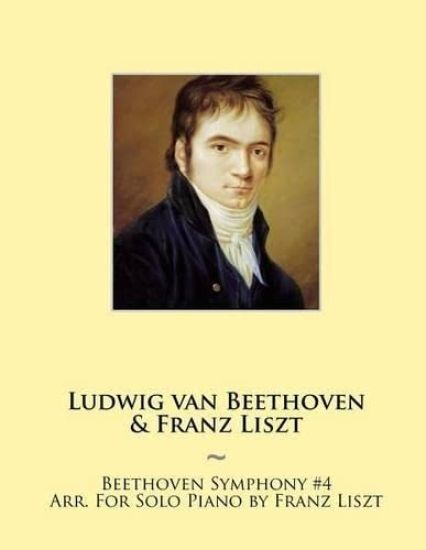
Sheet music for Beethoven's Symphony Number Four, arranged for solo piano by Franz Liszt. "The name of Beethoven is sacred in art. His symphonies are at present universally acknowledged to be master-pieces; whoever seriously wishes to extend his knowledge or to produce new works can never devote too much reflection and study upon then. For this reason every way or manner of making them accessible and popular has a certain merit, nor are the rather numerous arrangements published so far without relative merit, though, for the most part, they seem to be of but little intrinsic value for deeper research. The poorest lithograph, the most faulty translation always gives an idea, indefinite though it be, of the genius of Michel Angelo, of Shakespeare, in the most incomplete piano-arrangement we recognize here and there the perhaps half effaced traces of the master's inspiration. By the development in technique and mechanism which the piano has gained of late, it is possible now to attain more and better results than have been attained so far. With the immense development of its harmonic power the piano seeks to appropriate more and more all orchestral compositions. In the compass of its seven octaves it can, with but a few exceptions, reproduce all traits, all combinations, all figuration's of the most learned, of the deepest tone-creations, and leaves to the orchestra no other advantages, than those of the variety of tone-colors and massive effects -- immense advantages, to be sure. Such has been my aim in the work I have undertaken and now lay before the musical world. I confess that I should have to consider it a rather useless employment of my time, if I had but added one more to the numerous hitherto published piano-arrangements, following in their rut; but I consider my time well employed if I have succeeded in transferring to the piano not only the grand outlines of Beethoven's compositions but also all those numerous fine details, and smaller traits that so powerfully contribute to the completion of the ensemble. My aim has been attained if I stand on the level with the intelligent engraver, the conscientious translator, who comprehend the spirit of a work and thus contribute to the knowledge of the great masters and to the formation of the sense for the beautiful. Rome, 1865. F. Liszt."
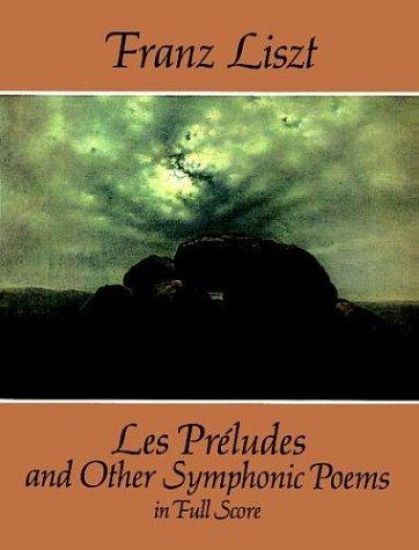
This authoritative edition presents full-score reproductions of three of Liszt's best-known symphonic poems. "Les ""Preludes" (Symphonic Poem No. 3) grew out of the composer's unpublished choral setting of Joseph Autran's poem "The Four Elements," blending stirring martial music and lovely pastoral themes to make this work the most popular of the symphonic poems. "Mazeppa" (Symphonic Poem No. 6) evokes Victor Hugo's portrayal of the Cossack leader and the symbolic triumph that comes only after defeat: "He runs, he flies, he falls, and stands up king " "Heroide Funebre "(Symphonic Poem No. 8) is the last vestige of the monumental Revolutionary Symphony, planned but never completed, suggesting universal brotherhood: a fine, heroic, dignified funeral march. In these richly sonorous works, Liszt explored the concept of the one-movement "transformation of themes," an approach to composition that Wagner would carry forward in his development of the leitmotif. Liszt's expanding chromaticism would be no less influential, anticipating the twentieth century's embrace of atonality. Frequently performed favorites of audiences around the world, these three works are reprinted from the original Breitkopf & Hartel edition.