Kirjojen hintavertailu – 12 903 735 kirjaa ja 27 kauppaa

Kirjailija

Fraser Parkinson

Kirjat ja teokset yhdessä paikassa: 5 kirjaa, julkaisuja vuosilta 2014–2021, suosituimpiin kuuluu Edinburgh South Side Through Time. Vertaile teosten hintoja ja tarkista saatavuus suomalaisista kirjakaupoista.

5 kirjaa

Kirjojen julkaisuvuodet: 2014–2021.

Leith Reflections

Leith Reflections

Jack Gillon; Fraser Parkinson

Amberley Publishing
2021
nidottu
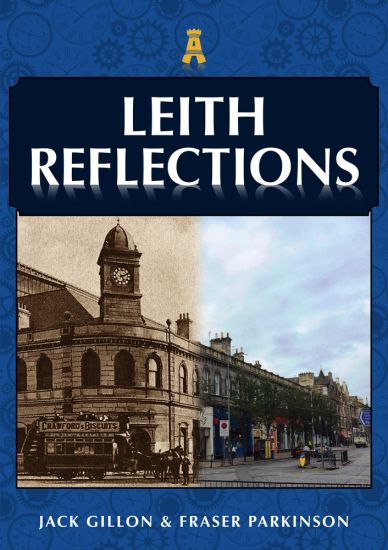
In 1560, Mary of Guise moved the Scottish Court to Leith, a site that is now Parliament Street, off Coalhill. Serving Edinburgh’s shipbuilding and repair facilities, in subsequent centuries Leith’s port saw the opening of a new Wet Dock, the first of its kind in Scotland. Leith has played a long and prominent role in Scottish history. As the major port serving Edinburgh, it has been the stage on which many significant events have taken place. From housing the Scottish Court to seeing civil war, being the port of call for royal arrivals and becoming its own burgh, Leith has seen it all. Leith Reflections features an exciting collection of historic and modern pictures that are individually merged to reveal how the area has changed over the decades. Each of the 180 pictures in this book combines a recent colour view of Leith with the matching sepia archive scene. Through the split-image effect, readers can see how streets, buildings, the docks and everyday life have transformed with the passing of time. Local authors Jack Gillon and Fraser Parkinson present this fascinating visual chronicle that ingeniously reflects past and present glimpses of Leith. This book will be of interest to residents, visitors, local historians and all those with links to the area.
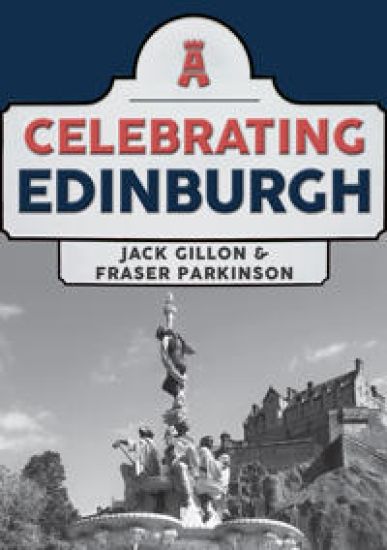
Celebrating Edinburgh

Celebrating Edinburgh

Jack Gillon; Fraser Parkinson

Amberley Publishing
2021
nidottu
Edinburgh, the capital of Scotland, has much to celebrate. The city has been central to Scottish life and its history for many centuries. Its festivals attract visitors from all over the world, the quality of its architecture has been awarded the highest accolade of World Heritage status, and nature also gifted Edinburgh with the most stunning of settings. Its eminent scientists, engineers, philosophers and men of letters are internationally renowned. It is this combination of factors that make Edinburgh the United Kingdom’s second most popular tourist destination. In Celebrating Edinburgh, local authors Jack Gillon and Fraser Parkinson highlight some of the significant aspects of the city’s history and identity: its notable individuals, achievements, events and culture. Chapters focus on different themes such as its literary prominence – Edinburgh was UNESCO’s first City of Literature in 2004 – and the authors, past and present, who have lived here, from Sir Arthur Conan Doyle and Robert Burns to Ian Rankin and JK Rowling. Here too are the world-famous Fringe Festival, Military Tattoo and Hogmanay celebrations. The city’s exceptional architecture and its place as the birthplace of the Scottish Enlightenment in the eighteenth century are also highlighted, together with its natural heritage and fringe of villages including Leith and Portobello. Illustrated throughout, this book will appeal to residents, visitors and all those with links to this marvellous city.
Leith History Tour

Leith History Tour

Jack Gillon; Fraser Parkinson

AMBERLEY PUBLISHING
2018
nidottu
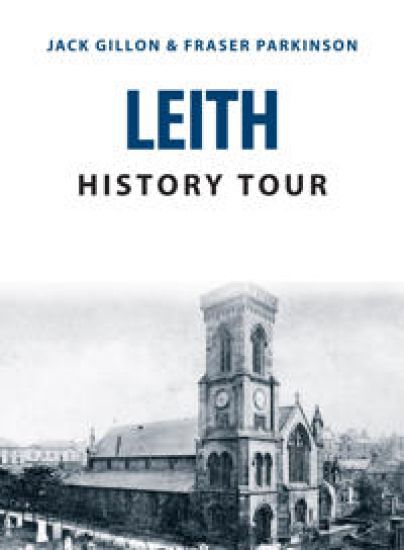
The first reference to the historic port of Leith dates from 1140, and the town constantly features in the power struggles that took place in Scotland. In the 1960s the face of Leith changed forever: the brimming tenements, shops, pubs and small workshops along the old and ancient thoroughfares in the heart of the town were destined for redevelopment. The Kirkgate, St Andrew Street, Tolbooth Wynd, Bridge Street and many more would disappear during the decade. Today, Leith is a thriving port and cruise line destination with many excellent hotels, restaurants and bars. Leith History Touris a unique insight into the illustrious history of this old port and shows just how much it has changed during the course of the nineteenth and twentieth centuries. Readers are invited to follow local authors Jack Gillon and Fraser Parkinson as they guide them through its streets and alleyways, pointing out the well-known and lesser-known landmarks along the way.
Edinburgh South Side Through Time

Edinburgh South Side Through Time

Jack Gillon; Fraser Parkinson

Amberley Publishing
2017
nidottu
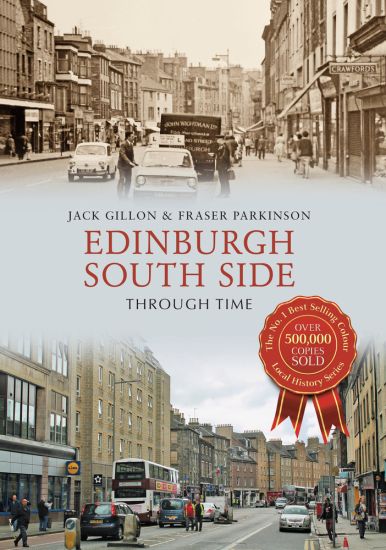
Edinburgh’s South Side has contributed much to the rich story of the city. In 1766, Edinburgh made its first ambitious expansion beyond the city walls with the planned development of George Square. The construction of the North and South Bridge, linking the New Town, Old Town and South Side, was a further boost to development in the area. Nineteenth-century industrialisation resulted in tenement housing, workshops and factories filling most of the available space between elegant Georgian buildings. In the 1950s, the collapse of the Dumbiedykes’ ‘Penny Tenement’ focused attention on Edinburgh’s slums, and the removal of a whole community as part of a major slum clearance drive followed. In the face of a public outcry, modern tower blocks also replaced the historic Georgian buildings on George Square with the loss of the fondly remembered Parker’s Store building in the Bristo area. In 1975, the South Side was declared a conservation area. This reversed the wave of demolition and resulted in the regeneration of the area and the retention of its historic identity. The mix of communities make it one of the most colourful areas of Edinburgh, and it holds a special place in the hearts of current and past residents. Edinburgh South Side Through Time takes you on this journey, with old and new images to illustrate how this part of the city has changed over the years.
Edinburgh in the 1950s

Edinburgh in the 1950s

Jack Gillon; David McLean; Fraser Parkinson

Amberley Publishing
2014
nidottu
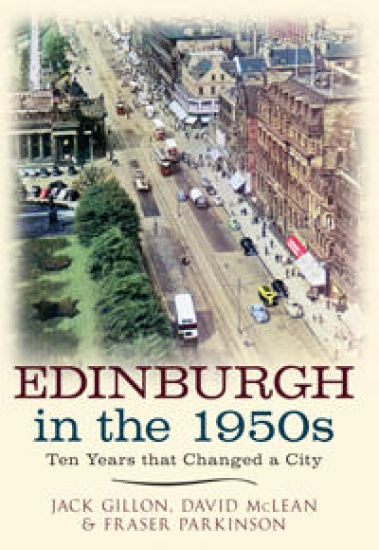
EDINBURGH in the 1950s was a very different place. After the ravages of war, the International Festival and Military Tattoo was introduced as an antidote to post-war austerity, the new Civic Survey and Plan put forward grandiose recommendations for change, and a new young Queen visited the city. This was a time when slum housing was a blight on many people's lives, but there was a real sense of community that was ultimately lost in the move to sparkling, modern homes in the new housing estates. People continued to use the trams to travel to work in the many factories or make trips to Portobello for a day of fun, but they were slowly usurped by the car. It was a glory period for the local football teams, and nights spent dancing or at the pictures were a weekly event. There was still the horse-drawn milk float and children played in streets that were lit by gas. Beautifully illustrated with many previously unpublished photographs, Edinburgh in the 1950s provides an exceptional insight into a time now acknowledged as the end of an era in Edinburgh - for good and for bad.