Kirjojen hintavertailu – 12 903 725 kirjaa ja 27 kauppaa

Kirjailija

Fred B. Schneider

Kirjat ja teokset yhdessä paikassa: 4 kirjaa, julkaisuja vuosilta 1993–2012, suosituimpiin kuuluu On Concurrent Programming. Vertaile teosten hintoja ja tarkista saatavuus suomalaisista kirjakaupoista.

4 kirjaa

Kirjojen julkaisuvuodet: 1993–2012.

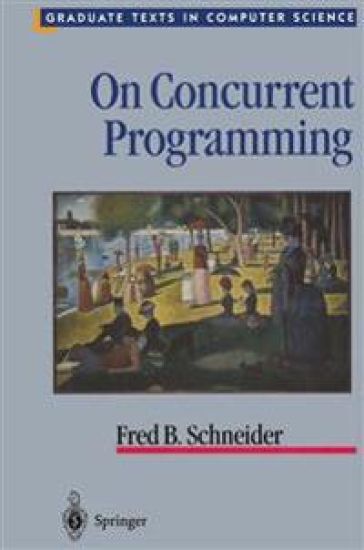
On Concurrent Programming

On Concurrent Programming

Fred B. Schneider

Springer-Verlag New York Inc.
2012
nidottu
Concurrent computing is gaining ground in interest as it becomes increasingly feasible to implement distributed computing across networks of workstations. This book, by one of the subject's leading figures, provides a comprehensive survey of the subject beginning with proposotional logic and concluding with concurrent programming. It is based on graduate courses taught at Cornell University and is designed to be used as a graduate text. There are exercises at the end of each chapter to extend and illustrate the main themes covered. Professor Schneier emphasizes the use of formal methods and assertional reasoning using notation and paradigms drawn from programming to drive the exposition. As a result, all those interested in studying concurrent computing will find this to be an invaluable approach to the subject.
A Logical Approach to Discrete Math

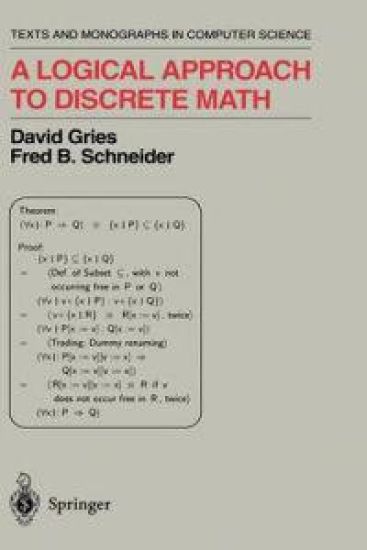
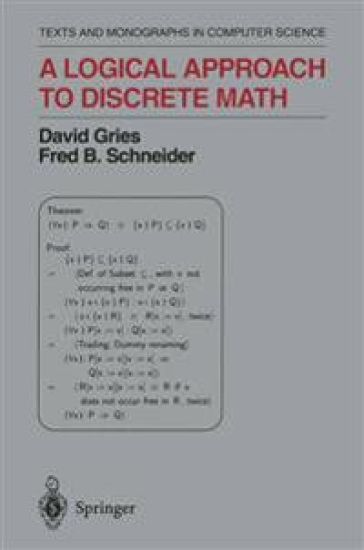
A Logical Approach to Discrete Math

David Gries; Fred B. Schneider

Springer-Verlag New York Inc.
2010
nidottu
This text attempts to change the way we teach logic to beginning students. Instead of teaching logic as a subject in isolation, we regard it as a basic tool and show how to use it. We strive to give students a skill in the propo­ sitional and predicate calculi and then to exercise that skill thoroughly in applications that arise in computer science and discrete mathematics. We are not logicians, but programming methodologists, and this text reflects that perspective. We are among the first generation of scientists who are more interested in using logic than in studying it. With this text, we hope to empower further generations of computer scientists and math­ ematicians to become serious users of logic. Logic is the glue Logic is the glue that binds together methods of reasoning, in all domains. The traditional proof methods -for example, proof by assumption, con­ tradiction, mutual implication, and induction- have their basis in formal logic. Thus, whether proofs are to be presented formally or informally, a study of logic can provide understanding.
On Concurrent Programming

On Concurrent Programming

Fred B. Schneider

Springer-Verlag New York Inc.
1997
sidottu
Concurrent computing is gaining ground in interest as it becomes increasingly feasible to implement distributed computing across networks of workstations. This book, by one of the subject's leading figures, provides a comprehensive survey of the subject beginning with proposotional logic and concluding with concurrent programming. It is based on graduate courses taught at Cornell University and is designed to be used as a graduate text. There are exercises at the end of each chapter to extend and illustrate the main themes covered. Professor Schneier emphasizes the use of formal methods and assertional reasoning using notation and paradigms drawn from programming to drive the exposition. As a result, all those interested in studying concurrent computing will find this to be an invaluable approach to the subject.
A Logical Approach to Discrete Math

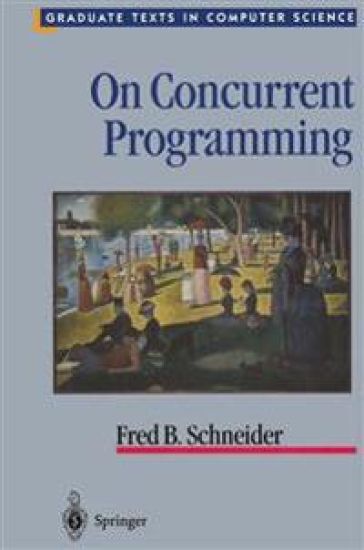
A Logical Approach to Discrete Math

David Gries; Fred B. Schneider

Springer-Verlag New York Inc.
1993
sidottu
This text attempts to change the way we teach logic to beginning students. Instead of teaching logic as a subject in isolation, we regard it as a basic tool and show how to use it. We strive to give students a skill in the propo­ sitional and predicate calculi and then to exercise that skill thoroughly in applications that arise in computer science and discrete mathematics. We are not logicians, but programming methodologists, and this text reflects that perspective. We are among the first generation of scientists who are more interested in using logic than in studying it. With this text, we hope to empower further generations of computer scientists and math­ ematicians to become serious users of logic. Logic is the glue Logic is the glue that binds together methods of reasoning, in all domains. The traditional proof methods -for example, proof by assumption, con­ tradiction, mutual implication, and induction- have their basis in formal logic. Thus, whether proofs are to be presented formally or informally, a study of logic can provide understanding.